Home Blog Page 9

11 Birds With Long Legs With Pictures

0

Explore the amazing world of long-legged birds! These incredible birds, like herons, egrets, flamingos, and cranes, are built to live in wetlands and marshes. Their long legs help them walk through water, making hunting for fish and other small animals easier while keeping an eye out for danger. 

This unique adaptation is not just about survival; it also contributes to their elegant and distinctive appearance. From the flamingo’s graceful strides to the heron’s poised stance, these birds are a testament to nature’s ingenuity and beauty. Join us as we explore these fascinating species with stunning visuals!

Why exactly do these birds have such long legs? 

Wading: Their long legs allow them to wade through water without getting their bodies wet, which is crucial for feeding in aquatic environments.

Foraging: Extended reach helps them probe deeper into water or mud to catch prey such as fish, crustaceans, and insects.

Locomotion: Long legs aid in navigating through tall grasses and reeds in wetlands, providing better mobility and access to food sources.

Which green bird in California mimics human speech but is often mistaken for a wild parakeet?

Long-Leg Birds vs. Short-Leg Birds 

Long-legged birds are different from their short-legged counterparts in several ways. They typically inhabit wetlands, marshes, and coastal areas where wading is necessary, while short-legged birds are often found in forests, fields, and urban areas. 

Their feeding habits also differ, with long-legged birds foraging in aquatic environments and short-legged birds hunting on the ground or in trees. Behaviorally, long-legged birds are more suited to open and aquatic environments, whereas short-legged birds excel in dense vegetation or terrestrial habitats.

11 Birds With Long Legs 

The following long-legged birds are remarkable examples of adaptation and survival in diverse wetland habitats, each with its unique characteristics and behaviors: – 

1. Great Blue Heron Overview
Great Blue Heron

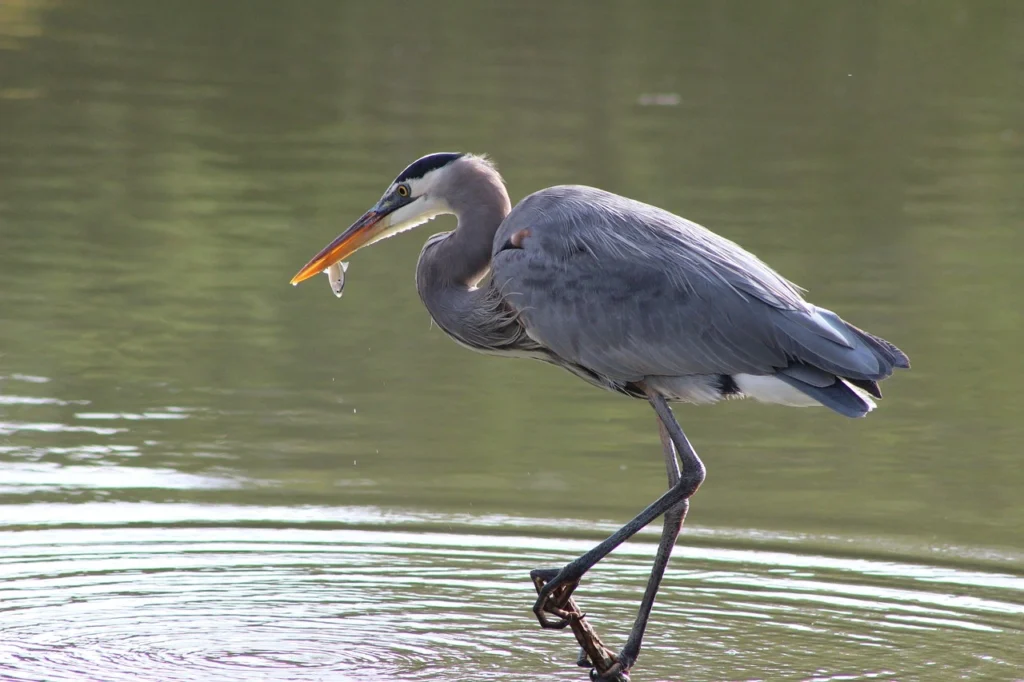
The Great Blue Heron (Ardea herodias) is one of North America’s most recognizable and widespread wading birds. Known for its stately appearance and impressive size, this bird is a captivating sight in many aquatic environments.

Great Blue Herons are the largest herons in North America, standing about 4.5 feet tall with a wingspan of up to 6.6 feet. They have a blue-gray body, a black stripe over their eye, and long legs and necks. Their feathers can appear more slate-gray, and they have a dagger-like bill which they use skillfully to catch prey.

Diet

Great Blue Herons are opportunistic feeders with a diet that primarily consists of fish. They also eat amphibians, small mammals, insects, reptiles, and other birds. They hunt by standing still or slowly wading in the water, then swiftly striking with their long, sharp bills to catch prey.

Behavior

These herons are solitary hunters and are often seen alone, although they may nest in colonies. They are known for their slow and deliberate movements when hunting, but they can quickly take flight when disturbed. In flight, they tuck their neck into an “S” shape and their long legs trail behind.

Also read: Birds With Long Legs With Pictures

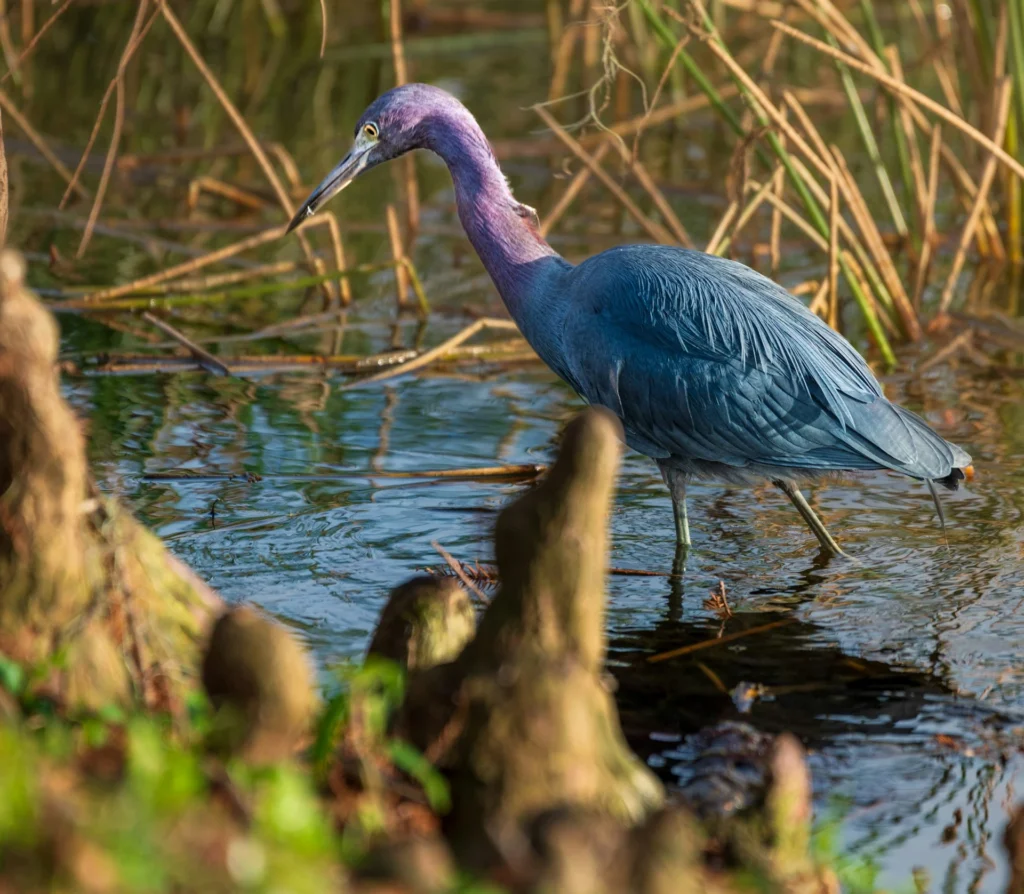
2. Little Blue Heron (Egretta caerulea)
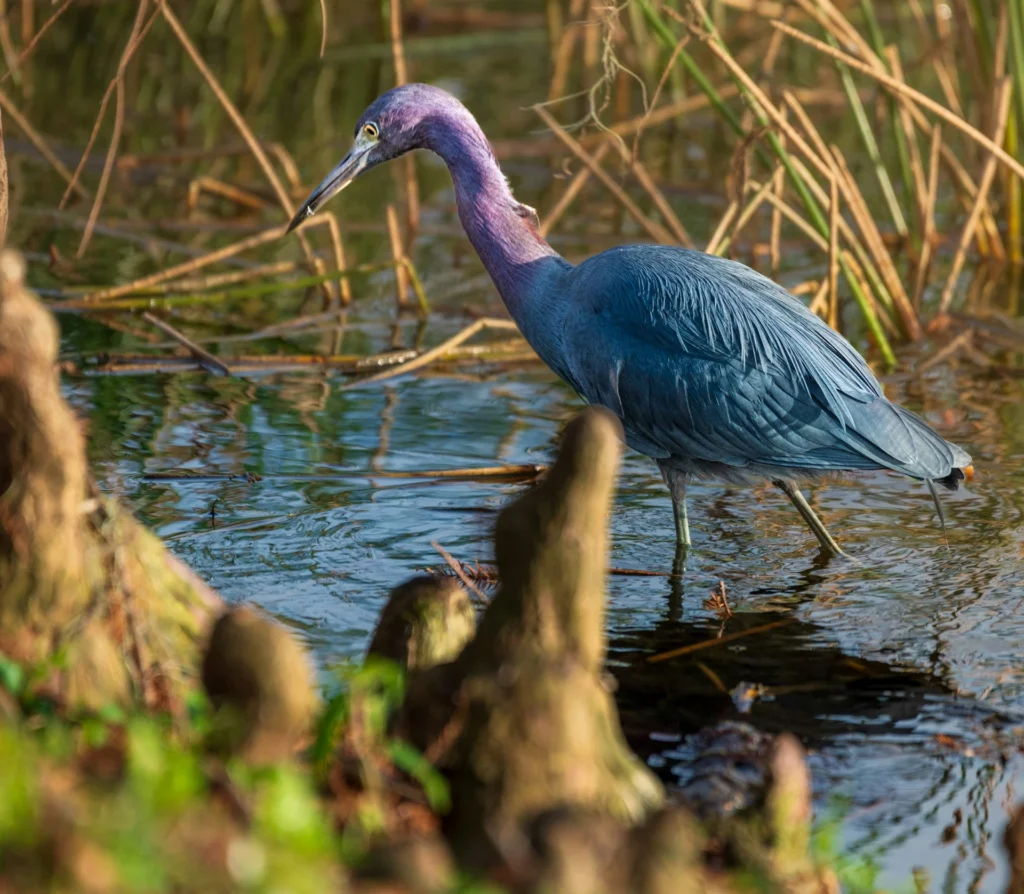
Little Blue Heron (Egretta caerulea)

The Little Blue Heron is a medium-sized heron with distinctive coloration. Adults have dark slate-blue bodies and purplish-blue heads and necks, while juveniles are entirely white, gradually transitioning to blue as they mature. Their bills are dark with a black tip, and their legs are greenish.

Little Blue Herons are found in wetlands, marshes, swamps, and along the edges of lakes and ponds. They prefer shallow freshwater environments but can also be found in brackish waters and coastal areas.

Diet

Their diet consists mainly of small fish, amphibians, crustaceans, insects, and other aquatic prey. They are patient hunters, often standing still or moving slowly through the water to catch their food.

Behavior

Little Blue Herons are typically solitary hunters but can be seen in mixed-species foraging groups. They are known for their deliberate hunting style, using their long legs to wade through shallow water. 

These herons build nests in trees or shrubs, often in colonies with other wading birds. Both parents share the responsibilities of building the nest, incubating the eggs, and feeding the chicks.

3.Tricolored Heron (Egretta tricolor)
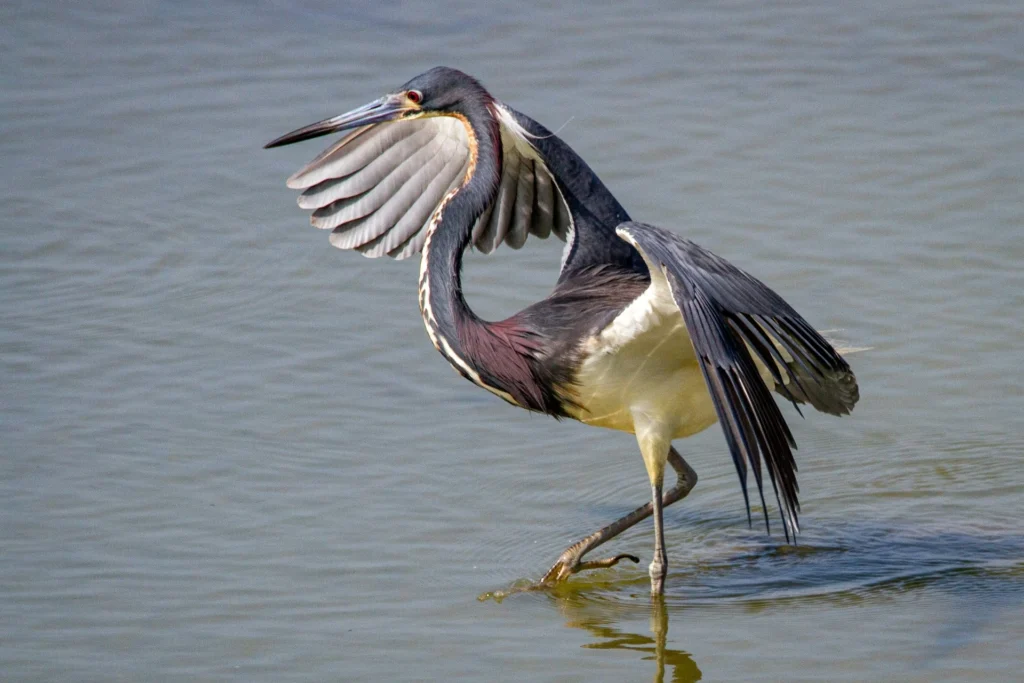
Tricolored Heron (Egretta tricolor)

The Tricolored Heron, also known as the Louisiana Heron, is a slender, medium-sized heron with a unique color pattern. It has a blue-gray body, a white belly, and a striking rufous (reddish) neck. The bill is long and pointed, yellow at the base, and dark at the tip.

Tricolored Herons inhabit coastal marshes, mangrove swamps, and the edges of lakes and rivers. They prefer brackish and saltwater environments but can also be found in freshwater wetlands.

Diet

Their diet includes small fish, crustaceans, insects, and amphibians. They are active foragers, often seen darting and chasing their prey in shallow waters.

Behavior:

These herons are known for their dynamic and energetic hunting techniques, including running, darting, and using their wings to corral fish. They often forage alone but can be seen in groups during the breeding season.

4.Great Egret (Ardea alba)
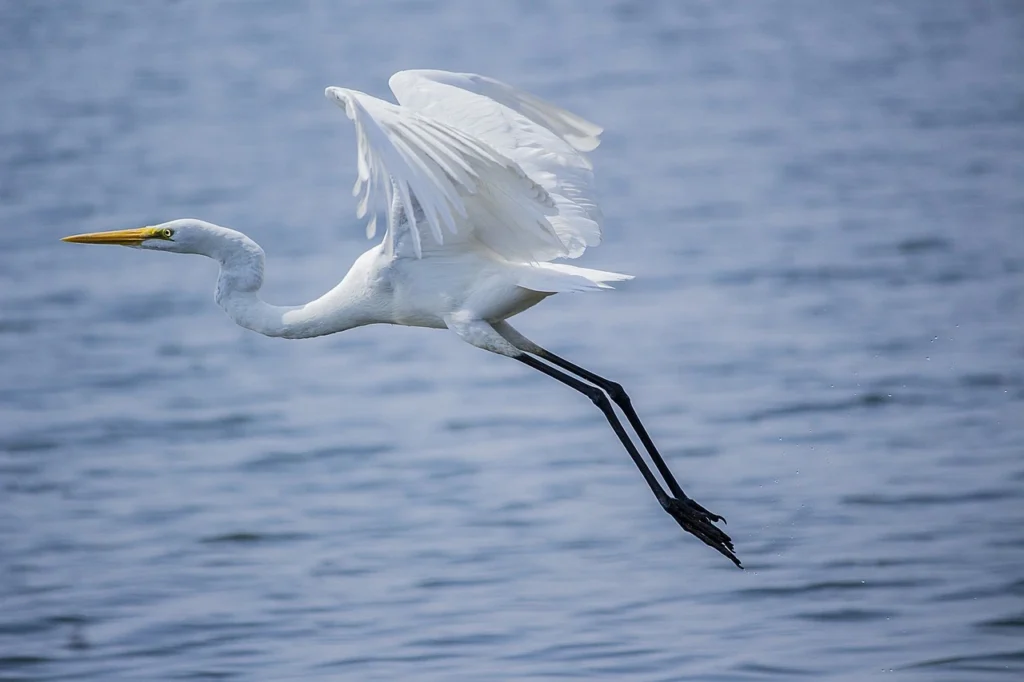
Great Egret (Ardea alba)

The Great Egret is a large, all-white heron with a long neck and legs. It has a yellow bill and black legs and feet. During the breeding season, it develops long, delicate plumes on its back.

Great Egrets are found in a variety of wetland habitats, including marshes, swamps, riverbanks, lakeshores, and coastal areas. They prefer shallow waters where they can easily hunt for food.

Diet

Their diet consists mainly of fish, but they also eat amphibians, reptiles, small mammals, and invertebrates. They hunt by standing still or slowly stalking their prey before striking quickly with their sharp bill.

Behavior

Great Egrets are solitary hunters but often nest in large colonies with other wading birds. They are known for their graceful movements and can be seen wading slowly through the water or standing motionless waiting for prey.

They build large, stick nests in trees or shrubs, usually in colonies. Both parents share the duties of nest building, incubating the eggs, and feeding the chicks.

5. Snowy Egret (Egretta thula)
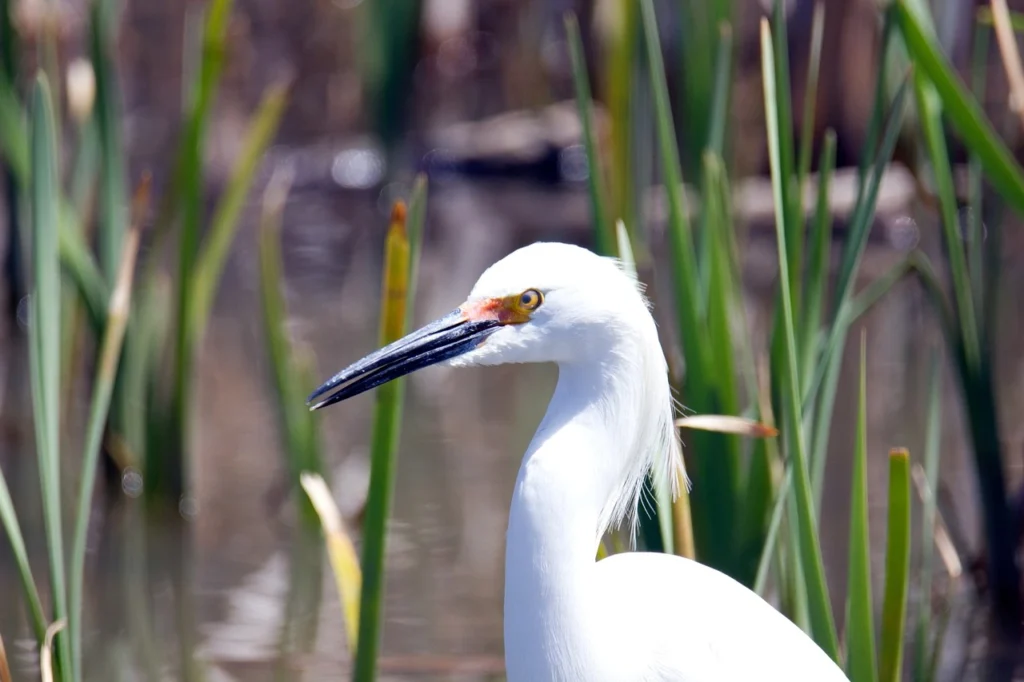
Snowy Egret (Egretta thula)

The Snowy Egret is a small, elegant heron with all-white plumage, a black bill, and black legs with bright yellow feet. During the breeding season, it displays long, wispy plumes on its head, neck, and back.

Snowy Egrets are found in a wide range of wetland habitats, including marshes, swamps, tidal flats, and mangroves. They prefer shallow waters where they can hunt for food.

Diet

Their diet includes small fish, crustaceans, insects, and amphibians. Snowy Egrets are active foragers, often seen running, hopping, and using their feet to stir up prey in the water.

Behavior

These egrets are known for their lively and animated hunting techniques. They often hunt in groups and can be seen using a variety of methods to catch their prey, including using their bright yellow feet to flush out fish.

Snowy Egrets nest in colonies, often with other wading birds. They build their nests in trees or shrubs, with both parents involved in nest building, incubation, and feeding the chicks.

6. Wood Stork (Mycteria Americana)
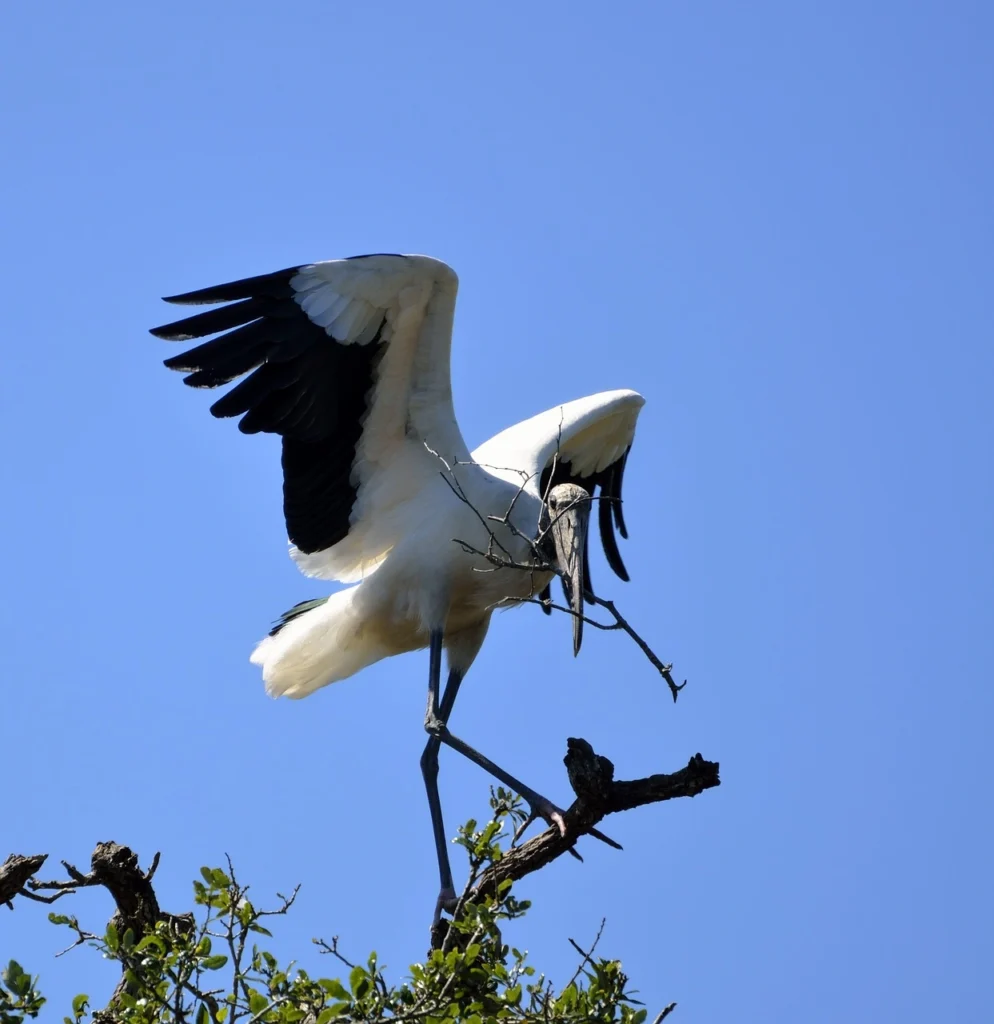
Wood Stork (Mycteria Americana)

The Wood Stork is a large wading bird with a distinctive appearance. It has a long, decurved bill, white plumage with black flight feathers, and bald, scaly-looking heads. Standing about 3 feet tall with a wingspan of 5.5 feet, Wood Storks are impressive in both size and appearance. These birds inhabit freshwater and brackish wetlands, including swamps, marshes, and mangroves. 

Diet:

Their diet primarily consists of fish, but they also eat amphibians, crustaceans, and insects. They forage by wading in shallow water, using their bills to feel for prey.

Behavior:

Wood Storks are social birds that often feed and nest in colonies. They are known for their method of feeding, which involves standing still with their bills open in the water and snapping them shut when they feel a fish or other prey.

Nesting typically occurs in large colonies in trees over water. Both parents share in building the nest, incubating the eggs, and feeding the young.

7. Whooping Crane (Grus Americana)
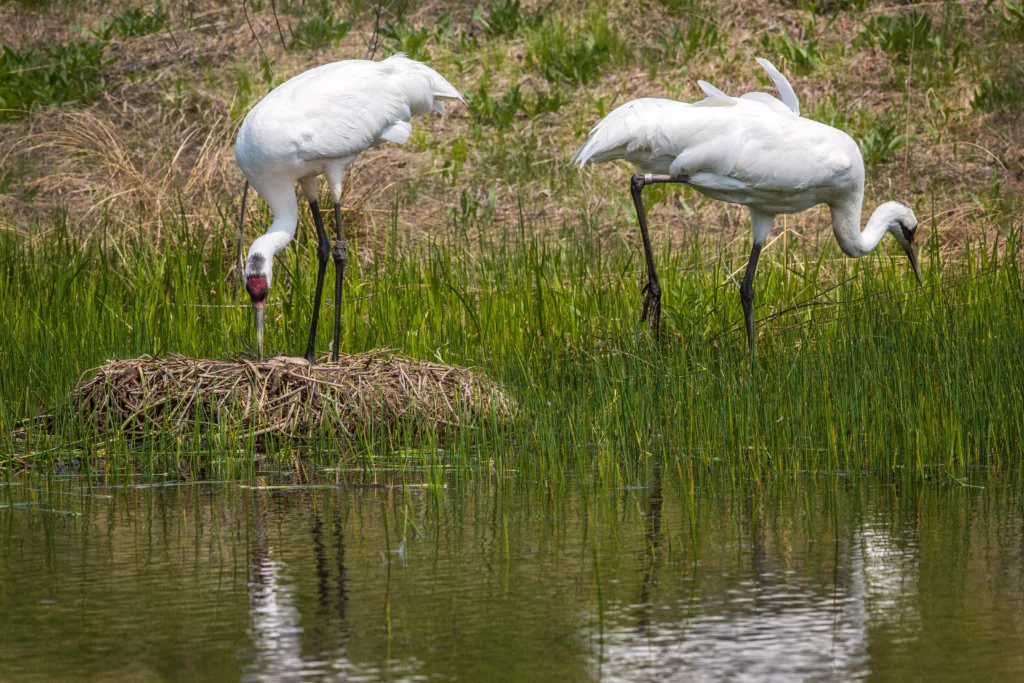
Whooping Crane (Grus Americana)

The Whooping Crane is one of the tallest birds in North America, standing about 5 feet tall with a wingspan of up to 7.5 feet. It is notable for its striking white plumage, black wingtips, and red crown. Once on the brink of extinction, intensive conservation efforts have helped increase their population. They are still endangered, with ongoing efforts focused on habitat protection, captive breeding, and reintroduction programs.

Diet: 

Whooping Cranes primarily feed on small fish, amphibians, insects, and crustaceans, supplemented by berries and plants. They forage in shallow waters and fields.

Behavior:

These cranes are known for their loud, trumpeting calls and elaborate courtship dances, which include leaping, wing flapping, and bowing. They migrate long distances between their breeding grounds in Canada and wintering areas in Texas.

Whooping Cranes build their nests in wetlands, usually on mounds surrounded by water. Both parents are involved in nest building, incubation, and chick-rearing.

8.Sandhill Crane (Grus canadensis)
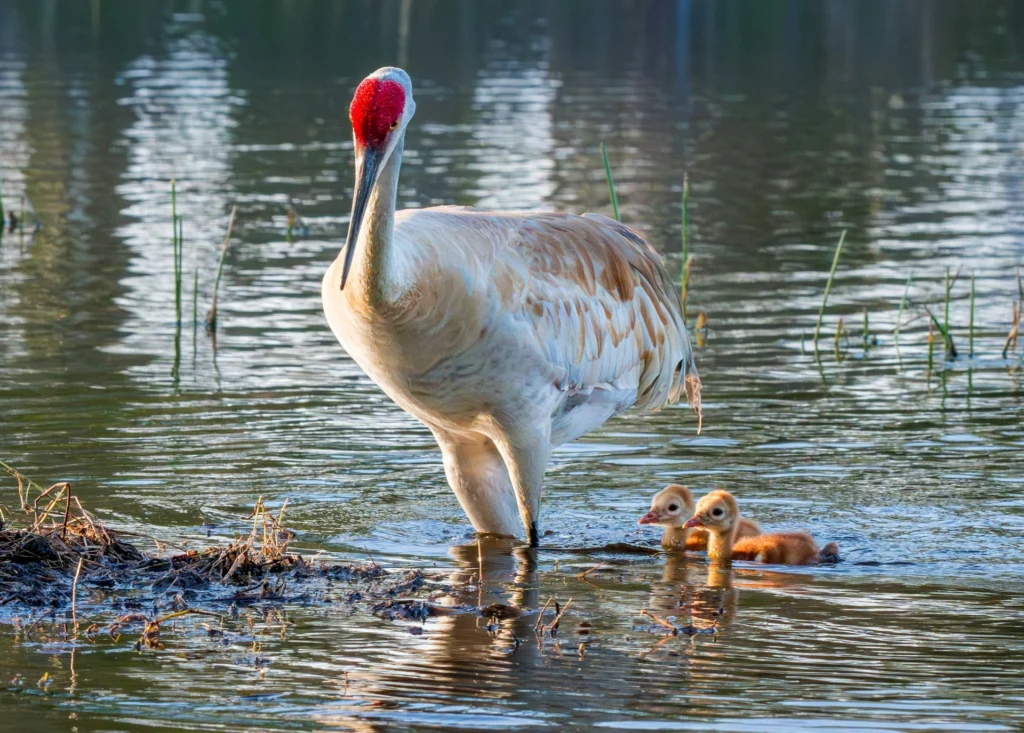
Sandhill Crane (Grus canadensis)

Sandhill Cranes are large, elegant birds with gray bodies, long legs, and necks, and a red forehead. They stand about 4 feet tall with a wingspan of 6-7 feet. While some populations are stable, others are threatened by habitat loss and changes in land use. Conservation efforts focus on protecting wetlands and migratory stopover sites.

Diet: 

Their diet includes grains, seeds, insects, small mammals, amphibians, and reptiles. They forage in wetlands, grasslands, and agricultural fields.

Behavior:

Sandhill Cranes are known for their distinctive trumpeting calls and synchronized dancing rituals, which play a role in pair bonding and communication. They are highly social and often seen in large flocks during migration.

These cranes build nests in wetlands, using plant materials. Both parents share in incubation and chick-rearing duties. 

9.Glossy Ibis (Plegadis falcinellus)
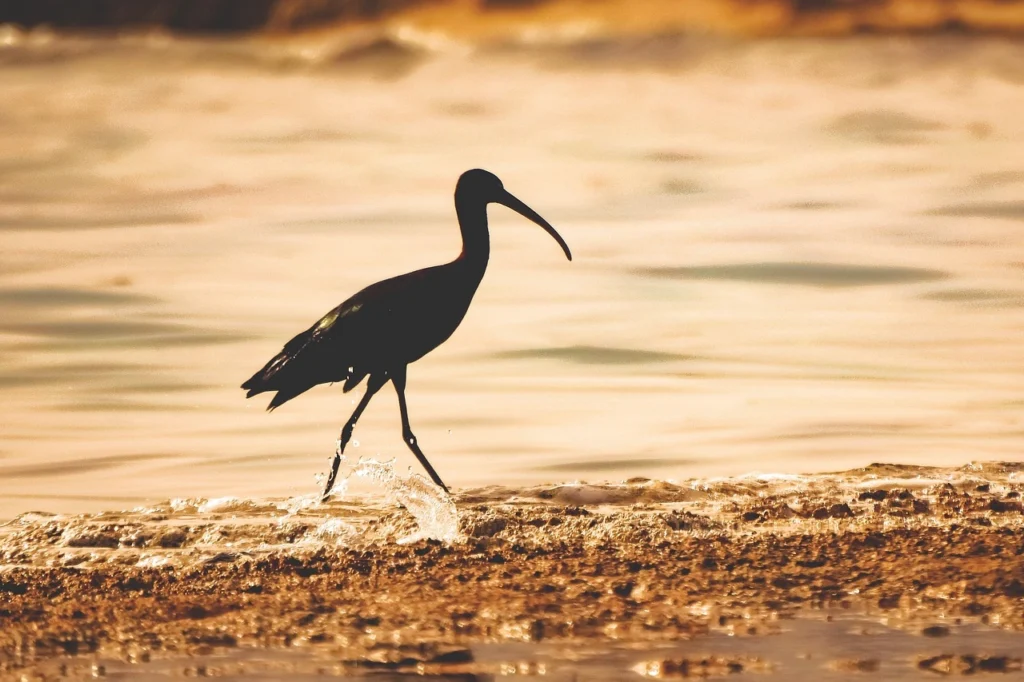
Glossy Ibis (Plegadis falcinellus)

The Glossy Ibis is a medium-sized wading bird with a distinctive long, curved bill and glossy, iridescent plumage that appears dark brown with green and purple highlights. Although currently listed as Least Concern, Glossy Ibises face threats from habitat loss and degradation. Conservation efforts include protecting wetland habitats and monitoring population trends.

Diet:

They feed on insects, crustaceans, small fish, and other invertebrates, foraging in shallow waters and mudflats.

Behavior: 

Glossy Ibises are social birds, often seen in flocks. They use their long bills to probe the mud for food, and their foraging style is methodical and deliberate.

They nest in colonies, often with other wading birds, building platform nests from sticks and reeds in trees or shrubs near water. Both parents care for the eggs and chicks.

10.White Ibis (Eudocimus albus)
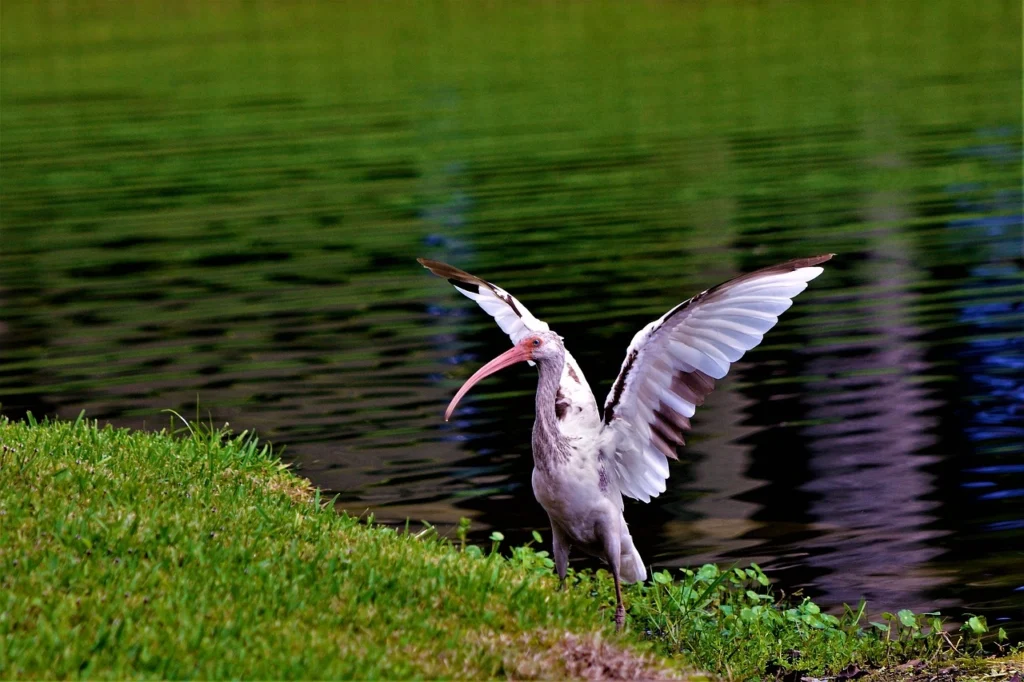
White Ibis (Eudocimus albus)

The White Ibis is easily recognized by its bright white plumage, pink face, and long, curved pink bill. They are medium-sized birds, with a wingspan of about 3 feet. They nest in colonies, usually in trees or shrubs over water. Both parents participate in building the nest, incubating the eggs, and feeding the chicks.

While currently not considered threatened, White Ibises are vulnerable to habitat loss and environmental changes. Efforts to conserve wetlands and manage water levels are crucial for their continued survival.

Diet:

Their diet consists mainly of small fish, crustaceans, and insects, which they catch by probing the mud and shallow waters with their bills.

Behavior: 

White Ibises are highly social, often seen foraging in large flocks. They are known for their graceful flight and the distinctive, repetitive calls they use to communicate.

11.Roseate Spoonbill (Platalea ajaja)
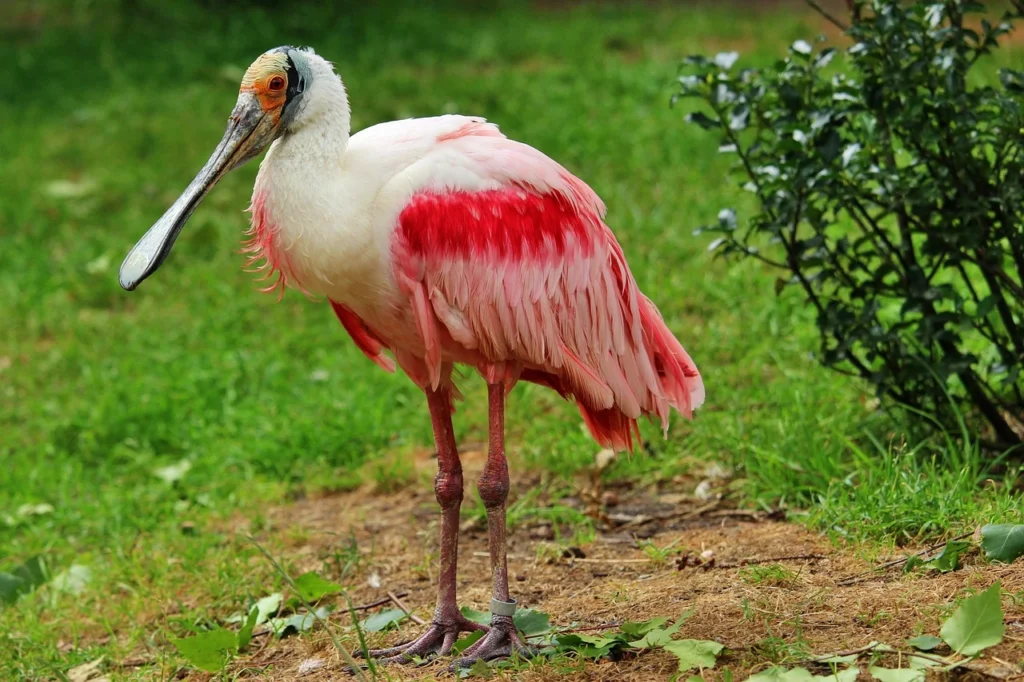
Roseate Spoonbill (Platalea ajaja)

The Roseate Spoonbill is a striking bird known for its pink plumage and unique spoon-shaped bill. They are medium-sized, with a wingspan of about 4.5 feet.They nest in colonies, typically in mangroves, trees, or shrubs over water. Both parents build the nest, incubate the eggs, and feed the young.

Once hunted nearly to extinction for their feathers, Roseate Spoonbills have made a comeback but are still vulnerable to habitat loss and environmental pollution. Conservation efforts focus on protecting their nesting and feeding habitats.

Diet:

Their diet includes small fish, crustaceans, and aquatic insects. They use their spoon-shaped bills to sweep through the water and capture prey by touch.

Behavior: 

Roseate Spoonbills are social birds, often seen feeding and nesting in groups. They forage by wading through shallow waters, sweeping their bills side-to-side to detect food.

So, these were the long-legged birds that play vital roles in their ecosystems, from controlling insect populations to maintaining the health of wetland environments. Protecting their habitats ensures their continued presence and the balance of the ecosystems they inhabit.
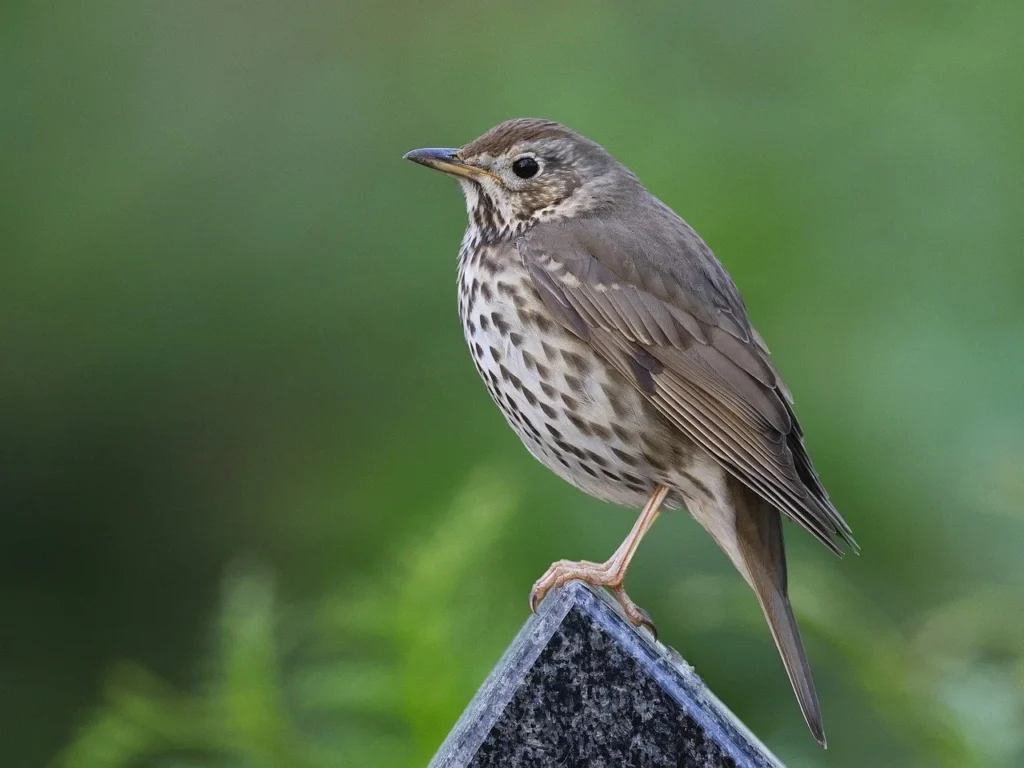
6 Birds That Look Like a Brown Thrasher and Their Comparison

0

Hey there, bird enthusiasts! Do you love watching the Brown Thrasher? They’re fascinating, aren’t they? But did you know other birds out there look a lot like them? Let’s dive into the world of bird watching and discover these amazing look-alikes together. 

We’ll explore their unique features and learn how to tell them apart from our beloved Brown Thrasher. Ready for some fun and feathered friends? Let’s get started!

Brown Thrasher: A Brief Overview! 

The Brown Thrasher is a charismatic bird that’s sure to catch your eye! With its striking reddish-brown feathers and bright yellow eyes, this bird is a true standout. They’re medium-sized, making them larger than many of their songbird cousins. 

Brown Thrashers are known for their skulking behavior, often hiding in dense underbrush, but don’t let their shyness fool you—they have a bold personality! They’re incredible mimics, capable of singing over a thousand different song variations, which makes them one of the most vocal birds in North America. 

These birds are often spotted scratching through leaf litter in search of insects and seeds. So, the next time you’re exploring a wooded area, keep an eye out for a flash of reddish-brown and a medley of songs—you might just be lucky enough to spot a Brown Thrasher!

6 Birds That Look Like a Brown  Thrasher 

Here are some popular birds that resemble a Brown Thrasher, along with a comparison of their key characteristics –  

1. Wood Thrush 

Wood Thrush 

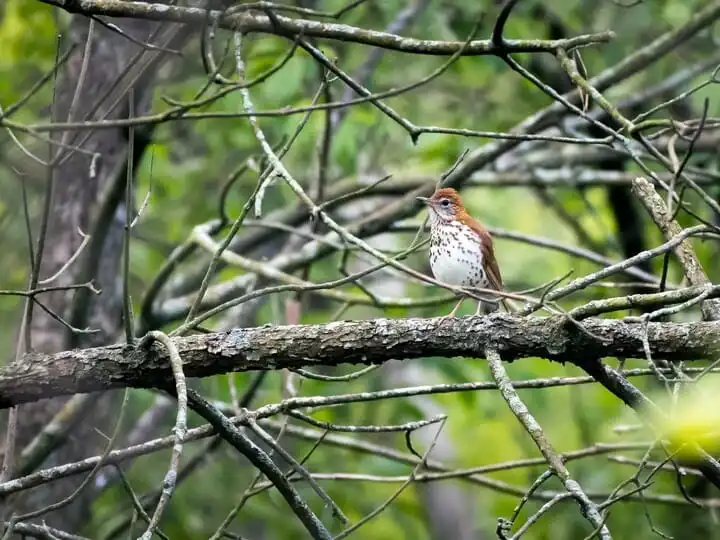
The charming Wood Thrush, also known as the Song Thrush, Swamp Angel, and Wood Robin. Scientifically named Hylocichla mustelina, this bird’s name translates to “weasel-colored woodland thrush,” highlighting its rich red-brown head, back, wings, and tail. 

Wood Thrushes are omnivores, feasting on soil invertebrates and larvae most of the year, and switching to fruits in late summer, fall, and winter. They occasionally snack on arboreal insects, snails, and even small salamanders. Spotting one is a treat for any bird watcher, so keep an eye out!

Also read: Birds With Long Legs With Pictures

Appearance:

-Size: Slightly smaller than Brown Thrasher (7-8 inches)

-Color: Rusty brown upperparts with white underparts and bold black spots on the chest

-Distinctive Features: Large, dark eyes

-Beak: Short and straight

Brown Thrasher vs Wood Thrush:

FeatureBrown Thrasher (Toxostoma rufum)Wood Thrush (Hylocichla mustelina)
Size & ShapeLarger (about 11.5 inches), long tail, curved billMedium-sized (around 8 inches), compact, short tail
ColourationRich rufous-brown above, bold black streaks belowWarm reddish-brown above, dark spots on white belly
BillLong, slightly curved (good for foraging in leaf litter)Shorter, straight, and more thrush-like
EyesBright yellowLarge, dark and soulful
VoiceLoud, varied mimicry in double phrasesFlute-like, ethereal and haunting song
HabitatBrushy fields, forest edges, thicketsDeciduous forests with dense canopy
RangeEastern and central U.S. (migratory in the north)Eastern U.S. and Canada (migrates to Central America)
BehaviourSkulks low, often flips leaves when foragingForages on the ground but roosts and sings in trees
NestingLow shrubs, dense thicketsLow tree branches, usually well-concealed
Which green bird in California mimics human speech but is often mistaken for a wild parakeet?

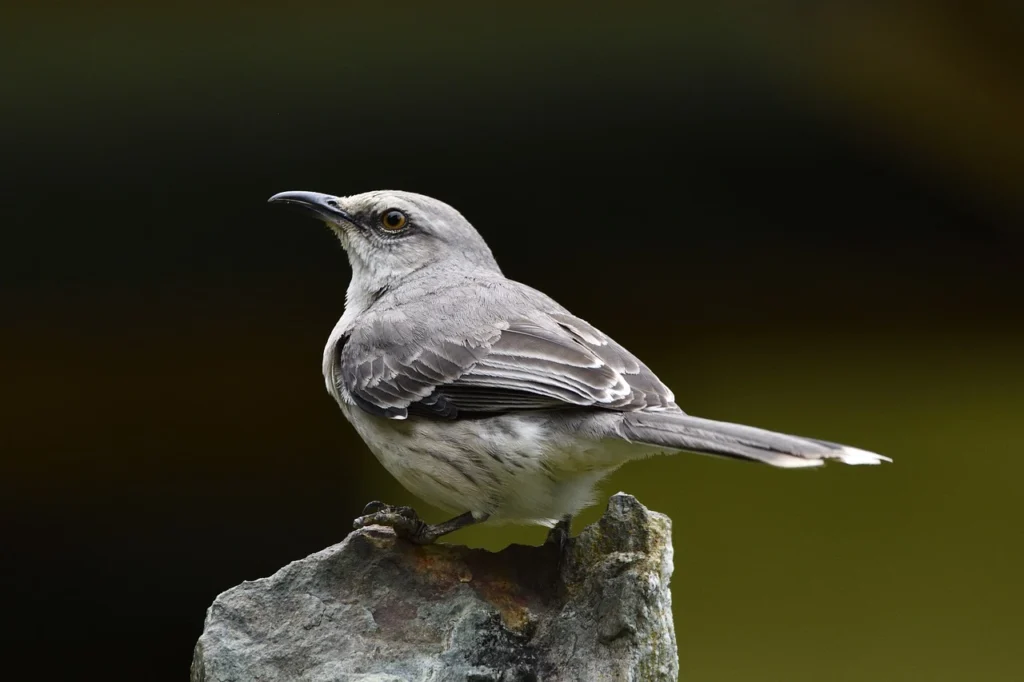
2. Northern Mockingbird(Mimus polyglottos)

Northern Mockingbird(Mimus polyglottos)

Let’s get to know the Northern Mockingbird, a true maestro of the avian world. Famous for their incredible singing ability, these birds belt out a series of phrases repeated two to six times, often mimicking other birds, frogs, dogs, and even car horns!

While they’re common in backyards, they’re not big fans of feeders. Want to attract them? Keep your lawn open and plant fruiting trees or bushes like mulberries, hawthorns, and blackberry brambles. Their lively presence and melodious songs make them a delightful addition to any yard!

Appearance:

-Size: Similar to Brown Thrasher (10 inches)

– Color: Grayish upperparts with white underparts

– Distinctive Features: White patches on wings and outer tail feathers

– Beak: Straight and thin

– Behavior: Known for mimicking other birds’ songs

Comparison:

– The Northern Mockingbird is grayer compared to the Brown Thrasher’s reddish-brown coloration.

– Both have similar body shapes and sizes.

– The Brown Thrasher has a slightly curved beak, unlike the straight beak of the Northern Mockingbird.

Also read: Birds With Long Legs With Pictures

3. Brown Thrush(Toxostoma rufum)

Brown Thrush(Toxostoma rufum)

Brown Thrasher, is a bird with a lot of character. These foxy brown birds feature heavy dark streaks on their whitish underparts and sport two black-and-white wing bars on their gray-brown wings. With their bright yellow eyes, they’re quite the sight! You’ll often find Brown Thrashers skulking in shrubby tangles or foraging on the ground. Known for their aggressive behavior, they fiercely defend their nests. Interestingly, their name comes from the thrashing sound they make while digging through ground debris. Keep an eye out for these vibrant and lively birds!

Appearance:

– Size: 9-12 inches

– Color: Reddish-brown upperparts with streaked underparts

– Distinctive Features: Long tail and bright yellow eyes

– Beak: Long and slightly curved

Comparison:

– Very similar to the Brown Thrasher in appearance, often confused due to their coloration and size.

– The Brown Thrush has a more prominent streaking pattern on its underparts.

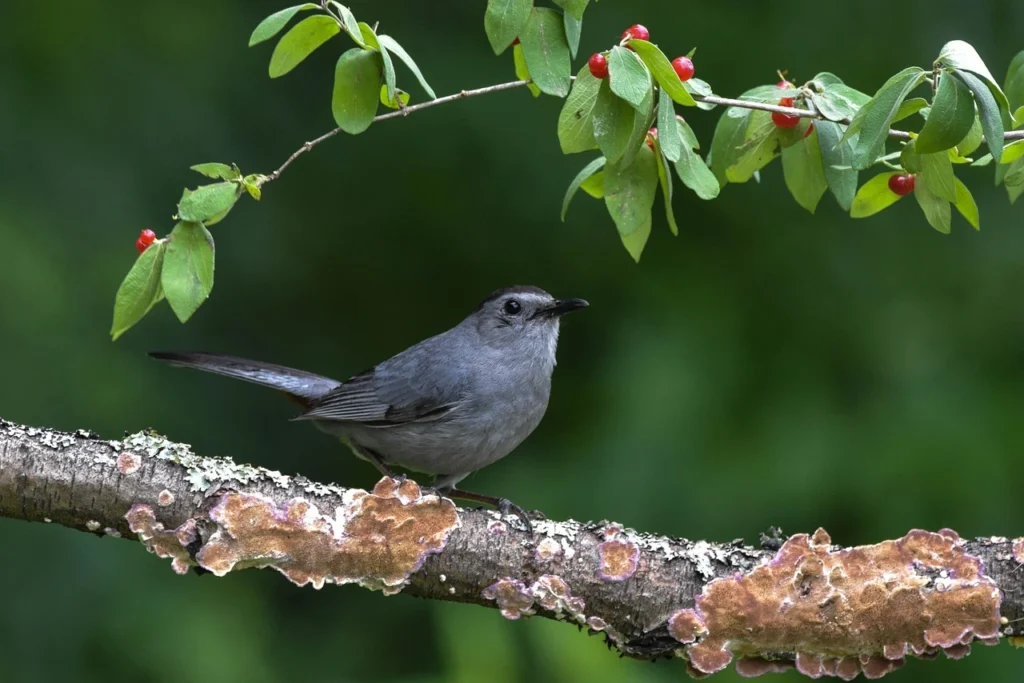
4. Gray Catbird(Dumetella carolinensis)

Gray Catbird(Dumetella carolinensis)

Gray Catbird, is a medium-sized perching bird found in North and Central America. This cool bird is the sole member of the “catbird” genus Dumetella. With an impressive global breeding population of 29 million, Gray Catbirds are thriving. 

These birds are chatty, using vocalizations, body posture, and feather displays to communicate. Their signature call is a cat-like meow, but they’re also skilled mimics, imitating other birds and even frogs. 

Despite their abundance, spotting a Gray Catbird is always a treat. Keep your ears open for their unique calls!

Appearance:

– Size: Slightly smaller (8-9 inches)

– Color: Slate gray overall with a darker cap and rufous undertail coverts

– Distinctive Features: Long tail and black cap

– Beak: Straight and thin

Comparison:

– The Gray Catbird is uniformly gray, lacking the brown coloration of the Brown Thrasher.

– Both have similar body shapes but differ significantly in color.

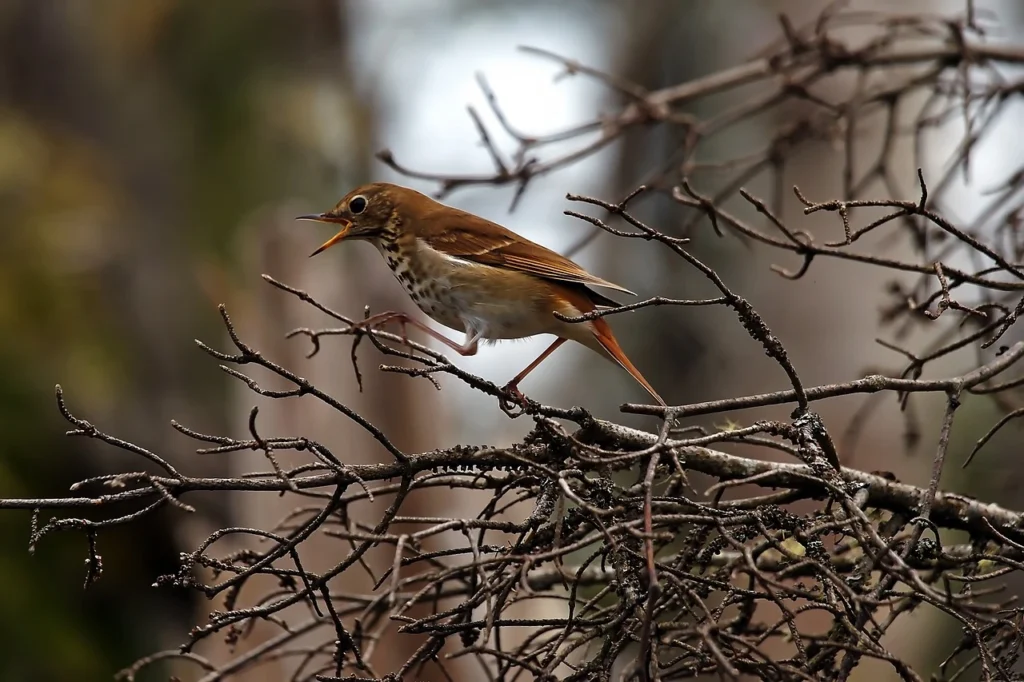
5. Hermit Thrush (Catharus guttatus)

Hermit Thrush (Catharus guttatus)

Hermit Thrush is a medium-sized North American bird with a knack for staying hidden. Unlike its Catharus cousins, it’s more closely related to the Mexican russet nightingale thrush. True to its name, the Hermit Thrush loves the dense forest understory and thickets, making it a bit elusive. 

You’ll often hear its sweet, melodic song before catching a glimpse of this shy bird. Its beautiful, flute-like notes are a real treat for any bird watcher. So, next time you’re in the woods, listen closely—you might just hear the enchanting call of the Hermit Thrush!

Appearance:

– Size: Smaller (6-7 inches)

– Color: Brown upperparts with a reddish tail, pale underparts with dark spots on the chest

– Distinctive Features: Ring around the eye

– Beak: Short and straight

Comparison:

– The Hermit Thrush is smaller and has a more spotted breast compared to the Brown Thrasher.

– The Hermit Thrush has a more uniform brown upperparts and lacks the reddish-brown coloration of the Brown Thrasher.

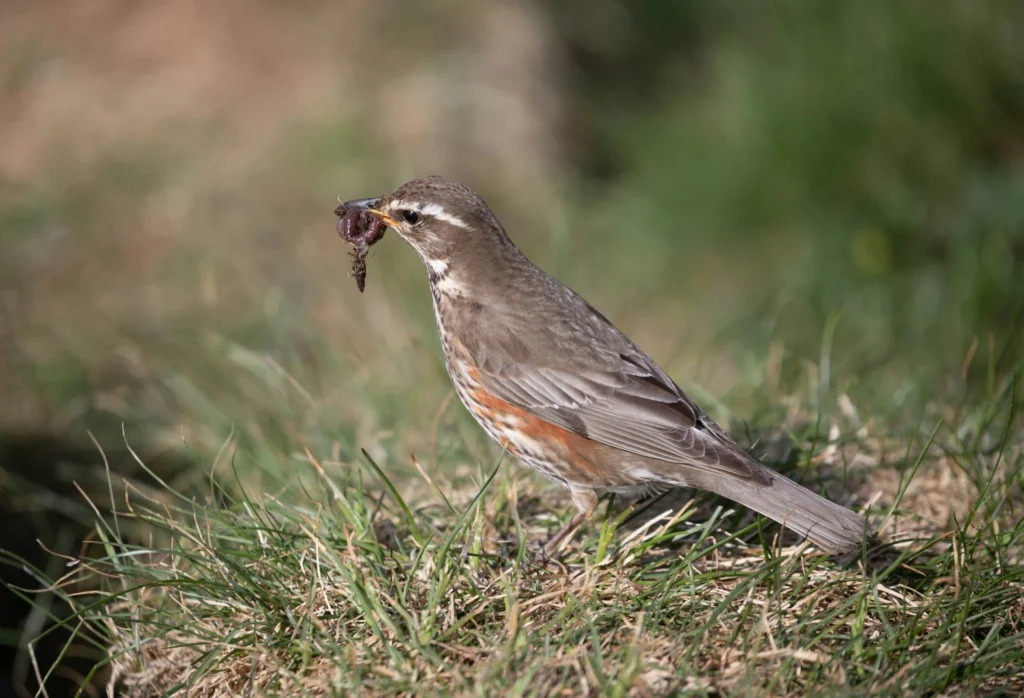
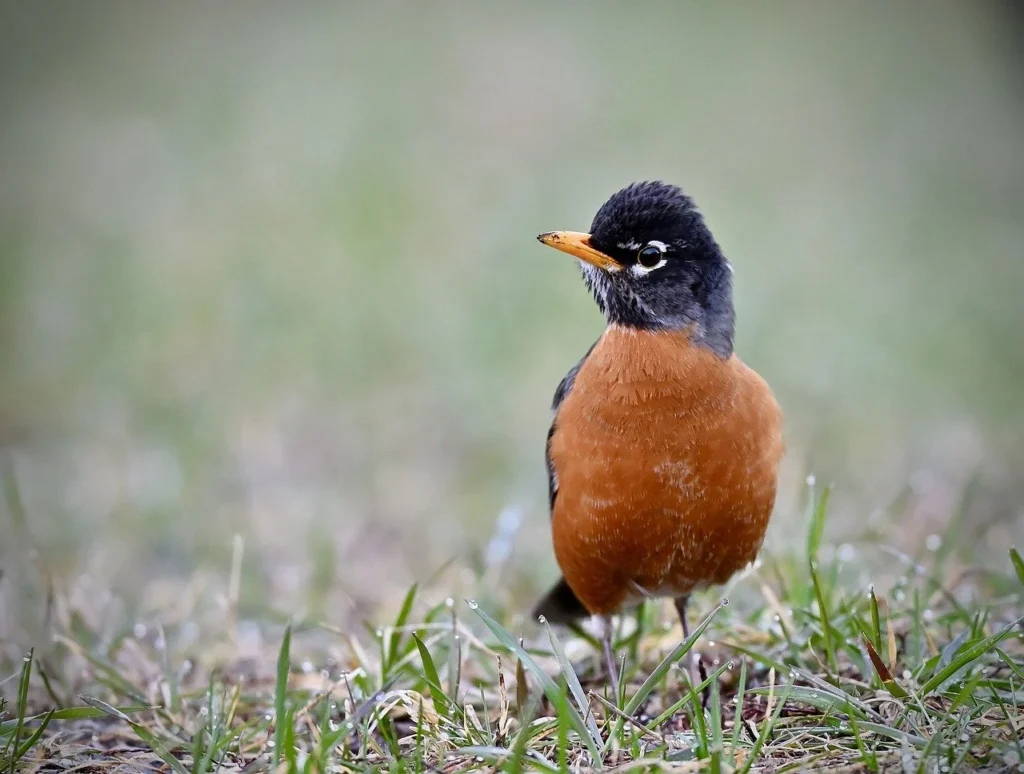
6. American Robin

American Robin

The American Robin is a familiar and much-loved migratory bird from the thrush family. Early settlers named it for its resemblance to the European Robin. This bird stands out with its reddish-orange breast and upright posture. 

Though not closely related to its European namesake, the American Robin is part of the same family as bluebirds and solitaires. You’ll often see these birds hopping around lawns, hunting for worms and insects. Their cheerful song is a sure sign of spring. So, keep an eye out for these delightful and vibrant birds in your backyard!

Appearance:

-Size: Medium-sized, about 10 inches in length.

Coloration:

-Breast: Reddish-orange, which is its most distinctive feature.

-Upper Parts: Gray-brown.

-Throat: White with dark streaks.

-Head: Darker, with a white eye ring.

-Tail: Dark with white corners.

-Eyes: Dark brown.

-Beak: Yellowish with a darker tip.

Comparison:

-Slightly smaller, around 10 inches.

-More likely to be seen in open lawns, often hopping around and pulling worms from the ground. Social and often found in flocks, especially during migration.

-Has a cheerful, melodious song consisting of a series of clear whistles.

Wrap It Up!

Bird watching is a delightful activity, especially when you encounter birds that closely resemble the Brown Thrasher. From the mimicking Northern Mockingbird to the elusive Hermit Thrush, each bird offers unique traits and behaviors that make them fascinating to observe. 

By understanding the differences in size, coloration, and habits, you can better appreciate the diversity of these avian wonders. So, next time you’re out in nature, keep an eye out for these look-alikes and enjoy the thrill of identifying each one. Happy bird watching!


Discover 12 Types of Blue Birds in California

Bluebirds are like flying jewels, captivating kids and adults alike with their vibrant colors. In California, the skies and trees come alive with these enchanting blue friends. Blue Birds in California add a touch of magic to the natural landscape, making every outdoor adventure a delightful experience. With its remarkable biodiversity, from arid deserts to snow-capped sierras, California offers a mosaic of habitats for over 600 bird species. 

Among the grebes, hawks, finches, and orioles, numerous blue-feathered jewels shine brightly. This article explores 12 dazzling types of bluebirds in California, showcasing their unique ecologies, behaviors, and vibrant plum.

From backyard favorites to elusive high-altitude specialists, discover the incredible blue birds that contribute to California’s rich avian heritage. 

Let’s find these beautiful blue friends together! Here are the 12 types of bluebirds in California

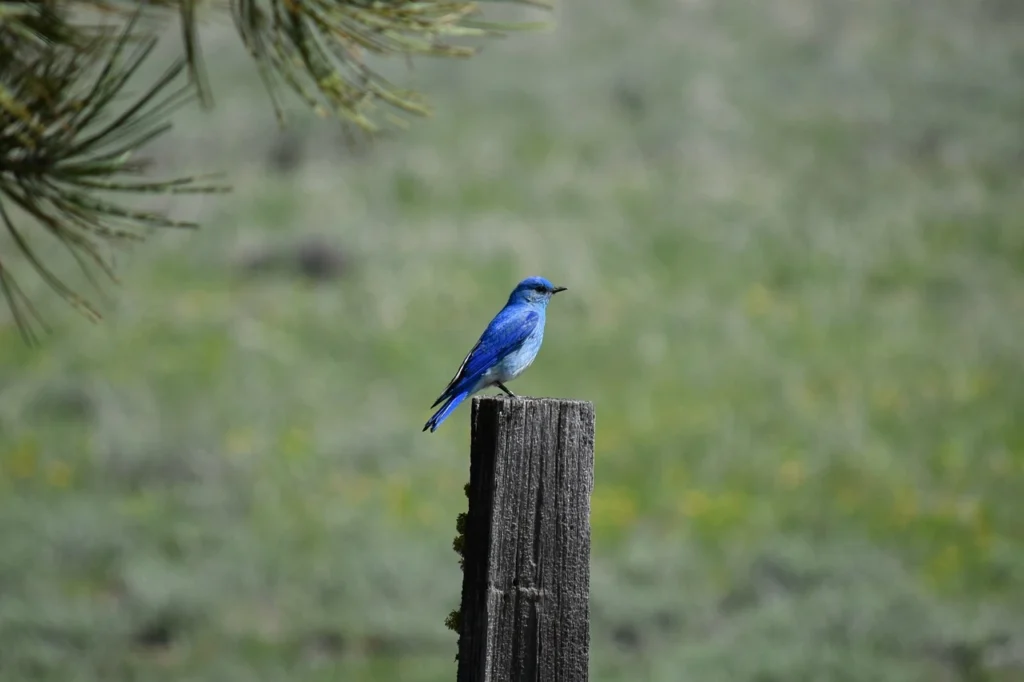
1. Mountain Bluebird 

Mountain Bluebird 

The Mountain Bluebird, a charming small thrush, graces the mountainous regions of western North America. These lovely birds are easily recognizable by their beautiful blue plumage. 

Male Mountain Bluebirds are stunning turquoise-blue on top, with lighter blue underneath and a white lower belly. Females are more understated, with dull blue wings and tails, and grey on their breasts, crowns, and backs. In the fall, females show a touch of red-orange on their throats and breasts, adding to their charm.

These birds are not just pretty to look at; they have a delightful song too. The males sing a high, warbled “chur chur,” while their call is a simple, thin “few.” The Mountain Bluebird, honored as the state bird of Idaho and Nevada, is an omnivore, feeding on insects like spiders, grasshoppers, and flies, as well as small fruits.

Next time you’re exploring the mountains, keep an eye and an ear out for these delightful birds. Their bright blue feathers and sweet songs add a splash of color and a touch of joy to the rugged landscape.

Also read: Birds With Long Legs With Pictures

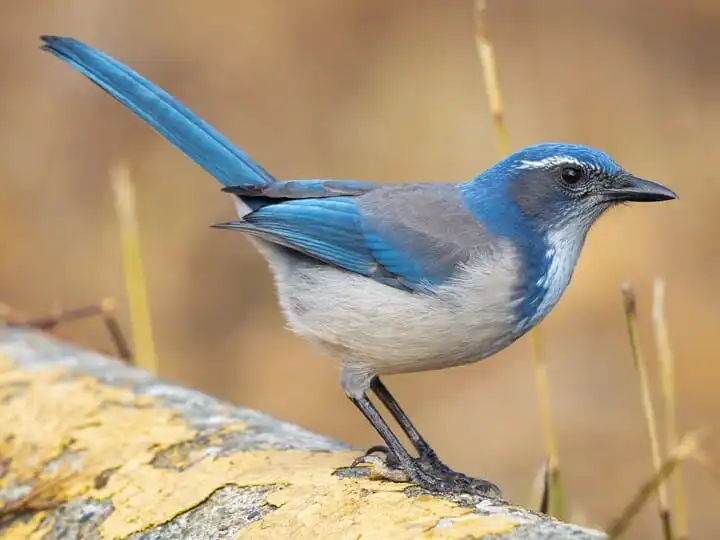
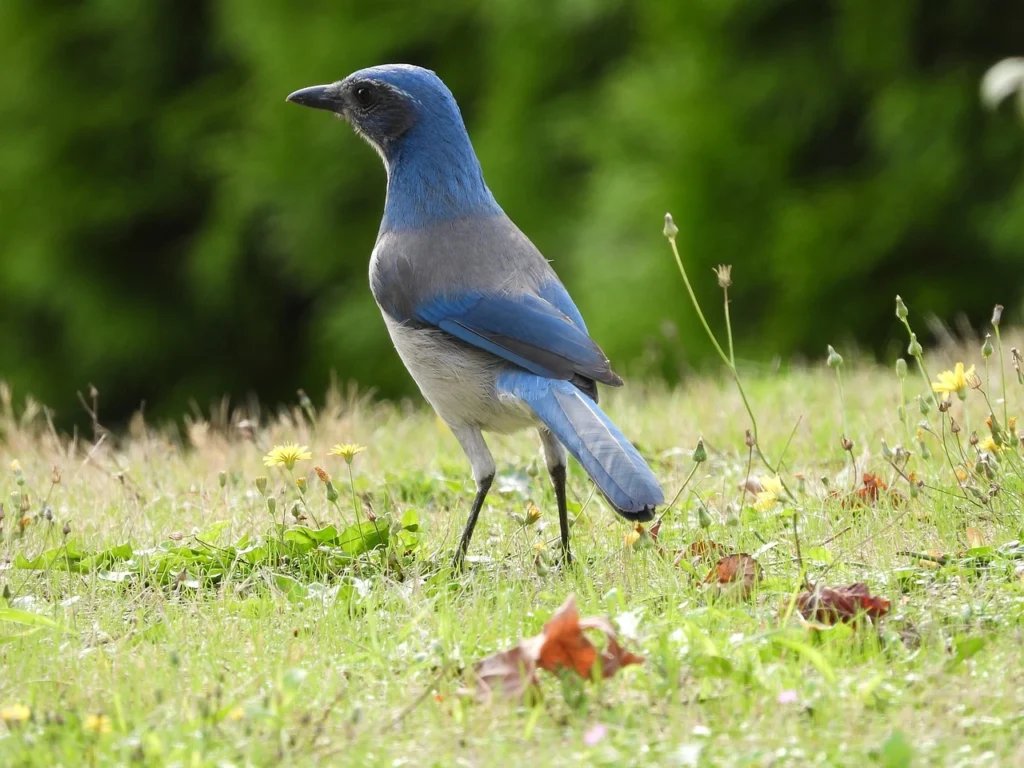
2. California Scrub-jay

California Scrub-jay

The California Scrub-Jay (Aphelocoma californica) is a striking bird native to western North America, found from southern British Columbia through California to western Nevada. This medium-sized bird, about 11–12 inches long with a 15-inch wingspan, boasts a blue head, wings, and tail, a gray-brown back, and grayish underparts. 

Its throat is whitish with a blue necklace, and it has distinctive white eyebrows. Unlike migratory birds, the California scrub jay stays in one place year-round, often thriving in urban areas where it becomes quite friendly and visits bird feeders. These birds were once grouped with Woodhouse’s scrub jay, collectively known as the Western Scrub-Jay, and were also lumped with the Island and Florida scrub jays under the name “scrub jay.” 

Known for their harsh, scratchy calls, these jays are highly adaptable, making themselves at home in both rural and urban environments. 

Despite often being mistaken for Blue Jays, California scrub jays are a distinct species, notable for their intelligence and bold behavior, adding vibrant life to the regions they inhabit.
Which green bird in California mimics human speech but is often mistaken for a wild parakeet?

3. Steller’s Jay 

Steller's Jay 

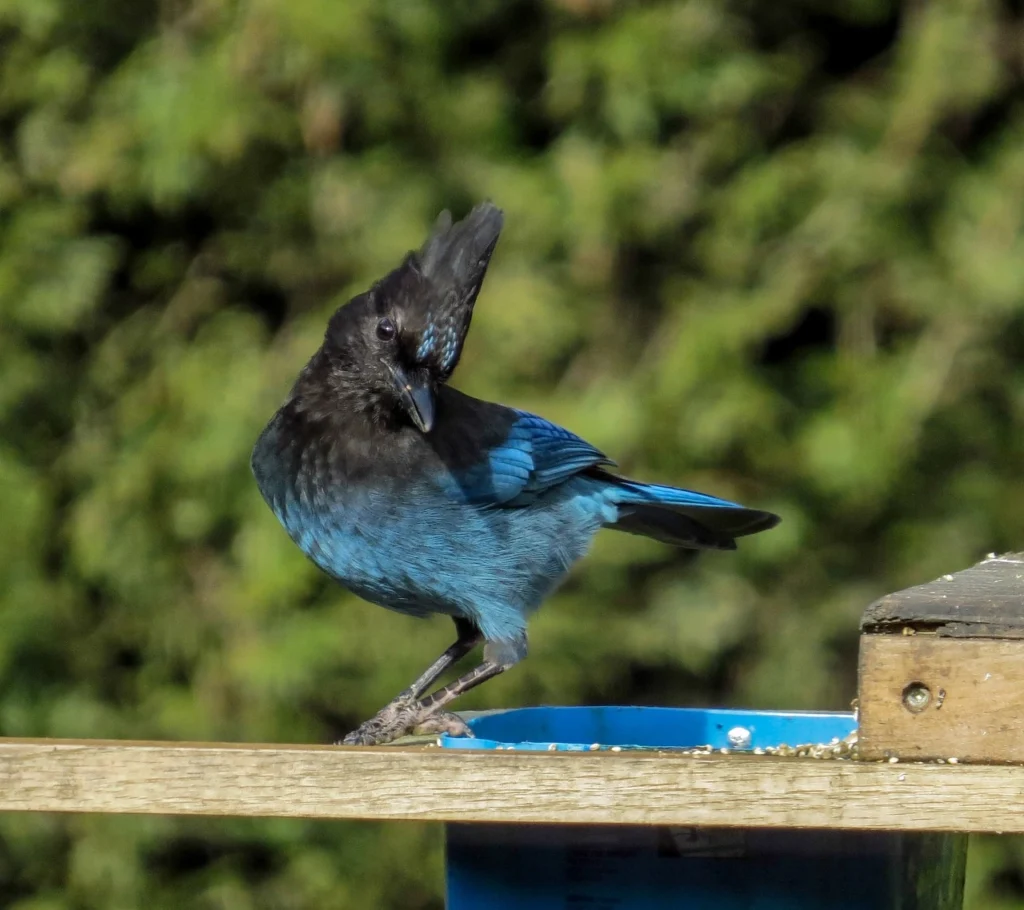
The Steller’s Jay is a striking bird native to western North America, often found in northern California and along the western coast. Known for its bold blue and black plumage, this medium-sized bird is easily recognizable. 

The Steller’s Jay has a tall, crest on its head, which it can raise or flatten, adding to its dramatic appearance. 

These jays prefer evergreen forests but are also common in campgrounds, parks, and backyards. They are very adaptable and are known to frequent bird feeders, making them a familiar sight for many Californians. 

Steller’s Jays are also famous for their noisy and varied calls, often heard before they are seen. They have a curious and intelligent nature, frequently mimicking the sounds of other birds and even human-made noises.

With their vibrant colors and lively personalities, Steller’s Jays are a delightful addition to California’s diverse bird population. 

Their adaptability and bold behavior make them one of the most captivating bluebirds you can encounter in the state.

4. Lazuli Bunting

Lazuli Bunting

Bill Bouton, CC BY-SA 2.0, via Wikimedia Commons

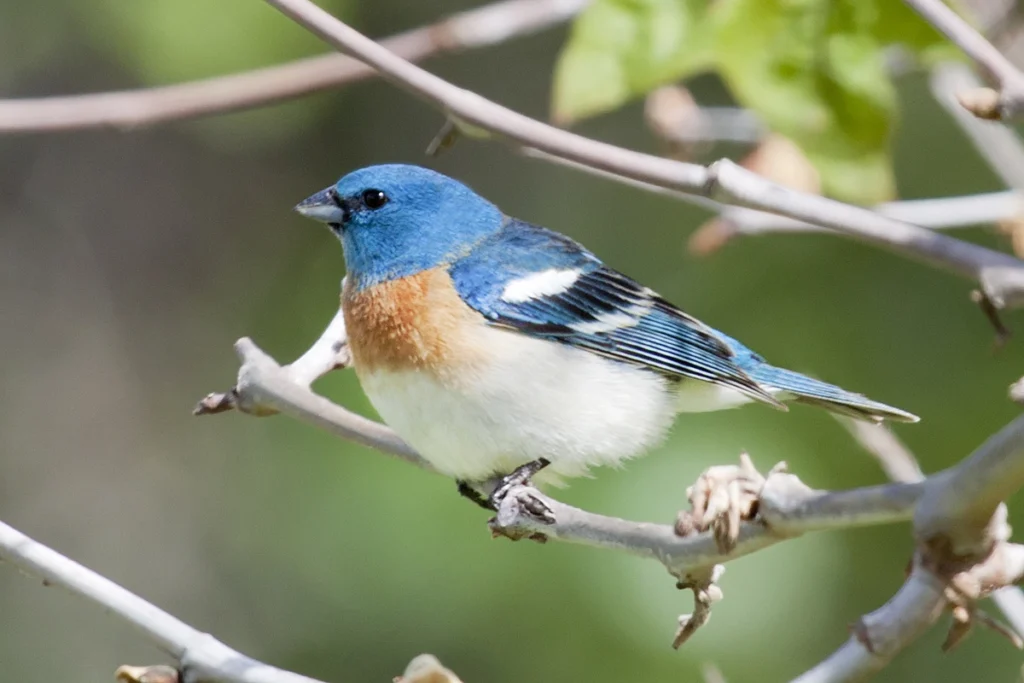
The Lazuli Bunting (Passerina amoena) is a dazzling North American songbird named after the vibrant lapis lazuli gemstone. Male Lazuli Buntings are easy to spot with their bright blue heads and backs, conspicuous white wing bars, and light rusty breasts paired with white bellies. 

These colors may remind you of the eastern and western bluebirds, but Lazuli Buntings are smaller, measuring about 5 to 5.9 inches long. They have distinctive wing bars and a short, conical bill that sets them apart.

Females, on the other hand, have a more subdued brown coloration, grayer on top and warmer underneath. 

They can be distinguished from female Indigo Buntings by their two thin, pale wing bars and subtle plumage differences. 

These lovely birds are a joy to watch, bringing a splash of color and a lively song to California’s landscapes.

Whether you’re in a wooded area, a shrubland, or even a well-planted backyard, keep an eye out for these little gems. 

The Lazuli Bunting adds a unique charm to California’s birdwatching experience with its stunning colors and cheerful presence.5. Belted Kingfisher 

5. Belted Kingfisher 

Belted Kingfisher

The Belted Kingfisher (Megaceryle alcyon) is a captivating bird found throughout North America, including California. This stocky, medium-sized bird measures between 11 and 14 inches in length, with a wingspan of 19 to 23 inches. 

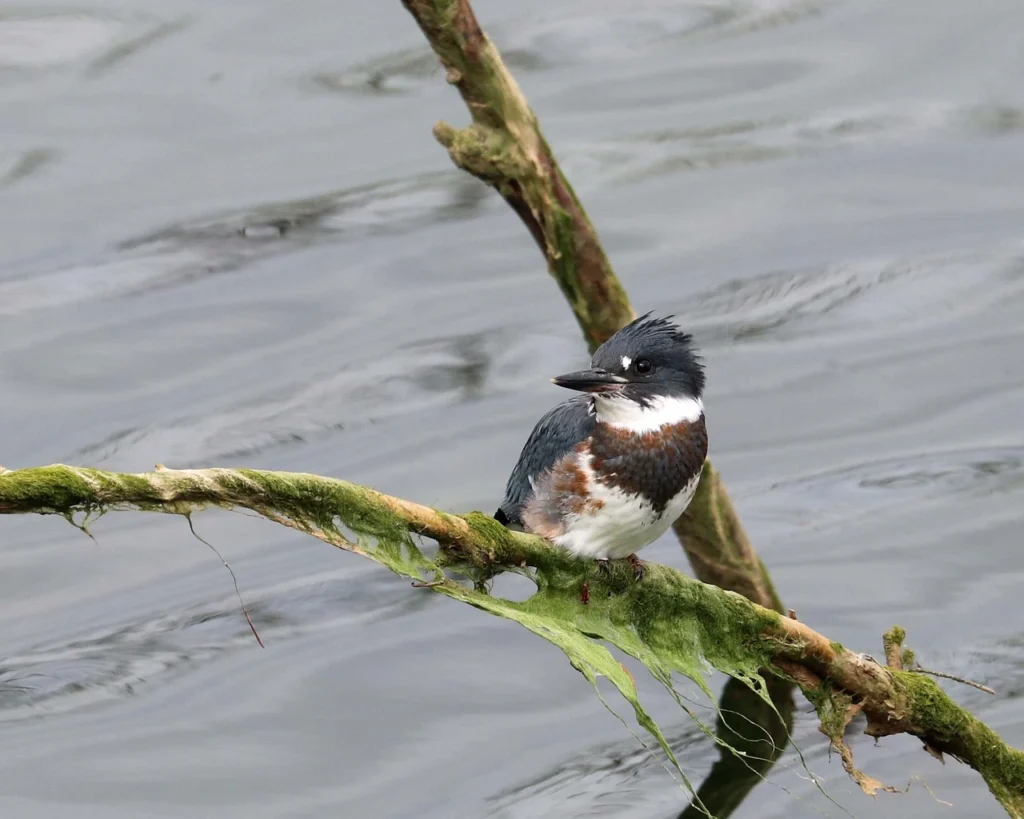
One of the kingfisher’s standout features is its large head with a shaggy crest and a long, heavy bill, black with a grey base.

Interestingly, the Belted Kingfisher shows reverse sexual dimorphism, meaning the females are more brightly colored than the males. 

Both sexes have a slate blue head, a large white collar, and a blue band across the breast. 

Their backs and wings are slate blue with black feather tips dotted with small white spots. The adult female also sports a rufous band across the upper belly that extends down the flanks, a unique trait distinguishing her from the male.

These birds are often seen near water bodies such as rivers, lakes, and coastal areas, where they dive to catch fish and other aquatic prey. 

Their loud, rattling calls are unmistakable and often heard before the bird is seen.

6. Western Kingbird 

Western Kingbird 

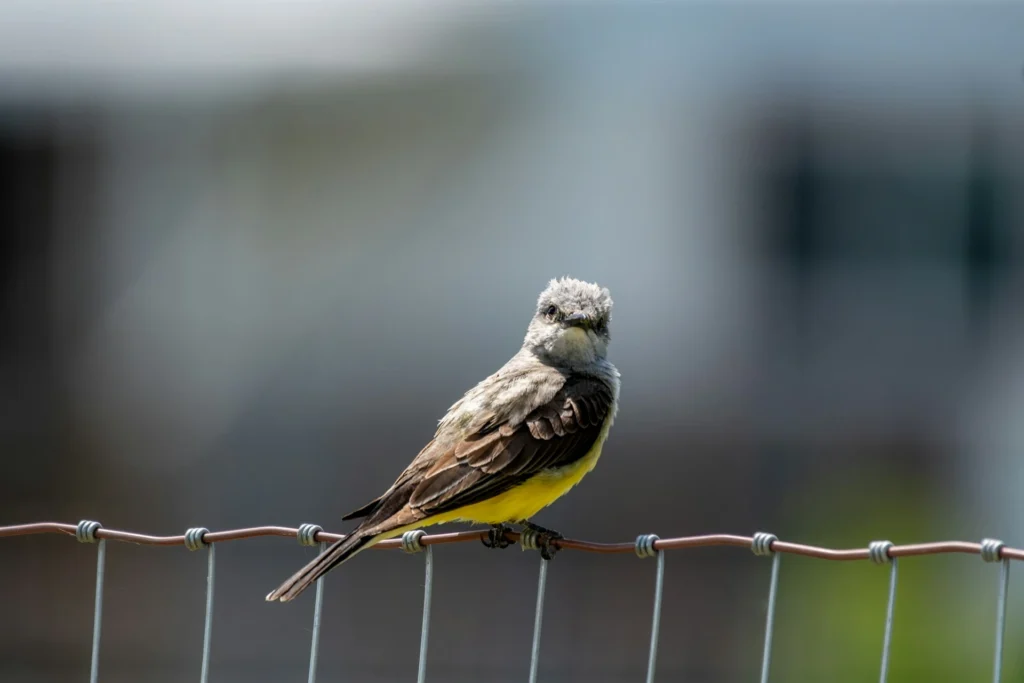
The Western Kingbird (Tyrannus verticalis) is a striking flycatcher commonly found throughout the western regions of North America, extending as far south as Mexico. This bird is known for its vibrant gray and yellow plumage, with adults displaying hidden crimson feathers during courtship or when confronting intruders.

Western Kingbirds are highly territorial and often mistaken for other kingbird species like 

Cassin’s Kingbird, Couch’s Kingbird, or the Tropical Kingbird due to their yellow coloring. However, they can be easily identified by their distinctive black, squared tail with white edges.

These birds are typically seen perched on fences, wires, or tree branches, ready to catch insects mid-flight. Their bold behavior and striking appearance make them a delightful sight for birdwatchers and nature enthusiasts across California.

In summary, the Western Kingbird is a beautiful and assertive bird, adding a splash of color and energy to the landscapes of California. Keep an eye out for these fascinating birds on your next outdoor adventure!

7. WESTERN BLUEBIRD

Western Bluebird - Blue and orange bird in California

Among the most beloved songbirds of the West, the Western Bluebird (Sialia mexicana) is a true gem of the California landscape, with its vibrant deep-blue plumage and rich rusty-orange breast. This blue and orange bird in California birders often seen flitting through oak woodlands or perched on a fence post.

Unlike its Eastern cousin, the Western Bluebird has a more subdued look, with darker blue tones and a slightly stockier build. Males are unmistakable with their electric-blue upperparts and chestnut flanks, while females display more muted hues of gray-blue and warm brown.

These birds favour open woodland edges, grasslands with scattered trees, and semi-rural areas—habitats where they can find both foraging grounds and cavity nesting sites. They’re often seen in family groups, especially in late summer, quietly feeding on insects, berries, and other small fruits.

Western Bluebirds are cavity nesters, often using old woodpecker holes or nest boxes provided by conservationists. Their presence is a welcome sight in healthy ecosystems and a testament to the success of habitat restoration and nest box programmes across California.

For birdwatchers, catching a glimpse of the Western Bluebird is always a treat. Its mellow call and graceful flight pattern, coupled with its vivid colouring, make it a standout species in any birding journal.

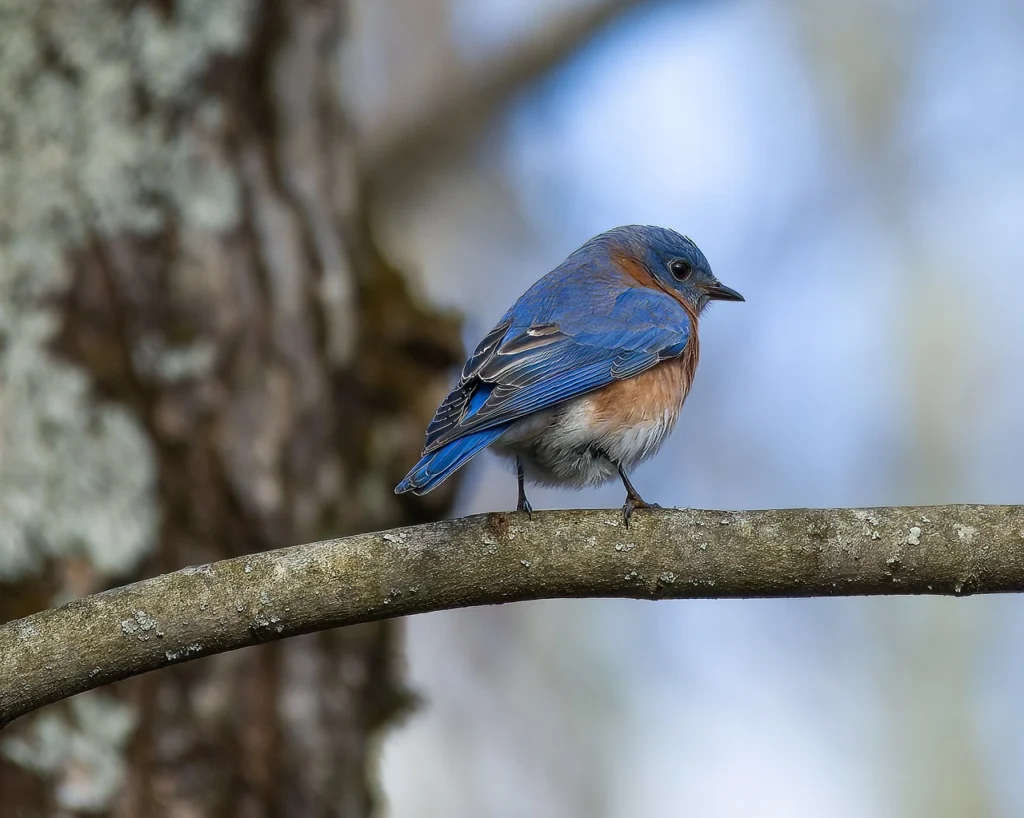
8. Eastern Bluebird 

Eastern Bluebird

The Eastern Bluebird (Sialia sialis) is a small, migratory thrush that brings vibrant color to open woodlands, farmlands, and orchards across North America.

Males are particularly striking with their bright blue heads, backs, and wings, and a brownish-red chest, making them a favorite among bird watchers. 

Females, while more subdued, display grayish-blue feathers with lighter, more orange-tinted breasts. These birds measure between 6.3 to 8.3 inches in length, have a wingspan of 9.8 to 12.6 inches, and weigh around 0.95 to 1.20 ounces. Known for their melodious calls and songs, males often sing soft warbles like “jeew” or “chir-wi,” and their complex song can sound like “chiti WEEW wewidoo.” 

Eastern Bluebirds thrive in open areas with sparse trees, making orchards and farmlands ideal for nesting. 

They often use tree cavities or birdhouses, making them common visitors to backyards with nesting boxes. As the state bird of Missouri and New York, the Eastern Bluebird is a cherished symbol of beauty and song in various parts of the United States.

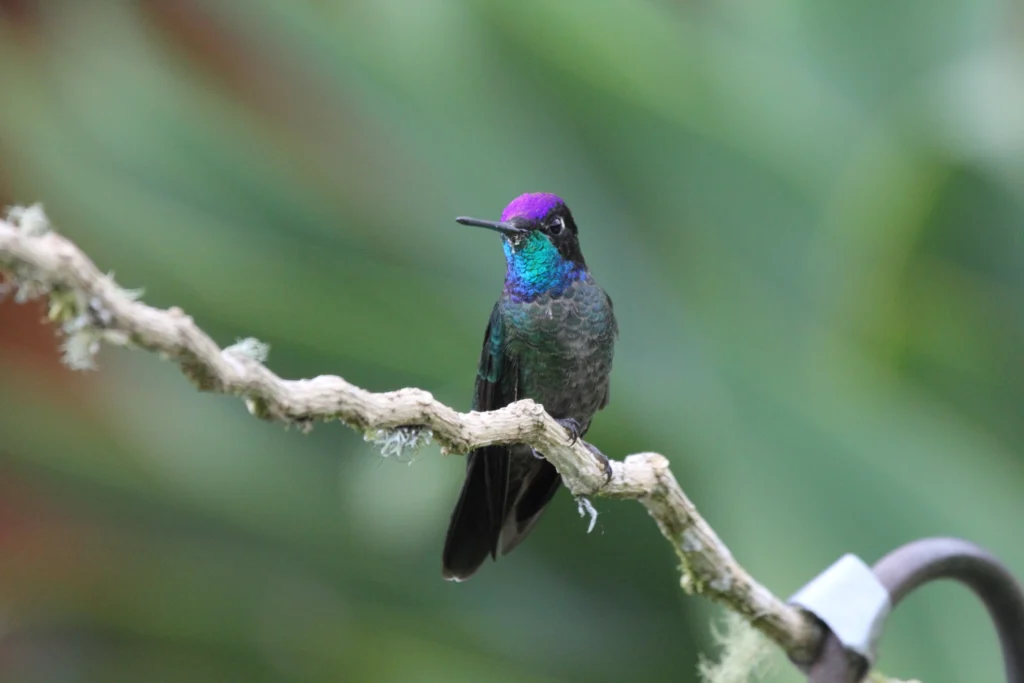
9. Magnificent Hummingbird

Magnificent Hummingbird

Dominic Sherony, CC BY-SA 2.0, via Wikimedia Commons

The Magnificent Hummingbird is a stunning, small bird that certainly lives up to its name. Males are particularly striking with their iridescent green and blue feathers, a brilliant purple crown, and a shiny green throat. 

Females are more modestly colored but still beautiful, with green upperparts and grayish underparts. These hummingbirds are often found in mountainous regions, where they feed on nectar from a variety of flowers. 

They are also known to catch insects mid-air, showcasing their incredible agility. Setting up hummingbird feeders can attract these magnificent birds to your garden, providing a wonderful display of nature’s beauty.

Both the Eastern Bluebird and the Magnificent Hummingbird add a splash of color and a touch of magic to California’s diverse bird population. Keep an eye out for these lovely birds during your outdoor adventures!

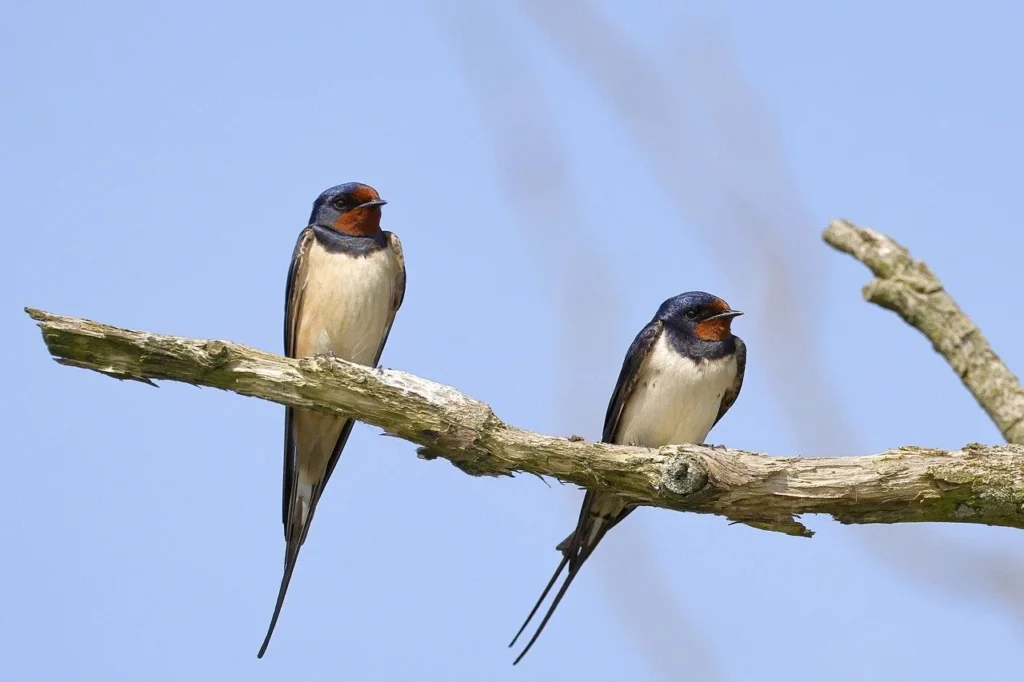
10. Barn Swallow

Barn Swallow

The Barn Swallow is the most widespread swallow species globally, with sightings reported as far as Antarctica. Known for their graceful and agile flight, these birds are often seen swooping through the air catching a variety of flying insects. 

Their diet includes flies, beetles, wasps, wild bees, winged ants, and true bugs. 

With streamlined bodies and distinctive forked tails, Barn Swallows are a delightful sight in the open skies of California. These birds are not only a joy to watch but also play a crucial role in controlling insect populations, making them an important part of the ecosystem. 

Keep an eye out for these aerial acrobats as they dart gracefully across fields and open areas, showcasing their remarkable flying skills and contributing to the natural beauty of California’s diverse birdlife.

11. Little Blue Heron

Little Blue Heron

The Little Blue Heron is a small heron with dark plumage and a distinctive two-toned bill. What’s fascinating about these birds is that juveniles are entirely white, closely resembling snowy egrets, before they mature into their darker feathers. 

During the breeding season, adults develop unique coloration on their heads, legs, and feet, making them even more striking. The Little Blue Heron symbolizes calmness, presence, and balance, encouraging us to embrace our uniqueness and find inner peace. 

These birds inhabit wetlands and marshes, where their serene presence adds to the tranquility of these environments. 

Observing a Little Blue Heron can remind us of the beauty in diversity and the importance of nurturing all aspects of ourselves. 

Their graceful demeanor and peaceful habitats make them a cherished sight in the natural landscapes of California.

12. Blue Grosbeak

Blue Grosbeak

DickDaniels (http://carolinabirds.org/), CC BY-SA 3.0, via Wikimedia Commons

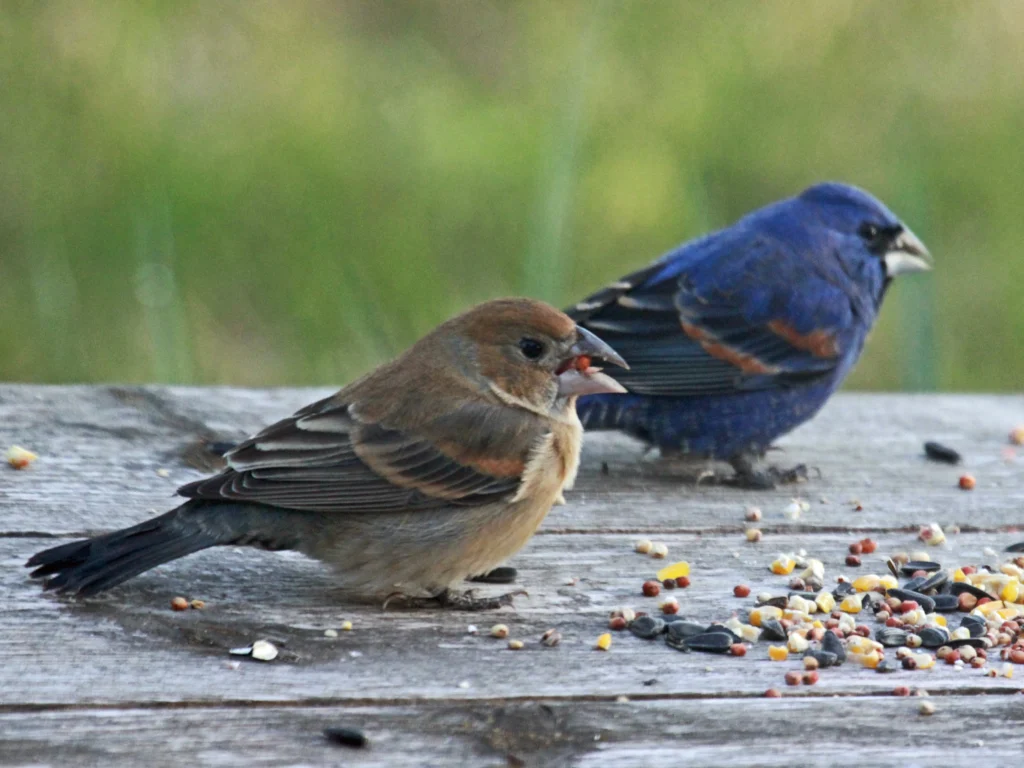
The Blue Grosbeak is a striking medium-sized bird that belongs to the cardinal family. These migratory birds spend their winters in Central America and migrate to breed in northern Mexico and the southern United States, including California. 

Male Blue Grosbeaks are known for their vibrant blue plumage, highlighted by two distinct brown wing bars. They thrive in brushy habitats and open woodlands, where their rich, melodious songs fill the air. 

Their presence adds a beautiful splash of color to the landscape, making them a favorite among birdwatchers. 

With their distinctive looks and enchanting songs, Blue Grosbeaks are a delightful sight in California’s diverse birdlife.

Wrap it up: These 12 blue birds add a touch of beauty and intrigue to California’s diverse ecosystems. Whether you’re watching swallows dart through the air, admiring the vibrant plumage of a Blue Grosbeak, or observing the serene presence of a Little Blue Heron, these birds offer a wonderful glimpse into the natural world!

Discover 10 Types of Red Birds in South Carolina

South Carolina, with its diverse ecosystems ranging from coastal marshes to mountainous regions, is home to a vibrant array of bird species. Among these, the Red Birds in South Carolina stand out for their striking plumage and captivating behaviors. This article delves into the lives of ten types of red birds found in South Carolina, exploring their habitats, behaviors, and the unique characteristics that make them a delight for bird watchers and nature enthusiasts.

1. Northern Cardinal (Cardinalis cardinalis)

Northern Cardinal

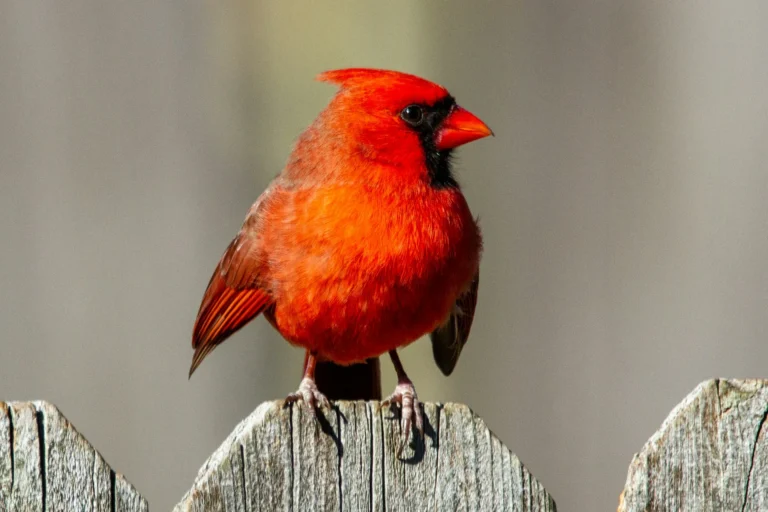
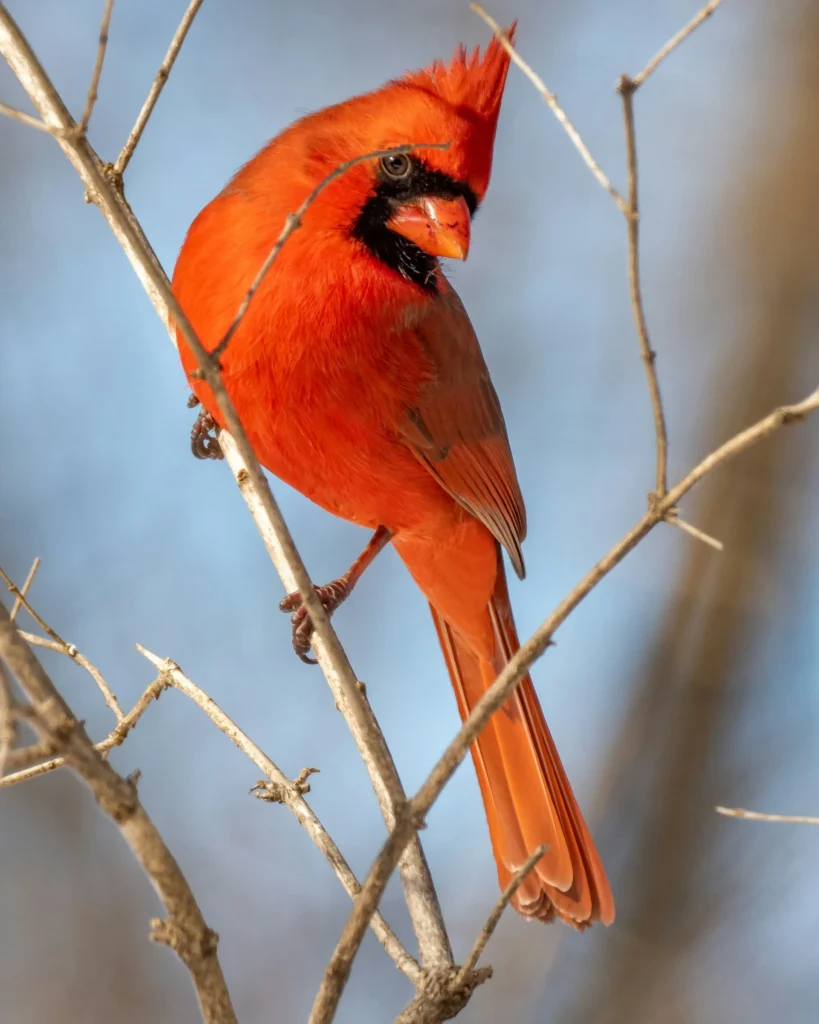
The Northern Cardinal is perhaps the most iconic red bird in South Carolina. The males are bright red all over, with a distinctive black mask around the bill and eyes. Females are a more subdued tan color with red tinges on the wings, crest, and tail. Both sexes have a prominent crest on their heads and a thick, orange-red bill.

Habitat and Distribution

Northern Cardinals are commonly found in woodlands, gardens, shrublands, and wetlands throughout South Carolina. They are year-round residents and are often seen at bird feeders.

Behavior and Diet

These birds are known for their melodious songs, which males use to establish territory and attract mates. Their diet includes seeds, grains, fruits, and insects. They are particularly fond of sunflower seeds and can often be seen foraging on the ground or in low shrubs.

Which red bird in South Carolina is so iconic it's featured in school logos and state bird lists?

2. Summer Tanager (Piranga rubra)

Summer Tanager

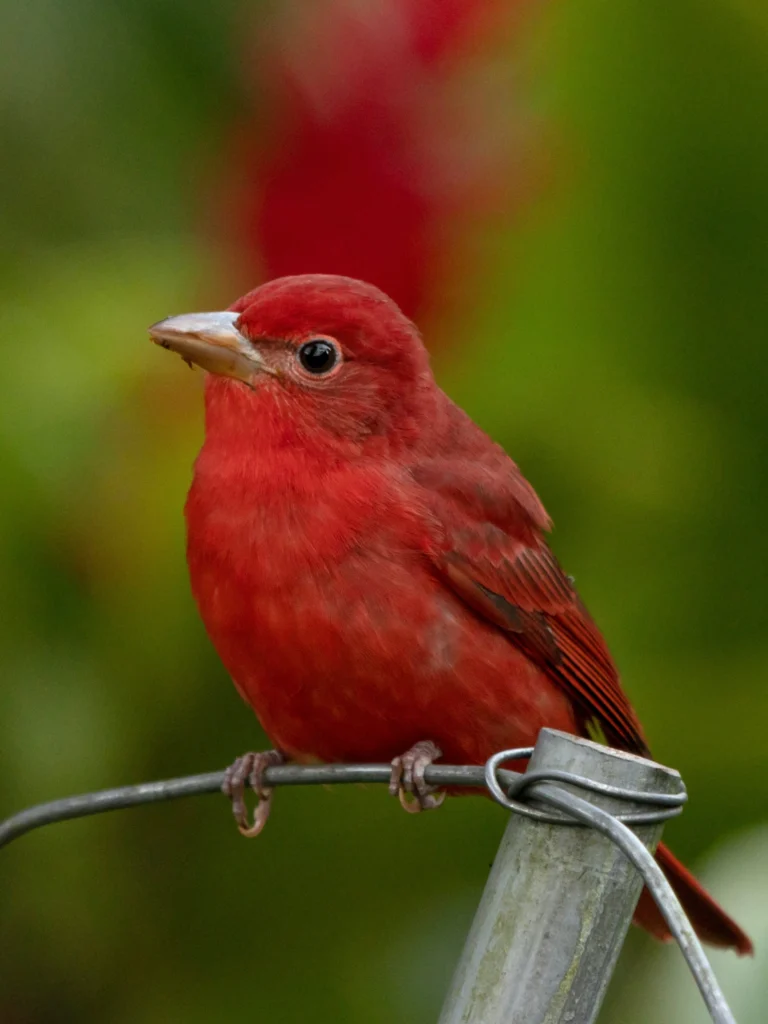
The male Summer Tanager is a vibrant rose-red, while the female is a more muted yellowish-green. The males are often mistaken for cardinals but lack the crest and have a more uniform color.

Habitat and Distribution

Summer Tanagers prefer open woodlands, especially those with tall trees, and are commonly found in the central and southern parts of South Carolina. They are migratory birds, spending the winter in Central and South America.

Behavior and Diet

These tanagers are adept insect hunters, catching bees, wasps, and other flying insects mid-air. They also eat fruits and berries. Their call is a distinctive, clear whistling.

Also read: Birds With Long Legs With Pictures

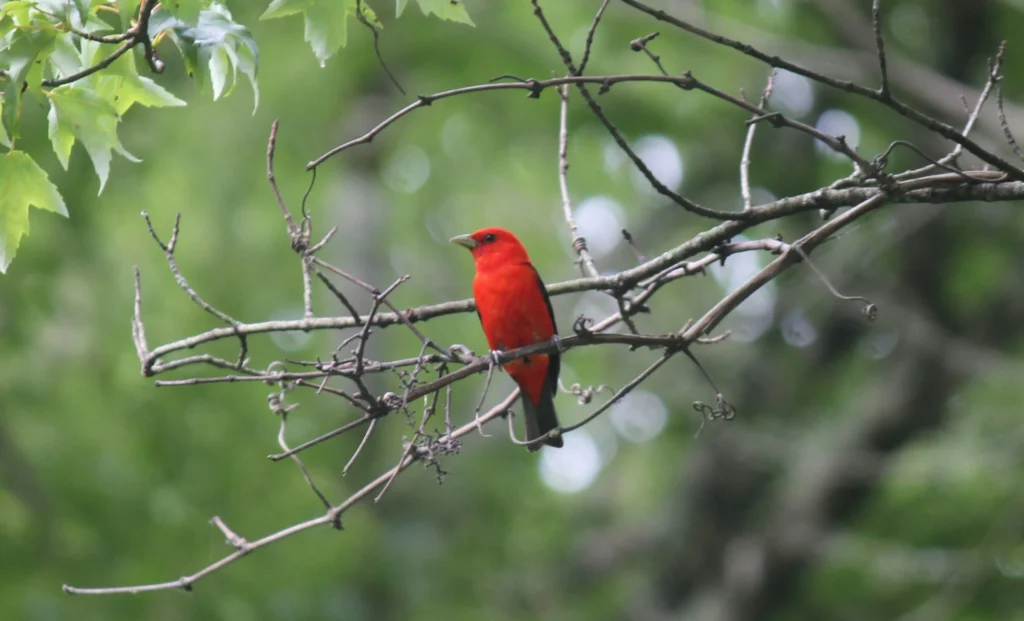
3. Scarlet Tanager (Piranga olivacea)

Scarlet Tanager

The male Scarlet Tanager is striking with its bright red body and contrasting black wings and tail. Females are olive-yellow with darker wings. This bird’s red is deeper and more scarlet compared to the Summer Tanager.

Habitat and Distribution

Scarlet Tanagers inhabit deciduous forests and are more commonly found in the northern parts of South Carolina during the breeding season. They migrate to South America for the winter.

Behavior and Diet

These birds primarily feed on insects and fruit. They are known for their shy and elusive nature, often staying high in the forest canopy. Their song is a series of short, burry phrases, similar to an American Robin’s but more hurried.
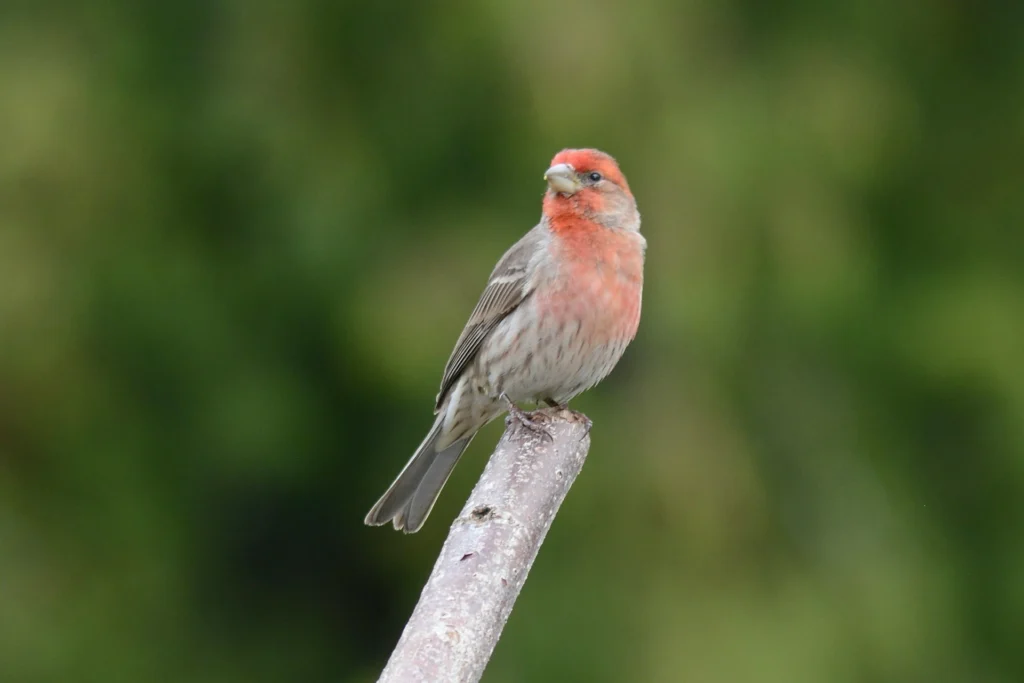
4. House Finch (Haemorhous mexicanus)

House Finch

Male House Finches have a rosy red forehead, throat, and chest, with streaked brown and white bodies. Females lack the red coloration and are brown-streaked overall.

Habitat and Distribution

House Finches are highly adaptable and are commonly found in urban areas, farmlands, and open woodlands across South Carolina. They are year-round residents.

Behavior and Diet

These social birds are often seen in flocks. Their diet includes seeds, fruits, and buds. They are frequent visitors to bird feeders, especially those stocked with sunflower seeds.

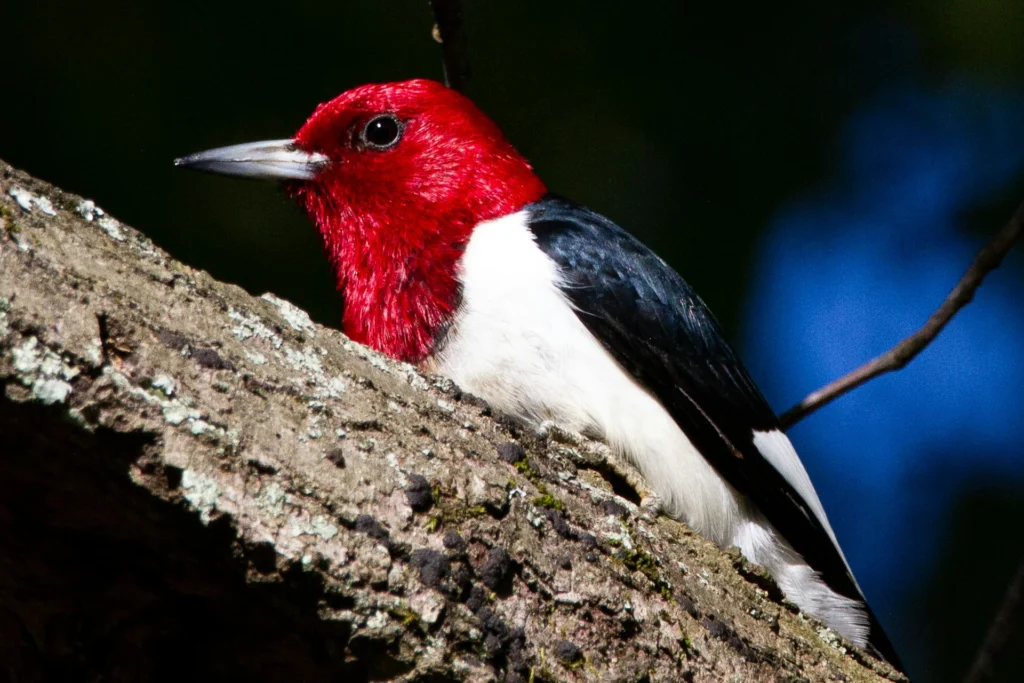
5. Red-headed Woodpecker (Melanerpes erythrocephalus)

Red-headed Woodpecker

This woodpecker is easily identifiable by its entirely red head, neck, and throat, contrasting sharply with its white underparts and black back with large white patches on the wings.

Habitat and Distribution

Red-headed Woodpeckers prefer open woodlands, orchards, and savannas. They are found throughout South Carolina but are more common in the Piedmont and Coastal Plain regions.

Behavior and Diet

They are known for their acrobatic flight and loud calls. Their diet includes insects, nuts, seeds, and fruit. They are also known to store food in tree crevices.
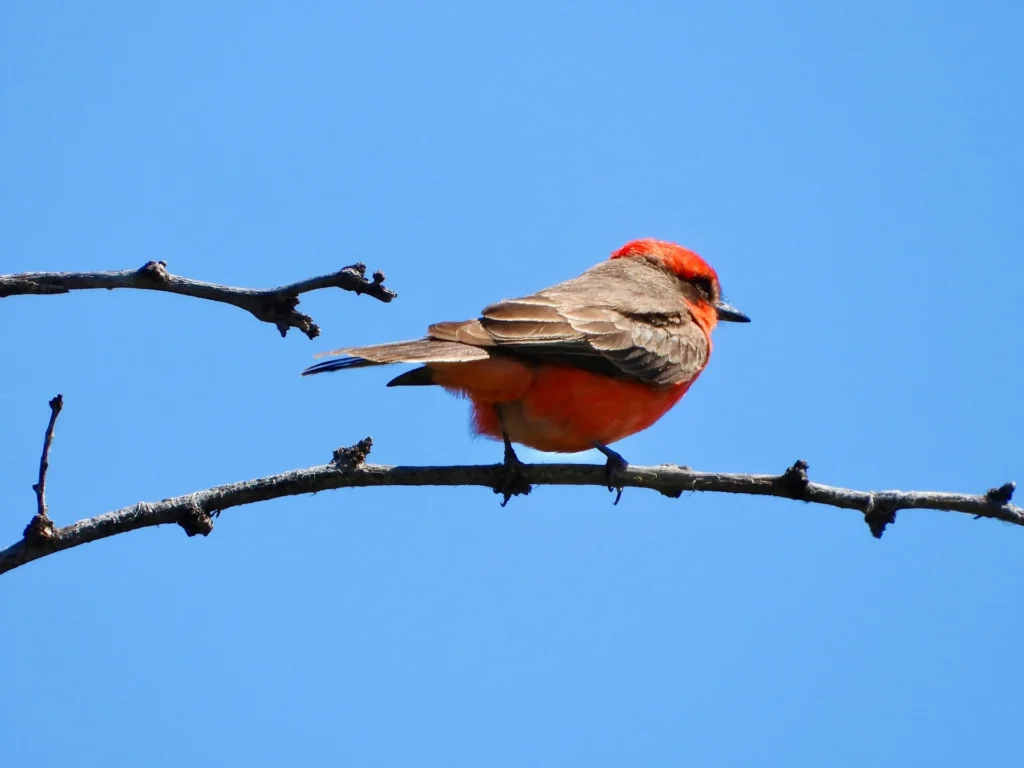
6. Vermilion Flycatcher (Pyrocephalus rubinus)

Vermilion Flycatcher

Males are bright vermilion red with a brownish-black back, wings, and tail. Females are more subdued with a peach-colored belly and gray upperparts.

Habitat and Distribution

Vermilion Flycatchers are rare in South Carolina, usually spotted during migration in open areas near water.

Behavior and Diet

These flycatchers hunt insects from perches, darting out to catch them in mid-air. They have a sharp, cheerful call and are often seen performing aerial displays during breeding season.

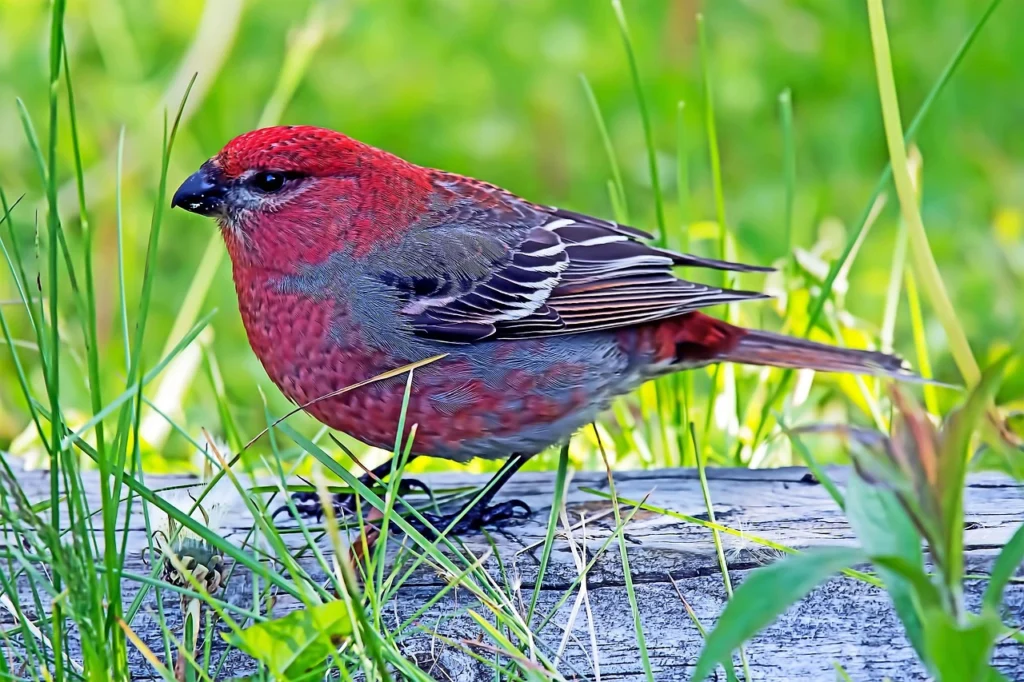
7. Pine Grosbeak (Pinicola enucleator)

Pine Grosbeak

Male Pine Grosbeaks are rosy red with grayish wings and tail, while females are yellowish or olive. These large finches have thick, conical bills.

Habitat and Distribution

Pine Grosbeaks are rare winter visitors in South Carolina, usually found in coniferous forests and mountainous regions.

Behavior and Diet

Their diet consists of seeds, buds, and fruits. They are generally tame and slow-moving, making them easier to observe.

Also Read : Discover 14 Types of Yellow Birds in Michigan

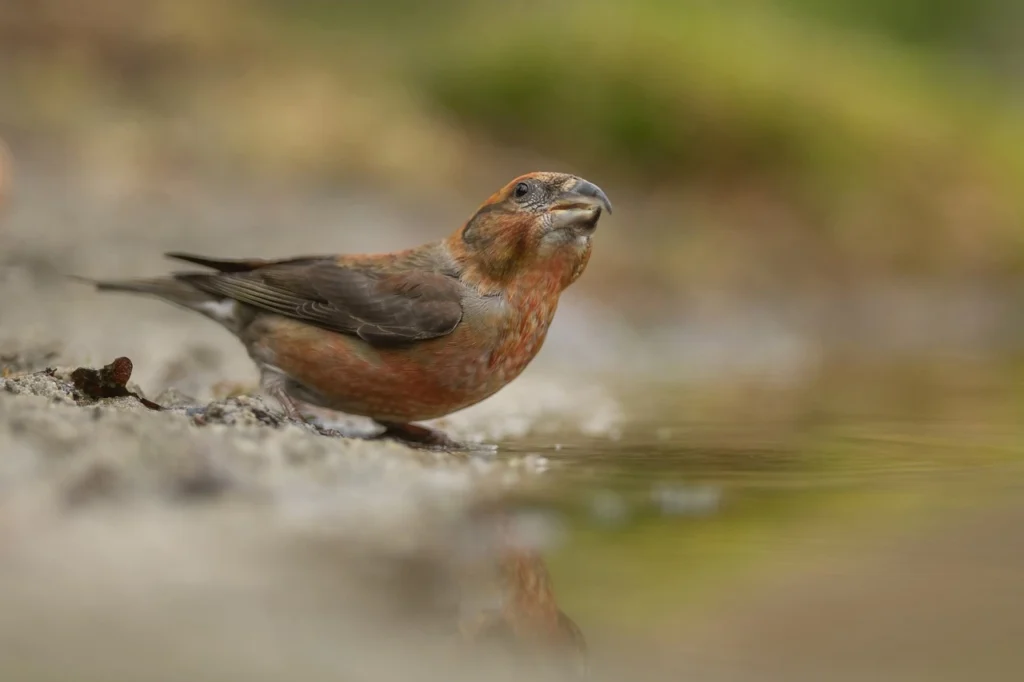
8. Red Crossbill (Loxia curvirostra)

Red Crossbill

Male Red Crossbills are reddish with darker wings, while females are olive or yellowish. They have unique crossed bills adapted for extracting seeds from conifer cones.

Habitat and Distribution

These birds are found in coniferous forests in South Carolina, particularly in the mountainous regions. They are nomadic, following cone crop availability.

Behavior and Diet

Red Crossbills are social and often seen in flocks. Their diet primarily consists of conifer seeds. Their calls are distinctive, metallic chirps.

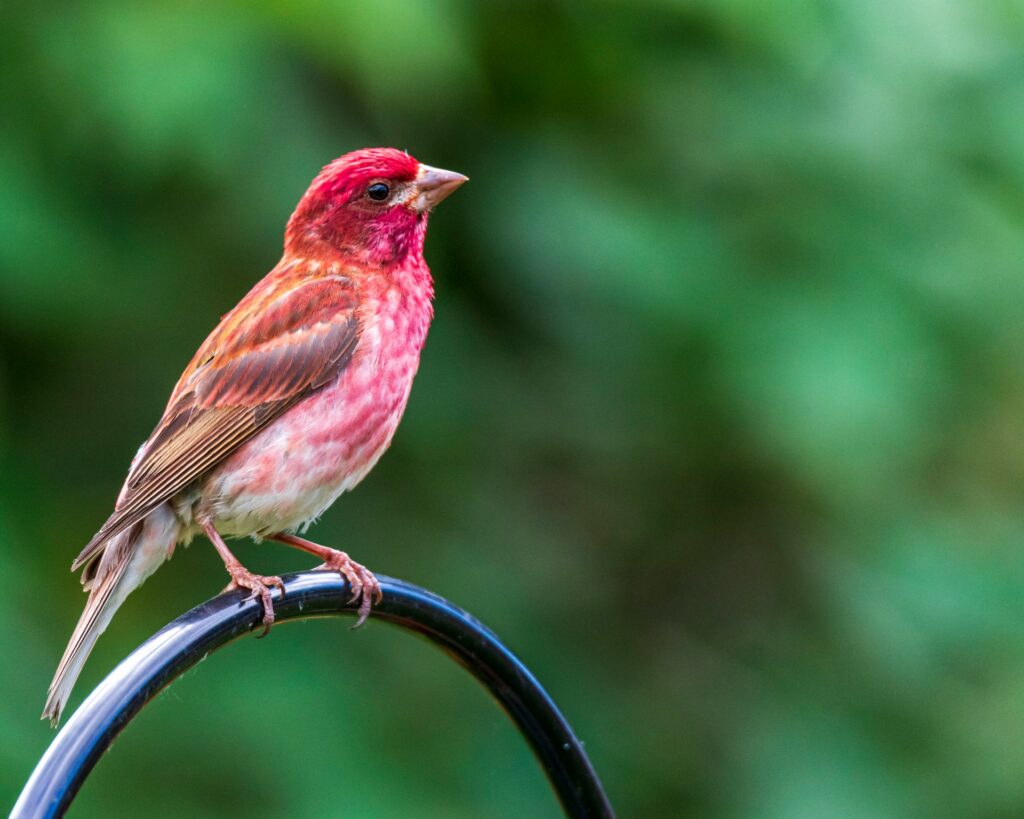
9. Purple Finch (Haemorhous purpureus)

Purple Finch

Male Purple Finches are raspberry red, especially on the head, chest, and back, with streaked brownish wings and back. Females are brown-streaked and lack the red coloration.

Habitat and Distribution

Purple Finches inhabit mixed forests and are winter visitors in South Carolina, often seen at feeders during colder months.

Behavior and Diet

Their diet includes seeds, berries, and insects. They have a rich, musical song and can often be seen feeding in flocks.

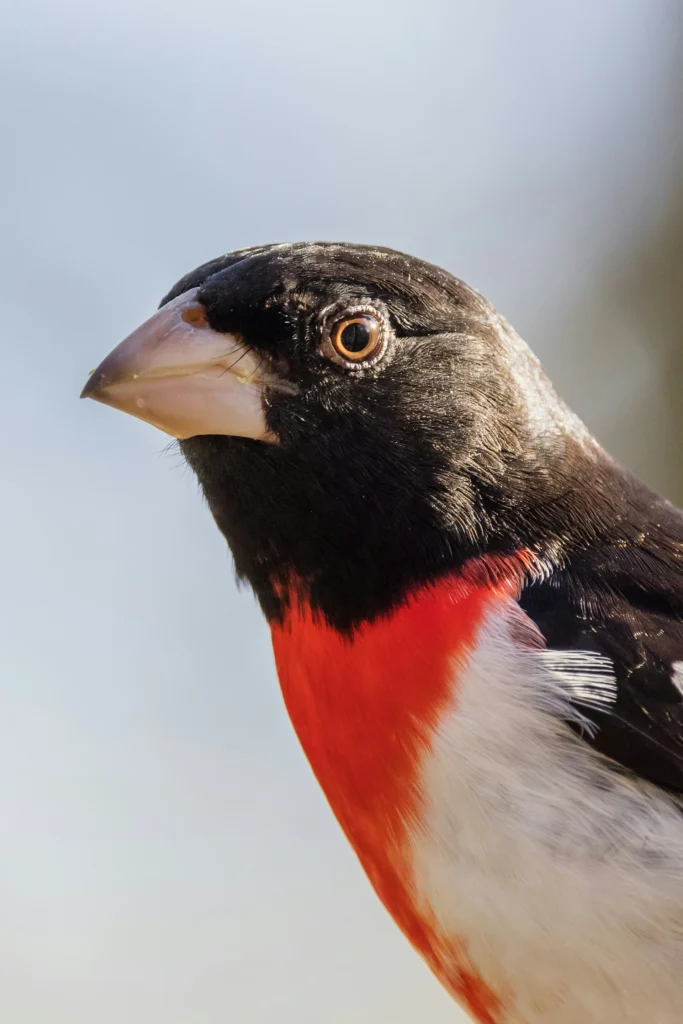
10. Rose-breasted Grosbeak (Pheucticus ludovicianus)

Rose-breasted Grosbeak

Males have a striking black and white plumage with a bright red triangular patch on the breast. Females are brown and heavily streaked, with a white eyebrow stripe.

Habitat and Distribution

Rose-breasted Grosbeaks are found in deciduous forests and woodland edges during migration and breeding seasons in South Carolina.

Behavior and Diet

Their diet consists of seeds, fruits, and insects. Males sing a rich, melodious song similar to that of a robin but more fluent and sweet. They are known for their powerful bills, which they use to crack open seeds.

Conservation and Bird Watching Tips

Conservation Efforts

Several of these red bird species face habitat loss, climate change, and predation threats. Conservation efforts in South Carolina focus on preserving and restoring habitats, creating bird-friendly environments, and researching to better understand bird populations and their needs.

Bird Watching Tips

For those interested in observing these beautiful red birds, here are some tips:

Best Locations: State parks, nature reserves, and botanical gardens are excellent places to spot these birds. Some popular locations include Congaree National Park, Francis Marion National Forest, and the ACE Basin.

Timing: Early morning and late afternoon are the best times for bird watching, as birds are most active during these periods.

Equipment: A good pair of binoculars, a bird field guide, and a notebook for recording sightings can enhance the bird-watching experience.

Feeders and Nest Boxes: Setting up bird feeders with appropriate food, such as sunflower seeds for cardinals and finches, and nest boxes can attract these birds to your backy

Conclusion

The red birds of South Carolina, with their vibrant plumage and diverse behaviors, add a splash of color to the state’s natural landscapes. From the iconic Northern Cardinal to the elusive Pine Grosbeak, each species has its unique charm. Whether you are a seasoned birder or a casual observer, the opportunity to witness these birds in their natural habitats is a rewarding experience that connects us to the beauty and complexity of the natural world. Conservation efforts and responsible bird-watching practices are crucial to ensuring that these magnificent birds continue to thrive in South Carolina for generations to come.

Discover 14 Types of Yellow Birds in Michigan

Michigan is a haven for bird enthusiasts, particularly those keen on vibrant colors. The state is home to a diverse array of yellow-feathered birds, each adding a splash of sunshine to the natural landscape. 

Their bright plumage not only makes them easy to spot but also incredibly attractive to bird watchers and nature lovers alike. In this article, we will delve into the fascinating world of Michigan’s yellow birds, uncovering the secrets behind their allure and providing detailed insights into their unique characteristics and behaviors. 

Whether you’re a seasoned birder or a curious newcomer, prepare to be enchanted by the diverse and colorful avian residents of Michigan. This guide explores these and other yellow-breasted birds that grace Michigan, inviting you to discover their beauty and diversity.

Here’s a list of 14 yellow birds in Michigan – 

Types of Yellow Birds in Michigan

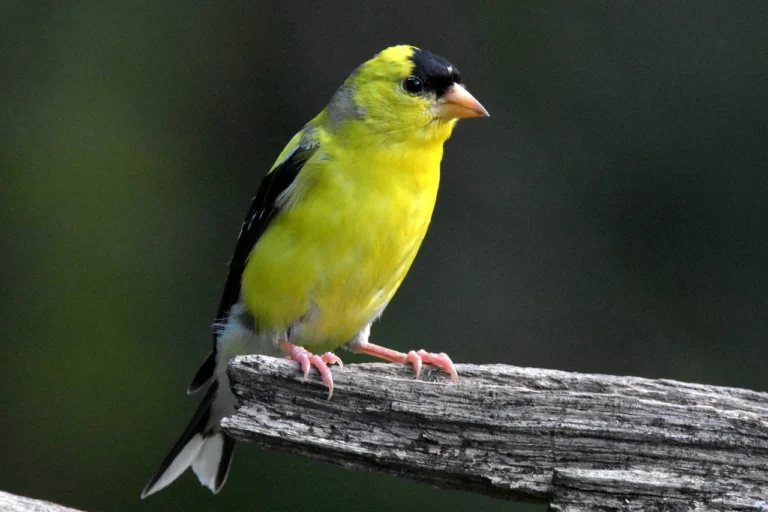
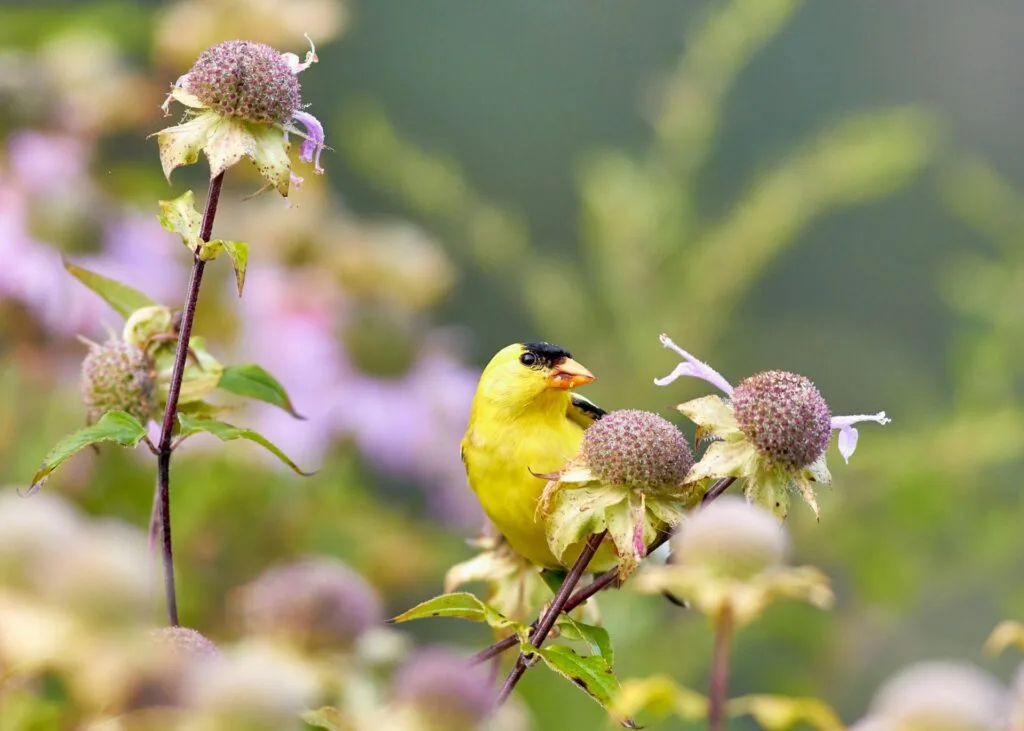
1. American Goldfinch

American Goldfinch

The American Goldfinch, a striking yellow bird, is a familiar sight in Michigan, captivating bird watchers with its vibrant plumage and cheerful song. Male goldfinches display a brilliant yellow color with contrasting black wings and a cap, while females are more subdued in their olive-brown tones. 

These birds thrive in open fields, meadows, and suburban gardens, often seen flitting among thistles and sunflowers, their preferred food sources. Goldfinches are unique for their late breeding season, which aligns with the peak abundance of seeds in mid-summer. The American Goldfinch is not just a symbol of summer but also a reminder of the state’s rich natural beauty.

Also read: Types of Red birds in South Carolina

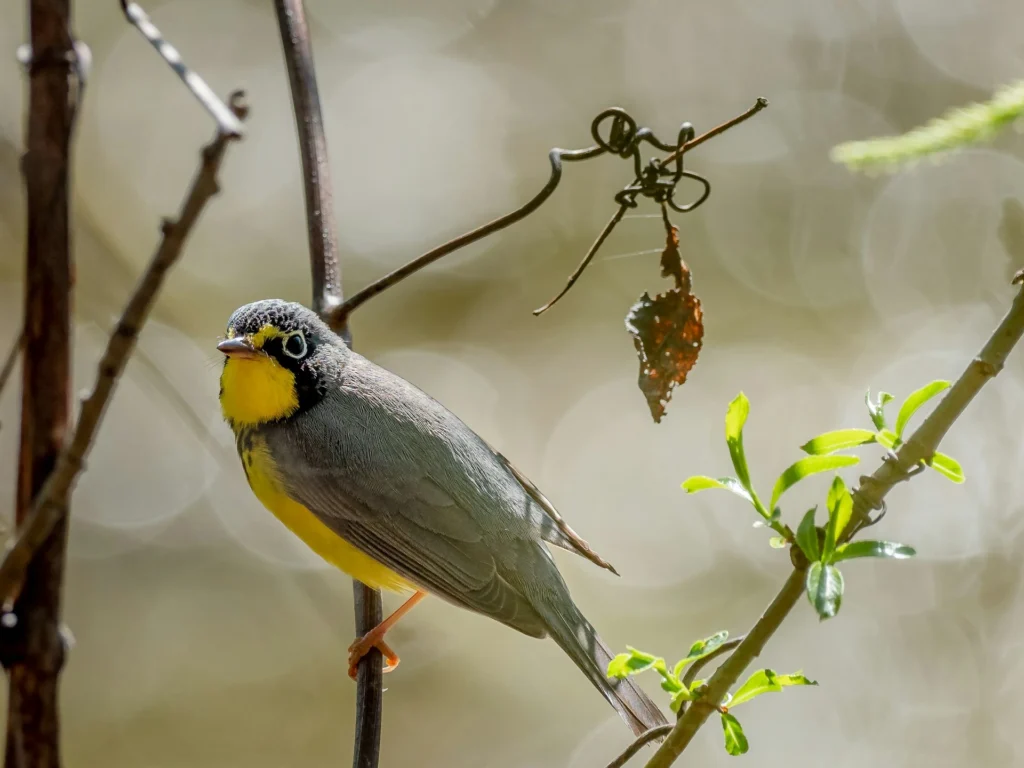
2. Canada Warbler 

Canada Warbler 

The Canada Warbler is a small, lively bird known for its bright yellow underparts and distinctive “necklace” of black streaks across its chest. This warbler thrives in dense, wet forests and shady ravines, often skulking in the underbrush.

Its diet mainly consists of insects like flies, beetles, and caterpillars, which it actively forages among the leaves. The Canada Warbler’s striking appearance and energetic behavior, coupled with its melodious song, make it a delightful presence in its preferred habitats during the breeding season.

Diet: 

Primarily eats insects, particularly favoring flies, beetles, and caterpillars.

Habitat: 

Prefers dense, wet forests and shady ravines, often skulking in the underbrush.

Which green bird in California mimics human speech but is often mistaken for a wild parakeet?

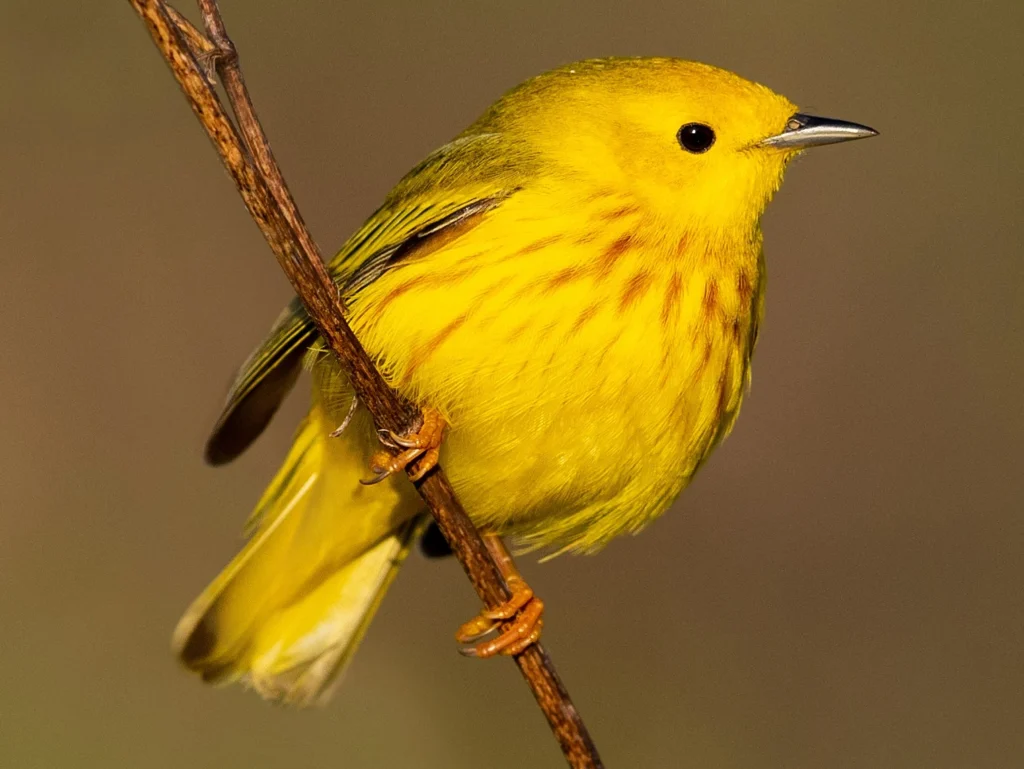
3. American Yellow Warbler

American Yellow Warbler

cc: https://ebird.org/species/yelwar?siteLanguage=en_PH

The American Yellow Warbler is a vibrant songbird known for its bright yellow plumage, making it a standout among Michigan’s avian residents. These small birds are widespread across North America, breeding in young forests and shrublands from the Arctic Circle to Mexico. 

Their diet primarily consists of insects, especially caterpillars, which forage from the tops of shrubs and small trees. During winter, they migrate to Central and South America, where they also consume fruit. 

The American Yellow Warbler’s cheerful song and energetic foraging behavior make it a delightful presence in both temperate and tropical habitats.

Diet: 

These birds are insect hunters, darting among shrubs and trees to catch caterpillars and other insect larvae. During winter, they also snack on fruit.

Habitat: 

Yellow Warblers migrate north each spring to nest in young forests and shrublands from the Arctic Circle to Mexico. Come autumn, they head south to Central and South America, often wintering in mangrove forests.

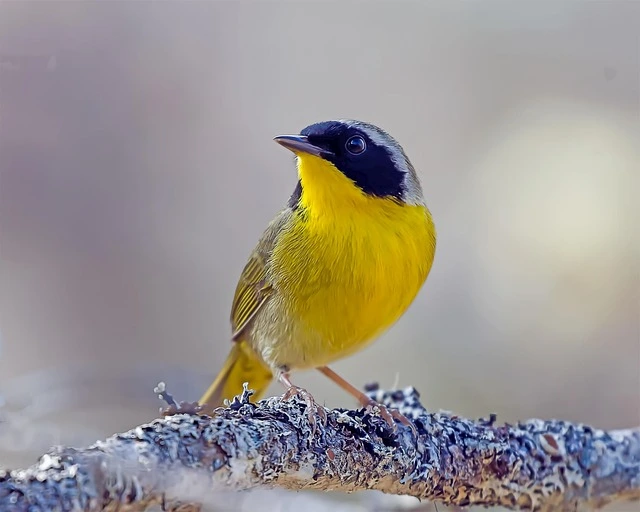
4. Common Yellowthroat

Common Yellowthroat

The Common Yellowthroat is a small warbler with a vibrant yellow throat and breast, accented by a bold black mask on the males. This lively bird is often found in wetlands, marshes, and overgrown fields, where it forages for insects and spiders. 

Known for its distinctive “Wichita-Wichita” song, the Common Yellowthroat is a vocal and energetic presence in its habitat. Its bright plumage and active behavior make it a favorite among birdwatchers, adding a cheerful note to the wetland symphony.

Diet: 

Feasts on insects and spiders, foraging low in dense vegetation.

Habitat: 

Prefers wetlands, marshes, and overgrown fields where its “wichity-wichity” song can be heard.

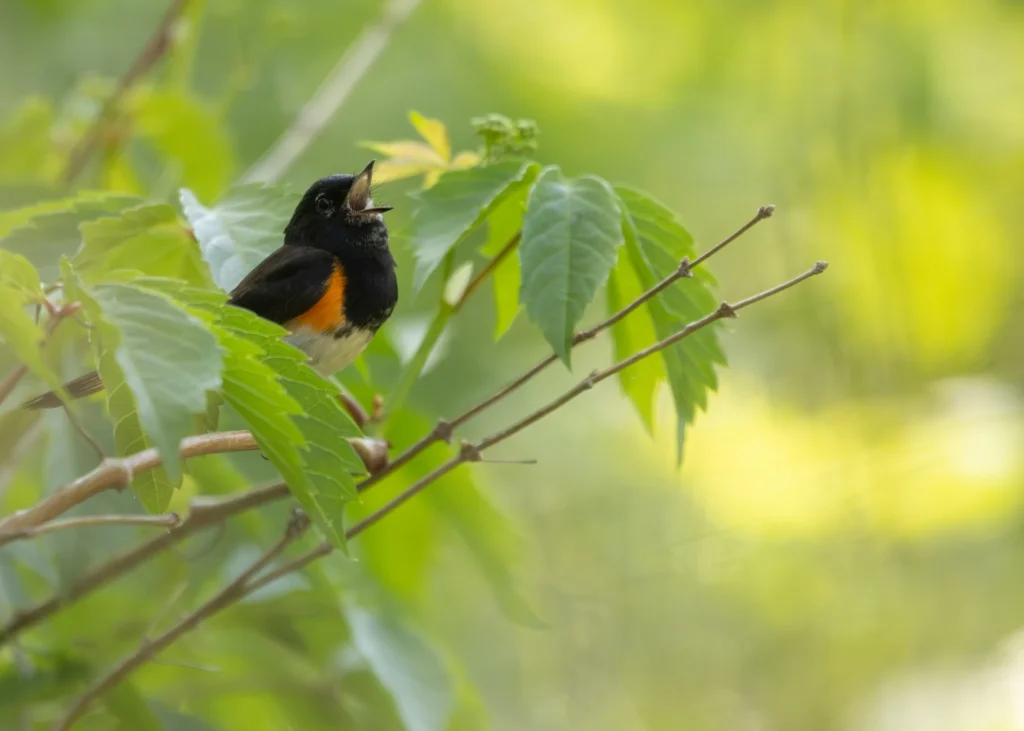
5. American Redstart

American Redstart

The American Redstart is a flashy bird. Males sport striking black feathers with bright reddish-orange patches on their sides, wings, and tail, while females are more subdued with yellow markings. These lively birds are a joy to watch as they flit through the trees, fanning their tails and flashing their colors to startle insects into flight.

Diet: 

These birds have a varied diet, mainly munching on insects like beetles, caterpillars, moths, and leafhoppers. They also enjoy spiders, daddy longlegs, and occasionally seeds and berries.

Habitat: 

American Redstarts breed in open wooded areas, especially those with plenty of deciduous trees. During migration, they can be found in nearly any treed habitat, and they spend their winters in tropical woodlands and open forests.

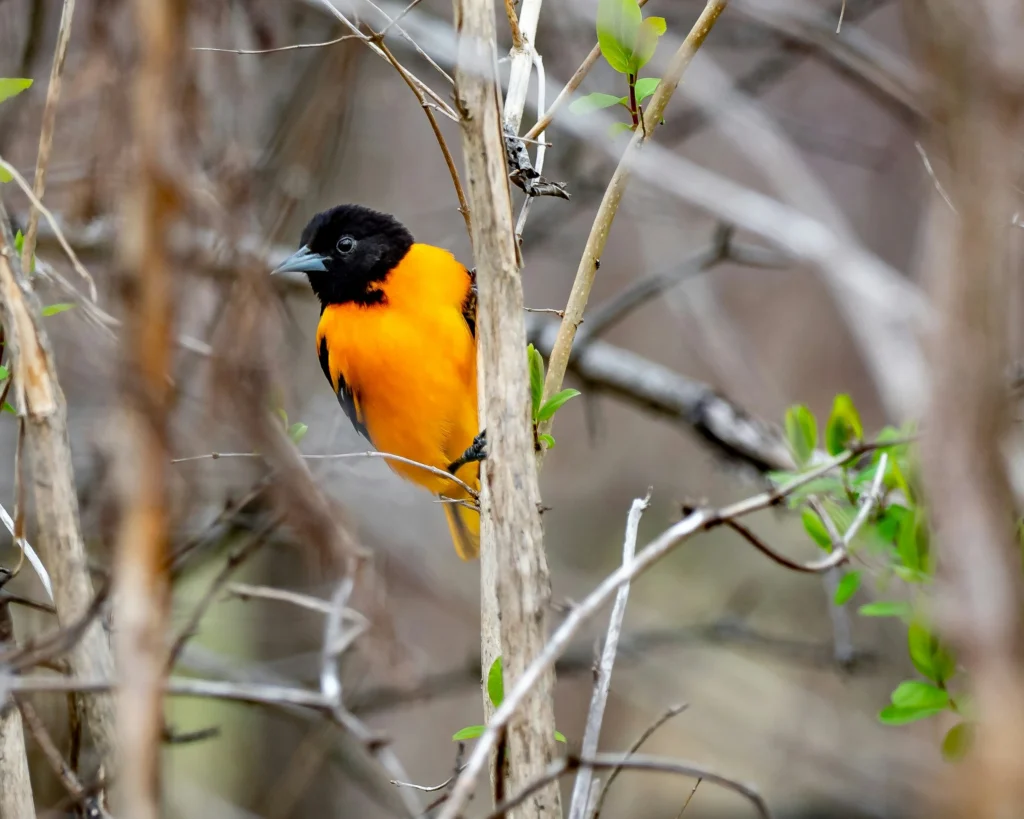
6. Baltimore Oriole

Baltimore Oriole

The Baltimore Oriole is a striking blackbird with vibrant orange and black plumage. These birds are named after Lord Baltimore’s coat of arms and are a delightful sight in eastern North America. They migrate south from late summer to early fall, spending their winters in the Southeast U.S., Central America, or South America until April.

Diet: 

Insects, berries, and nectar make up the bulk of the Baltimore Oriole’s diet. They feast on caterpillars, beetles, grasshoppers, wasps, bugs, spiders, and snails. They also enjoy berries and sometimes cultivated fruit.

Habitat: 

Baltimore Orioles thrive in open deciduous woodlands and are also common in community parks and suburban backyards. 

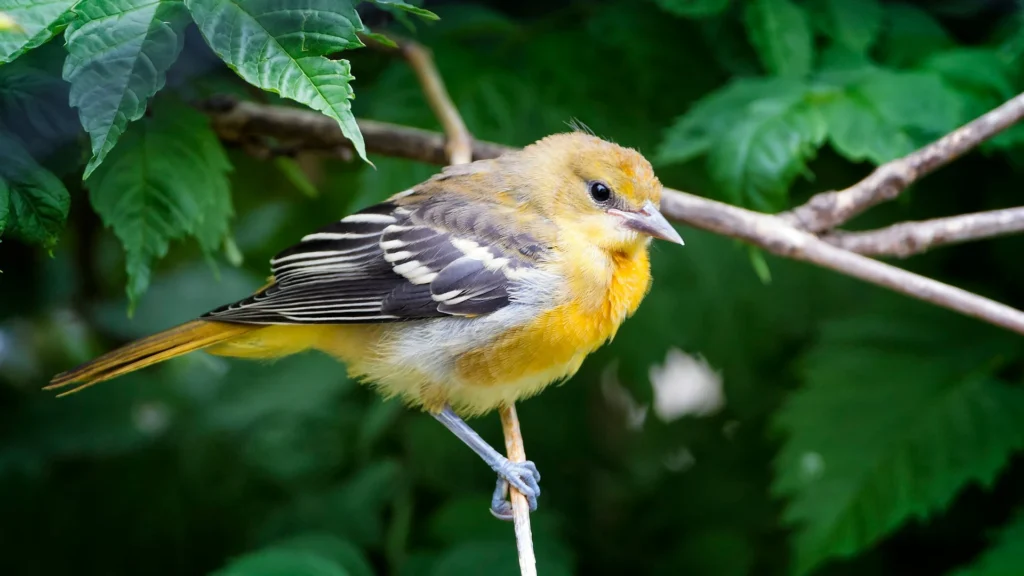
7. Baltimore Oriole (Female)

Baltimore Oriole (Female)

The female Baltimore Oriole is a lovely bird with a subtle blend of yellow and orange hues, less vibrant than the male but equally captivating. She’s often found in open woodlands, parks, and gardens, where she skillfully weaves a hanging nest from plant fibers.

 Her diet consists of insects, fruit, and nectar, making her a frequent visitor to backyard feeders. Despite her quieter coloration, she plays a crucial role in the ecosystem by controlling insect populations and aiding in plant pollination. Spotting a female Baltimore Oriole adds a touch of sunshine to any birdwatching excursion.

Diet: 

She loves insects, fruits, and nectar, often seen sipping from flowers or feeders.

Habitat:

Prefers open woodlands, parks, and suburban gardens where she builds her distinctive hanging nest.

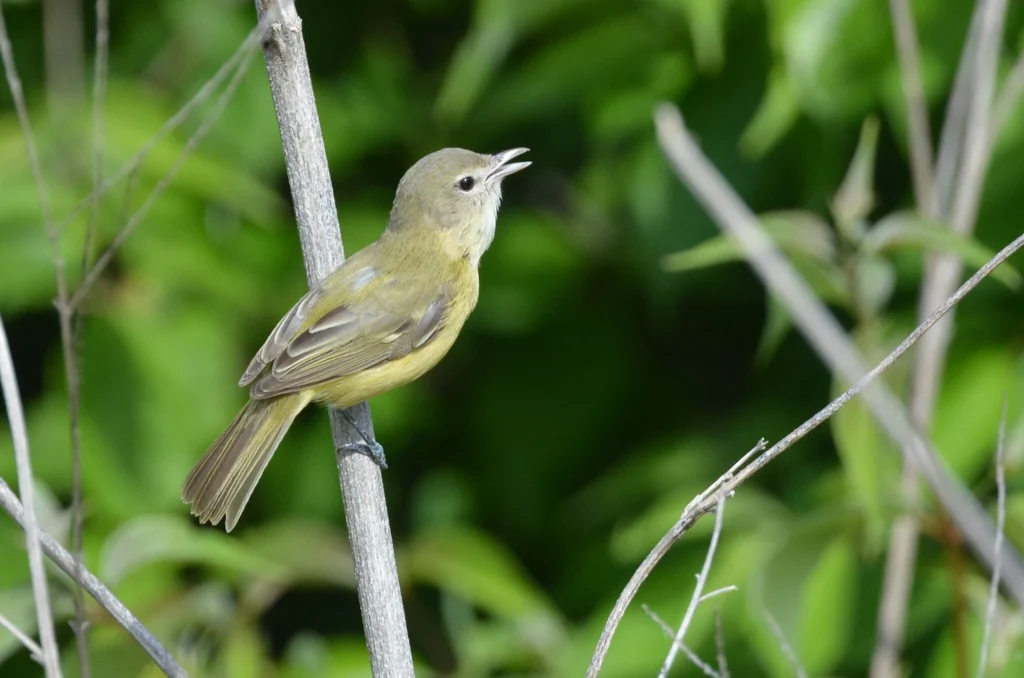
8. Bell’s Vireo

Bell’s Vireo

Wildreturn, CC BY 2.0, via Wikimedia Commons

Bell’s Vireo is a small, energetic bird with a touch of yellow on its sides and a penchant for staying well hidden in dense shrubbery. Known for its persistent and cheerful song, this vireo primarily feeds on insects and spiders, which it skillfully hunts among the leaves and branches. 

Preferring shrubby areas, thickets, and riparian zones, Bell’s Vireo is often more easily heard than seen. Despite its modest size and coloring, it’s a dynamic presence in its habitat, contributing to insect control and bringing a lively soundtrack to the places it inhabits.

Diet:

Primarily insectivorous, snacking on a variety of insects and spiders.

Habitat: 

Enjoys shrubby areas, thickets, and riparian zones where it can stay well-hidden while singing its heart out.

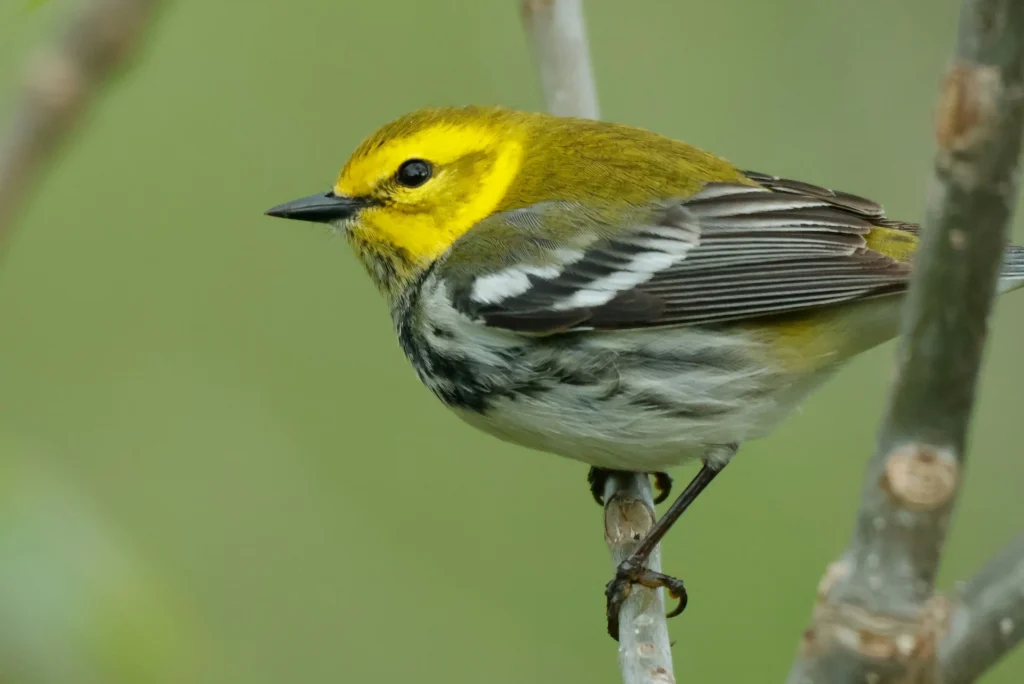
9. Black-throated Green Warbler

Black-throated Green Warbler

The Black-throated Green Warbler is a striking bird with its vivid yellow-green back, black throat, and contrasting white belly. This small songbird is a common sight in Michigan’s mixed forests, especially where coniferous and deciduous trees intermingle. 

Its diet primarily consists of insects, with caterpillars being a particular favorite, and it occasionally snacks on berries. Known for its distinctive and melodic song, the Black-throated Green Warbler adds both visual and auditory delight to its environment, making it a favorite among birdwatchers during the breeding season.

Diet: 

Feeds on insects, especially caterpillars, and occasionally berries.

Habitat:

Found in mixed forests, particularly in coniferous and deciduous woodlands during the breeding season.

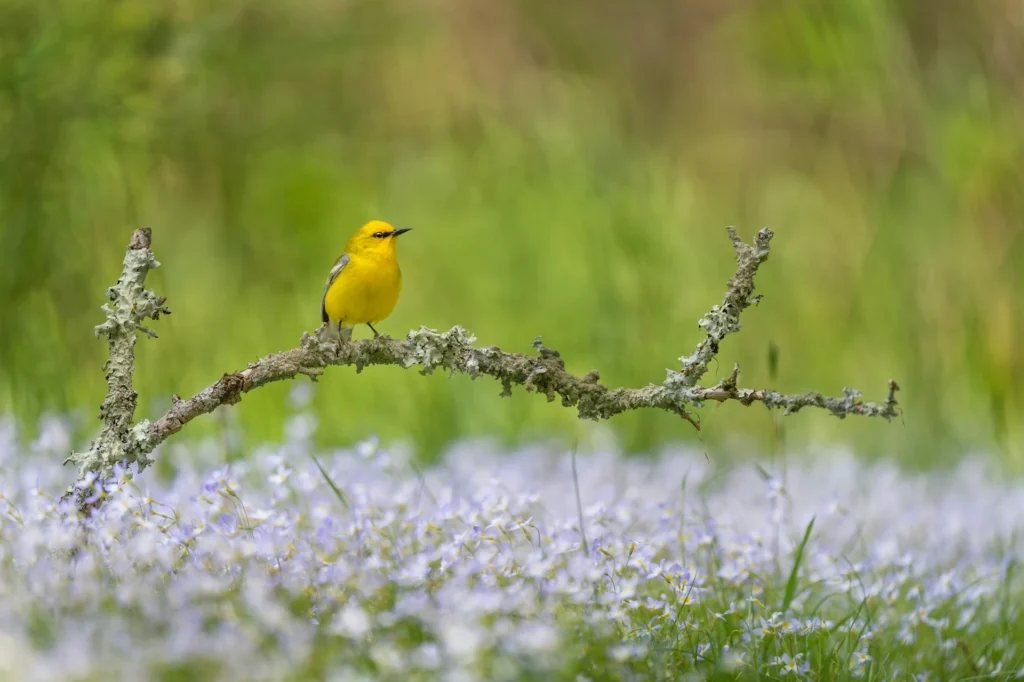
10. Blue-Winged Warbler

Blue-Winged Warbler

The Blue-winged Warbler is a vibrant, lemon-yellow bird with soft blue-gray wings and a black eye stripe. It’s a dynamic forager, darting through shrubs and low trees in search of insects and spiders. 

Preferring brushy fields, forest edges, and young forests, this warbler is often heard before it’s seen, thanks to its distinctive buzzing song. The Blue-winged Warbler’s bright coloration and lively behavior make it a delightful sight, adding a splash of color and energy to the landscapes it inhabits during the breeding season.

Diet: 

Insects and spiders make up the bulk of its diet, often foraging in shrubs and low trees.

Habitat: 

Prefers brushy fields, forest edges, and young forests, where its buzzing song can be heard.

Check more on World Birds Life.

11. Bullock’s Oriole

Bullock’s Oriole

Gregory “Slobirdr” Smith, CC BY-SA 2.0, via Wikimedia Commons

The Bullock’s Oriole is a western cousin to the Baltimore Oriole, showcasing stunning yellow and black plumage with a touch of white. This medium-sized songbird is often found in open woodlands and areas with abundant trees, where it builds intricate hanging nests. 

Its diet includes insects, fruit, and nectar, making it a versatile feeder and a welcome visitor to gardens and parks. The Bullock’s Oriole’s striking appearance and melodic song make it a favorite among birdwatchers, adding a vibrant splash of color to the regions it inhabits.

Diet:

Enjoys insects, fruit, and nectar, often seen foraging high in the trees.

Habitat: 

Found in open woodlands, especially those with plenty of trees for nesting.

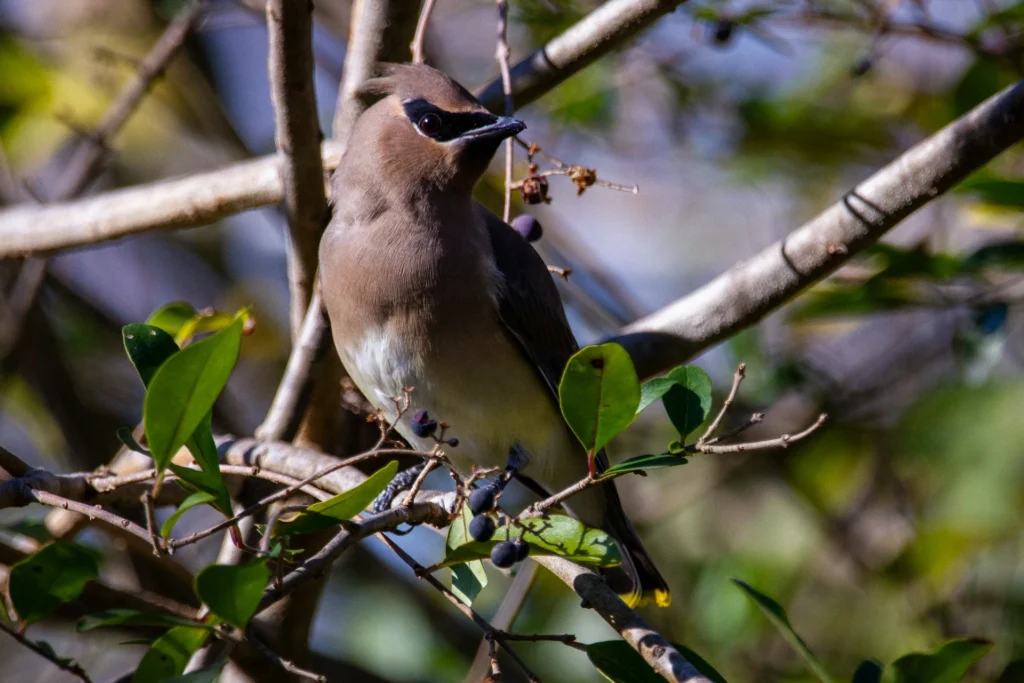
12. Cedar Waxwing

Cedar Waxwing

The Cedar Waxwing is an elegant bird with sleek yellow underparts, a distinctive crest, and waxy red tips on its wing feathers. These birds are often seen in flocks, adding a touch of sophistication to the landscape. 

Their diet is heavily fruit-based, but they also catch insects on the wing. Cedar Waxwings prefer open woodlands, orchards, and gardens, especially where fruit-bearing trees and shrubs are plentiful. Their social nature and striking appearance make them a charming and entertaining sight for bird enthusiasts year-round.

Diet: 

Berries are their favorite, but they also catch insects on the wing.

Habitat: 

Found in open woodlands, orchards, and gardens, especially where fruit-bearing trees and shrubs are plentiful.

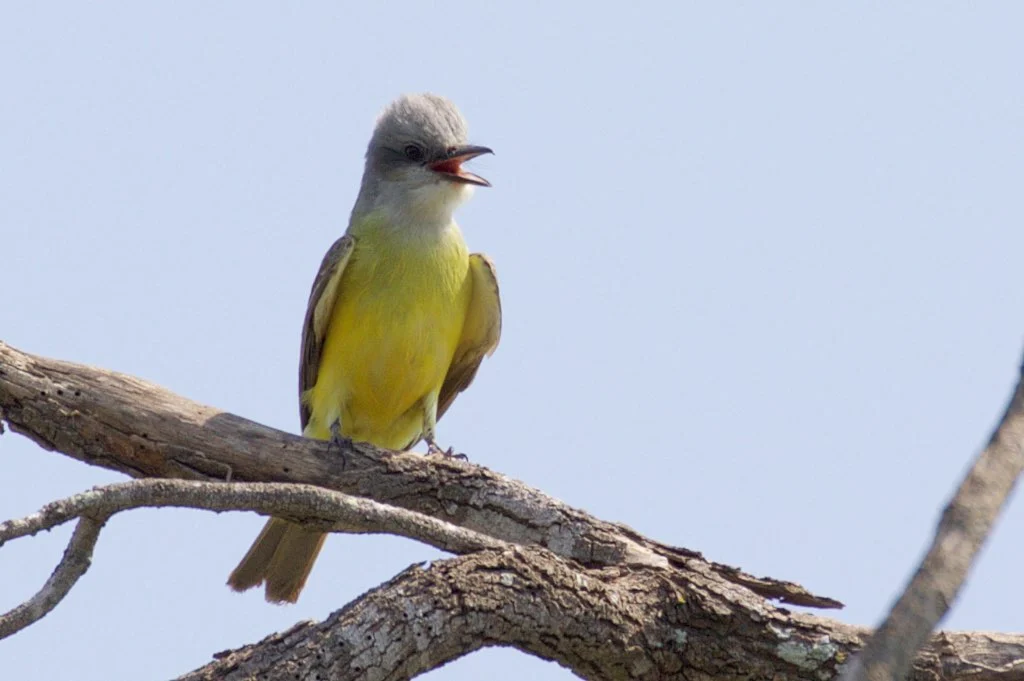
13. Couch’s Kingbird

Couch’s Kingbird

HarmonyonPlanetEarth, CC BY 2.0, via Wikimedia Commons

Couch’s Kingbird is a robust and striking bird with a bright yellow belly and a commanding presence. Known for its aggressive behavior in defending its territory, this kingbird primarily feeds on insects but also enjoys fruit and berries. 

It prefers open areas with scattered trees, often perching conspicuously as it surveys for prey. Couch’s Kingbird’s bold coloring and assertive nature make it a fascinating bird to observe, adding a splash of color and drama to the landscapes it inhabits.

Diet: 

Primarily feeds on insects, but also enjoys fruit and berries.

Habitat: 

Found in open areas with scattered trees, often perched conspicuously as it surveys for prey.

14. Cape May Warbler

Cape May Warbler

Andy Reago & Chrissy McClarren, CC BY 2.0, via Wikimedia Commons

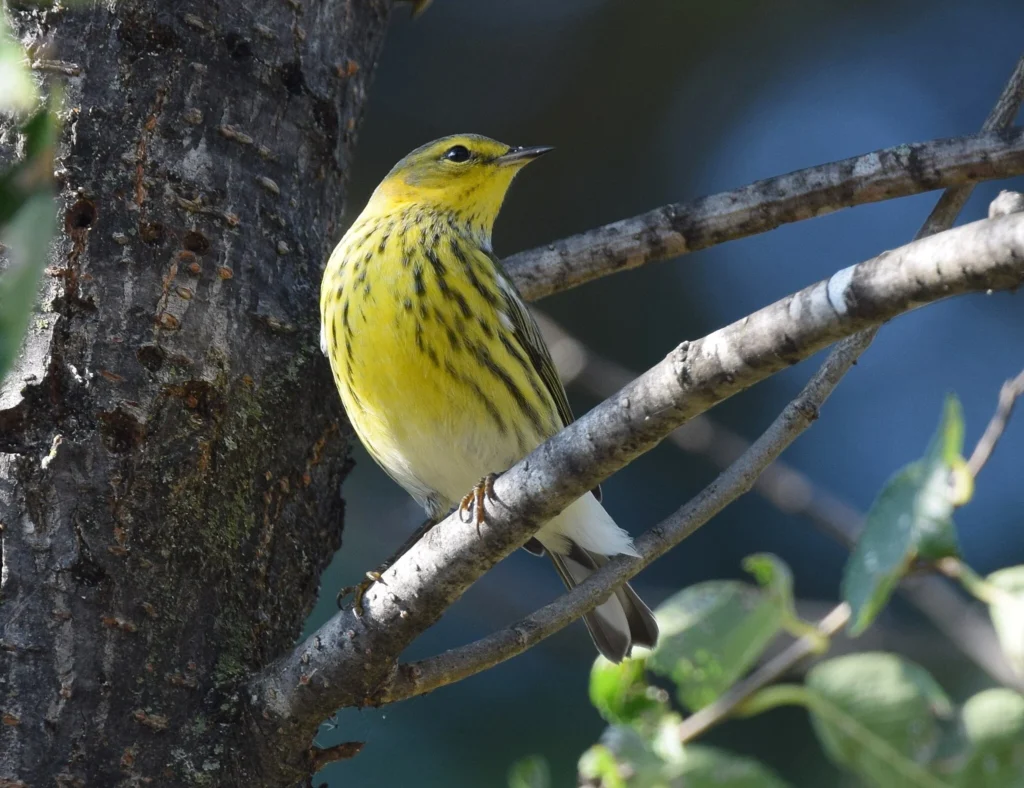
The Cape May Warbler is a striking bird with a yellow face, chestnut cheek patch, and bold streaks on its chest. This small songbird primarily feeds on insects during the breeding season and turns to nectar and fruit in the winter.

 Preferring northern coniferous forests for breeding, it migrates through Michigan, where it can be spotted in various wooded areas. The Cape May Warbler’s vibrant coloring and distinctive markings make it a favorite among birdwatchers, adding a splash of color and excitement during migration seasons.

Diet: 

Feeds on insects, especially during the breeding season, and enjoys nectar and fruit in the winter.

Habitat: 

Breeds in northern coniferous forests and migrates through Michigan, where it can be spotted in various wooded areas.

So, these were the most popular yellow birds you could spot in Michigan. Hope you enjoy it!