Home Blog Page 7

Discover 11 Types of Hawks in Tennessee

Tennessee is home to a remarkable diversity of hawks, offering birdwatchers and nature enthusiasts the opportunity to observe hawks in Tennessee in various habitats. From the open fields and woodlands to wetlands and suburban areas, each hawk species displays unique characteristics and behaviors. Whether it’s the Red-Tailed Hawk’s piercing cry or the Northern Harrier’s low gliding flight, these birds play a vital role in the ecosystem. This guide explores eleven fascinating hawks in Tennessee, their features, habitats, and habits, providing insight into the rich avian diversity of the Volunteer State.

Types of Hawks in Tennessee

1. Red-Tailed Hawk (Buteo jamaicensis)

Red-Tailed Hawk

The Red-Tailed Hawk is a common raptor in Tennessee, recognized by its broad wings and striking reddish-brown tail. It thrives in diverse habitats, from open fields to woodlands, often seen soaring gracefully overhead.

This versatile hunter preys on small mammals, reptiles, and birds, showcasing its adaptability. The Red-Tailed Hawk’s piercing cry is iconic, frequently used in films to depict raptors. Adults display a rich brown plumage with pale undersides, making them easily identifiable.

Their soaring flight and sharp vision make them formidable predators, while their widespread presence provides a reliable spectacle for bird enthusiasts and nature lovers alike.

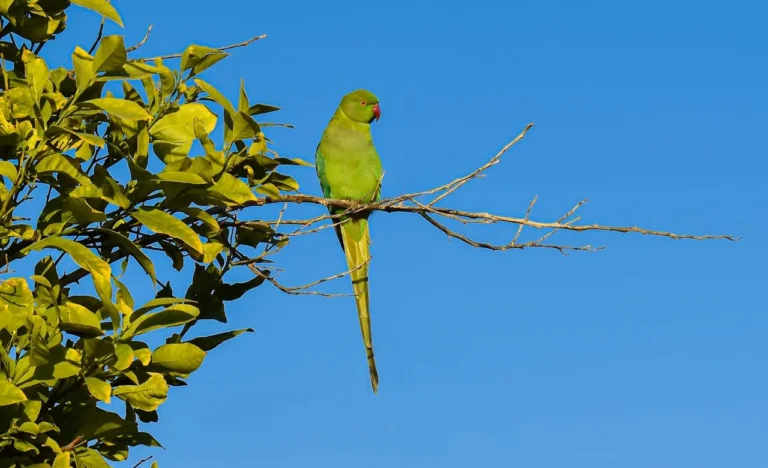
Which green bird in California mimics human speech but is often mistaken for a wild parakeet?

2. Cooper’s Hawk (Accipiter cooperii)

Cooper’s Hawk

Cooper’s Hawks are agile, medium-sized raptors that excel in wooded environments. Known for their stealth and speed, they hunt smaller birds mid-flight, using their long tails and rounded wings for precise navigation through dense forests.

Males are smaller than females, with both sexes sporting blue-gray backs and reddish-barred chests. Often spotted near suburban areas, these hawks adapt well to human-altered landscapes, occasionally visiting backyard bird feeders to prey on unsuspecting birds. Cooper’s Hawk is also found in other North American states like Florida and Illinois.

Their sharp features and distinctive black-banded tails make them a favorite among birdwatchers. Despite their small size, Cooper’s Hawks are formidable predators, showcasing remarkable agility and hunting prowess.

3. Red-Shouldered Hawk (Buteo lineatus)

Red-Shouldered Hawk

The Red-Shouldered Hawk stands out with its reddish-brown shoulders and intricately patterned wings. This medium-sized raptor prefers habitats near water, such as swamps or riverside forests, where its loud “kee-rah” calls echo through the trees.

It is known for its stocky build, barred underparts, and checkered black-and-white wing patterns. These hawks are skilled hunters, feeding on small mammals, amphibians, and reptiles.

Often spotted perched in trees or gliding gracefully above wetlands, the Red-Shouldered Hawk is a vital part of the ecosystem. Its striking appearance and distinctive behavior make it a cherished sight for bird enthusiasts and nature observers.

4. Broad-Winged Hawk (Buteo platypterus)

Broad-Winged Hawk

The Broad-Winged Hawk is a smaller raptor known for its remarkable migratory behavior, traveling in large flocks called “kettles.” In Tennessee, they are more noticeable during migration, though they nest in forested areas.

Compact with broad wings, these hawks feature dark brown backs and pale, barred undersides. Their high-pitched whistles are a hallmark of their presence.

Feeding on insects, small mammals, and reptiles, they play an essential role in their ecosystem. Their migration spectacle is a highlight for birdwatchers, as thousands of these hawks gather to journey south, offering an awe-inspiring natural event.

5. Northern Harrier (Circus hudsonius)

 Northern Harrier

The Northern Harrier, distinguishable by its owl-like facial disk, is a unique raptor often seen gliding low over open fields and marshes. Though not a true hawk, it shares similar hunting traits, relying on its acute hearing to locate prey.

Males are gray, while females exhibit a brown plumage, both featuring long tails and a distinctive white rump patch. Their buoyant, low-flight pattern makes them easily recognizable.

Northern Harriers prey on small mammals and birds, using their exceptional sensory adaptations. These elegant hunters are a captivating sight for bird enthusiasts, offering a glimpse of their remarkable hunting techniques and behavior.

6. Sharp-Shinned Hawk (Accipiter striatus)

Sharp-Shinned Hawk

The Sharp-Shinned Hawk is a small, agile raptor frequently seen in backyards during winter months. With a slim body, shorter wings, and square-tipped tail, it is adept at hunting small birds, often ambushing them near feeders.

These hawks have a blue-gray back, orange-barred chest, and sharp talons for capturing prey. Despite their diminutive size, they are fierce predators, displaying exceptional maneuverability in dense vegetation.

Their resemblance to Cooper’s Hawks can make identification tricky, but their smaller stature and squared tail are key distinctions. The Sharp-Shinned Hawk is a fascinating visitor to suburban areas, captivating birdwatchers with its skillful hunting.

7. Rough-Legged Hawk (Buteo lagopus)

Rough-Legged Hawk

The Rough-Legged Hawk, a winter visitor to Tennessee, is adapted to cold climates and breeds in the Arctic tundra. This large raptor is named for its feathered legs, which help it retain heat in frigid environments.

Found in open fields and agricultural areas, it hunts small mammals and birds, often hovering mid-air before diving on prey. With light and dark morphs, its striking patterns make it a favorite among birdwatchers.

Long, broad wings and a robust build characterize this hawk, which is less common but highly sought after for its beauty and rarity during the winter months.

8. Swainson’s Hawk (Buteo swainsoni)

 Swainson’s Hawk

Swainson’s Hawks are rare migrants in Tennessee, typically seen during their long journeys between North and South America. These slender raptors prefer open grasslands and agricultural areas, feeding on insects, small mammals, and reptiles.

Their long, pointed wings and distinctive plumage, including a brown chest and pale underside, make them recognizable. Swainson’s Hawks are social during migration, often traveling in large groups.

Their adaptability and impressive endurance during migration highlight their unique ecological role. For bird enthusiasts, spotting this rare hawk in Tennessee is a special occasion, offering a glimpse of their remarkable migratory lifestyle.

9. Ferruginous Hawk (Buteo regalis)

 Ferruginous Hawk

The Ferruginous Hawk, the largest hawk in North America, is a rare visitor to Tennessee. Known for its pale body and rusty-colored legs, this powerful bird thrives in open grasslands and prairies.

With long, broad wings and a robust build, it is an apex predator, preying on small mammals and birds. Its striking appearance and rarity make it a prized sighting for birdwatchers.

This hawk’s majestic flight and formidable presence underscore its dominance in its habitat. Despite being uncommon in Tennessee, the Ferruginous Hawk’s beauty and strength leave a lasting impression on those fortunate enough to observe it.

10. Harris’s Hawk (Parabuteo unicinctus)

Harris’s Hawk

Harris’s Hawks are social raptors, occasionally spotted in Tennessee despite being more common in the southwestern United States. They are unique for their cooperative hunting tactics, working in groups to capture prey.

These dark brown hawks feature reddish shoulders and legs, with long tails tipped in white. Their adaptability and teamwork set them apart from other raptors.

Found near open areas and edges of woodlands, Harris’s Hawks are fascinating to observe. While rare in Tennessee, their occasional presence delights bird enthusiasts, offering a glimpse into their remarkable social behaviors and striking physical characteristics.

11. Zone-Tailed Hawk (Buteo albonotatus)

Zone-Tailed Hawk

The Zone-Tailed Hawk is a rare and elusive species in Tennessee, often mistaken for a Turkey Vulture due to its similar soaring flight. Its black plumage, white-banded tail, and slender wings help it blend into vulture flocks, allowing it to surprise prey.

Preferring wooded canyons and open fields, this hawk preys on small mammals and reptiles. Its mimicry of vultures is a unique adaptation, showcasing its stealth and hunting prowess.

Though infrequent in Tennessee, spotting a Zone-Tailed Hawk is a special experience for birdwatchers, highlighting the intricate strategies of raptor survival.

Conclusion

Hawks are not only magnificent predators but also vital components of Tennessee’s ecosystems. Their diverse adaptations, from the stealthy Cooper’s Hawk to the migratory Broad-Winged Hawk, highlight the incredible variety within this group of raptors. Observing these birds in their natural habitats offers a deeper appreciation for their role in maintaining ecological balance. Whether common residents or rare visitors, Tennessee’s hawks captivate with their beauty, skill, and ecological importance, leaving an indelible mark on all who have the pleasure of witnessing their grandeur in flight.

Discover 10 Types of Hawks in Illinois

Illinois is a haven for hawk enthusiasts, offering a glimpse into the majestic world of these powerful birds of prey. From the soaring Red-tailed Hawk to the agile Cooper’s Hawk, each species contributes to the state’s vibrant ecosystem, controlling populations of small mammals and birds. Whether gliding over grasslands or darting through dense forests, hawks in Illinois showcase incredible hunting skills and adaptability. With diverse habitats like woodlands, wetlands, and open fields, Illinois provides endless opportunities for birdwatchers to marvel at these raptors. Grab your binoculars and explore the skies to witness their grace and power!

Types of Hawks in Illinois

1. Red-tailed Hawk

Red-tailed Hawk

The Red-tailed Hawk (Buteo jamaicensis) is one of the most widespread hawks in Illinois. Easily recognizable by its reddish-brown tail and broad wings, this species thrives in a variety of habitats, including open fields, woodlands, and even urban areas. They are known for their sharp eyesight and powerful hunting skills, often preying on small mammals like mice and rabbits.It is also found in many other states of North America.

Identification Tips:

  • Large size, with a wingspan of about 4 feet.
  • Distinctive red tail visible in adults.
  • Loud, piercing scream often heard in movies.

Best Places to Spot:

  • Forest preserves
  • Farmlands
  • Suburban neighborhoods
Which green bird in California mimics human speech but is often mistaken for a wild parakeet?

2. Cooper’s Hawk

Cooper’s Hawk

The Cooper’s Hawk (Accipiter cooperii) is a medium-sized hawk known for its agility and speed. These hawks are adept at navigating through dense forests as they hunt for smaller birds. They are a common sight in Illinois’s wooded areas and suburban backyards, particularly near bird feeders.

Identification Tips:

  • Slender body with rounded wings and a long tail.
  • Grayish-blue back and reddish barring on the chest.
  • Swift, agile flight patterns.

Best Places to Spot:

  • Forested areas
  • Residential neighborhoods

3. Sharp-shinned Hawk

Sharp-shinned Hawk

Similar in appearance to the Cooper’s Hawk, the Sharp-shinned Hawk (Accipiter striatus) is slightly smaller and just as nimble. These hawks are also forest dwellers and can often be seen darting through trees in pursuit of songbirds. They are more commonly observed during migration periods.

Identification Tips:

  • Small size, with a wingspan of about 20-27 inches.
  • Square-shaped tail and thin legs.
  • Dark cap and reddish barring on the chest.

Best Places to Spot:

  • Woodlands
  • Hawk migration observation sites

4. Red-shouldered Hawk

Red-shouldered Hawk

The Red-shouldered Hawk (Buteo lineatus) is a striking bird with vibrant plumage and a distinct call. These hawks prefer riparian habitats, such as wooded areas near rivers and streams. Their diet consists of small mammals, amphibians, and reptiles.

Identification Tips:

  • Medium size, with reddish shoulders and barred underparts.
  • Distinctive loud, repetitive call.

Best Places to Spot:

  • Bottomland forests
  • River valleys

5. Northern Harrier

Northern Harrier

The Northern Harrier (Circus hudsonius) is unique among Illinois hawks for its low, gliding flight over grasslands and marshes. With its owl-like face and long wings, this hawk is specially adapted for hunting in open habitats.

Identification Tips:

  • Long tail and wings, with a white patch on the rump.
  • Males are gray, while females are brown.
  • Flight style: low and slow over fields.

Best Places to Spot:

  • Grasslands
  • Wetlands
  • Prairie restoration sites

6. Broad-winged Hawk

 Broad-winged Hawk

A migratory species, the Broad-winged Hawk (Buteo platypterus) is a summer visitor to Illinois. These hawks are best known for their spectacular group migrations, called “kettles,” where hundreds can be seen spiraling upwards in the sky.

Identification Tips:

  • Compact size, with broad wings and a short tail.
  • Striped tail and reddish-brown chest.

Best Places to Spot:

  • Forested areas during summer
  • Hawk watching sites during migration

7. Rough-legged Hawk

Rough-legged Hawk

The Rough-legged Hawk (Buteo lagopus) is a winter visitor to Illinois. These hawks prefer open fields and marshes, often seen hovering while hunting for small mammals. Their feathered legs, which extend down to their toes, help them endure cold temperatures.

Identification Tips:

  • Large size, with a wingspan of 4-5 feet.
  • Light-colored head and dark belly band.
  • Feathers covering their legs.

Best Places to Spot:

  • Agricultural fields
  • Marshlands

8. Swainson’s Hawk

Rough-legged Hawk

The Swainson’s Hawk (Buteo swainsoni) is a rare visitor to Illinois, typically spotted during migration. Known for their long migrations to South America, these hawks often form large groups during their travels.

Identification Tips:

  • Medium size with long, narrow wings.
  • Light underside with a dark chest band.
  • Pale face and dark flight feathers.

Best Places to Spot:

  • Open grasslands
  • Migration hotspots

9. Ferruginous Hawk

Ferruginous Hawk

The Ferruginous Hawk (Buteo regalis) is the largest hawk in North America and an occasional visitor to Illinois. Known for its striking appearance and impressive wingspan, this hawk prefers open areas where it can hunt for small mammals.

Identification Tips:

  • Large size with a wingspan of up to 5 feet.
  • Rust-colored feathers on the back and legs.
  • Light underparts with dark markings.

Best Places to Spot:

  • Open grasslands
  • Prairie regions

10. Northern Goshawk

Northern Goshawk

The Northern Goshawk (Accipiter gentilis) is a rare and elusive hawk in Illinois, typically found in heavily forested areas. Known for its fierce hunting skills, it preys on a variety of animals, including birds and small mammals.

Identification Tips:

  • Large size with broad wings and a long tail.
  • Slate-gray back and finely barred underparts.
  • Intense red eyes in adults.

Best Places to Spot:

  • Dense forests
  • Remote wooded areas

Conclusion

Illinois’s rich natural landscapes provide a haven for these incredible hawks. Whether you’re a seasoned birder or a casual nature enthusiast, observing these raptors in their natural habitats is an unforgettable experience. Pack your binoculars, visit the state’s diverse habitats, and marvel at the beauty and power of these aerial predators.

Discover Blue Birds in Pennsylvania: Where and How to Spot Them

Pennsylvania is home to an incredible array of bird species, each adding vibrant colors and melodies to the state’s diverse ecosystems. Among these, blue birds stand out for their striking hues and captivating charm. From meadows to woodlands and suburban backyards, these feathered beauties brighten the landscapes and inspire birdwatchers across the Keystone State. This guide delves into the types of blue birds you can spot in Pennsylvania, offering insights into their unique characteristics, habitats, and behaviors.

12 Types of Blue Birds in Pennsylvania

1. Eastern Bluebird

Eastern Bluebird

The Eastern Bluebird symbolizes happiness and is a common sight in Pennsylvania. These small thrushes have vibrant blue plumage on their backs and reddish-orange chests, making them unmistakable.

They inhabit open fields, orchards, and woodland edges, often perching on fences or wires.

Their diet consists of insects, fruits, and berries. Known for their melodious songs, Eastern Bluebirds are cavity nesters and thrive in areas with nesting boxes. Conservation efforts have greatly boosted their population, ensuring their continued presence in the state.

Which green bird in California mimics human speech but is often mistaken for a wild parakeet?

2. Mountain Bluebird

Mountain Bluebird

Though less common in Pennsylvania, the Mountain Bluebird is a stunning bird with bright sky-blue feathers and a graceful appearance. Preferring open grasslands and mountainous regions, they occasionally wander into Pennsylvania during migration. These birds are insectivores, often seen hovering above fields to spot prey.

Their nests are built in cavities, and they may use nest boxes if natural options are scarce. Mountain Bluebirds are a joy to observe, adding a splash of vivid blue to the landscape.

3. Blue Jay

Blue Jay

The Blue Jay is a year-round resident in Pennsylvania and is easily recognized by its striking blue and white plumage with black accents.

Known for their intelligence and noisy calls, Blue Jays are frequent visitors to backyard feeders. They are omnivores, eating everything from seeds and nuts to insects and small vertebrates.

Blue Jays play a vital role in forest regeneration by dispersing acorns. Social and bold, they often mimic the calls of other birds and are highly territorial.

4. Indigo Bunting

Indigo Bunting

The Indigo Bunting is a small songbird renowned for its vibrant, all-blue feathers that shimmer in sunlight.

Found in brushy areas, forest edges, and fields, these birds are summer visitors to Pennsylvania.

Indigo Buntings feed on seeds, berries, and insects. Their sweet, high-pitched songs are a treat for birdwatchers. Males sing persistently during the breeding season to defend their territory and attract mates.

These birds migrate to Central and South America during winter, making their presence in Pennsylvania a seasonal delight.

5. Cerulean Warbler

Cerulean Warbler

The Cerulean Warbler is a diminutive, tree-dwelling bird with a striking blue-and-white color pattern. Preferring mature deciduous forests, they are often found high in the tree canopy.

These warblers are insectivores, foraging for caterpillars, flies, and other small insects.

Known for their fast, buzzing songs, Cerulean Warblers are a challenge to spot due to their treetop habitat. Unfortunately, their populations are declining due to habitat loss, making conservation efforts crucial for their survival.

6. Blue Grosbeak

Blue Grosbeak

The Blue Grosbeak is a rare but beautiful bird in Pennsylvania, sporting deep blue plumage with chestnut wing bars.

They inhabit shrubby fields, forest edges, and riparian areas. Blue Grosbeaks are seed and insect eaters, often seen foraging on the ground or perching on shrubs.

Their melodious, warbling song is a highlight for bird enthusiasts. These birds breed in Pennsylvania during the summer months and migrate to Central America for the winter.

7. Tree Swallow

Tree Swallow

The Tree Swallow is a sleek bird with iridescent blue-green backs and white underparts.

Found near water bodies, open fields, and wetlands, they are adept aerial foragers, catching insects mid-flight.

Tree Swallows nest in cavities and readily use nesting boxes. Their graceful flight patterns and social behavior make them a favorite among birdwatchers. During migration, they form large flocks, creating mesmerizing aerial displays.

8. Northern Parula

Northern Parula

The Northern Parula is a small warbler with a bluish-gray back, yellow chest, and white wing bars. These birds inhabit mature forests with abundant moss and lichen, where they build unique hanging nests.

Northern Parulas are insectivores, feeding on spiders and small insects. Their high-pitched, buzzy songs can be heard during the breeding season.

Migrating through Pennsylvania, they are most commonly observed in spring and fall, delighting bird enthusiasts with their colorful presence.

9. Barn Swallow

Barn Swallow

The Barn Swallow is a graceful bird with cobalt-blue upperparts, a reddish throat, and a deeply forked tail.

These birds are common in Pennsylvania, often nesting in barns, under bridges, or on other man-made structures.

They are aerial insectivores, catching prey on the wing with impressive agility. Barn Swallows are highly social and often seen in flocks.

Their cheerful chirps and swooping flight patterns make them a beloved sight in rural and suburban areas.

10. Violet-green Swallow

Violet-green Swallow

The Violet-green Swallow is an occasional visitor to Pennsylvania, distinguished by its glossy green back and violet tail.

These birds prefer open areas near water and cliffs. They are aerial foragers, feeding on flying insects.

Violet-green Swallows nest in cavities, including those in trees or cliffs, and occasionally use nest boxes. Their swift, acrobatic flight and vivid coloring make them a spectacular sight during migration.

11. Pygmy Nuthatch

Pygmy Nuthatch

The Pygmy Nuthatch is a small, social bird with a bluish-gray back and a buff-colored underbelly.

Found in coniferous forests, they occasionally stray into Pennsylvania.

These birds are agile climbers, often seen moving headfirst down tree trunks in search of insects and seeds.

Pygmy Nuthatches nest in tree cavities and form close-knit family groups. Their high-pitched, twittering calls and playful behavior endear them to bird enthusiasts.

12. Lazuli Bunting

Lazuli Bunting

The Lazuli Bunting is a rare but vibrant visitor to Pennsylvania. Males display a brilliant blue head and back with an orange chest and white belly.

They inhabit shrubby areas and forest edges, feeding on seeds, berries, and insects. Lazuli Buntings are known for their cheerful, melodious songs.

During migration, they bring a burst of color and music to the landscape, captivating birdwatchers lucky enough to spot them.

Tips for Spotting Blue Birds in Pennsylvania

  • Choose the Right Habitat: Different species prefer various environments, from open fields to dense forests.
  • Use Binoculars: These make it easier to observe details like plumage and behavior.
  • Time Your Visits: Many bluebirds are migratory, so spring and summer are ideal seasons for spotting them.
  • Learn Their Songs: Recognizing bird calls can help you locate species that may be hidden in foliage.

Pennsylvania’s diverse habitats make it an excellent destination for birdwatching. Whether you’re a seasoned birder or a curious beginner, keep an eye out for these dazzling bluebirds during your next outdoor adventure!

Conclusion

Blue birds bring unparalleled beauty and ecological value to Pennsylvania. Each species, from the common Blue Jay to the rare Lazuli Bunting, offers a unique glimpse into the state’s vibrant avian diversity. Birdwatchers and nature enthusiasts can enjoy these magnificent creatures by visiting the right habitats and using simple tools like binoculars and field guides. Pennsylvania’s varied landscapes provide an excellent backdrop for observing and appreciating these colorful birds. By understanding their habitats and behaviors, you contribute to preserving these species for future generations

Hawks in Florida: Habitats, Diet, and Appearance of Majestic Raptors

Florida is a haven for bird enthusiasts, offering a rich variety of hawks in Florida that thrive in its diverse landscapes. From dense forests to open wetlands, each species contributes uniquely to the state’s ecosystems. This guide highlights the incredible diversity of hawks in Florida, showcasing their appearances, behaviors, and ecological roles. Whether you’re a seasoned birder or a curious observer, Florida’s hawks are sure to captivate your interest.

1. Red-tailed Hawk (Buteo jamaicensis)

 Red-tailed Hawk

The Red-tailed Hawk is one of the most widespread hawks in North America. Known for its broad wings and distinctive red tail, this raptor is commonly seen soaring over open fields and forests in Florida.

These birds are adaptable and thrive in various environments, making them one of the most easily spotted hawks in the region. Their powerful build and sharp talons make them skilled hunters, often seen perched high, scanning the ground for prey. 

Despite their fierce hunting style, they play a crucial role in maintaining ecological balance by controlling rodent populations.

  • Appearance: Brown body with a reddish tail.
  • Habitat: Open fields, deserts, and woodlands.
  • Diet: Small mammals, birds, and reptiles.
Which green bird in California mimics human speech but is often mistaken for a wild parakeet?

2. Red-shouldered Hawk (Buteo lineatus)

Red-shouldered Hawk

The Red-shouldered Hawk is easily recognized by its reddish shoulders and striking barred chest. These vocal birds are known for their sharp, distinctive calls that resonate through the wetlands and wooded areas they inhabit. 

Red-shouldered Hawks are agile hunters, often seen gliding over swamps or perched near rivers, waiting to strike at prey. 

Their preference for amphibians and reptiles highlights their vital role in aquatic ecosystems, contributing to the balance of these habitats.

  • Appearance: Reddish shoulders, dark bands on wings.
  • Habitat: Swamps, river valleys, and mixed woodlands.
  • Diet: Frogs, lizards, and small mammals.

3. Cooper’s Hawk (Accipiter cooperii)

The Cooper’s Hawk is a stealthy and agile predator, often found in wooded areas and suburban backyards. Known for its speed and precision, this hawk specializes in hunting small birds, swooping down swiftly to catch its prey. Its adaptability to human-altered landscapes has allowed its population to thrive. 

Cooper’s Hawks are often mistaken for Sharp-shinned Hawks due to their similar appearance, but they are larger and have more rounded tails.

  • Appearance: Blue-gray back with a reddish-barred chest.
  • Habitat: Forests, woodlands, and suburban areas.
  • Diet: Small birds and mammals.

4. Sharp-shinned Hawk (Accipiter striatus)

 Sharp-shinned Hawk

The Sharp-shinned Hawk, the smallest hawk in North America, is an expert hunter of small birds. Its quick and agile flight makes it a formidable predator, often darting through dense foliage to surprise its prey. 

This hawk is more commonly seen during migration periods in Florida. While similar to the Cooper’s Hawk, it has a squared-off tail and slightly smaller build, making identification a rewarding challenge for birdwatchers.

  • Appearance: Blue-gray back with an orange-striped chest.
  • Habitat: Dense forests and edges.
  • Diet: Small birds and insects.

5. Broad-winged Hawk (Buteo platypterus)

Broad-winged Hawk

The Broad-winged Hawk is renowned for its spectacular migrations, forming massive flocks, or “kettles,” that fill the sky. These seasonal movements are a sight to behold, drawing birdwatchers from far and wide. 

In Florida, this hawk can be seen during migration seasons as it travels to and from its breeding and wintering grounds. Its diet consists of a variety of prey, reflecting its adaptability and resilience.

  • Appearance: Brown above with white underparts and barred chest.
  • Habitat: Forests and open woodlands.
  • Diet: Small mammals, amphibians, and insects.

6. Northern Harrier (Circus hudsonius)

Northern Harrier

The Northern Harrier is unique among hawks due to its owl-like facial disk, which enhances its ability to hunt by sound. This bird often glides low over marshes and fields, its distinctive white rump patch easily visible. 

Northern Harriers are solitary hunters, preferring to fly alone as they search for small mammals and birds. Their presence is a sign of healthy wetland ecosystems, making them an important indicator species.

  • Appearance: Slim body with long wings and a white rump patch.
  • Habitat: Marshes, fields, and wetlands.
  • Diet: Small mammals and birds.

7. Short-tailed Hawk (Buteo brachyurus)

Short-tailed Hawk
A

The Short-tailed Hawk is a rare sight in the United States, with its range primarily in southern Florida. This tropical species is known for its two distinct color morphs, which provide camouflage in different habitats. 

It primarily hunts birds, often soaring high in the sky and swooping down on unsuspecting prey. Its limited distribution makes it a prized observation for bird enthusiasts visiting Florida.

  • Appearance: Two color morphs: light (white underparts) and dark (blackish body).
  • Habitat: Forest edges and open areas.
  • Diet: Birds and small mammals.

8. Zone-tailed Hawk (Buteo albonotatus)

 Zone-tailed Hawk

The Zone-tailed Hawk’s resemblance to a turkey vulture helps it blend in with scavengers, giving it an advantage while hunting. 

This rare visitor to Florida is often mistaken for its lookalike due to its flight style and blackish coloration. When spotted, it’s typically in open landscapes or arid regions, making it a rare treat for birdwatchers.

  • Appearance: Blackish with white bands on its tail.
  • Habitat: Arid landscapes and open areas.
  • Diet: Small mammals, reptiles, and birds.

9. Great Black Hawk (Buteogallus urubitinga)

Great Black Hawk

The Great Black Hawk is an impressive tropical raptor that occasionally appears in Florida. With its striking black plumage and white tail tip, this hawk is a formidable predator of reptiles and amphibians. 

While rare, its presence adds to Florida’s biodiversity, particularly in coastal or forested areas. Its powerful build and sharp talons make it an efficient hunter, thriving in its native tropical habitats.

  • Appearance: Black body with a white tail tip.
  • Habitat: Tropical forests and coastal regions.
  • Diet: Reptiles, amphibians, and fish.

10. Ferruginous Hawk (Buteo regalis)

 Ferruginous Hawk

The Ferruginous Hawk is a regal and striking bird, known for its large size and powerful flight. With its rust-colored back and pale underparts, this hawk is adapted to open landscapes where it hunts small mammals. 

Though more common in western regions, occasional sightings in Florida make it an exciting find for bird enthusiasts. Its role as a top predator in its habitat is crucial for maintaining ecological balance.

  • Appearance: Rusty-red back with pale underparts.
  • Habitat: Open grasslands and deserts.
  • Diet: Small mammals, including prairie dogs and rabbits.

11. Harris’s Hawk (Parabuteo unicinctus)

 Harris's Hawk

The Harris’s Hawk is unique among raptors for its cooperative hunting behavior, often forming small groups to capture prey. 

This social strategy sets it apart and increases its success rate. Its striking dark brown plumage, accented by chestnut shoulders and white markings, makes it easily identifiable.

Found in arid regions, the Harris’s Hawk demonstrates remarkable adaptability and intelligence, thriving even in challenging environments.

  • Appearance: Dark brown with chestnut shoulders and white markings.
  • Habitat: Arid regions and scrublands.
  • Diet: Small mammals, birds, and reptiles.

12. Rough-legged Hawk (Buteo lagopus)

The Rough-legged Hawk is a winter visitor to Florida, migrating from its Arctic breeding grounds. Its feathered legs provide insulation in cold climates, a distinctive feature among hawks. Often seen hovering over open fields, it hunts small mammals like voles. 

The Rough-legged Hawk’s seasonal presence adds to Florida’s avian diversity, providing birdwatchers with a glimpse of a raptor adapted to extreme conditions.

  • Appearance: Light underparts with dark belly bands and feathered legs.
  • Habitat: Open fields and tundra.
  • Diet: Small mammals and birds.

13. White-tailed Hawk (Geranoaetus albicaudatus)

 White-tailed Hawk

The White-tailed Hawk is a striking raptor with a distinctive white tail and black band. This bird of prey is rarely seen in Florida, making any sighting noteworthy. It thrives in open grasslands, where it hunts a variety of small animals. Its sharp eyesight and powerful talons make it a skilled predator. 

The White-tailed Hawk’s presence in Florida highlights the state’s role as a haven for diverse avian species.

  • Appearance: Gray body with a white tail and black band.
  • Habitat: Grasslands and open areas.
  • Diet: Small mammals, birds, and reptiles.

Conclusion

The hawks of Florida symbolize the state’s ecological richness, offering unforgettable experiences for nature lovers. Observing these raptors in their natural habitats provides a deeper appreciation for the balance they maintain in the environment.

12 Types of Florida Woodpeckers with Pictures

Florida’s vibrant ecosystems, ranging from pine forests to wetlands, provide a perfect habitat for a variety of Florida Woodpeckers. Known for their rhythmic drumming and unique adaptations, these fascinating birds play crucial roles in maintaining healthy ecosystems. Whether it’s the Pileated Woodpecker, a striking giant carving through tree bark, or the tiny Downy Woodpecker flitting between branches, each species brings its own charm and ecological importance. With a mix of resident and migratory woodpeckers, Florida Woodpeckers offer birdwatchers and nature enthusiasts plenty of opportunities to observe these avian wonders in their natural habitats.

Types of Florida Woodpeckers

1. Pileated Woodpecker

Florida Woodpeckers Pileated Woodpecker

Scientific name: Dryocopus pileatus

Life span: Up to 12 years

Size: 16-19 inches

Weight: 8-12 ounces

Wingspan: 26-30 inches

The Pileated Woodpecker is the largest woodpecker in Florida, making it an iconic sight in the state’s forests.

Its bold black plumage, accented by white stripes on its face and a vivid red crest, make it unmistakable.

Preferring mature forests, these birds use their strong bills to carve large, rectangular holes in trees while searching for ants and beetle larvae.

Their loud, resonant calls often echo through wooded areas, signaling their presence.

Observing their industrious foraging and striking appearance makes them a favorite among birdwatchers and nature enthusiasts alike.

Which green bird in California mimics human speech but is often mistaken for a wild parakeet?

2. Red-bellied Woodpecker

Florida Woodpeckers Red-bellied Woodpecker

Scientific name: Melanerpes carolinus

Life span: 10-12 years

Size: 9-10.5 inches

Weight: 2-3 ounces

Wingspan: 13-16 inches

The Red-bellied Woodpecker is a common sight in Florida’s woodlands and suburban backyards.

Despite its name, the reddish hue on its belly is faint and often hard to notice. More prominent are its red cap and nape, which contrast with its black-and-white striped back.

This versatile woodpecker thrives on a varied diet, including insects, fruits, nuts, and seeds.

Its distinctive, rolling calls and adaptability to human-altered environments make it a frequent visitor to feeders, providing ample opportunities for close observation.

3. Downy Woodpecker

Florida WoodpeckersDowny Woodpecker

Scientific name: Dryobates pubescens

Life span: 4-5 years

Size: 5.5-7 inches

Weight: 0.7-1 ounce

Wingspan: 9-11 inches

As Florida’s smallest woodpecker, the Downy Woodpecker charms bird enthusiasts with its diminutive size and spotted black-and-white plumage.

These birds are highly active, often seen flitting between trees and visiting backyard feeders.

Their diet primarily consists of insects, supplemented by seeds and berries.

Known for their whinnying call and gentle tapping on tree bark, Downy Woodpeckers are approachable and easy to spot, making them a favorite among novice birdwatchers.

4. Hairy Woodpecker

 Florida Woodpeckers Hairy Woodpecker

Scientific name: Dryobates villosus

Life span: 5-6 years

Size: 7-10 inches

Weight: 1.5-3.4 ounces

Wingspan: 13-16 inches

Slightly larger than the Downy Woodpecker, the Hairy Woodpecker shares similar black-and-white markings but has a noticeably longer bill.

These birds prefer mature forests and wooded areas, where they forage for insects beneath tree bark.

Occasionally, they consume sap and fruit as well. The Hairy Woodpecker’s sharp, piercing call and vigorous drumming make it a key indicator of a healthy forest ecosystem. Observing this species provides insight into the dynamic role woodpeckers play in their habitats.

5. Red-headed Woodpecker

Florida Woodpeckers Red-headed Woodpecker

Scientific name: Melanerpes erythrocephalus

Life span: 9-12 years

Size: 7.5-9 inches

Weight: 2-3.2 ounces

Wingspan: 14-17 inches

The Red-headed Woodpecker is a striking bird, known for its completely red head, bright white body, and black wings with white patches.

This species exhibits remarkable behavior, such as catching insects in mid-air and storing food in tree crevices for later consumption.

Found in open woodlands and savannas, these woodpeckers are highly territorial and vocal.

Their bold coloration and fascinating habits make them a highlight for birdwatchers exploring Florida’s natural areas.


6. Northern Flicker

Florida Woodpeckers Northern Flicker

Scientific name: Colaptes auratus

Life span: 6-9 years

Size: 11-12 inches

Weight: 3-5 ounces

Wingspan: 16-20 inches

The Northern Flicker stands out among woodpeckers with its brownish plumage, black spots, and red nape.

Unlike most woodpeckers, flickers often forage on the ground, feeding primarily on ants and other insects. Their loud, clear calls and unique ground-feeding behavior distinguish them from other species.

Found in open woodlands, fields, and suburban areas, the Northern Flicker’s adaptability makes it a versatile and fascinating member of Florida’s avian community.


7. Yellow-bellied Sapsucker

 Florida Woodpeckers Yellow-bellied Sapsucker

Scientific name: Sphyrapicus varius

Life span: 6-7 years

Size: 7-8.5 inches

Weight: 1.5-2 ounces

Wingspan: 13-16 inches

The Yellow-bellied Sapsucker migrates to Florida during winter, bringing its unique sap-feeding behavior to the state.

This medium-sized woodpecker drills neat rows of holes in tree bark to extract sap and catch insects attracted to the sap.

Its pale yellow belly and black-and-white striped face help identify it.

Observing the intricate rows of sap wells left behind provides a glimpse into the resourcefulness and adaptability of this migratory bird.

8. Red-cockaded Woodpecker

Florida Woodpeckers  Red-cockaded Woodpecker

Scientific name: Dryobates borealis

Life span: Up to 15 years

Size: 8-9 inches

Weight: 1.5-2 ounces

Wingspan: 14-15 inches

The Red-cockaded Woodpecker is an endangered species, relying heavily on mature pine forests for survival.

It is characterized by its black-and-white barred back and small red streaks on its head, known as cockades.

This species nests in live pine trees, a behavior unique among woodpeckers.

Conservation efforts in Florida focus on preserving and restoring suitable habitats to protect this rare and ecologically significant bird.

9. Ivory-billed Woodpecker

Florida Woodpeckers  Ivory-billed Woodpecker

Scientific name: Campephilus principalis

Life span: Unknown

Size: 18-20 inches

Weight: 16-20 ounces

Wingspan: 30-31 inches

The Ivory-billed Woodpecker, long thought to be extinct, remains an enigma in the birding world.

This large woodpecker, with its striking black-and-white plumage and ivory-colored bill, is occasionally reported in remote areas of Florida.

These unconfirmed sightings fuel hope and inspire continued conservation efforts for old-growth forest habitats. While elusive, the Ivory-billed Woodpecker symbolizes the importance of protecting biodiversity.

10. Acorn Woodpecker

Florida Woodpeckers Acorn Woodpecker

Scientific name: Melanerpes formicivorus

Life span: 8-15 years

Size: 8-9 inches

Weight: 2-3 ounces

Wingspan: 13-15 inches

The Acorn Woodpecker is a rare visitor to Florida, easily recognized by its colorful appearance featuring a red crown, white face, and black back.

Known for its remarkable behavior of storing acorns in specialized holes drilled into tree trunks, this species exhibits complex social structures.

While more common in the western United States, occasional sightings in Florida make it a fascinating subject for bird enthusiasts.

11. Golden-fronted Woodpecker

Florida Woodpeckers Golden-fronted Woodpecker

Scientific name: Melanerpes aurifrons

Life span: 6-10 years

Size: 8.5-10 inches

Weight: 2.5-3.5 ounces

Wingspan: 15-17 inches

The Golden-fronted Woodpecker is a striking bird known for its vibrant golden-yellow crown and nape, contrasting with black-and-white striped wings and pale gray underparts. Native to the southwestern United States and Central America, this species occasionally appears in Florida, delighting birdwatchers.

Preferring open woodlands and scrublands, it thrives in areas with scattered trees like pecan groves.

These adaptable omnivores feed on insects, fruits, seeds, and sap, playing a vital role in ecosystems by dispersing seeds.

They nest in tree cavities, with both parents sharing in raising their young. While not endangered, preserving natural habitats is crucial for their long-term survival, ensuring future generations enjoy this beautiful species.

12. Gila Woodpecker

Florida Woodpeckers  Gila Woodpecker

Scientific name: Melanerpes uropygialis

Life span: 7-8 years

Size: 8-9.5 inches

Weight: 2-3 ounces

Wingspan: 15-17 inches

The Gila Woodpecker is a medium-sized bird native to desert regions of the southwestern United States and Mexico.

Recognizable by its light brown head and body, black-and-white barred back, and a red cap on males, this species is perfectly adapted to arid environments. It thrives in saguaro cacti, where it nests in cavities it excavated.

A versatile feeder, the Gila Woodpecker eats insects, fruits, nectar, and seeds. It plays a key role in its ecosystem by pollinating plants and dispersing seeds.

Though not endangered, habitat loss poses challenges, making the conservation of desert landscapes vital for its continued survival.

Conclusion

Florida’s woodpeckers showcase the state’s rich biodiversity, from the diminutive Downy Woodpecker to the enigmatic Ivory-billed Woodpecker. Whether in forests, wetlands, or suburban backyards, these birds captivate with their vibrant colors, unique behaviors, and rhythmic drumming. Grab your binoculars and explore Florida’s natural wonders to spot these incredible birds in their habitats!

14 Different Types of Herons in Florida 2025

Florida is a haven for bird enthusiasts, boasting a rich array of heron species thanks to its wetlands, marshes, and coastal habitats. These striking birds, known for their elegant appearances and fascinating behaviors, play vital roles in maintaining the balance of aquatic ecosystems. This guide provides information on the unique characteristics, habitats, and conservation statuses of herons found in the Sunshine State, offering a comprehensive overview for bird watchers and nature lovers alike. Whether you’re exploring mangroves or freshwater marshes, Florida’s herons are sure to captivate and inspire appreciation for the natural world.

14 Types of Herons in Florida

1. Black-crowned Night Heron

Herons in Florida Black-crowned Night Heron

Scientific name: Nycticorax nycticorax
Life span: 10-15 years
Size: 23-28 inches
Weight: 1.5-2.2 pounds
Wingspan: 44-46 inches
Status: Least Concern

The Black-crowned Night Heron is a medium-sized bird, easily recognized by its contrasting black cap, white body, and piercing red eyes. These nocturnal birds roost during the day in wooded wetlands or mangroves and emerge at dusk to forage. They have an omnivorous diet, including fish, crustaceans, insects, and plant material. Adapted to urban environments, they often nest near human settlements. Their slow and deliberate hunting technique makes them efficient predators. With a life span of up to 15 years, this heron’s resilience is well-suited to a variety of wetland habitats.

Which green bird in California mimics human speech but is often mistaken for a wild parakeet?

2. Yellow-crowned Night Heron

Herons in Florida Yellow-crowned Night Heron

Scientific name: Nyctanassa violacea
Life span: 6-10 years
Size: 21-27 inches
Weight: 1.5-2.0 pounds
Wingspan: 39-44 inches
Status: Least Concern

The Yellow-crowned Night Heron is most famous for its distinct yellow crown stripe, grayish-blue body, and contrasting black face. Preferring coastal marshes and tidal flats, this heron specializes in crustaceans, especially crabs, which form the majority of its diet. Active at dusk and nighttime, it employs stealth and patience while hunting. Nesting in colonies, often alongside other waders, it constructs platform nests in mangroves or wooded areas. This species is an excellent indicator of healthy coastal ecosystems. Despite habitat loss, its conservation status remains Least Concern, thanks to its adaptability and stable population in suitable environments.

3. Little Blue Heron

Herons in Florida Little Blue Heron

Scientific name: Egretta caerulea
Life span: 7-17 years
Size: 22-29 inches
Weight: 0.8-1.3 pounds
Wingspan: 39-41 inches
Status: Least Concern

The Little Blue Heron showcases a remarkable transformation, starting as a white juvenile before maturing into a slate-blue adult with maroon accents on the neck. Found in freshwater marshes and brackish habitats, they are skillful hunters, feeding on small fish, amphibians, and insects. These herons are known for their slow, calculated movements and precise strikes. Nesting in mixed-species colonies, they often share resources with other herons and egrets. Their preference for undisturbed wetlands makes habitat conservation vital for their survival. Although not currently endangered, habitat destruction poses a long-term threat to this species.

4. Tricolored Heron

Herons in Florida Tricolored Heron

Scientific name: Egretta tricolor
Life span: 10-14 years
Size: 24-26 inches
Weight: 0.9-1.2 pounds
Wingspan: 37-39 inches
Status: Least Concern

Renowned for its elegant mix of blue-gray, white, and reddish-brown feathers, the Tricolored Heron is a frequent inhabitant of estuaries, marshes, and lagoons. This medium-sized heron exhibits dynamic feeding techniques, such as running, wing-flicking, and darting to catch small fish and crustaceans. It breeds in colonies and often nests in mangroves or shrubs near water. Known for its adaptability, it thrives in both freshwater and saltwater environments. With a population trend that appears stable, the Tricolored Heron holds a Least Concern conservation status, highlighting its resilience in diverse wetland ecosystems.

5. Snowy Egret

Scientific name: Egretta thula
Life span: 10-15 years
Size: 20-27 inches
Weight: 0.8-1.0 pounds
Wingspan: 39-41 inches
Status: Least Concern

The Snowy Egret, with its striking white plumage and contrasting black beak, legs, and bright yellow feet, is a spectacle in Florida’s wetlands. These small herons are known for their energetic foraging style, often chasing prey through shallow waters. Preferring both freshwater and saltwater habitats, they feed on fish, crustaceans, and insects. Their elaborate breeding plumage and courtship displays make them a favorite among birdwatchers. While their population is stable, historic overhunting for their feathers reminds us of the importance of conservation efforts. Today, they are classified as Least Concern but continue to depend on healthy wetland habitats.

6. Cattle Egret

Cattle Egret

Scientific name: Bubulcus ibis
Life span: 10-15 years
Size: 18-22 inches
Weight: 0.9-1.4 pounds
Wingspan: 35-38 inches
Status: Least Concern

The Cattle Egret is a unique heron species often found far from water, in pastures and agricultural areas. Known for its symbiotic relationship with livestock, it feeds on insects disturbed by grazing animals. This small, stocky bird has white plumage with a buff-colored crown during the breeding season. Unlike other herons, they frequently nest in large colonies in trees or shrubs near water. Their adaptability has allowed them to expand their range significantly, and their population is considered stable. As a species of Least Concern, the Cattle Egret continues to thrive in diverse environments, from wetlands to dry grasslands.

7. Green Heron

Scientific name: Butorides virescens
Life span: 7-10 years
Size: 16-18 inches
Weight: 0.5-0.8 pounds
Wingspan: 25-27 inches
Status: Least Concern

The Green Heron is a master of stealth, blending seamlessly into dense vegetation along streams, ponds, and wetlands. Its dark green back and chestnut-colored neck give it a distinctive appearance. Uniquely, this heron uses tools, such as dropping insects or other bait into the water to lure fish—a rare behavior in birds. They are solitary hunters, preferring to ambush prey with a sudden strike. Green Herons are known for their adaptability, thriving in both rural and urban settings. While their population is stable, wetland preservation is critical for their continued success.

8. Least Bittern

Herons in Florida Least Bittern

Scientific name: Ixobrychus exilis
Life span: 8-10 years
Size: 11-14 inches
Weight: 0.2-0.3 pounds
Wingspan: 17-18 inches
Status: Least Concern

The Least Bittern, the smallest heron species in Florida, is an elusive bird that thrives in dense reeds and cattails. Its compact body and striped plumage provide excellent camouflage, making it challenging to spot. Preferring freshwater marshes, it feeds on small fish, insects, and amphibians. Its unique ability to grasp vertical stems allows it to navigate through dense vegetation. The Least Bittern’s soft, cooing call is often the only clue to its presence. Despite habitat loss, its conservation status remains Least Concern, thanks to its adaptability and widespread range.

9. American Bittern

Herons in Florida American Bittern

Scientific name: Botaurus lentiginosus
Life span: 8-15 years
Size: 23-33 inches
Weight: 1.5-3.3 pounds
Wingspan: 42-50 inches
Status: Least Concern

The American Bittern is a solitary and secretive heron known for its streaked brown plumage that helps it blend into marshy surroundings. Found in freshwater wetlands, it feeds on small fish, amphibians, and invertebrates. Its deep, booming call is a defining feature of its breeding season. These birds are highly territorial and rely on dense vegetation for nesting and foraging. Although not endangered, habitat destruction poses a significant threat to their population. Conservation efforts focused on wetland restoration are essential to ensure their survival.

10. Purple Heron

Herons in Florida Purple Heron

Scientific name: Ardea purpurea
Life span: 10-20 years
Size: 29-38 inches
Weight: 1.5-3.0 pounds
Wingspan: 47-57 inches
Status: Least Concern

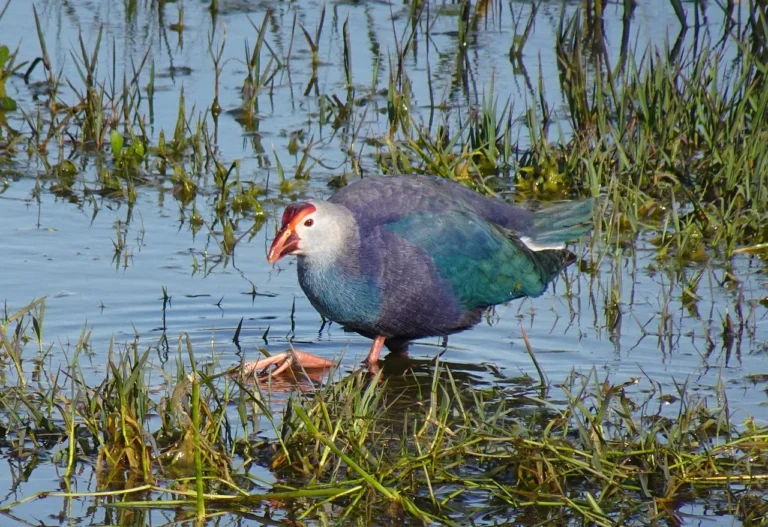
The Purple Heron is a rare visitor to Florida, easily recognized by its reddish-brown plumage and slender neck. Found primarily in marshes and reed beds, it feeds on fish, frogs, and small mammals. These herons are known for their slow and deliberate movements while hunting. Though more common in Europe, Asia, and Africa, occasional sightings in Florida highlight its migratory tendencies. Its conservation status is Least Concern, but habitat protection remains critical for sustaining its global population.

11. Striated Heron

Herons in Florida Striated Heron

Scientific name: Butorides striata
Life span: 5-10 years
Size: 16-18 inches
Weight: 0.4-0.7 pounds
Wingspan: 25-28 inches
Status: Least Concern

The Striated Heron, a relative of the Green Heron, is occasionally spotted in Florida. It has a compact body, bluish-gray plumage, and a black cap. Preferring mangroves and tidal zones, it feeds on fish and crustaceans. Its patient hunting technique and ability to blend into its surroundings make it an effective predator. While its presence in Florida is rare, it thrives in tropical and subtropical regions worldwide. Conservation efforts in mangrove ecosystems benefit this species and others that rely on similar habitats.

12. Whistling Heron

Herons in Florida  Whistling Heron

Scientific name: Syrigma sibilatrix
Life span: 10-15 years
Size: 25-28 inches
Weight: 1.2-2.0 pounds
Wingspan: 40-46 inches
Status: Least Concern

The Whistling Heron is an exotic bird, occasionally found in Florida but native to South America. Its pale blue-gray plumage, yellowish neck, and distinctive whistling call set it apart. Preferring open wetlands and savannas, it feeds on insects, small fish, and amphibians. While not a common resident, its sporadic appearances delight bird enthusiasts. Its conservation status is Least Concern, supported by a stable population across its native range.

13. Great Blue Heron

Herons in Florida  Great Blue Heron

Scientific name: Ardea herodias
Life span: 15-24 years
Size: 36-54 inches
Weight: 4.0-5.5 pounds
Wingspan: 66-79 inches
Status: Least Concern

The Great Blue Heron, the largest heron in Florida, is a majestic bird with slate-gray plumage and striking head plumes. Found in both freshwater and saltwater habitats, it feeds on a variety of prey, including fish, amphibians, and small mammals. Known for its deliberate hunting style, it can stand motionless for extended periods before striking. With a long life span and a widespread range, this species is a testament to the resilience of wetland birds. Its conservation status is Least Concern, emphasizing the importance of maintaining healthy aquatic ecosystems.

14. Reddish Egret

Reddish Egret
User:Googie man, CC BY-SA 3.0, via Wikimedia Commons

Scientific name: Egretta rufescens
Life span: 12-16 years
Size: 27-32 inches
Weight: 1.0-1.6 pounds
Wingspan: 46-48 inches
Status: Near Threatened

The Reddish Egret is an active and agile hunter, often seen performing “dances” in shallow waters to flush out prey. Its shaggy reddish neck and slate-gray body make it one of the most distinctive herons in Florida. Preferring coastal lagoons and salt flats, it feeds primarily on fish. This species is Near Threatened due to habitat loss and declining populations. Conservation efforts focused on protecting coastal wetlands are vital for its survival.

Conclusion

Florida’s wetlands and coastal habitats provide a sanctuary for a remarkable variety of heron species. Each of these birds, from the stealthy Green Heron to the majestic Great Blue Heron, plays a crucial role in their ecosystems. Observing these herons offers not only an aesthetic delight but also a deeper understanding of the importance of preserving wetlands and natural habitats. As human activity continues to threaten these environments, conservation efforts remain vital to ensuring the survival of these elegant birds. By exploring and protecting Florida’s ecosystems, we can continue to enjoy the beauty and diversity of its herons for generations to come.

Discover 11 Types of Green Birds in California

California is a treasure trove of natural beauty, and its skies and forests are no exception. Among its avian wonders, green birds stand out with their vibrant hues and fascinating behaviors. From tiny hummingbirds that shimmer like emeralds to striking parakeets that bring a touch of the tropics, these feathered gems captivate birdwatchers and nature enthusiasts alike. Whether you’re strolling through urban parks, hiking forest trails, or simply gazing out your window, California’s green birds offer a splash of color and a symphony of songs to enrich your day. Let’s dive into the lush world of these remarkable birds and discover the magic they bring to the Golden State.

Types of Green Birds in California

1. Pacific Parrotlet

Green Birds in California Pacific Parrotlet

The Pacific Parrotlet is a tiny dynamo of personality and color. Measuring just around 5 inches, these “pocket parrots” boast vivid green feathers with splashes of blue on their wings. Native to Central and South America, they’ve found popularity as adorable pets in California.

Known for their intelligence, these little birds are quick learners and can mimic sounds or even phrases. Despite their small size, they have bold and curious personalities, often exploring their surroundings with fearless enthusiasm.

Their playful antics and cheerful chirps make them delightful companions, whether spotted in a cage or occasionally in the wild. The Pacific Parrotlet proves that big things really do come in small packages!

Which green bird in California mimics human speech but is often mistaken for a wild parakeet?

2. Violet-green Swallow

Green Birds in California Violet-green Swallow

The Violet-green Swallow is like a little gem darting through California’s skies. With its shimmering green back, iridescent purple wings, and crisp white belly, this bird looks like it flew straight out of an artist’s palette.

Known for their acrobatic flight, these swallows zip and swoop effortlessly, catching insects mid-air with incredible precision. They’re often seen near open woodlands, rivers, or cliffs, where they build their nests in tree cavities or crevices.

Social and lively, they frequently gather in flocks, creating a spectacle of aerial ballet. The Violet-green Swallow is more than just a bird—it’s a tiny, feathered reminder of the beauty and grace found in nature’s smallest creatures.

3. Green-tailed Towhee

 Green-tailed Towhee

The Green-tailed Towhee is a shy but melodious bird, often heard before it’s seen. Sporting an olive-green body, a rust-colored crown, and a white throat, this bird loves to stay low, foraging in dense shrubs or brushy areas.

Found in mountainous regions and deserts, the Green-tailed Towhee migrates seasonally, bringing its charming song wherever it goes. It’s a ground-dweller at heart, scratching through leaf litter for seeds and insects.

Despite their elusive nature, these towhees are a delight for birdwatchers, as their vivid green feathers contrast beautifully with their natural surroundings. Keep your ears tuned to their sweet, whistling calls for a chance to spot them in action.

4. Yellow-chevroned Parakeet

Yellow-chevroned Parakeet

The Yellow-chevroned Parakeet is a tropical gem that has adapted to California’s urban landscape. These bright green birds are easily recognized by the bold yellow patches on their wings, especially when they’re in flight. Originally from South America, they’ve established small, thriving populations in California’s cities.

Often seen in palm trees or perched on power lines, these social parakeets thrive in flocks, chattering away noisily. They’re highly adaptable, feeding on a variety of fruits, seeds, and flowers.

Their playful antics and striking appearance make them a favorite among bird enthusiasts. A touch of the tropics in California, these birds bring color and life to urban areas.

5. Ruby-crowned Kinglet

Ruby-crowned Kinglet

The Ruby-crowned Kinglet is a pint-sized dynamo with a splash of fiery flair! While its olive-green plumage may seem modest at first glance, a quick flutter reveals its hidden secret—a bright ruby-red crown that flashes like a tiny jewel when the bird is excited or showing off.

Found flitting through California’s forests, parks, and gardens, this energetic bird is constantly on the move, hopping from branch to branch as it searches for insects and spiders. Its sweet, complex song is surprisingly loud for such a small bird, often earning it the nickname “pocket-sized opera singer.”

The Ruby-crowned Kinglet is proof that big personalities come in small, green packages!

6. Lesser Goldfinch

Lesser Goldfinch

The Lesser Goldfinch is a pint-sized songbird with a cheerful disposition and a striking green-and-black plumage. Commonly found across California, they’re easily recognizable by their glossy black cap and lemony yellow underside. Lesser Goldfinches are social birds that gather in flocks, often seen fluttering around gardens or perched on sunflowers, nibbling on seeds.

Their melodious songs are a delightful mix of trills and whistles, making them a favorite among backyard bird enthusiasts. These adaptable birds thrive in a variety of habitats, from urban parks to open woodlands.

Whether you’re hiking or simply sipping coffee on your patio, these vibrant little songbirds are bound to bring a smile.

7. Chlorospingus

Chlorospingus

The Chlorospingus, sometimes called a “Bush-Tanager,” is an occasional visitor to California, adding tropical flair to the state’s birding scene. Sporting olive-green feathers with yellowish accents and a dark mask around their eyes, they exude an air of mystery.

Found primarily in Central and South America, their rare appearances in California make them an exciting find for birdwatchers. They’re social creatures, often traveling in small, noisy flocks, foraging for fruit and insects.

These adaptable birds thrive in dense forests, where their soft chirps blend harmoniously with the environment. Spotting a Chlorospingus is like uncovering a hidden gem in the lush greenery.

8. Western Tanager

Western Tanager

The Western Tanager looks like a flying sunset, blending yellows, reds, and greens into a breathtaking display. These colorful songbirds are common in California during spring and summer, often seen foraging high in pine or mixed woodlands. Their diet includes insects and fruits, making them valuable participants in forest ecosystems.

Males boast vibrant plumage, while females lean toward more subdued olive tones. Their song is a sweet, whistling melody, adding music to their striking visual charm.

Whether you’re hiking in the mountains or exploring local parks, a flash of their colors is sure to brighten your day.

9. Anna’s Hummingbird

Anna’s Hummingbird

Anna’s Hummingbird is a tiny marvel with dazzling metallic green feathers and a ruby-red throat. Common across California, they’re often found flitting around gardens, sipping nectar from flowers or feeders. These agile flyers can hover, zip backward, or dart at lightning speed, all while producing a distinctive hum with their rapid wingbeats.

Anna’s Hummingbirds are territorial and fearless, often chasing off much larger birds. Unlike most hummingbirds, they sing, producing a series of high-pitched chirps and squeaks.

Their vibrant colors and dynamic behavior make them a joy to watch, adding a sparkle to California’s backyards and parks year-round.

10. Broad-tailed Hummingbird

Broad-tailed Hummingbird

The Broad-tailed Hummingbird is a shimmering jewel in California’s mountainous regions. These tiny birds are a dazzling sight with metallic green feathers and a signature iridescent rose-colored throat in males. Known for their distinctive trilling sound, made by their wingbeats, they’re a favorite among nature enthusiasts.

These hummingbirds thrive in meadows and alpine forests, flitting from flower to flower to sip nectar while also feasting on small insects. Migrating from Central America to breed in the western United States, their journey is nothing short of incredible.

Watching a Broad-tailed Hummingbird hover in mid-air is a mesmerizing experience, showcasing nature’s elegance in motion.

11. Plumbeous Vireo

Plumbeous Vireo

The Plumbeous Vireo brings a touch of elegance to California’s woodlands with its muted gray-green plumage and white eye-rings, giving it a “spectacled” appearance. These small songbirds are highly vocal, often serenading their surroundings with a cheerful, repetitive tune.

Preferring open forests and woodland edges, they’re often seen hopping along branches as they forage for insects and berries. Plumbeous Vireos are dedicated parents, building meticulous cup-shaped nests from bark strips, grass, and cobwebs.

Their calm demeanor and melodic songs make them a delight to observe in their natural habitat. They’re a gentle reminder of the beauty hidden in the quieter corners of the birding world.

Conclusion

California’s green birds are more than just a feast for the eyes—they’re vital contributors to the state’s rich biodiversity. From pollinating plants to controlling insect populations, these birds play essential roles in maintaining ecological balance. They also inspire us with their resilience, adaptability, and vibrant presence. Whether they’re dazzling us with their colors, enchanting us with their songs, or simply flitting through our lives, these feathered friends remind us of nature’s endless wonders. So, grab your binoculars, head outdoors, and let California’s green birds brighten your day with their beauty and charm. The avian world is waiting to be explored!

Discover 18 Types of Florida Birds with Long Beaks

Florida is a birdwatcher’s paradise, teeming with fascinating species that grace its skies, wetlands, and coastlines. Among these, Florida birds with long beaks stand out as nature’s multitaskers, using their remarkable tools for digging, probing, and even performing acrobatic hunting techniques. From the elegant Great Blue Heron to the flamboyant American Flamingo, these avian wonders showcase the diversity and beauty of Florida’s ecosystems. Each bird brings its unique charm and purpose, from cracking shells to sipping nectar. Let’s embark on a journey to discover the intriguing lives of Florida’s long-beaked residents, where every beak tells a story of adaptation, survival, and wonder.

Types of Florida Birds with Long Beaks

1. Avocet

Florida Birds with Long BeaksAmerican Avocet

The American Avocet is a graceful wader with an unmistakable long, upturned beak that it sweeps side-to-side in shallow waters to catch small aquatic creatures. Sporting black-and-white stripes on its back and a striking peachy-orange head during the breeding season, this bird is a true beauty of Florida’s wetlands.

Its stilt-like legs allow it to wade deep into the water, while its rhythmic feeding movements give it a mesmerizing elegance.

Often found in salt ponds, marshes, and lagoons, the American Avocet is as entertaining to watch as it is captivating in appearance. Its adaptability and unique feeding style make it a standout among Florida’s long-beaked avian residents.

Which green bird in California mimics human speech but is often mistaken for a wild parakeet?

2. American Oystercatcher

Florida Birds with Long Beaks American Oystercatcher

The American Oystercatcher is a coastal bird with a striking black-and-white body and a vivid orange beak that demands attention. Its name reflects its talent for prying open oyster shells, but its menu includes clams, mussels, and other shellfish.

These birds are often seen along Florida’s sandy beaches and rocky shorelines, where their loud calls echo over the waves. With strong legs and a sturdy build, they move with purpose, leaving behind trails of opened shells.

Their beaks act like a toolkit, expertly cracking open hard exteriors to access the soft, tasty insides. They’re nature’s ultimate seafood connoisseurs and a delight for birdwatchers to observe.

3. American White Ibis

Florida Birds with Long Beaks American White Ibis

The American White Ibis is a common yet captivating sight in Florida, often seen foraging in flocks along wetlands, lawns, and even parking lots. With its curved, reddish-orange bill, it digs through mud and soft ground to find insects, small crustaceans, and worms.

This bird’s snow-white feathers contrast beautifully with its black wingtips, visible during flight. Known for its gentle demeanor and adaptability, the White Ibis thrives in both wild and urban environments.

It’s also a social bird, often traveling in large groups and emitting soft, grunting calls. Its long beak and resourceful habits make it one of Florida’s most endearing avian residents.

4. American White Pelican

Florida Birds with Long Beaks American White Pelican

The American White Pelican is a majestic bird with an impressive wingspan and a massive, pouch-like beak that serves as the ultimate fishing net. Unlike its diving relatives, this pelican prefers to work in groups, herding fish into shallow waters before scooping them up.

Its bright white feathers and black wingtips are striking against Florida’s blue skies, making it a favorite among birdwatchers. Often found in freshwater lakes and coastal lagoons, the White Pelican is a master of teamwork and efficiency.

Its quiet, graceful demeanor contrasts with its powerful beak, which can hold gallons of water and fish. This bird is nature’s gentle giant.

5. American Woodcock

Florida Birds with Long Beaks American Woodcock

The American Woodcock, affectionately known as the “Timberdoodle,” is a quirky little bird with a plump body and an exceptionally long, straight beak. This nocturnal forager uses its specialized bill to probe deep into the soil for worms and insects.

Its mottled brown plumage provides excellent camouflage, blending seamlessly with the forest floor. What sets this bird apart is its peculiar courtship display, which involves spiraling flights and a series of melodic, twittering calls.

Found in Florida’s woodlands and brushy areas, the American Woodcock is a fascinating example of nature’s creativity, charming bird enthusiasts with its unique habits and extraordinary hunting tools.

6. Black-necked Stilt

Florida Birds with Long Beaks Black-necked Stilt

The Black-necked Stilt is a slender, elegant wader that looks like it’s walking on stilts—literally! With its thin, pink legs and long, needle-like beak, this bird is perfectly designed for life in shallow waters.

Its black-and-white body is striking, adding a touch of sophistication to Florida’s wetlands. Stilts are often seen wading gracefully through marshes, searching for small aquatic insects and crustaceans.

Despite their delicate appearance, they are fiercely protective of their nests, often confronting much larger predators. Their combination of beauty, agility, and tenacity makes them an unforgettable sight in Florida’s natural landscapes.

7. Great Black-backed Gull

Florida Birds with Long Beaks Great Black-backed Gull

The Great Black-backed Gull is the heavyweight champion of the gull world, being the largest gull species in the world. Its striking black wings contrast sharply with its white body, and its yellow beak is tipped with a bright red spot.

Found along Florida’s coasts and estuaries, this gull is both a scavenger and a predator, feeding on fish, small birds, and even carrion. Despite its imposing size, the Great Black-backed Gull is surprisingly agile in flight, soaring effortlessly over shorelines.

Its commanding presence and sharp hunting instincts make it a fascinating part of Florida’s avian ecosystem.

8. Great Blue Heron

 Florida Birds with Long Beaks Great Blue Heron

The Great Blue Heron is a towering bird of elegance and precision, standing nearly five feet tall with a dagger-like beak perfect for spearing fish. Its slate-gray feathers, long legs, and graceful movements make it a standout in Florida’s wetlands.

These solitary hunters are often seen standing motionless, patiently waiting to strike at an unsuspecting fish or frog. In flight, their wide wingspan and slow, deliberate wingbeats are breathtaking.

Whether wading through shallow waters or nesting high in trees, the Great Blue Heron is a symbol of serenity and skill in Florida’s natural world.

9. Great Egret

Florida Birds with Long Beaks Great Egret

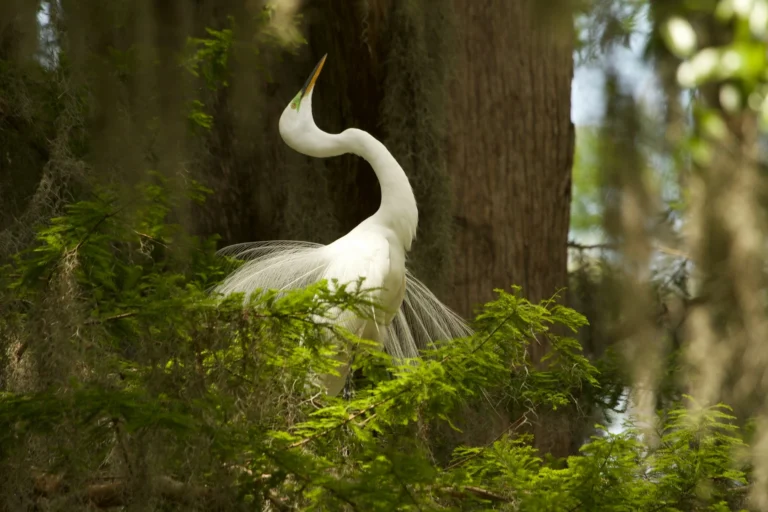
The Great Egret is the picture of grace, with its all-white feathers and slender, S-shaped neck. Its sharp, yellow beak is a versatile tool, used for spearing fish, frogs, and other small creatures in Florida’s wetlands.

Often seen stalking through marshes with deliberate, elegant steps, this bird embodies patience and precision. During the breeding season, it grows long, flowing plumes, adding a touch of extravagance to its already stunning appearance.

The Great Egret is not only a symbol of natural beauty but also a conservation success story, as it was once nearly hunted to extinction for its feathers.

10. King Rail

Florida Birds with Long Beaks King Rail

The King Rail is the largest rail species in North America and a secretive resident of Florida’s marshes and wetlands. With a slightly curved beak and a bold, rusty-brown body, this bird is as striking as it is elusive.

Its long legs and bill allow it to probe deep into mud for insects, crustaceans, and small fish. Despite its size, the King Rail is a master at hiding, often blending seamlessly into dense reeds and grasses.

Its distinctive, grunting call is often the only clue to its presence. Observing a King Rail in the wild feels like discovering a hidden treasure.

11. Long-billed Curlew

Florida Birds with Long Beaks Long-billed Curlew

The Long-billed Curlew is nature’s sandpiper extraordinaire, boasting a beak so long and curved it looks almost exaggerated. This cinnamon-colored bird uses its extraordinary bill to probe deep into sandy or muddy soil for crabs, worms, and other hidden treasures.

Found in coastal areas and open wetlands, it’s a joy to watch as it struts confidently, showcasing its unique hunting skills. The Long-billed Curlew’s melodious calls add an extra layer of charm, making it a favorite among birdwatchers.

Its elegant design and efficient feeding habits are a testament to nature’s ingenuity.

12. Long-billed Dowitcher

Florida Birds with Long Beaks Long-billed Dowitcher

The Long-billed Dowitcher is a compact shorebird with a bill that functions like a sewing needle, rapidly probing mudflats for tiny invertebrates. This bird’s rusty-red plumage during breeding season and its energetic feeding behavior make it stand out among Florida’s shorebirds.

Often found in flocks, the Long-billed Dowitcher migrates in large numbers, creating spectacular sights along Florida’s wetlands. Its high-pitched, chirpy calls are a common soundtrack in marshes, adding a lively vibe to its environment.

Watching it “stitch” through the mud is both amusing and awe-inspiring.

13. Northern Shoveler

Florida Birds with Long Beaks Northern Shoveler

The Northern Shoveler is a dabbling duck with a bill that’s wide and spoon-shaped—perfect for sifting through water for seeds, insects, and plankton. With its iridescent green head, white chest, and rusty sides, the male Northern Shoveler is a dashing figure on Florida’s lakes and ponds.

Females, though more subdued in color, are equally skilled at foraging. These social ducks are often seen in groups, gracefully spinning in circles to stir up food.

Their unique feeding style and vibrant appearance make them a delightful addition to Florida’s birdlife.

14. Ruby-throated Hummingbird

Florida Birds with Long Beaks Ruby-throated Hummingbird

The Ruby-throated Hummingbird is a tiny jewel of a bird, darting through Florida’s gardens and forests with incredible speed. Its long, slender beak is perfectly designed for sipping nectar from flowers, while its iridescent green feathers and ruby-red throat patch make it a stunning sight.

Despite its small size, this hummingbird is a fearless and agile flier, capable of hovering and even flying backward. During migration, it travels vast distances, often crossing the Gulf of Mexico in a single flight.

This lively and colorful bird is a reminder of the resilience and beauty of nature.

15. Sandhill Crane

Sandhill Crane

The Sandhill Crane is a majestic bird with long legs, a red crown, and a resonant bugling call that can be heard from miles away. Known for its elegant courtship dances, which involve bowing, jumping, and wing flapping, this bird is a true romantic.

Its sturdy beak is perfect for digging up plant roots, seeds, and small critters in Florida’s grasslands and wetlands. Often seen in pairs or small family groups, Sandhill Cranes are loyal and social creatures, symbolizing grace and connection.

Their large wingspan and graceful flight make them a sight to behold in Florida’s skies.

16. Snowy Egret

Florida Birds with Long Beaks Snowy Egret

The Snowy Egret is a dainty, white-feathered beauty with golden-yellow feet that seem to dance through Florida’s wetlands. Its sharp, black bill and slender frame make it a skilled hunter, stirring up small fish and shrimp with its feet before striking with precision.

Known for its long, wispy plumes during the breeding season, the Snowy Egret once faced near extinction due to the fashion industry’s demand for its feathers. Thankfully, it has made a remarkable recovery and is now a common yet breathtaking sight in Florida’s marshes and estuaries.

17. Willet

Florida Birds with Long Beaks Willet

The Willet may seem like an unassuming shorebird at first glance, but when it takes flight, its striking black-and-white wing pattern steals the show. Found along Florida’s coastlines and mudflats, this bird uses its sturdy, straight beak to forage for crabs, mollusks, and other small invertebrates.

Its distinctive “pill-will-willet” call is often heard echoing through the air, giving it its name. The Willet’s adaptability to both coastal and inland habitats, along with its unique wing markings, makes it a delightful bird to watch for casual observers and birdwatchers alike.

18. Wood Stork

Florida Birds with Long Beaks  Wood Stork

The Wood Stork is a prehistoric-looking bird with a bald, scaly head and a long, thick beak designed for fishing in shallow waters. This wading bird is a master of efficiency, snapping its beak shut in milliseconds when it senses prey like fish or amphibians.

Found in Florida’s swamps and wetlands, the Wood Stork often nests in large colonies, creating a bustling hub of activity. Despite its rough appearance, it’s a vital player in Florida’s ecosystems, serving as a key indicator of wetland health.

Watching a Wood Stork gracefully move through the water is a reminder of nature’s balance and resilience.

Conclusion

Florida’s long-beaked birds are more than just a beautiful sight—they are a testament to nature’s ingenuity and resilience. Each species, with its specialized beak and unique behavior, plays a vital role in maintaining the delicate balance of Florida’s ecosystems. Whether wading through wetlands, skimming the water’s surface, or dazzling with their vibrant colors, these birds inspire awe and admiration. By appreciating and protecting these avian marvels, we ensure that future generations can experience the magic of Florida’s rich biodiversity. So grab your binoculars and explore—these feathered friends are waiting to show you their extraordinary world!

Discover 16 Types of Black Birds in Florida

Florida is a birdwatcher’s paradise, teeming with an incredible variety of avian species. Among these are the striking black birds that captivate with their beauty, behavior, and unique traits. From wetlands and coasts to urban parks and open fields, these birds thrive in diverse habitats, each playing a vital role in the ecosystem. Whether it’s the Common Grackle’s glossy feathers, the Swallow-tailed Kite’s elegant flight, or the Orchard Oriole’s melodic calls, black birds in Florida offer endless opportunities for discovery. Let’s take a closer look at these fascinating species and the wonders they bring to the Sunshine State.

Types of Black Birds in Florida

1. American Crow

Black Birds in Florida American Crow

The American Crow is one of Florida’s most intelligent and adaptable birds. Known for their shiny black feathers and loud, cawing calls, these crows are social creatures that often gather in large, noisy groups called roosts.

They’re highly resourceful, foraging for food in a wide range of environments, from urban areas to forests.

American Crows are also clever problem-solvers, capable of using tools and even recognizing human faces! They’re often seen strutting confidently across fields or perched in trees, observing their surroundings. Their curious nature and ability to mimic sounds make them fascinating to watch, offering endless entertainment to bird lovers.

Which green bird in California mimics human speech but is often mistaken for a wild parakeet?

2. Black Rail

Black Birds in Florida Black Rail

The Black Rail is a secretive little bird that hides in Florida’s marshes, earning it a reputation as one of the most elusive species in North America.This tiny bird, about the size of a sparrow, has dark feathers with a hint of reddish-brown and subtle white speckles.

Black Rails prefer dense vegetation, making them challenging to spot, but their distinctive “kick-ee-doo” call gives away their presence.Known as a “ghost of the marsh,” their rarity and stealth make spotting one a rewarding experience for dedicated birders.

These nocturnal foragers quietly scuttle through grasses, adding a sense of mystery to Florida’s wetlands.

3. Black Skimmer

Black birds in Florida Black Skimmer

The Black Skimmer is a show-stopper among Florida’s coastal birds, with its striking black-and-white plumage and distinctive red-and-black bill.

These graceful birds are best known for their unique fishing technique: flying low over the water, they skim the surface with their elongated lower mandible to catch fish. Watching them hunt at sunset is like witnessing nature’s poetry in motion.

Found along Florida’s beaches and estuaries, Black Skimmers are social birds that nest in colonies.

Their comical, high-pitched calls and synchronized flying displays make them an unforgettable sight, capturing the hearts of anyone lucky enough to observe them in action.

4. Black Vulture

Black birds in Florida Black Vulture

Black Vultures are nature’s cleanup crew, playing an essential role in Florida’s ecosystems.With their dark plumage, bald blackheads, and broad wings, these scavengers are built for soaring gracefully across the sky in search of carrion.

Unlike their turkey vulture cousins, Black Vultures rely heavily on sight to locate food and often follow others to a meal.T hey’re social birds, often seen in groups perched on fences or circling together overhead.

Despite their ominous appearance, these birds are fascinating, showcasing nature’s balance by keeping the environment clean and free of decay.

Their curious personalities make them surprisingly endearing.

5. Boat-tailed Grackle

Black birds in Florida  Boat-tailed Grackle

The Boat-tailed Grackle is a bold and brassy bird that thrives in Florida’s wetlands and urban areas. Males are easily recognizable by their glossy, iridescent black feathers and loud, metallic calls, making them stand out among loud black birds, while females sport a more subdued brown hue.

These birds are fearless, often strutting confidently through parking lots or scavenging for food near outdoor dining areas.Their long, keel-shaped tails and sharp intelligence make them stand out among Florida’s blackbird species.

Grackles are known for their dramatic displays during mating season, puffing up their feathers and singing with gusto. Their lively antics add a touch of drama to any scene.

Black birds in Florida Bobolink

The Bobolink is a true globetrotter, traveling thousands of miles from South America to North America every year.In Florida, these migratory songbirds are a rare but delightful sight, especially in grassy fields and meadows.

Males in their breeding plumage are striking, with jet-black bodies, white backs, and a golden patch on their heads.Known for their bubbly, musical songs, Bobolinks bring a touch of charm wherever they go.

They’re often seen foraging for seeds and insects, preparing for their long journey.Their incredible migrations, spanning entire continents, make them one of Florida’s most fascinating visitors.

7. Brewer’s Blackbird

Black birds in Florida Brewer’s Blackbird

Brewer’s Blackbirds may not be as flashy as some of their relatives, but their sleek black feathers and bright yellow eyes exude understated elegance.Found in open fields, farmlands, and parks, these birds are social and often forage in flocks.

In Florida, you might spot them strolling through grassy areas or hopping around picnic tables in search of crumbs.Their calm demeanor and adaptability make them a common yet delightful addition to the birding scene.

When sunlight hits their feathers just right, subtle iridescent hues emerge, revealing their hidden beauty.

8. Bronzed Cowbird

Black birds in Florida  Bronzed Cowbird

The Bronzed Cowbird is a fascinating sight with its glossy, metallic black plumage and piercing red eyes.A brood parasite, this bird lays its eggs in the nests of unsuspecting host birds, letting them do the hard work of raising its young.

In Florida, Bronzed Cowbirds are often found in agricultural fields and open grasslands.Despite their unconventional parenting style, these birds are intriguing members of the avian world.

Their shimmering feathers glint bronze and purple in the sunlight, making them a visual treat for bird enthusiasts.

9. Common Gallinule

Black birds in Florida Common Gallinule

The Common Gallinule is a waterbird with plenty of personality! Known for its bright red beak and forehead shield, this bird is hard to miss as it glides across Florida’s ponds and marshes.Its black plumage contrasts beautifully with white side stripes and yellow legs.

Common Gallinules are excellent swimmers and can often be seen walking on floating vegetation, thanks to their large, lobed feet. Their loud, squawking calls are a familiar sound in Florida’s wetlands.

These birds are highly adaptable and thrive in urban and rural environments, making them one of Florida’s most entertaining aquatic residents.

10. Common Grackle

Black birds in Florida  Common Grackle

The Common Grackle is no ordinary blackbird! Black birds with yellow eyes, like the Grackle, boast iridescent black plumage that shimmers with shades of blue, green, and purple—this bird is a rainbow in disguise.

Found throughout Florida, Grackles are bold, social birds that often gather in noisy flocks. They’re highly resourceful and can thrive in a variety of habitats, from city parks to farmlands.

Known for their sharp calls and piercing yellow eyes, Grackles are always up to something, whether it’s foraging for food or chasing away intruders.Their intelligence and adaptability make them a favorite among birdwatchers.

11. Double-crested Cormorant

Black birds in Florida  Double-crested Cormorant

The Double-crested Cormorant is a sleek, black waterbird known for its fishing prowess.With its long neck, hooked bill, and striking turquoise eyes, this bird is built for underwater hunting.

Found along Florida’s coasts, lakes, and rivers, cormorants are expert divers, capable of staying submerged for extended periods.After fishing, they often perch with wings outstretched to dry, creating a striking silhouette against the water.

Despite their slightly prehistoric appearance, these birds are graceful and efficient hunters, playing a key role in Florida’s aquatic ecosystems.

12. European Starling

Black birds in Florida European Starling

The European Starling may be a non-native species, but it’s made itself at home in Florida with its adaptability and dazzling looks.Covered in iridescent black feathers that shimmer with purples and greens, starlings often form massive, synchronized flocks called murmurations.

These aerial displays are mesmerizing, as thousands of birds twist and turn in unison.Starlings are skilled mimics, capable of imitating sounds from other birds and even mechanical noises.

They thrive in both urban and rural areas, foraging for insects, fruits, and seeds.Their sociable nature and beautiful plumage make them a standout among Florida’s avian residents.

13. Magnificent Frigatebird

Black birds in Florida Magnificent Frigatebird

The Magnificent Frigatebird is a true marvel of the skies, with an impressive wingspan of up to seven feet and a forked tail that helps it glide effortlessly.These coastal birds rarely land, spending most of their time soaring above Florida’s beaches and open waters.

Males are famous for their bright red throat pouches, which they inflate like balloons during courtship displays.Frigatebirds are kleptoparasites, often stealing food from other seabirds mid-air.

Their aerial grace and unique behavior make them one of the most captivating birds to observe along Florida’s coasts.

14. Red-cockaded Woodpecker

Black birds in Florida Red-cockaded Woodpecker

The Red-cockaded Woodpecker is a rare and endangered treasure of Florida’s pine forests.With its black-and-white striped back and a tiny red streak on the males’ heads, this bird blends seamlessly with its habitat.

Unlike most woodpeckers, it creates cavities in live pine trees, often surrounded by resin that deters predators.These birds are social, living in family groups called clans.

The preservation of longleaf pine forests is crucial to their survival, making them an emblem of conservation in Florida.Spotting one is a true privilege, as it offers a glimpse into the delicate balance of Florida’s ecosystem.

15. Rusty Blackbird

Black birds in Florida Rusty Blackbird

The Rusty Blackbird is a rare winter visitor to Florida, bringing its unique charm to wetlands and wooded areas.

During the colder months, their feathers take on a rusty, brownish hue, which gives them their name.In breeding season, their plumage transforms into a sleek black with hints of green and blue iridescence.

These shy birds are often seen foraging quietly along water edges, searching for insects and seeds.Rusty Blackbirds are declining in numbers, making each sighting in Florida a special and meaningful experience for birdwatchers.

16. Smooth-billed Ani

Black birds in Florida Smooth-billed Ani

The Smooth-billed Ani is a quirky bird with a distinctive oversized, curved beak that gives it a unique appearance.

Found in southern Florida’s grassy areas and shrubby habitats, these social birds are often seen in small, chattering groups.Their glossy black plumage and loose feathers give them a somewhat disheveled look.

Smooth-billed Anis are insectivores, often catching prey on the ground.They have a cheerful and curious personality, and their calls—a mix of whistles and squawks—add a lively vibe to their surroundings.Spotting one is always a delightful surprise!

Conclusion

Black birds in Florida are as diverse as the landscapes they inhabit, each one contributing its unique flair to the state’s vibrant biodiversity. From graceful raptors and secretive marsh dwellers to bold urban scavengers, these birds are a testament to nature’s creativity and resilience.

Whether you’re an avid birder or a casual observer, spotting these feathered wonders can deepen your appreciation for Florida’s rich natural heritage. So grab your binoculars and explore—every encounter with these black-plumed beauties is a reminder of the intricate and awe-inspiring world of birds. Happy birdwatching!

Discover 10 Types of  Pink Birds in Florida

Florida, known for its lush wetlands, sunny beaches, and diverse ecosystems, is a haven for bird enthusiasts. Among its avian treasures, pink birds stand out for their striking hues and unique beauty. From majestic waders to delicate songbirds, these feathered gems brighten Florida’s skies and landscapes. In this article, we’ll explore ten types of pink birds that you can spot in the Sunshine State, delving into their habitats, behaviors, and fascinating traits.

Types of  Pink Birds in Florida

1. Roseate Spoonbill (Platalea ajaja)

Pink Birds in Florida Roseate Spoonbill

The Roseate Spoonbill is a true artist of Florida’s wetlands, painting the marshes pink with its vibrant feathers. Its stunning color comes from a diet rich in carotenoids, giving its plumage a striking pink hue that is impossible to ignore.

Roseate Spoonbills at Cedar Key Museum are a notable sight, showcasing the beauty of these unique birds in their natural habitat.

Unique Spoon-Shaped Beak

With a beak shaped like a flat spoon, this bird is perfectly equipped for wading through shallow waters. It uses this unique tool to sweep for small fish and crustaceans, making feeding time as fascinating as it is effective.

Social and Picturesque

These social birds are often seen in flocks, creating a picture-perfect scene against the lush green mangroves. Their graceful movements and vivid appearance make them a favorite among birdwatchers and photographers.

A Natural Masterpiece

Whether gliding through the sky or resting peacefully in the wetlands, the Roseate Spoonbill embodies the elegance and beauty of Florida’s marshy landscapes.

Which green bird in California mimics human speech but is often mistaken for a wild parakeet?

2. American Flamingo (Phoenicopterus ruber)

Pink Birds in Florida American Flamingo

The American Flamingo is an icon of beauty and grace, instantly recognizable by its long legs, curved neck, and coral-pink feathers. While famously associated with tropical vibes, these stunning birds occasionally grace Florida’s waters with their presence, particularly in the Everglades and Keys.

Coloration and Diet

Their signature pink hue comes from a diet rich in brine shrimp and algae.

Social Behavior

Flamingos are social birds, often gathering in flocks that create a dazzling display of synchronized movement.

Sightings and Appeal

Watching them wade in shallow waters or take flight is a mesmerizing experience. Beyond their beauty, birds pretty in pink symbolize Florida’s exotic charm and remain a favorite sight for bird enthusiasts.

3. Scarlet Ibis (Eudocimus ruber)

Pink Birds in Florida  Scarlet Ibis

The Scarlet Ibis is a striking spectacle, dazzling anyone who sees it with its fiery red feathers that seem to glow like embers in the sunlight. Its vibrant color is a true feast for the eyes, making it one of the most breathtaking birds to encounter.

Occasional Florida Visitor

While native to South America, Scarlet Ibises sometimes visit Florida, bringing a bold splash of color to its wetlands. These rare appearances are a special treat for birdwatchers and nature enthusiasts alike.

Foraging with Elegance

With their long, curved beaks, Scarlet Ibises are experts at foraging in muddy waters for crustaceans. Their diet contributes to their signature red hue, which sets them apart from other wetland birds.

A Rare Delight

Often seen in groups, these birds exude elegance whether perched in trees or soaring through the skies. Their rarity in Florida makes spotting one an unforgettable experience, earning them the title of a fiery gem in Florida’s avian crown.

4. Rose-Breasted Grosbeak (Pheucticus ludovicianus)

Pink Birds in Florida Rose-Breasted Grosbeak

The Rose-Breasted Grosbeak is a true charmer, captivating bird enthusiasts with its striking plumage of black, white, and pink. Its rosy chest patch resembles a splash of watercolor, adding an artistic touch to its sleek appearance.

Seasonal Visitor to Florida

As a migratory bird, the Grosbeak graces Florida’s gardens and woodlands during its journey, bringing a delightful burst of color and song to the landscape. Its presence is a seasonal treat for birdwatchers.

A Songbird Extraordinaire

The male Rose-Breasted Grosbeak is known for its cheerful, melodic whistles that echo through the trees, often making it easier to hear than see. Even when hidden, its song guides bird lovers to its perch.

Distinctive Yet Subtle Females

While females lack the bold pink chest patch, their intricate brown and white patterns are equally captivating. They add a subtle elegance to the species’ overall charm.

A Backyard Favorite

Frequent visitors to feeders, these birds enjoy munching on seeds, offering a close-up view for birdwatchers. Their approachable demeanor makes them a favorite in Florida’s backyard birdwatching community.

5. Pink-necked Green Pigeon (Treron vernans)

Pink Birds in Florida Pink-necked Green Pigeon

A Pastel Vision

The Pink-Necked Green Pigeon is a stunning blend of soft pastels, with a pink neck fading gracefully into green wings. Its appearance is reminiscent of a spring garden brought to life.

An Exotic Visitor

Native to Southeast Asia, this bird occasionally graces Florida with its presence, thrilling birdwatchers with its rare elegance and tropical beauty.

Fruit-Loving Forager

These pigeons are avid fruit lovers, often perched in treetops enjoying berries. Their diet and gentle cooing add a serene charm to their surroundings.

A Hidden Treasure

Social yet elusive, spotting a Pink-Necked Green Pigeon feels like discovering a rare gem in Florida’s wild landscapes.

6.Purple Finch

Pink Birds in Florida Purple Finch

The Purple Finch is like a little jewel in the trees, bringing a pop of raspberry-pink to Florida’s landscapes. Despite its name, it’s not entirely purple but instead wears a blend of stunning pink feathers that shimmer beautifully in sunlight.

Fashionable Feathers

Male Purple Finches flaunt their vibrant pink plumage like a stylish coat, while the females sport subtler, streaky brown patterns. Their understated elegance helps them blend seamlessly into their natural surroundings.

Feeder Favorites

These petite songbirds are frequent guests at feeders, delighting birdwatchers as they snack on sunflower seeds and berries. Their friendly and approachable nature adds to their charm.

A Sweet Treasure

Spotting a Purple Finch is like finding a tiny treasure in Florida’s avian world. Their cheerful chirping and playful presence make them a delightful addition to any birdwatching experience.

7. Pink Cockatoo (Cacatua leadbeateri)

Pink Birds in Florida Pink Cockatoo

A Flamboyant Showstopper

The Pink Cockatoo dazzles with its pink and white plumage and a flamboyant crest of pink, orange, and yellow that flares when it’s excited or curious.

An Exotic Treat

Native to Australia, this bird occasionally appears in Florida due to aviary escapes, providing bird lovers with a rare and delightful surprise.

Playful and Intelligent

Known for their affectionate and intelligent nature, Pink Cockatoos are mimics and playful companions, making sightings in the wild truly memorable.

8. Galah (Eolophus roseicapilla)

Pink Birds in Florida Galah

The Galah, also called the Rose-Breasted Cockatoo, is a striking parrot with a bubblegum-pink chest and soft gray wings. Its bold colors make it an instant standout in any landscape.

An Australian Visitor to Florida

Native to Australia, Galahs sometimes appear in Florida, typically as aviary escapees. Their rare presence in the state adds excitement for bird enthusiasts.

Cheeky and Social by Nature

Galahs are known for their outgoing and playful personality. They’re the life of any avian gathering, often chattering or mimicking sounds with impressive skill.

A Burst of Festive Energy

With their carnival-like appearance and lively antics, Galahs bring joy and laughter wherever they’re spotted. They’re a true delight in Florida’s birding scene.

9. Pink-Headed Fruit Dove (Ptilinopus porphyreus)

Pink Birds in Florida Pink-Headed Fruit Dove

A Tropical Painting

The Pink-Headed Fruit Dove looks like it belongs in an art gallery, with a vibrant pink head contrasting vividly against its green wings.

Rare and Serene

Native to Southeast Asia, these birds are shy and often hidden in dense foliage. Sightings in Florida are rare, usually due to aviary escapes.

A Peaceful Presence

With its soft cooing and fruit-heavy diet, this dove adds tranquility and beauty to its surroundings, delighting any bird enthusiast lucky enough to find it.

10. House Finch

Pink Birds in Florida House Finch

The House Finch is a delightful songbird, with males easily recognized by their rosy-red head, chest, and rump, which bring vibrant color to Florida’s backyards and urban spaces.

Subtle Beauty in Females

While females lack the bold red hues, their streaky brown plumage adds a touch of understated elegance, allowing them to blend harmoniously with their surroundings.

Frequent Feeder Visitors

Social and friendly, House Finches often visit feeders, eagerly munching on sunflower seeds and fruits, making them a favorite among bird enthusiasts.

Melodic Songsters

Known for their cheerful chirping, House Finches fill the air with melodic tunes, adding life and joy to any environment.

Urban Adaptability

These adaptable birds thrive in urban and suburban settings, often nesting in eaves or trees. Spotting a House Finch feels like discovering a pocket-sized burst of sunshine!

Tips for Birdwatching Pink Birds in Florida

  1. Visit the Right Locations:
    • The Everglades, Merritt Island, and Big Cypress National Preserve are hotspots.
    • Coastal areas and freshwater wetlands offer ample opportunities.
  2. Time Your Visits:
    • Early mornings and late afternoons are the best times for birdwatching.
    • Winter and spring migrations bring many species to Florida.
  3. Carry the Right Gear:
    • A good pair of binoculars and a camera with a zoom lens are essential.
    • Use a bird identification guide or app to track sightings.
  4. Respect Their Habitat:
    • Avoid disturbing birds or their nests.
    • Stay on designated trails and follow local guidelines.

Conclusion

Florida’s pink birds offer a kaleidoscope of beauty and charm, enriching the state’s already vibrant biodiversity. From the graceful Roseate Spoonbill to the occasional Pink Cockatoo, each species adds a unique touch to the landscape. Whether you’re a seasoned birder or a casual nature lover, exploring these avian wonders is an experience you’ll never forget. So grab your binoculars, head to Florida’s wetlands, and prepare to be mesmerized by the blush-toned treasures of the Sunshine State.