Home Blog Page 4

Yellow Birds in Arizona :19 Species You Can Spot in the Desert and Beyond

0

Arizona is a sun-drenched state, full of desert landscapes, mountain forests, and rippling rivers. But it’s not just the red rocks and cactus blooms that add color here—yellow birds bring flashes of sunshine wherever they go! Whether it’s a tiny warbler flitting through cottonwoods, a bold oriole perched on a saguaro, or a meadowlark singing from the grasslands, these golden-feathered beauties are everywhere if you know where to look.

In this guide, we’ll explore the most eye-catching yellow birds of Arizona, from familiar backyard favorites to seasonal migrants that brighten up spring and fall. Grab your binoculars—because spotting these feathered sunbeams is like finding wildflowers in flight.

Yellow Birds in Arizona

American Goldfinch
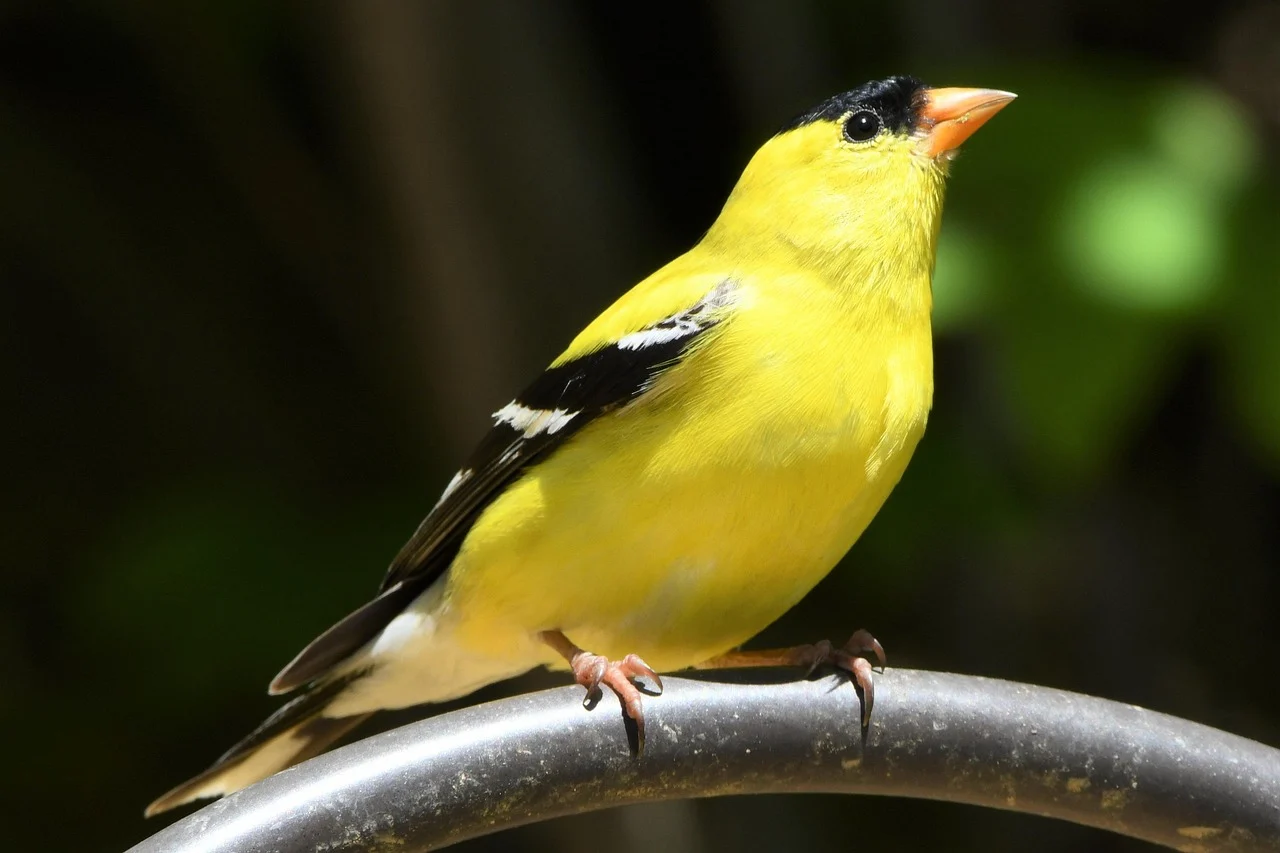
American Goldfinch

Appearance

The American Goldfinch is like a flying drop of sunshine. Males in breeding season glow in bright lemon-yellow with a black cap and wings, while females wear softer olive-yellow tones year-round. In winter, both sexes take on a duller plumage, blending into dry fields but still showing hints of golden.

Habitat

In Arizona, you’ll often see them in weedy fields, open meadows, gardens, and even suburban backyards. They especially love areas with plenty of thistles, sunflowers, and dandelions.

Diet

Unlike many songbirds, goldfinches are almost strictly vegetarian. They thrive on seeds—especially thistle, sunflower, and asters—though they may nibble buds and berries as well.

Vocalisations

Their call is cheerful and bouncy, often described as a “per-chick-o-ree” flight call that matches their undulating flight pattern.

Nesting

Uniquely, American Goldfinches breed later in summer when thistle and milkweed are abundant, using the plant fibers and down to line their nests. Females weave neat cup-shaped nests often in shrubs or small trees.

Behaviour

They’re highly social and often found in flocks, even during breeding season. Their buoyant flight, where they dip and rise in arcs, is a trademark sight.

Conservation

Thankfully, American Goldfinches are thriving. They benefit from backyard feeders stocked with nyjer or sunflower seeds, making them one of the most common and well-loved yellow birds in Arizona.

Yellow Warbler
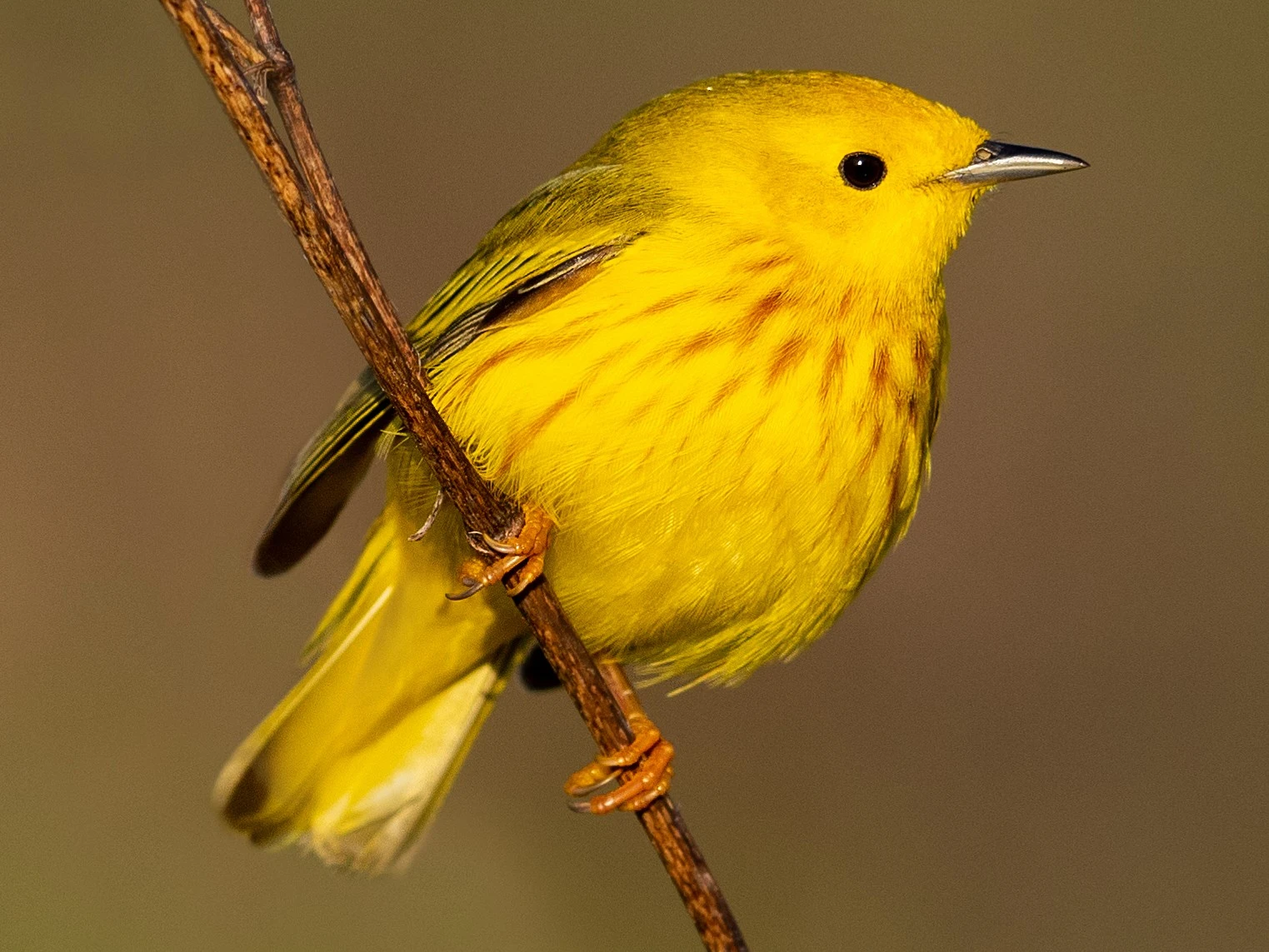
Yellow Warbler

Appearance

The Yellow Warbler is one of the brightest yellow songbirds in Arizona. Males are almost entirely golden-yellow with faint chestnut streaks on the breast, while females and juveniles are slightly paler. Their round heads, thin bills, and glowing plumage make them easy to spot in green foliage.

Habitat

These warblers thrive in willow thickets, riparian areas, and shrubby habitats near streams and rivers. In Arizona, they are often seen in lush riparian corridors that cut through the desert.

Diet

They mainly feed on insects, including caterpillars, beetles, and spiders. Occasionally, they may eat berries during migration when insects are scarce.

Vocalisations

Their song is a sweet, high-pitched “sweet-sweet-sweeter-than-sweet,” which is both melodic and easily recognizable during breeding season.

Nesting

Yellow Warblers build compact cup-shaped nests in shrubs or small trees, often concealed within dense leaves. Females typically lay 3–5 eggs, which they incubate for about two weeks.

Behaviour

They are active and agile, constantly flitting among branches as they glean insects from leaves. During migration, they often join mixed flocks of other small songbirds.

Conservation

Yellow Warblers remain common, though habitat loss and brood parasitism by cowbirds pose threats. Protecting riparian habitats in Ari

Zona is key to maintaining their populations.

Yellow-breasted Chat
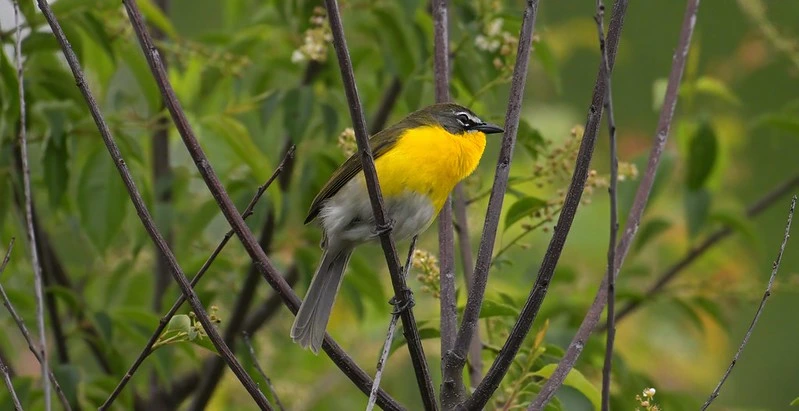
Yellow-breasted Chat

ppearance

The Yellow-breasted Chat is the largest member of the warbler family, and it looks the part! It has a bright yellow chest and throat, olive-green upperparts, and striking white “spectacles” around its eyes. Its hefty size, long tail, and strong bill make it stand out from smaller warblers.

Habitat

In Arizona, chats prefer dense thickets, brushy stream edges, and tangled vegetation in riparian areas. They love places where they can stay hidden while singing loudly from cover.

Diet

Their diet is a mix of insects and berries. In summer, they eat beetles, caterpillars, and grasshoppers, while fall brings more fruit and berry foraging.

Vocalisations

The Yellow-breasted Chat is famous for its loud, varied, and often comical song. It includes whistles, croaks, chuckles, and squawks, sometimes delivered in an almost mocking tone. Males often sing from high perches or even during display flights.

Nesting

Chats build bulky cup-shaped nests in dense shrubs or low tangles of vegetation. The female lays 3–5 eggs, which are incubated for about 11 days before hatching.

Behaviour

Despite their size, chats are secretive birds, usually staying low and hidden in thick cover. During breeding season, however, males become bold and visible while defending territories.

Conservation

Yellow-breasted Chats are fairly common across much of Arizona’s riparian habitats, though loss of dense shrub cover can reduce their breeding success. Conservation of streamside vegetation helps maintain healthy populations.

Lesser Goldfinch
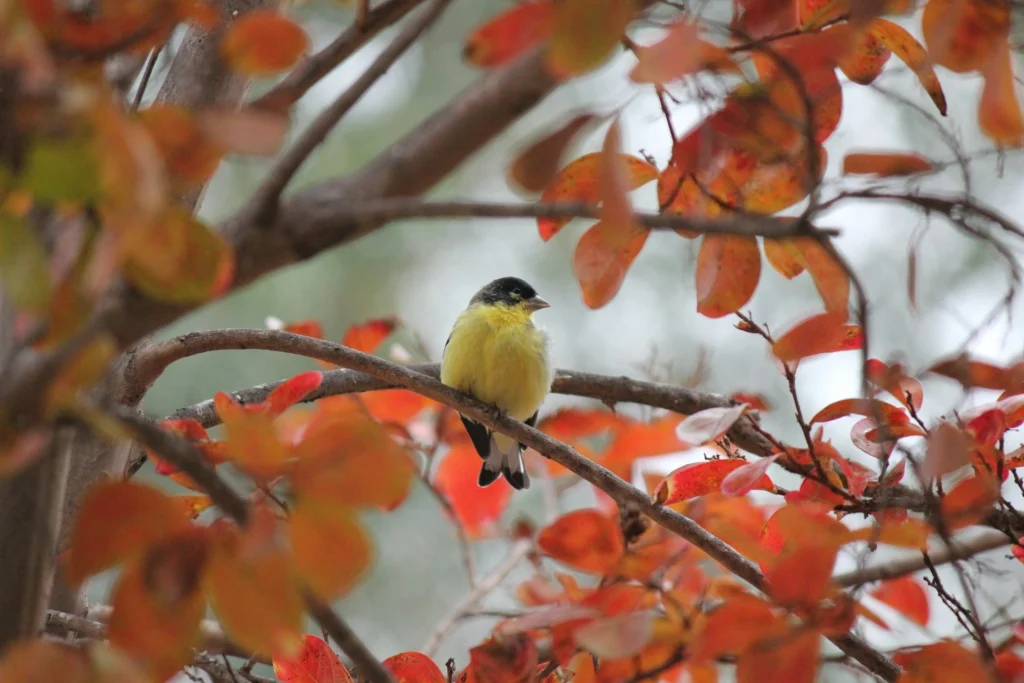
Lesser Goldfinch

Appearance

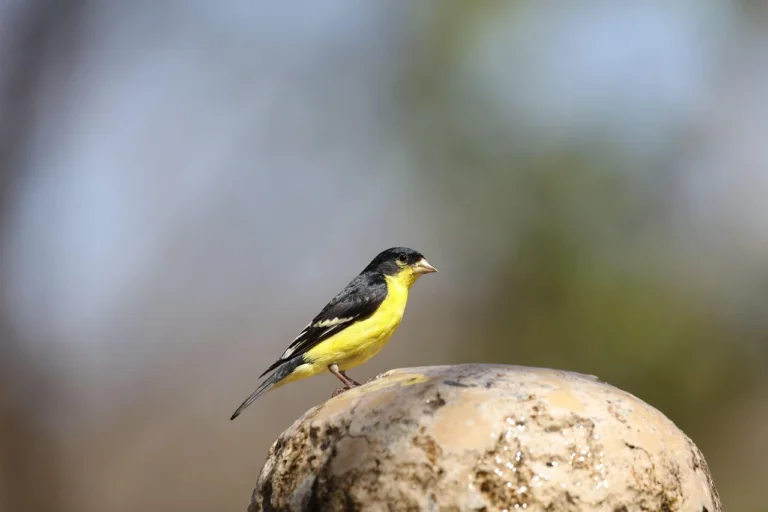
The Lesser Goldfinch is a tiny bird with a big splash of sunshine. Males in Arizona usually have a bright yellow belly and breast, with glossy black backs and caps, though some show greenish backs instead. Females and juveniles are duller, olive-yellow overall, but still glow softly in the desert sun.

Habitat

These goldfinches are common across Arizona, especially in foothills, desert scrub, and open woodlands. They’re also frequent visitors to backyard feeders stocked with sunflower seeds or nyjer.

Diet

Seeds make up most of their diet, particularly those of sunflowers, dandelions, and thistles. They also eat buds and occasionally insects, especially when feeding young.

Vocalisations

Their song is a long, cheerful series of trills and twitters, often delivered while perched high or even in flight. They also have a distinctive “tee-yee” call.

Nesting

Females weave cup-shaped nests in shrubs or trees, often 4–8 feet above ground. They line the nests with soft plant fibers and hair, laying 3–5 pale blue eggs.

Behaviour

Social and active, Lesser Goldfinches often form flocks. Their undulating flight pattern, much like the American Goldfinch, is a giveaway. You’ll often see them hanging upside down on seed heads while feeding.

Conservation

These birds are widespread and adaptable, and their numbers remain stable. They benefit from native plant growth and backyard feeding stations throughout Arizona.

Western Tanager
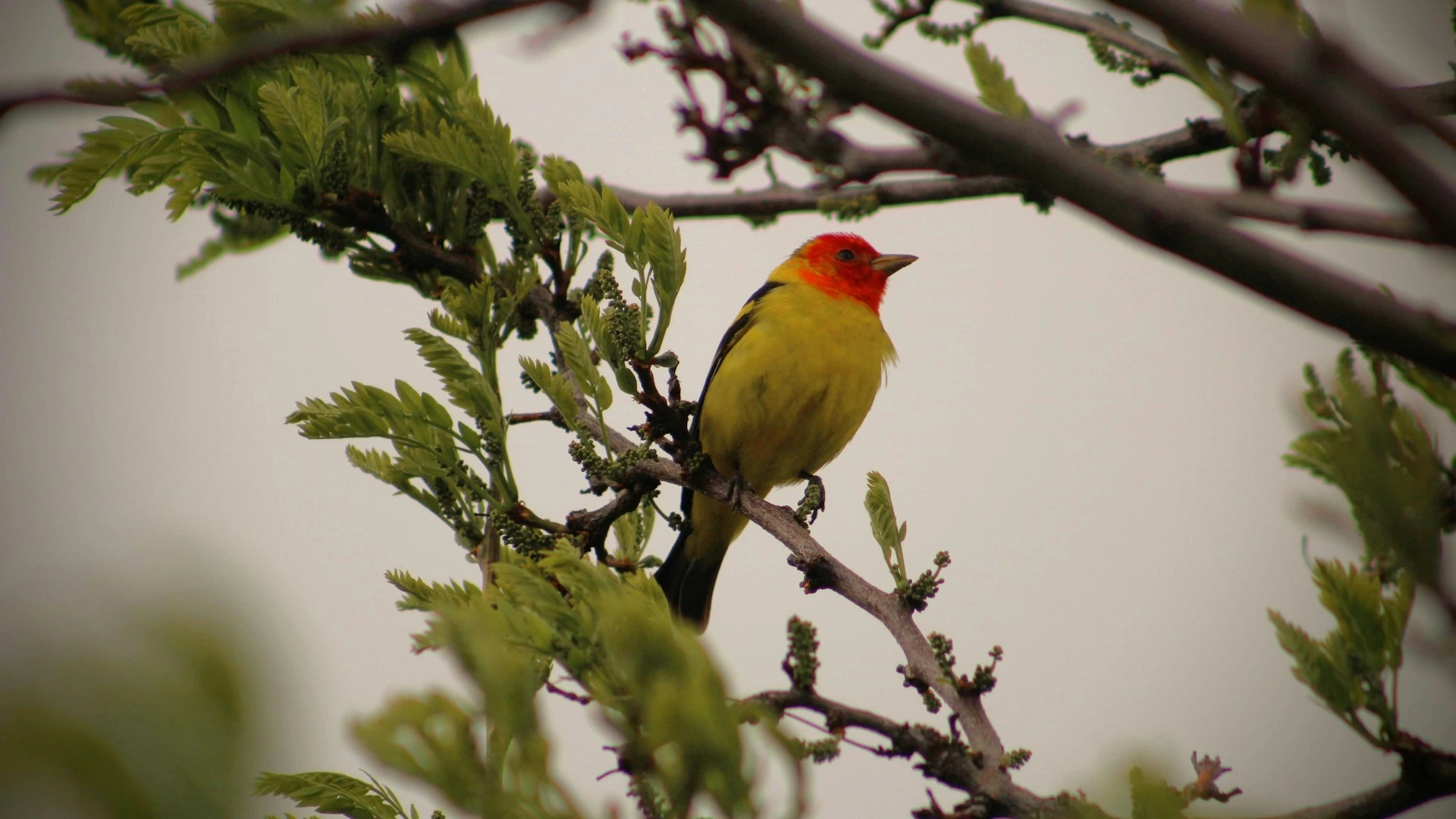
Appearance

The Western Tanager is one of the most striking yellow birds you’ll see in Arizona. Males have brilliant yellow bodies with black wings and a flaming red-orange face during breeding season. Females are more subdued, with olive-yellow bodies and grayish wings, but still stand out with their sunny color.

Habitat

They prefer coniferous and mixed woodlands, especially pine forests in northern and higher-elevation parts of Arizona. During migration, they may also turn up in backyards, orchards, and desert oases.

Diet

Their diet includes insects such as wasps, ants, and beetles, as well as fruit and berries. They’re agile foragers, often plucking insects from leaves or catching them midair.

Vocalisations

The Western Tanager’s song resembles that of a hoarse robin—short, burry phrases that sound like “pit-er-ick” or “preet.” Their call note is a sharp “pit-ti-tick.”

Nesting

Females build a shallow, cup-shaped nest of twigs and grasses placed high on horizontal branches of conifers. They typically lay 3–5 pale blue-green eggs.

Behaviour

Though colorful, Western Tanagers are shy and often remain hidden among treetops. They may join mixed feeding flocks during migration and are known for brief appearances at fruiting trees in suburban areas.

Conservation

They are widespread and not considered threatened, but like many migrants, they rely heavily on forest habitats. Protecting Arizona’s high-elevation forests ensures their continued presence.

Western Meadowlark
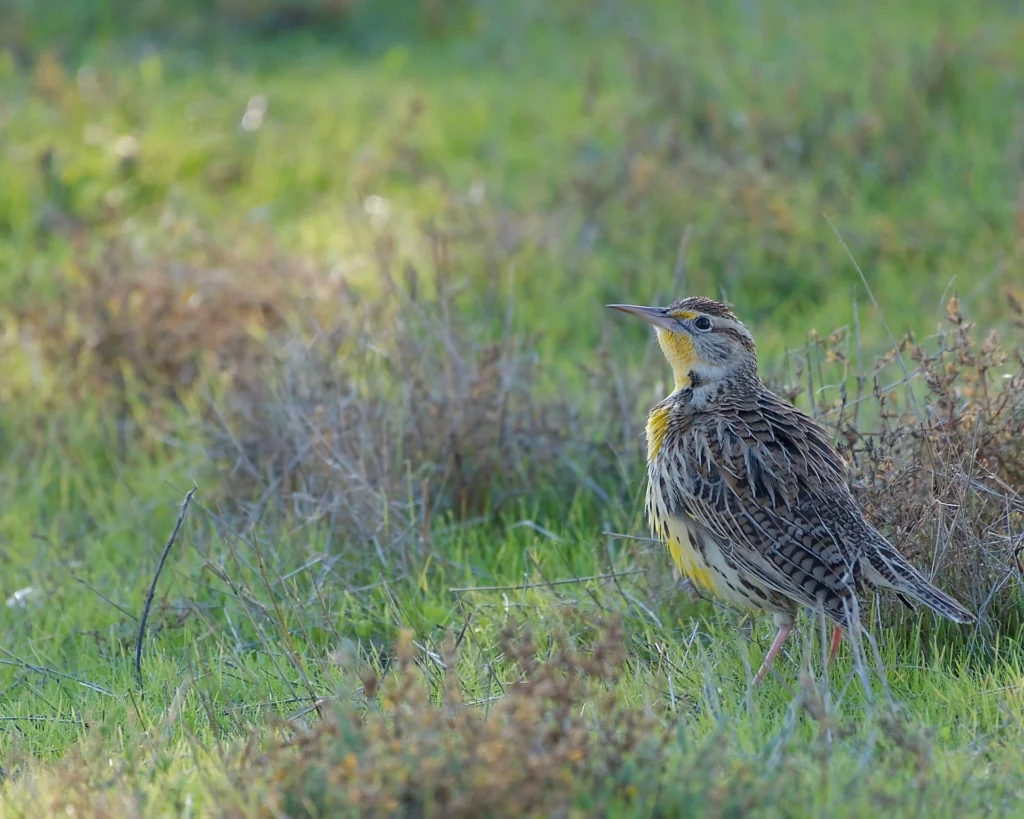
Western Meadowlark

Appearance

The Western Meadowlark is a medium-sized songbird with a bright yellow belly and chest, boldly marked with a black “V” across its breast. Its back is streaked in browns and tans, blending perfectly with open grasslands, while the long, pointed bill helps it forage on the ground.

Habitat

In Arizona, Western Meadowlarks thrive in grasslands, agricultural fields, prairies, and desert plains with scattered shrubs. They are often spotted perched on fence posts or singing from low shrubs.

Diet

They primarily eat insects—grasshoppers, beetles, and caterpillars—especially in summer. In winter, they switch to seeds and grains, often foraging in open fields.

Vocalisations

Western Meadowlarks are famous for their rich, flute-like song, a series of liquid, gurgling notes that carry across open landscapes. Their calls include sharp “chup” notes used in flight or alarm.

Nesting

Nests are built on the ground, hidden among grasses. The female constructs a domed, tunnel-like nest of woven grasses, lining it with soft plant material. Clutches usually contain 4–6 spotted eggs.

Behaviour

They walk or run along the ground more than they fly, often probing soil for insects. Males sing from prominent perches to defend territories, while both parents guard their well-camouflaged nests.

Conservation

Western Meadowlarks are still common in Arizona but face threats from habitat loss due to urban development and intensive farming. Preserving native grasslands is key to sustaining their populations.

Western Kingbird
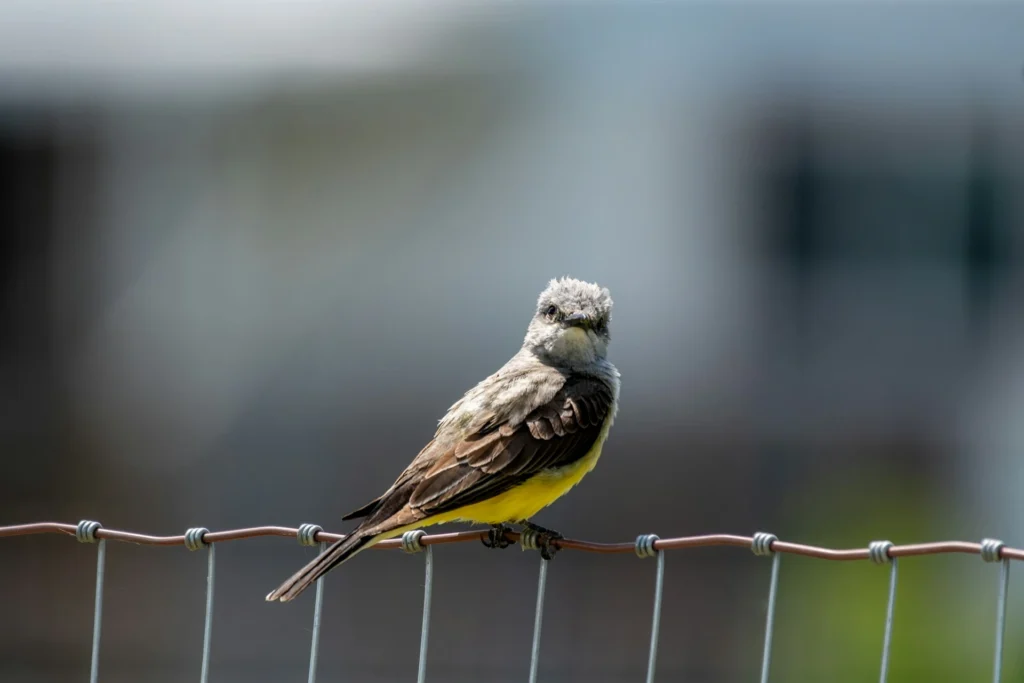
Western Kingbird

Appearance

The Western Kingbird is a bold and striking flycatcher with a pale gray head and back, a bright lemon-yellow belly, and a dark, squared tail edged with white. Its sharp posture and fearless attitude make it easy to spot on fences, wires, or treetops.

Habitat

In Arizona, Western Kingbirds are common in open country, desert edges, agricultural fields, and grasslands dotted with trees or powerlines. They thrive in places where they have plenty of open space for hunting insects.

Diet

As a flycatcher, its diet is mostly insects. They swoop from perches to snatch flying prey like grasshoppers, beetles, and wasps. In late summer and fall, they also eat berries and small fruits.

Vocalisations

Their call is a sharp, buzzy “kit-kit-kit” or a squeaky chatter, often given while chasing intruders or during aerial displays.

Nesting

Western Kingbirds build bulky cup-shaped nests out of twigs, grasses, and plant fibers, often lined with soft materials. They frequently nest in trees, shrubs, or even man-made structures like utility poles. Females lay 3–5 eggs, incubating them for about two weeks.

Behaviour

True to their name, kingbirds are territorial and aggressive. They won’t hesitate to chase away hawks, crows, or much larger birds from their nesting areas. Their acrobatic flights while catching insects are a delight to watch.

Conservation

These birds are thriving across Arizona and the western U.S. They adapt well to human-altered landscapes, making them a common and welcome sight during the summer months.

Common Yellowthroat

Common Yellowthroat

Appearance

The Common Yellowthroat is a small but flashy warbler. Males wear a bright yellow throat and breast, olive-green back, and a striking black facial mask bordered with white. Females lack the mask and appear more subdued, with softer yellow underparts and a plain face.

Habitat

In Arizona, Common Yellowthroats are usually found in marshes, wetlands, and dense riparian vegetation. They prefer areas with thick grasses, cattails, or shrubs near water.

Diet

Their diet consists mostly of insects and spiders. They forage low in vegetation, flicking leaves and probing stems for caterpillars, beetles, and other small prey.

Vocalisations

Their song is a sharp, rolling “witchety-witchety-witchety,” often repeated several times. Call notes are sharp “chack” sounds given when disturbed.

Nesting

Nests are usually well-hidden close to the ground in dense vegetation. The female weaves a cup-shaped nest from grasses and fibers, laying 3–5 eggs, which she incubates for about 12 days.

Behaviour

Common Yellowthroats are secretive, often skulking in reeds and brush. They can be tricky to spot, but males often sing from exposed perches during breeding season, giving birders a lucky glimpse.

Conservation

They are widespread and fairly common in Arizona where wetland habitats remain. However, loss of marshes and riparian zones could threaten local populations over time.

Evening Grosbeak
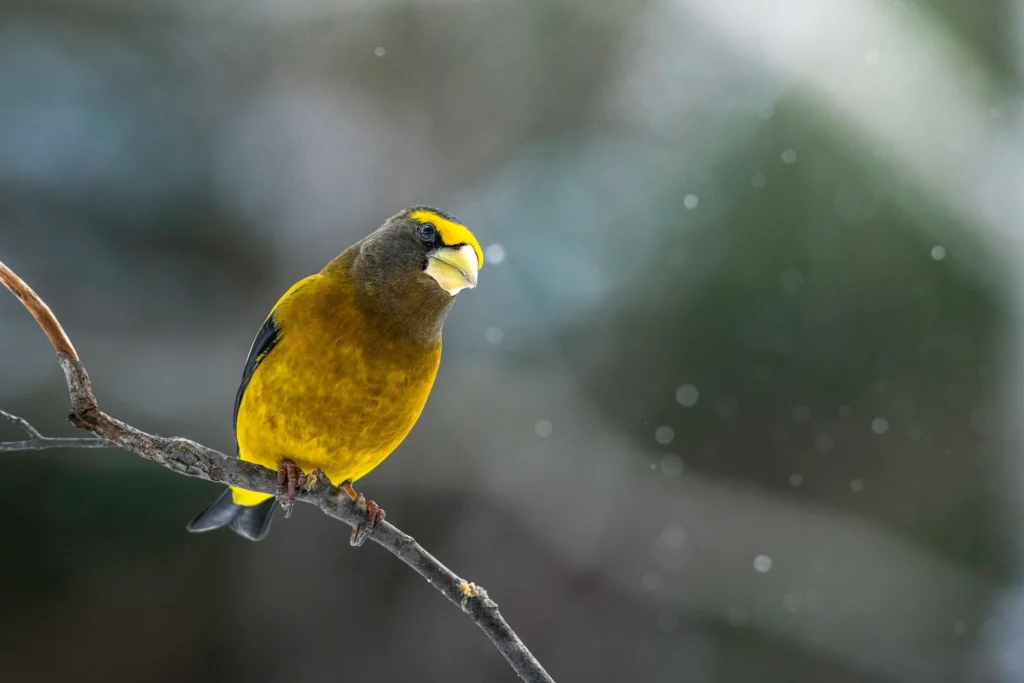
Evening Grosbeak

Appearance

The Evening Grosbeak is a chunky, powerful finch with a massive pale bill built for cracking seeds. Males are boldly patterned with a golden-yellow body, dark brown head, and striking black wings marked by bold white patches. Females are more subdued in gray with hints of yellow on the neck and flanks.

Habitat

In Arizona, Evening Grosbeaks are mostly found in mountain forests of conifers such as pine, fir, and spruce. During winter, they may wander into lower elevations, visiting feeders or fruiting trees.

Diet

They primarily eat seeds, buds, and berries. Their enormous bill allows them to easily crack open tough seeds like sunflower and maple. In summer, they also eat insects, especially caterpillars and spruce budworms.

Vocalisations

Their calls are sharp, ringing “cleer” notes that can be heard from far away. Unlike many finches, they do not have a long, musical song but communicate mainly through these strong calls.

Nesting

Nests are usually placed high in conifer trees. Females build loose, shallow nests from twigs and roots, lining them with softer plant fibers. A typical clutch contains 2–5 pale blue eggs.

Behaviour

Evening Grosbeaks are often seen in noisy flocks, especially in winter. They move together between feeding sites, sometimes descending on backyard feeders in large numbers. Their powerful bills make short work of hard seeds.

Conservation

Populations have declined in recent decades due to habitat loss, forest management changes, and declines in insect prey like spruce budworm. However, they still appear in Arizona’s higher elevations during certain seasons.

Townsend’s Warbler
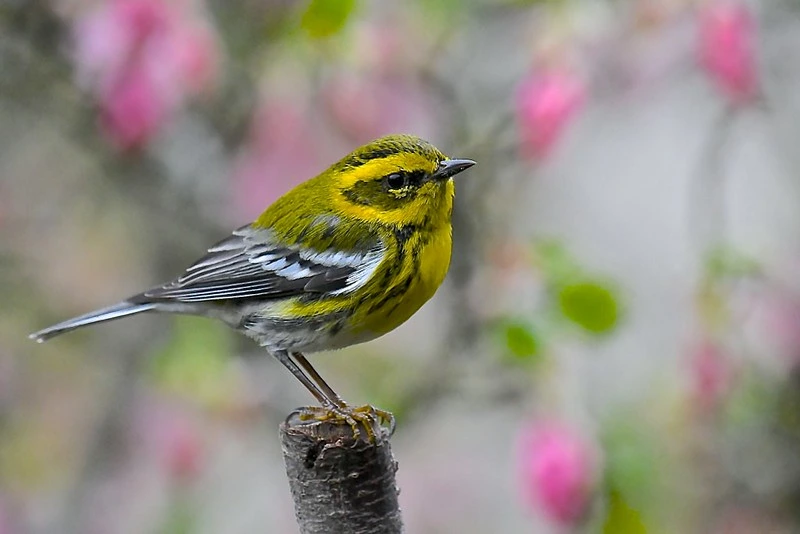
Townsend’s Warbler

Appearance

The Townsend’s Warbler is a striking little songbird with bold contrasts of yellow, black, and white. Males show a bright yellow face with a dark black mask and throat, a yellow breast, and olive back with black streaks. Females and immatures are duller but still display the distinctive facial pattern.

Habitat

In Arizona, Townsend’s Warblers are most often seen during migration in spring and fall. They pass through forests, riparian corridors, and even urban areas, though they breed farther north in conifer forests of the Pacific Northwest.

Diet

They mainly eat insects such as caterpillars, beetles, and spiders. During migration, they may also consume nectar or small fruits.

Vocalisations

Their song is a series of high, thin notes, often described as “zee-zee-zee-zee” with a slightly buzzy quality. Calls are sharp “tsip” sounds.

Nesting

They rarely nest in Arizona, as their breeding range lies farther north. In their breeding grounds, nests are cup-shaped and built high in conifers, lined with moss, hair, and feathers.

Behaviour

Active and agile, Townsend’s Warblers forage among tree canopies, gleaning insects from needles and branches. They often join mixed flocks of warblers and chickadees during migration.

Conservation

Their populations are considered stable, though like many migrants, they depend on healthy breeding and wintering forests. Protecting migration stopover habitats in Arizona helps ensure their safe passage.

Scott’s Oriole
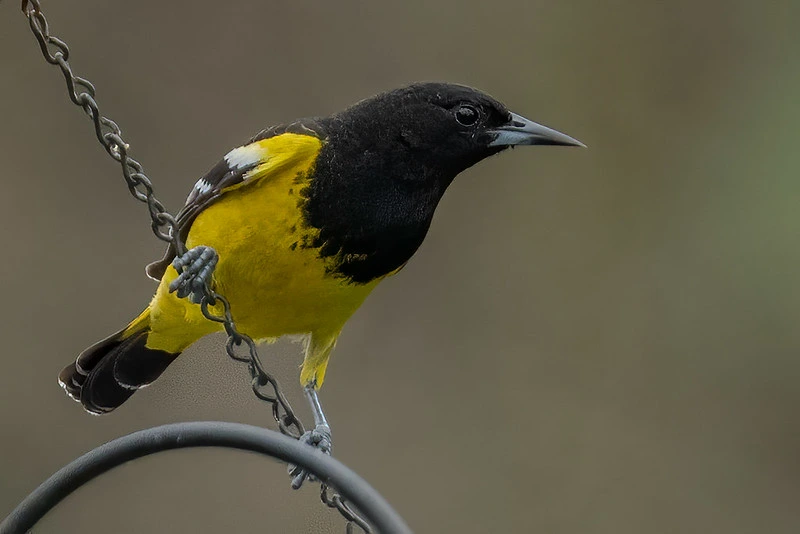
Scott’s Oriole

Appearance

Scott’s Oriole is a stunning desert specialist with a vivid yellow belly and undertail paired with a jet-black head, chest, back, and tail. Females are olive-yellow with dusky wings, but both sexes stand out beautifully against Arizona’s dry landscapes.

Habitat

This oriole thrives in arid regions of Arizona, especially desert foothills and slopes dotted with yucca and agave. They are often seen perched on yucca stalks or foraging among desert plants.

Diet

Their diet is varied and includes insects, spiders, fruits, and nectar. They are especially known for sipping nectar from yucca blossoms and feeding on beetles, caterpillars, and grasshoppers.

Vocalisations

Males sing a rich, melodious series of whistles that carry far across desert canyons. Their song is slower and sweeter compared to other orioles.

Nesting

Scott’s Orioles often build their nests in yucca plants, weaving a hanging basket-like nest from grass, yucca fibers, and plant stems. Females typically lay 3–5 eggs.

Behaviour

They are active and conspicuous during breeding season, frequently singing from exposed perches. Despite their showy colours, they can also be shy, slipping into yucca groves when disturbed.

Conservation

Scott’s Orioles are stable in Arizona, benefiting from the presence of native yucca and agave. However, habitat destruction in desert regions could impact local populations in the future.

Orange-crowned Warbler
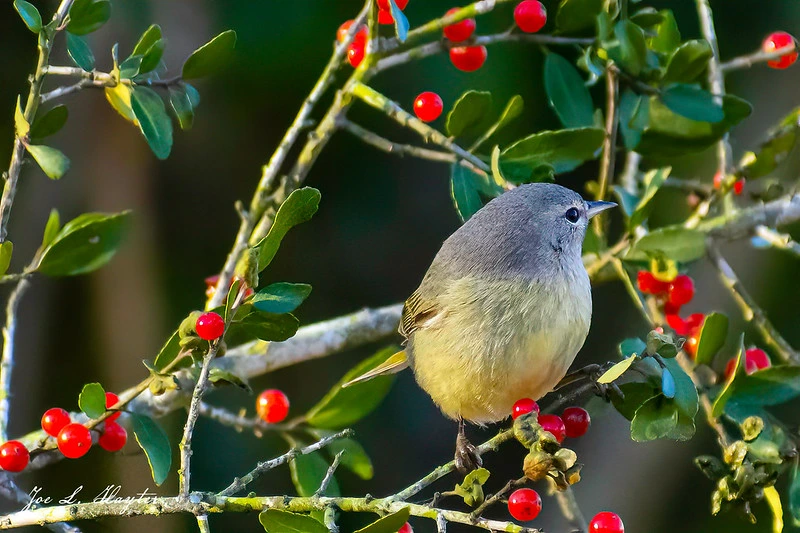
Orange-crowned Warbler

Appearance

The Orange-crowned Warbler is one of the more understated yellow birds in Arizona. Its plumage is mostly olive-yellow with a faintly brighter belly. The “orange crown” that gives the bird its name is usually hidden and only occasionally visible when the feathers are raised.

Habitat

In Arizona, they are most often seen during migration in spring and fall, though a few winter in the state’s warmer regions. They favour shrubby woodlands, riparian thickets, and desert scrub.

Diet

Their diet is primarily insects and spiders, which they glean from leaves and branches. During migration and winter, they also eat berries and sometimes sip nectar from flowering plants.

Vocalisations

Their song is a rapid, trilling series of notes that descends slightly at the end. Their call is a sharp “chip,” often heard while they flit through bushes.

Nesting

This species rarely breeds in Arizona, instead nesting farther north in shrubby thickets and forest understories. Their nests are well-hidden, cup-shaped, and placed close to the ground.

Behaviour

Orange-crowned Warblers are active and restless, constantly moving through foliage in search of insects. They are more secretive than brighter warblers, but their subtle colours and constant motion give them away.

Conservation

Their populations are healthy and widespread. Since they migrate through Arizona, maintaining riparian and shrubby stopover habitats is vital for their long-term survival.

MacGillivray’s Warbler
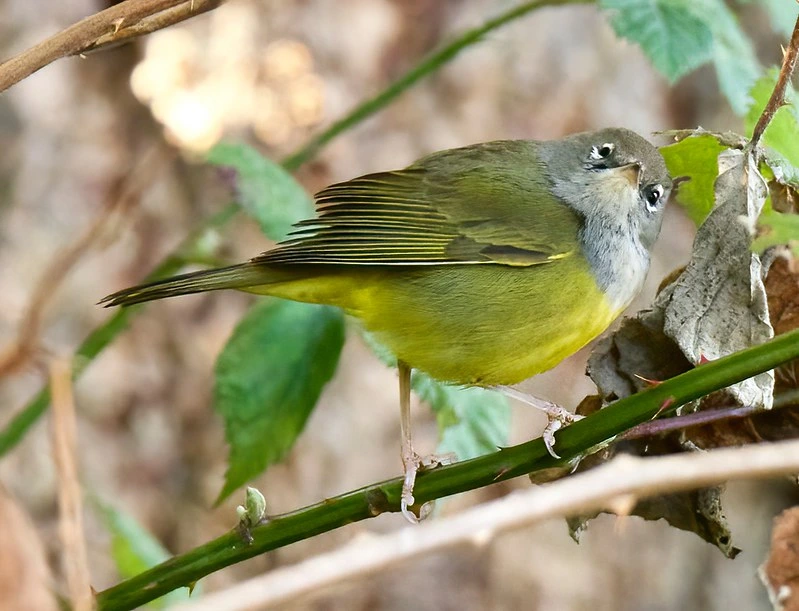
MacGillivray’s Warbler

Appearance

MacGillivray’s Warbler is a secretive but beautiful bird. Males have a bright yellow belly and underparts, contrasted with a slate-gray hood and white eye arcs that look like spectacles. Females are paler, with more olive tones and less distinct facial markings.

Habitat

In Arizona, they are mainly migrants, passing through dense thickets, riparian corridors, and shrubby foothills. They prefer areas with heavy undergrowth where they can stay concealed.

Diet

Their diet consists mostly of insects, especially caterpillars, beetles, and spiders. They sometimes eat berries during migration when insects are scarce.

Vocalisations

Their song is a loud, rolling warble, somewhat similar to the Common Yellowthroat but more musical and energetic. Calls are sharp “chup” notes often given when alarmed.

Nesting

MacGillivray’s Warblers do not typically nest in Arizona, as their breeding range lies farther north and west in dense, shrubby forests. Nests are cup-shaped, built low in vegetation, and lined with grasses and hair.

Behaviour

They are shy and often stay low in thickets, flicking their tails as they move. Birders usually catch only quick glimpses of them darting between cover during migration.

Conservation

Populations are stable overall, but like other migrants, they depend on healthy stopover habitats. Riparian habitat loss in Arizona could reduce their local numbers during migration.

Wilson’s Warbler
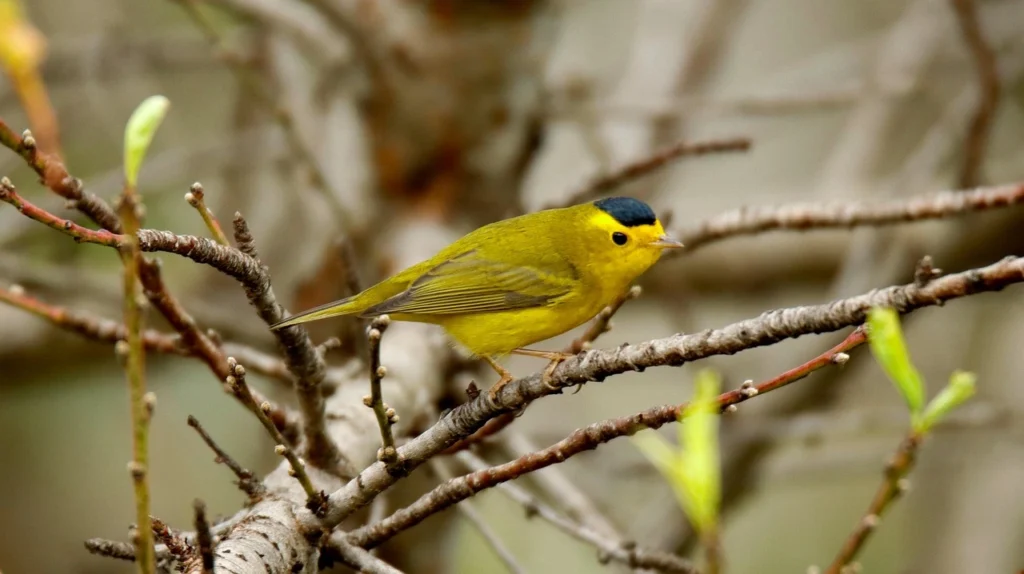
Wilson’s Warbler

Appearance

Wilson’s Warbler is a tiny burst of sunshine with a bright yellow body and olive-green back. The standout feature is the neat black cap that males wear, giving them a cheerful but sharp look. Females and juveniles are also yellow but lack or only faintly show the cap.

Habitat

In Arizona, Wilson’s Warblers are most often seen during migration in spring and fall. They prefer riparian areas, shrubby thickets, and even backyard gardens where they can find dense cover.

Diet

These warblers eat insects almost exclusively, including midges, beetles, caterpillars, and spiders. They forage actively among leaves, often hovering or hanging upside down to reach prey.

Vocalisations

Their song is a rapid, chattering trill, often described as “chit-chit-chit-chetty-chetty.” Calls are sharp “chit” notes, frequently given while they flit about low shrubs.

Nesting

Wilson’s Warblers do not breed in Arizona; their nesting grounds lie farther north in shrubby areas near streams and wetlands. Nests are typically well-hidden on or near the ground, made from grasses and moss.

Behaviour

These birds are restless and constantly in motion, flicking their wings as they forage. They often join mixed flocks of warblers and can be seen darting quickly through vegetation.

Conservation

Wilson’s Warblers are widespread, but their populations have shown declines due to habitat loss and changes along migration routes. Protecting riparian areas in Arizona provides critical stopover points.

Nashville Warbler
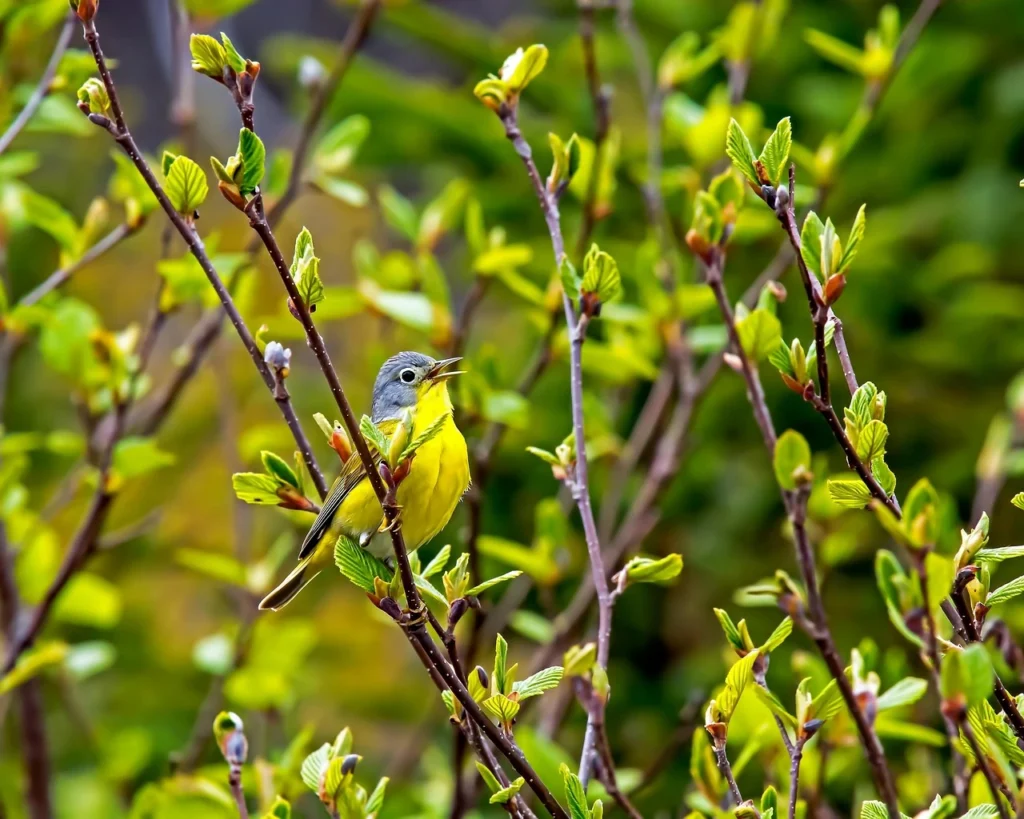
Nashville Warbler

Appearance

The Nashville Warbler is a charming little songbird with a soft yellow belly and olive-green back. Its head is bluish-gray, highlighted by a white eye ring that gives it a gentle, wide-eyed look. The faint rufous crown patch is usually hidden, making it more subtle than its name suggests.

Habitat

In Arizona, Nashville Warblers are primarily migrants, passing through woodlands, riparian areas, and shrubby desert washes. They’re often spotted in spring and fall as they head between breeding grounds in the north and wintering sites in Mexico.

Diet

They feed mainly on insects such as caterpillars, beetles, and leafhoppers. While migrating, they occasionally supplement their diet with berries and nectar.

Vocalisations

Their song is a two-part tune: an opening series of high, quick notes followed by a slower trill. Their call is a sharp “tsip,” often given while foraging.

Nesting

Nashville Warblers don’t breed in Arizona. On their northern breeding grounds, females build domed nests on or near the ground in shrubby areas, laying 3–5 speckled eggs.

Behaviour

These warblers are active, hopping and flitting through low shrubs and trees as they glean insects from foliage. They’re often seen traveling in mixed flocks with other warblers.

Conservation

Populations are stable, and they remain a common migrant across Arizona. Their reliance on both northern forests and desert stopover sites highlights the importance of connected habitat

Hooded Oriole
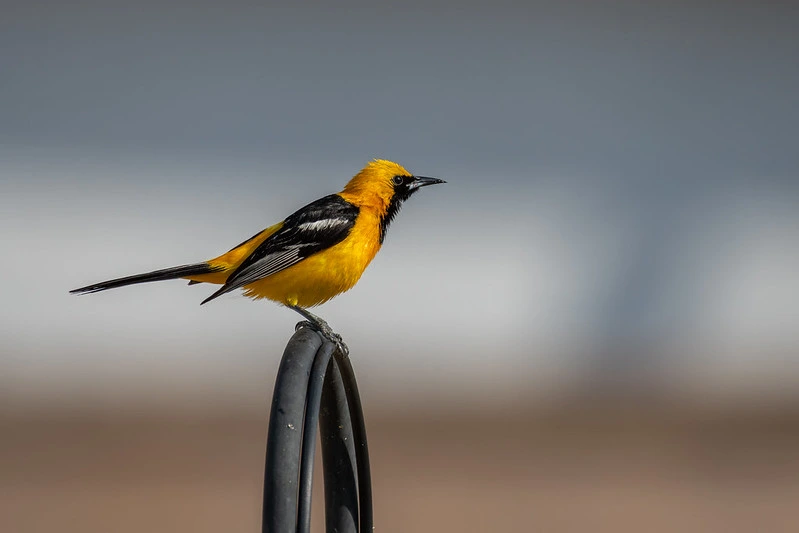
Hooded Oriole

Appearance

The Hooded Oriole is a slim, graceful bird that brings tropical colour to Arizona’s landscapes. Males wear bright orange-yellow plumage with a black throat, back, and wings, while females and immatures are paler yellow-green. Their slender, curved bills are perfectly adapted for sipping nectar.

Habitat

In Arizona, Hooded Orioles thrive in desert habitats, especially where ornamental palms or blooming plants grow. They are often found in suburban neighborhoods, nesting in fan palms or visiting hummingbird feeders.

Diet

Their diet includes nectar, insects, fruits, and berries. They often sip from flowers such as agaves and also visit feeders stocked with sugar water.

Vocalisations

Their song is a series of high-pitched, chattering whistles and squeaks, often mixed with mimicry. Calls are sharp, rising notes that sound like “chee-ick.”

Nesting

Hooded Orioles are skilled weavers, often suspending their pouch-shaped nests from palm fronds. Nests are made of grasses, plant fibers, and even string. Females lay 3–5 pale eggs.

Behaviour

These orioles are active, acrobatic, and often seen clinging to palm fronds or flowers while foraging. They can be shy around people but frequently visit backyard feeders in southern Arizona.

Conservation

Their populations are stable and even expanding in suburban areas where palms are planted. Protecting nectar sources and nesting trees supports their presence.

Also read: Types of Florida Woodpeckers with Pictures

Lawrence’s Goldfinch
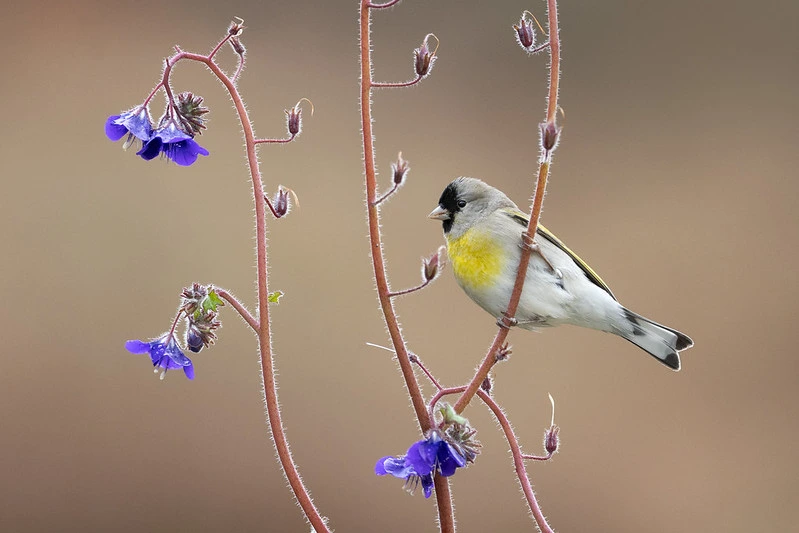
Lawrence’s Goldfinch

Appearance

Unlike its brighter relatives, the Lawrence’s Goldfinch has a more muted golden look. Males have a yellow breast, gray body, and black face mask, while females are mostly gray with faint yellow hints. Their subtle beauty stands out in the right light.

Habitat

In Arizona, Lawrence’s Goldfinches are rare visitors, mostly seen in the southeastern part of the state. They prefer weedy fields, grasslands, and foothill valleys with seed-rich plants.

Diet

They eat primarily seeds from sunflowers, fiddlenecks, and thistles, often foraging on the ground or clinging to seed heads.

Vocalisations

Their song is a series of soft, tinkling notes and musical twitters, often given in flight. Calls are sweet “tew” notes.

Nesting

Nests are built in trees or shrubs, loosely woven from grasses, plant down, and feathers. Females lay 3–5 pale eggs and incubate them for about 12 days.

Behaviour

Lawrence’s Goldfinches are nomadic, often appearing in unpredictable locations depending on seed crops. They form small flocks and feed socially.

Conservation

Their numbers fluctuate with rainfall and food supply. Habitat preservation in grasslands helps sustain their populations.

Hooded Warbler
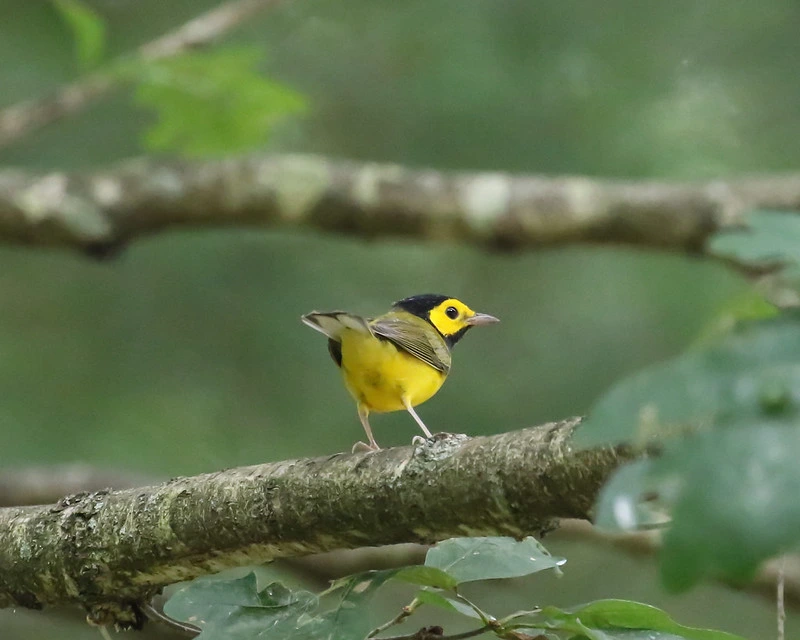
Hooded Warbler

Appearance

The Hooded Warbler is a small, brilliant bird with a bright yellow face and underparts. Males are unmistakable with a bold black hood covering the head and throat. Females lack the full hood but show a shadowy mask.

Habitat

In Arizona, Hooded Warblers are considered rare migrants, most often recorded in riparian thickets and wooded areas during spring and fall.

Diet

They eat insects and spiders, gleaning them from leaves or catching them in midair.

Also Read : 20 Types of Ducks in Texas (Plus Duck-Like Species Found in Wetlands)

Vocalisations

Their song is a sweet, whistled series of notes often transcribed as “weeta-weeta-wee-tee-oh.” Calls are sharp “chip” notes.

Nesting

Though they don’t breed in Arizona, elsewhere Hooded Warblers build nests in shrubs near the ground, lining them with fine plant material.

Behaviour

They are active and restless, often flicking their tails to reveal white tail spots while foraging.

Conservation

Because they are only rare migrants in Arizona, their conservation status locally is minor. Across their range, they remain stable, though forest habitat loss could impact them.

Eastern Meadowlark
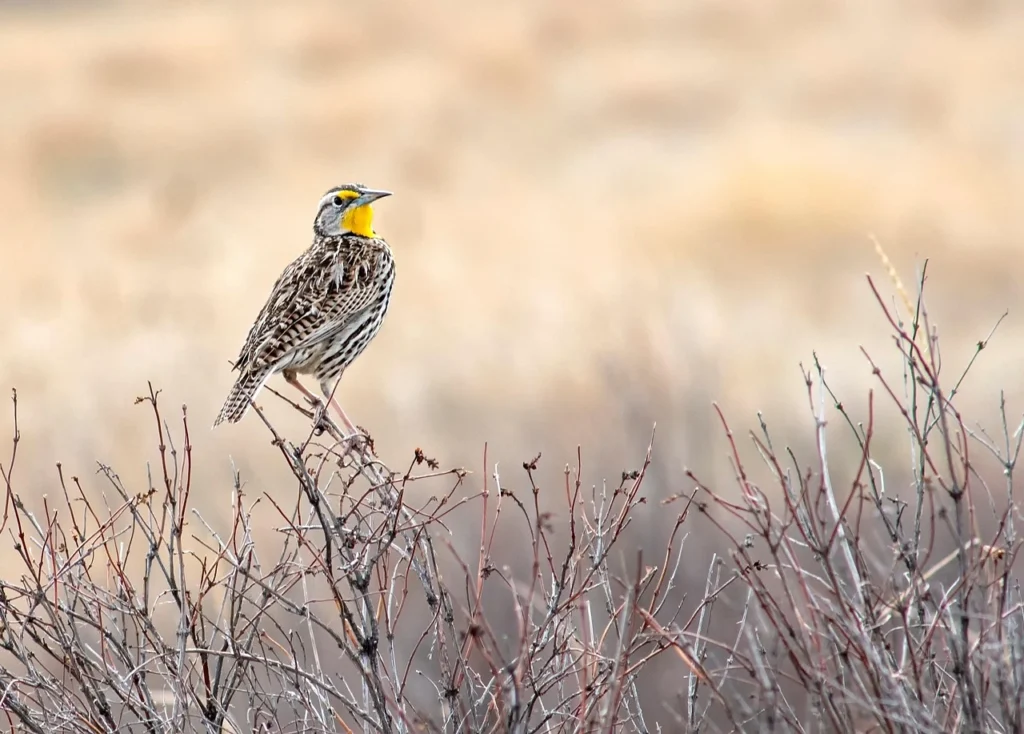
Eastern Meadowlark

Appearance

The Eastern Meadowlark looks nearly identical to its western cousin, with a bright yellow belly, a black “V” on the chest, and streaked brown upperparts. The main difference lies in their songs.

Habitat

In Arizona, Eastern Meadowlarks are rare and localized, mostly in southeastern grasslands and open fields.

Diet

They eat insects in summer, including grasshoppers and beetles, and switch to seeds and grains in winter.

Vocalisations

Unlike the Western Meadowlark’s flute-like melody, the Eastern Meadowlark sings a series of clear, simple whistles that rise and fall.

Nesting

Their nests are ground-based, woven domes of grasses hidden among tall grass. Females lay 3–6 eggs.

Behaviour

They forage on the ground, walking steadily as they probe soil and vegetation for insects and seeds.

Conservation

Populations are declining across their range due to grassland loss, and in Arizona they remain an uncommon sight.

Conclusion: 

Arizona is blessed with an incredible variety of yellow-feathered beauties. From the lemon-bright American Goldfinch in your backyard to the fiery Western Tanager in the mountains, each bird adds a flash of sunshine to the desert and forest landscapes. Whether you’re a beginner birder or an experienced enthusiast, spotting these golden treasures is a reminder of how vibrant and diverse Arizona’s birdlife truly is.

FAQs About Yellow Birds in Arizona

What is the most common yellow bird in Arizona?

The Lesser Goldfinch is the most common year-round yellow bird, often seen at backyard feeders and in desert foothills.

Which yellow bird sings the sweetest song?

The Western Meadowlark is famous for its flute-like melody, one of the most beautiful bird songs in the American West.

Are there rare yellow birds in Arizona?

Yes! The Hooded Warbler and Eastern Meadowlark are rare migrants, while Lawrence’s Goldfinch appears unpredictably.

When is the best time to see yellow warblers in Arizona?

Spring and fall migration (April–May and September–October) bring many warbler species, including Yellow, Wilson’s, Nashville, and MacGillivray’s Warblers.

Can I attract yellow birds to my backyard?

Absolutely! Plant native flowers, provide a water source, and offer nyjer or sunflower seeds to attract goldfinches, orioles, and other bright visitors.
20 Types of Ducks in Texas (Plus Duck-Like Species Found in Wetlands)

Texas is a haven for duck lovers. With its vast wetlands, coastal bays, and inland lakes, the Lone Star State hosts one of the most diverse waterfowl populations in the United States. Whether you’re exploring marshes along the Gulf Coast or scanning prairie ponds in the Panhandle, you’re bound to spot a colourful variety of ducks year-round.

Ducks in Texas come in all shapes and sizes—from the elegant Northern Pintail to the vibrantly plumaged Wood Duck. Some species breed here during spring and summer, while others make Texas a temporary stopover during their winter migration. And it’s not just ducks you’ll find. Several other waterbirds, like coots and grebes, share similar features and habitats, often confusing even seasoned birders.

This guide explores the most common types of ducks in Texas as well as a few duck-like species that are often found in the same wetlands. Each bird is described with helpful ID tips, range insights, feeding habits, and more—perfect for birdwatchers, photographers, and nature lovers alike.

So grab your binoculars, and let’s dive into the fascinating world of Texas ducks and their look-alike cousins!

True species of Ducks in Texas

1. Mallard (Anas platyrhynchos)

Mallard

Appearance

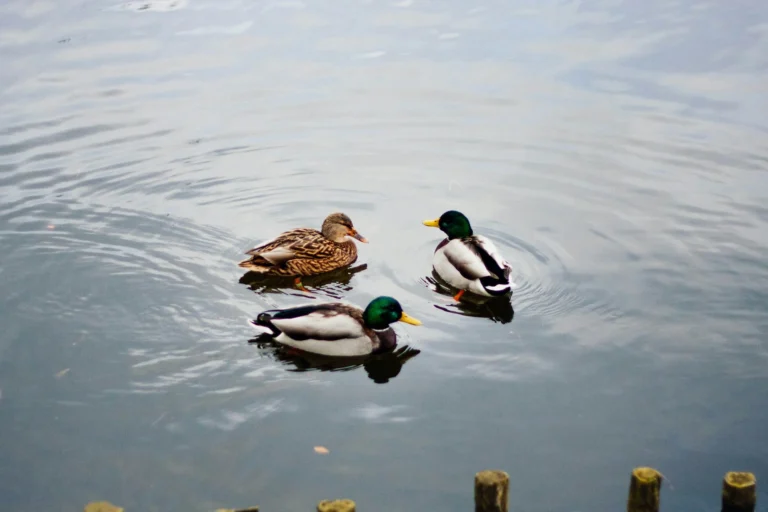
The Mallard is one of the most easily recognized ducks in North America. Males have a glossy green head, bright yellow bill, white neck ring, and grayish body with a black tail. Females are mottled brown with orange bills marked by black blotches. Both sexes have a vibrant blue wing patch (speculum) bordered with white, visible in flight.

Habitat and Range in Texas

Mallards are found year-round throughout Texas. They thrive in city parks, ponds, lakes, rivers, and wetlands—anywhere there’s water. They’re especially common in East and Central Texas but can be seen statewide.

Diet

Mallards are dabbling ducks, meaning they feed at or just below the surface without diving. Their omnivorous diet includes:

  • Aquatic plants and algae
  • Seeds and grains
  • Insects and crustaceans
  • Occasionally small fish

In urban areas, they may also forage on bread or grains left by humans, though this isn’t recommended for their health.

Also read: TYPES OF Black Birds in South Carolina

Behavior

Mallards are social, often seen in mixed flocks during migration. They’re excellent flyers and are usually the first ducks to return to breeding areas in early spring. Males give a soft “rhaeb” while females make the classic “quack.”

Breeding

In Texas, Mallards nest in spring and early summer. The female chooses a spot on the ground near water and builds a nest lined with her own down feathers. She lays 8–13 eggs and cares for the ducklings alone after they hatch.

Fun Fact

Mallards are the ancestor of nearly all domestic duck breeds. Their adaptability to both wild and urban settings makes them one of the most successful waterfowl species on Earth.

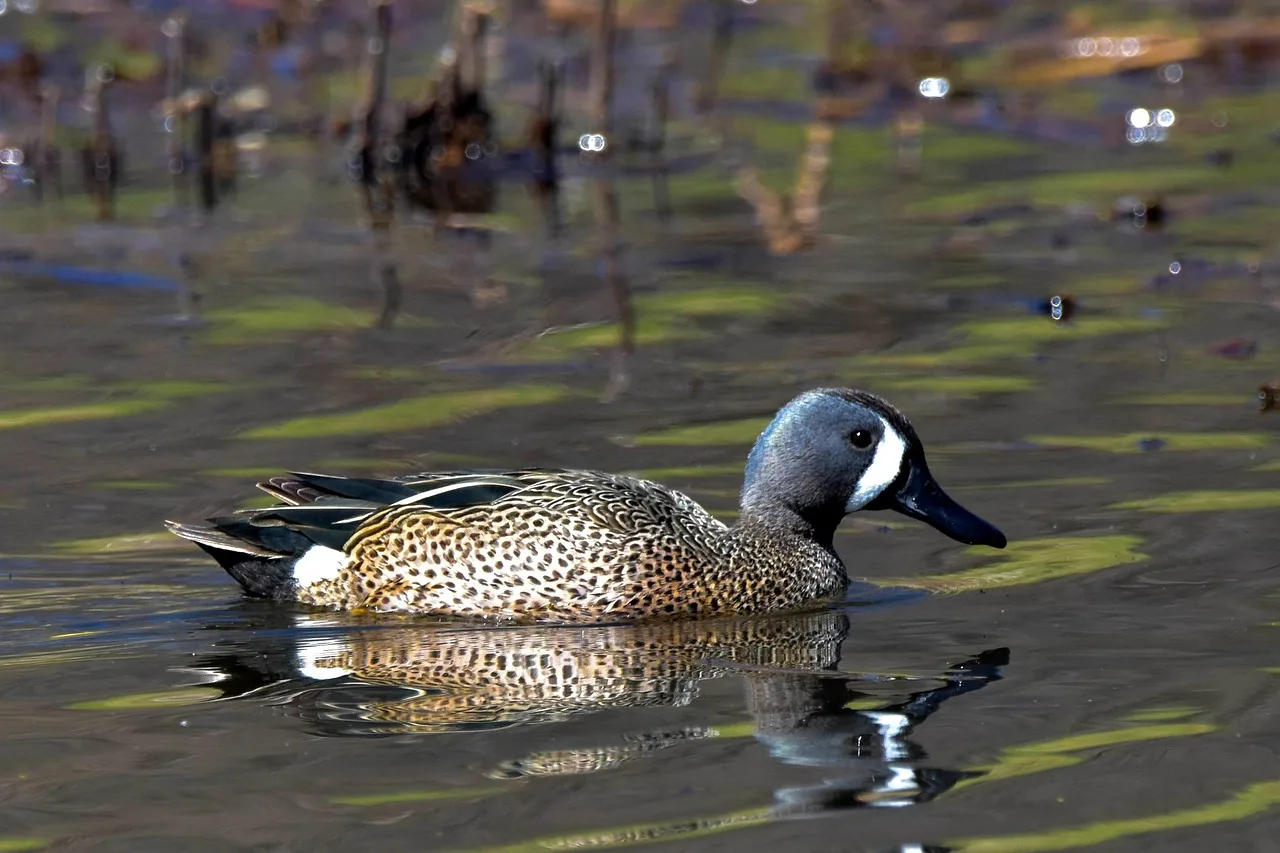
2. Blue-winged Teal (Spatula discors)

Blue-winged Teal

Appearance

The Blue-winged Teal is a small and slender dabbling duck with distinctive features. Males sport a bold white crescent in front of the eye, a spotted brown body, and powder-blue wing patches visible in flight. Females are mottled brown and more subdued, but also show blue upper wings when flying.

Habitat and Range in Texas

Blue-winged Teals are common in Texas during migration and breed in the northern and central parts of the state. You’ll often spot them in shallow ponds, marshes, flooded fields, and seasonal wetlands—especially from March to May and again in September to November.

Diet

These agile dabblers feed in shallow waters and muddy edges. Their diet includes:

  • Aquatic insects
  • Seeds and grasses
  • Algae and duckweed
  • Small crustaceans

They often feed by skimming the surface or tipping forward in water rather than diving.

Behavior

Blue-winged Teals are among the first ducks to migrate south in fall and among the last to return in spring. They’re fast flyers and usually travel in tight, zig-zagging flocks. Their flight is quick, erratic, and low over water—making them a favourite among birders and hunters.

Breeding

Females build nests in dense grasses, often far from water. The nests are shallow scrapes lined with grasses and down. Blue-winged Teals are secretive during breeding, and their nests are well hidden. Clutches usually contain 9–12 eggs.

Fun Fact

Despite their small size, Blue-winged Teals are long-distance migrants. Some individuals travel all the way to South America for the winter, passing right through Texas wetlands en route.

Also read: Birds That Look Like Ostriches

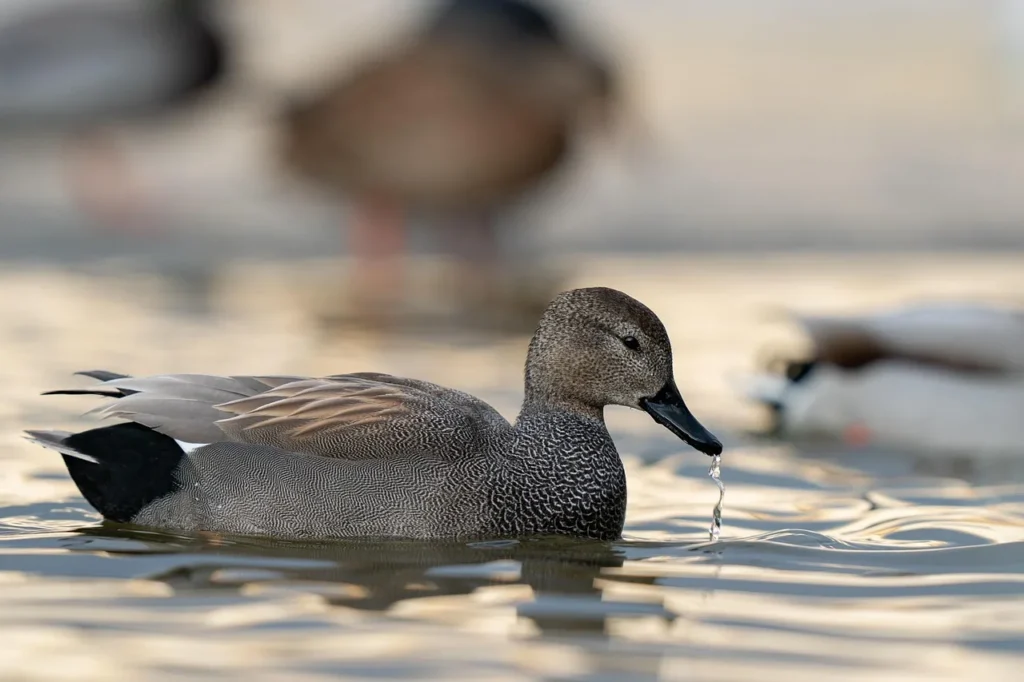
3. Gadwall (Mareca strepera)

Gadwall

Appearance

The Gadwall may not be as flashy as other ducks, but its subtle elegance makes it a favourite among birders. Males are mostly gray-brown with a black rump and white wing patch that’s only visible in flight. Females resemble female Mallards with mottled brown plumage but lack the orange bill and blue speculum.

Habitat and Range in Texas

Gadwalls are common winter visitors and local breeders in Texas. They’re typically found in:

  • Shallow freshwater ponds and marshes
  • Slow-moving rivers
  • Wetlands with plenty of submerged vegetation

They’re particularly abundant in the eastern half of the state during the cooler months.

Diet

Gadwalls are primarily herbivorous. They forage by dabbling or grazing and feed on:

  • Pondweed
  • Wigeon grass
  • Algae
  • Seeds of aquatic plants
    Occasionally, they’ll supplement their diet with insects or small crustaceans.

Behavior

Gadwalls are often seen in mixed flocks with other ducks, especially American Wigeons and Northern Shovelers. They are quieter than most dabblers but may produce soft, raspy quacks or whistles. Males often steal food from diving ducks, a behaviour called “kleptoparasitism.”

Breeding

Some Gadwalls breed in the Texas Panhandle and High Plains. The female nests on the ground in dense vegetation, often close to water. She lays 7–12 eggs, and the young can feed themselves within a day of hatching.

Fun Fact

Unlike many other ducks, Gadwalls have a distinctive white wing patch instead of colourful blues or greens—making them easier to ID in flight once you know what to look for.

4. Bufflehead (Bucephala albeola)

Bufflehead

Appearance

Buffleheads are among the smallest diving ducks in North America—but they pack a lot of character. Males are striking: glossy black-and-white with a large, iridescent head marked by a bold white patch behind the eye. Females and immatures are more subtle, with gray-brown plumage and a smaller white cheek patch.

Habitat and Range in Texas

Buffleheads are migratory winter visitors to Texas, most common from late fall through early spring. You’ll often find them in:

  • Sheltered coastal bays
  • Lakes and reservoirs
  • Slow-moving rivers and ponds with plenty of space to dive

They prefer open water but can also be spotted near wooded shorelines.

Diet

Buffleheads are agile divers, feeding mainly underwater. Their diet includes:

  • Aquatic insects and larvae
  • Crustaceans (like small shrimp and amphipods)
  • Mollusks
  • Some aquatic plants and seeds

They dive frequently, often staying submerged for 10–25 seconds.

Behavior

Buffleheads are quick, buoyant swimmers and strong fliers. While quiet for most of the year, males give a high-pitched squeak during courtship. They’re often seen in small groups or pairs, rarely in large flocks.

Breeding (Outside Texas)

Though they don’t breed in Texas, Buffleheads nest in tree cavities, especially abandoned Northern Flicker holes, in Canada and the northern U.S. The female lays 6–11 eggs and tends the nest high above the ground.

Fun Fact

Buffleheads are one of the few duck species that can fly directly from the water into a tree cavity—thanks to their compact size and powerful wings.

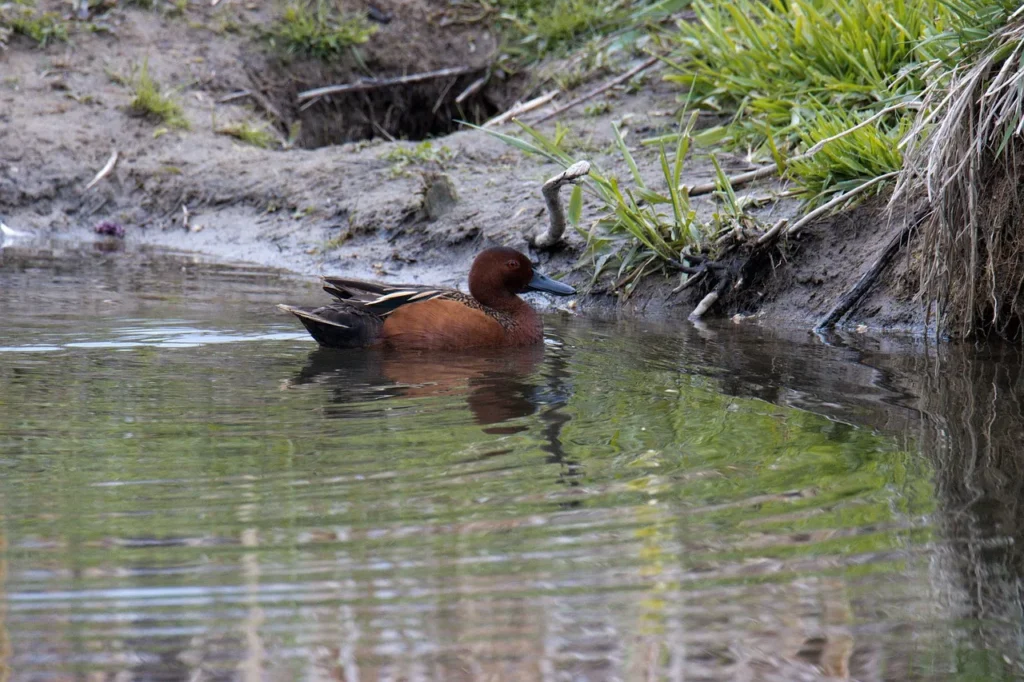
5. Cinnamon Teal (Spatula cyanoptera)

Cinnamon Teal

Appearance

The Cinnamon Teal is a standout among Texas ducks. Males in breeding plumage are unmistakable, with rich reddish-cinnamon bodies, bright red eyes, and dark bills. Females are mottled brown, resembling Blue-winged Teals but with a slightly larger size and duller coloration. Both sexes have blue shoulder patches visible in flight.

Habitat and Range in Texas

Cinnamon Teals are considered rare breeders and seasonal migrants in Texas. They’re more frequently seen during spring and fall migration, primarily in:

  • Shallow freshwater marshes
  • Irrigated fields and flooded meadows
  • Prairie potholes and seasonal wetlands in western Texas

They prefer calm, vegetated waters with plenty of shoreline cover.

Diet

Cinnamon Teals forage by dabbling and filtering through mud. Their varied diet includes:

  • Seeds from aquatic grasses
  • Aquatic insects and larvae
  • Crustaceans
  • Algae and pondweed

They primarily feed during early morning and late afternoon.

Behavior

Generally quiet and shy, Cinnamon Teals are not as gregarious as other dabbling ducks. Males may perform head-bobbing displays during courtship. Their swift, direct flight and low profile on water make them harder to spot in dense vegetation.

Breeding

While breeding in Texas is rare, when it does occur, females build nests in grassy areas close to water. They lay 8–10 eggs in shallow depressions, well concealed by plant cover. Ducklings are precocial and leave the nest within a day of hatching.

Fun Fact

The Cinnamon Teal is mostly a western species and is one of the few North American ducks found as far south as Chile and Argentina during winter migration.

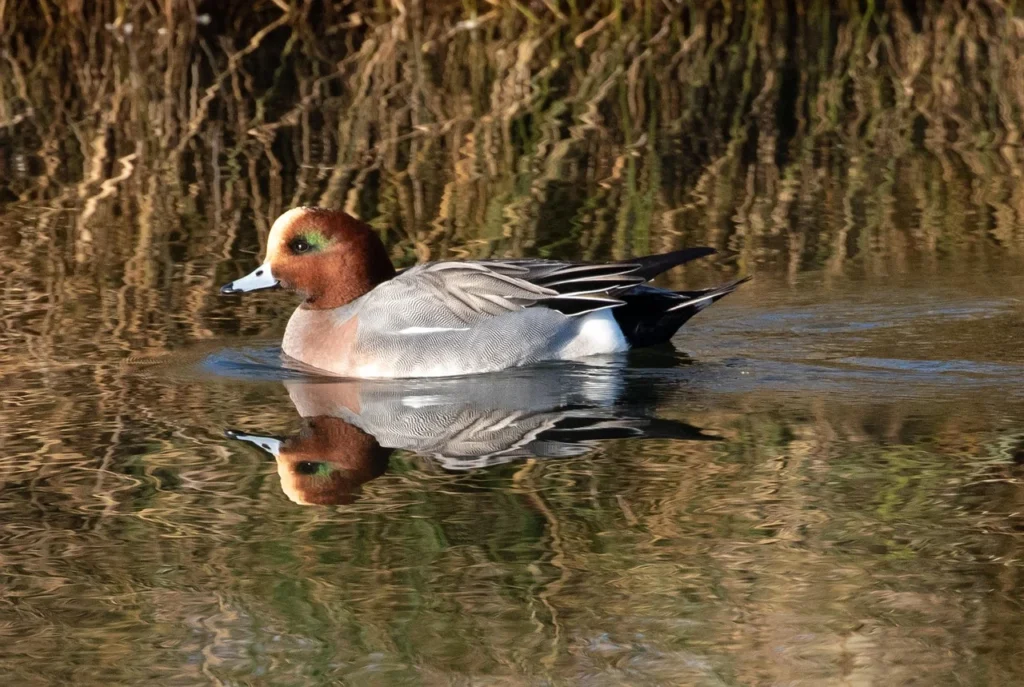
6. American Wigeon (Mareca americana)

American Wigeon

Appearance

The American Wigeon, sometimes nicknamed “baldpate,” is a medium-sized duck known for its elegant colouring. Males feature a distinctive white forehead, green band behind the eye, and pinkish-brown body. Females are mostly gray-brown with a pale head and subtle markings. Both sexes show a white belly and striking white wing patches in flight.

Habitat and Range in Texas

American Wigeons are migratory and common throughout Texas, especially from late fall to early spring. They are found in:

  • Freshwater marshes
  • Stock ponds and reservoirs
  • Coastal wetlands and estuaries
  • Urban retention ponds and golf courses

They often gather in large flocks during winter.

Diet

Wigeons are often called “grazing ducks” for their preference for land-based plants. Their diet includes:

  • Grasses and sedges
  • Aquatic plants like duckweed
  • Crop grains (rice, wheat, barley)
  • Occasional aquatic invertebrates

They also steal food from diving ducks like coots, earning them a reputation as clever opportunists.

Behavior

American Wigeons are vocal ducks. Males emit a soft, three-note whistle that sounds like “whew-whew-whew,” while females produce low grunts. They’re often seen resting on open water or grazing in nearby fields.

Breeding (Outside Texas)

Breeding takes place further north in the U.S. and Canada. Females build concealed ground nests in tall grass or shrubs near water, laying 8–10 eggs. Chicks are active shortly after hatching and follow the mother to water.

Fun Fact

Despite being dabblers, American Wigeons often spend more time foraging on land than in water, unlike most other ducks in Texas.

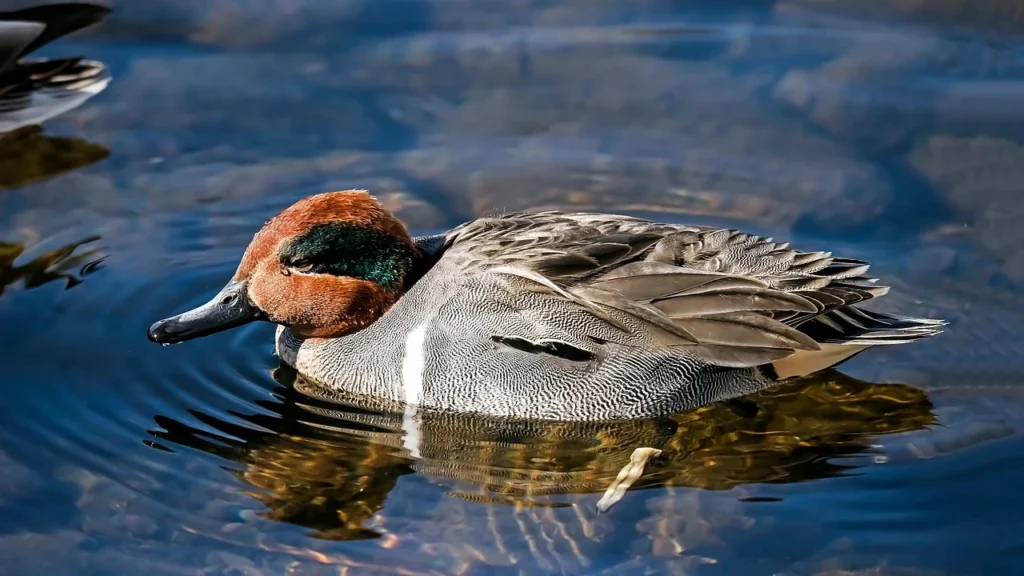
7. Green-winged Teal (Anas crecca)

Green-winged Teal

Appearance

The Green-winged Teal is the smallest dabbling duck in North America, but it’s big on beauty. Males sport a chestnut head with a vivid green eye patch, a greyish body, and a vertical white bar on the side. Females are mottled brown with a compact body and subtle markings, but both sexes display a brilliant green wing patch in flight.

Habitat and Range in Texas

This teal is a common winter visitor throughout Texas. You’ll spot them from late fall through early spring in:

  • Shallow freshwater ponds
  • Coastal marshes
  • Rice fields and flooded lowlands
  • Edges of lakes and reservoirs

They often form dense flocks and are easily spooked into swift flight.

Diet

Green-winged Teals are dabblers, feeding mostly in shallow waters. Their diet includes:

  • Seeds from grasses and aquatic vegetation
  • Aquatic insects and crustaceans
  • Small snails and zooplankton

They prefer feeding near the surface and along muddy shores.

Behavior

These energetic little ducks are fast flyers and often the first to take off when disturbed. Males give high-pitched whistles, while females make soft quacking sounds. They’re social and often mix with other teal species during migration.

Breeding (Outside Texas)

Breeding occurs in northern regions of North America. Females choose ground nests concealed in dense grasses near water. Clutches usually contain 6–10 eggs, and ducklings leave the nest soon after hatching.

Fun Fact

Green-winged Teals are among the earliest migrants, sometimes arriving in Texas as early as late August—a welcome sight to birders and waterfowl hunters alike.

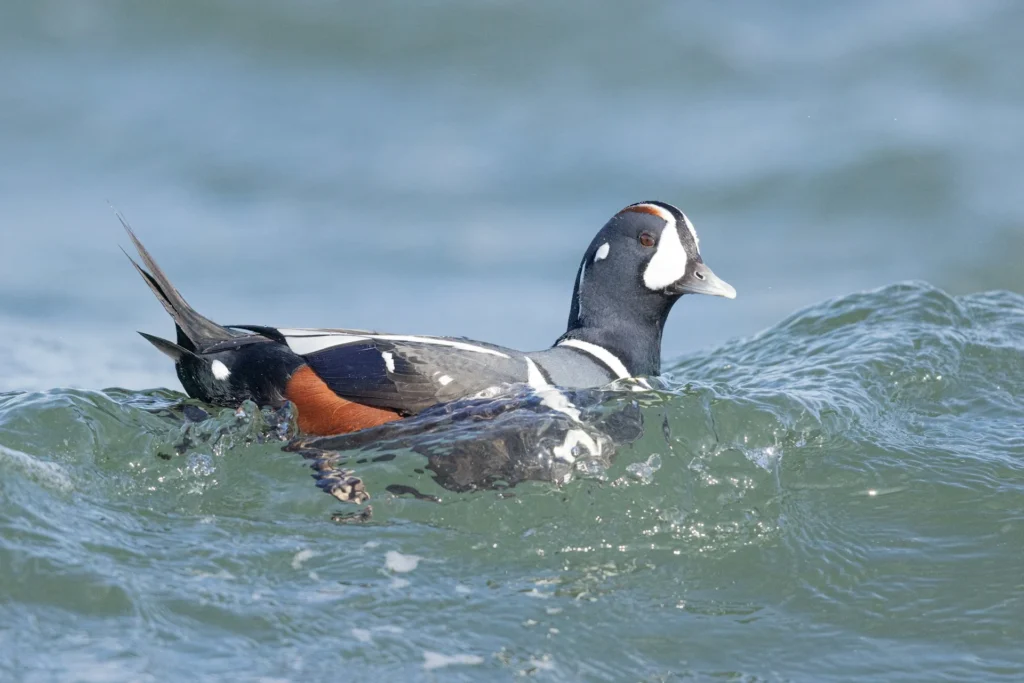
8. Harlequin Duck (Histrionicus histrionicus)

Harlequin Duck

Appearance

The Harlequin Duck is one of the most visually striking ducks in North America. Males have a dramatic plumage with slate-blue, chestnut, and white markings, including bold white spots on the head and neck. Females are more understated, with brown-gray bodies and a small round white patch near the eyes.

Habitat and Range in Texas

This species is extremely rare in Texas, but occasional sightings occur along rocky Gulf Coast shores during winter migration. It’s more commonly found in fast-flowing streams in the Pacific Northwest and along coastal waters in the northeast.

In Texas, any Harlequin Duck encounter is considered special and often draws birdwatchers hoping to spot a rare migrant.

Diet

Harlequin Ducks are adept divers, feeding mostly on:

  • Aquatic insects
  • Crustaceans (especially crabs and shrimp)
  • Small mollusks
  • Fish eggs and larvae

They use their compact bodies and strong legs to navigate turbulent waters with remarkable agility.

Behavior

They’re highly adapted to rugged environments. Unlike other ducks, Harlequins are rarely seen loafing in calm waters—they prefer the thrill of swift rivers or crashing surf. Their call is a soft squeaky whistle, earning them the nickname “sea mice.”

Breeding (Outside Texas)

They breed along mountain streams in places like Montana, Wyoming, and Alaska. Nesting typically occurs in rocky crevices or tree roots along riverbanks. Chicks are led to turbulent waters almost immediately after hatching.

Fun Fact

Harlequin Ducks are named after colourful stage clowns of Renaissance Italy, thanks to their playful and vividly patterned appearance.

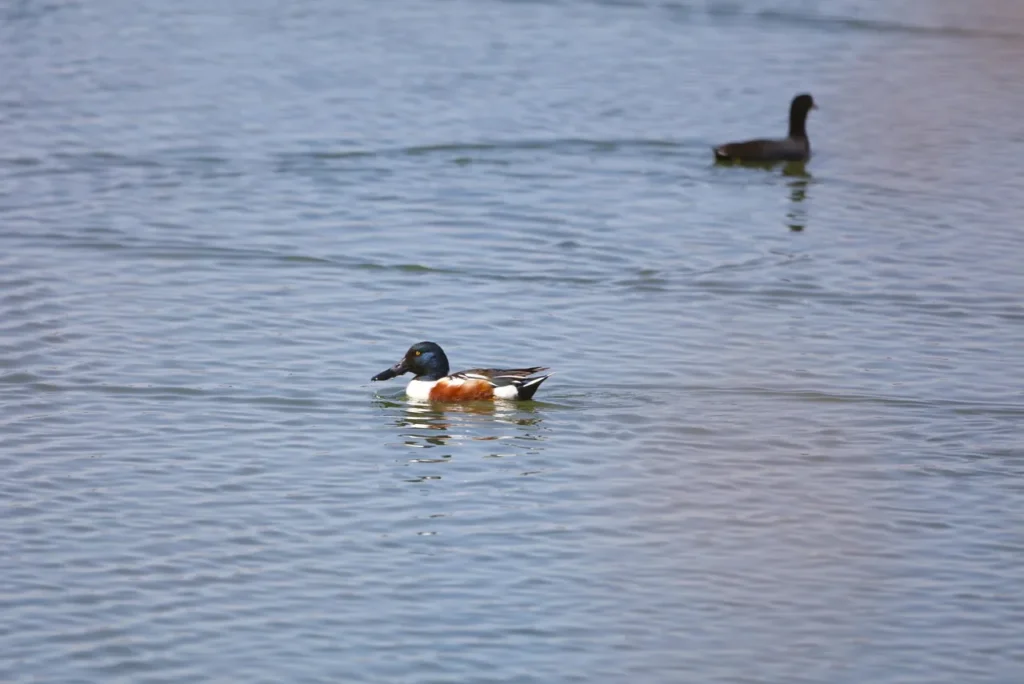
9. Northern Shoveler (Spatula clypeata)

Northern Shoveler

Appearance

The Northern Shoveler is instantly recognizable thanks to its oversized, spoon-shaped bill. Males are striking in breeding plumage: iridescent green heads, white chests, and chestnut flanks. Females are more camouflaged in mottled brown but share the same broad, flat bill that gives this duck its name.

Habitat and Range in Texas

Common across marshes, wetlands, and shallow lakes throughout Texas, especially during the cooler months. They are:

  • Migratory and arrive in large numbers in fall and winter
  • Seen in coastal prairies, playa lakes, and flooded rice fields

They tend to prefer shallow waters with abundant floating vegetation.

Diet

Northern Shovelers feed primarily by skimming the water’s surface, filtering tiny organisms with their wide bills. Their diet includes:

  • Zooplankton and aquatic insects
  • Algae and aquatic plants
  • Seeds and crustaceans

This unique feeding style sets them apart from most dabbling ducks.

Behavior

Shovelers often swim in tight circles, stirring up food from the bottom to the surface. They’re social birds and can be seen in dense feeding flocks. Males give a low, nasal “took-took,” while females quack more softly than Mallards.

Breeding (Outside Texas)

They typically breed in prairie potholes and wetlands of the Northern U.S. and Canada. Females build ground nests concealed in grass, laying around 8–12 eggs.

Fun Fact

Despite their large bills, Northern Shovelers are among the least aggressive dabblers, often avoiding conflict and feeding peacefully in groups.

10. Wood Duck (Aix sponsa)

Wood Duck

Appearance

The male Wood Duck is among the most vividly colored ducks in North America, with an iridescent green and purple head, red eyes, a white throat stripe, and chestnut chest. Females are more muted but elegant, featuring a teardrop-shaped white eye ring and soft gray-brown plumage.

Habitat and Range in Texas

Wood Ducks are commonly found in forested wetlands, cypress swamps, and slow-moving rivers and streams across East and Central Texas. They are:

  • Year-round residents in many parts of the state
  • Breeding in wooded areas with water access

They readily use nest boxes in conservation areas and backyards near water.

Diet

These ducks are highly omnivorous and versatile in their feeding:

  • Seeds, acorns, and berries
  • Aquatic insects, snails, and crustaceans
  • Occasionally small fish and amphibians

They forage in both trees and water, making them more flexible than most ducks.

Behavior

Wood Ducks are agile flyers and strong swimmers. Unlike many duck species, they perch in trees and often nest in tree cavities, sometimes 20–30 feet off the ground. Ducklings famously leap from the nest a day after hatching to follow their mother to water.

Their vocalizations are distinct:

  • Males give a high-pitched whistle
  • Females emit a sharp “oo-eek” sound

Breeding

In Texas, Wood Ducks nest from late winter through early summer, laying 7–15 eggs per clutch. Thanks to nest box programs and wetland preservation, their populations have rebounded significantly.

Fun Fact

Wood Ducks were once nearing extinction due to overhunting and habitat loss, but they are now a major conservation success story, thanks to human intervention.

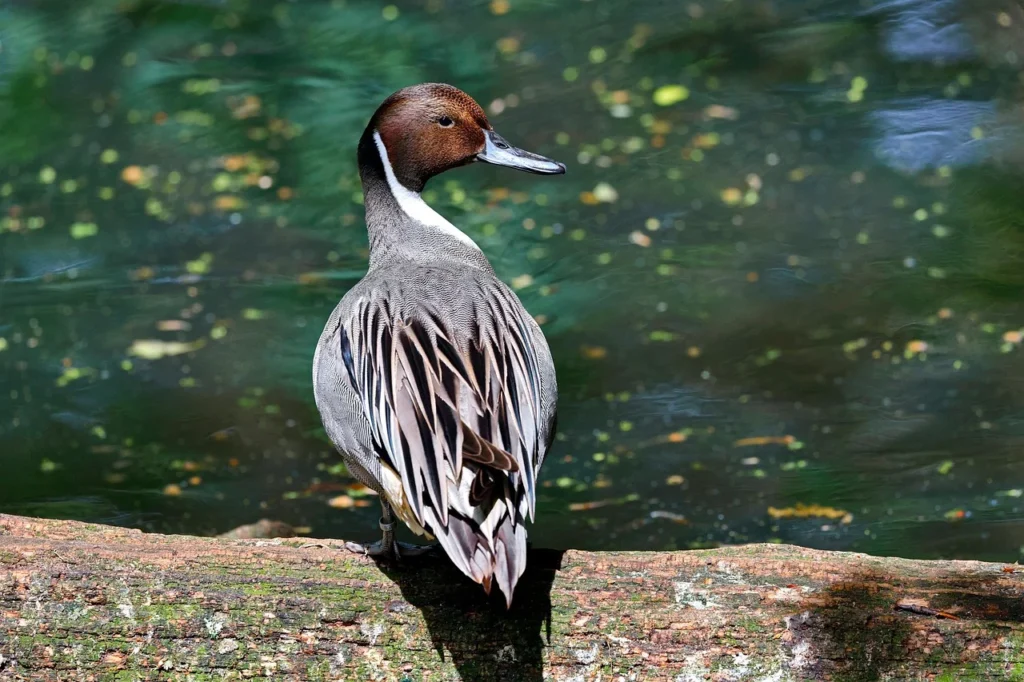
11. Northern Pintail (Anas acuta)

Northern Pintail

Appearance

Northern Pintails are slender, long-necked ducks with a distinctive silhouette. Males feature:

  • Chocolate-brown heads
  • White necks and underparts with a thin white stripe running up the side of the neck
  • Grayish flanks and long, black central tail feathers

Females are more muted, sporting mottled brown plumage and a more subtle version of the male’s graceful shape.

Habitat and Range in Texas

In Texas, Northern Pintails are winter migrants, commonly seen in:

  • Coastal wetlands
  • Flooded rice fields and freshwater marshes
  • Panhandle playas and prairie ponds

Their presence is strongest in fall through early spring, often in large mixed flocks with other dabbling ducks.

Diet

Pintails are dabblers and prefer shallow waters. Their diet includes:

  • Seeds and grains (especially rice and smartweed)
  • Aquatic plants and pondweeds
  • Insects and small aquatic invertebrates

They often forage in agricultural fields and are drawn to recently flooded areas.

Behavior

Northern Pintails are known for their graceful flight and sleek appearance. They migrate in impressive flocks, often covering thousands of miles between breeding and wintering grounds. They’re also quieter than many ducks, with males emitting a soft whistle and females producing a hoarse quack.

Breeding (Outside Texas)

They breed in the northern prairies of the U.S. and Canada, choosing open fields and grasslands near water. Females lay around 6–12 eggs and incubate them for about three weeks.

Fun Fact

Because of their elegant shape and swift flight, the Northern Pintail is sometimes called the “greyhound of the skies.” They are one of the earliest migratory ducks to arrive in Texas each fall.

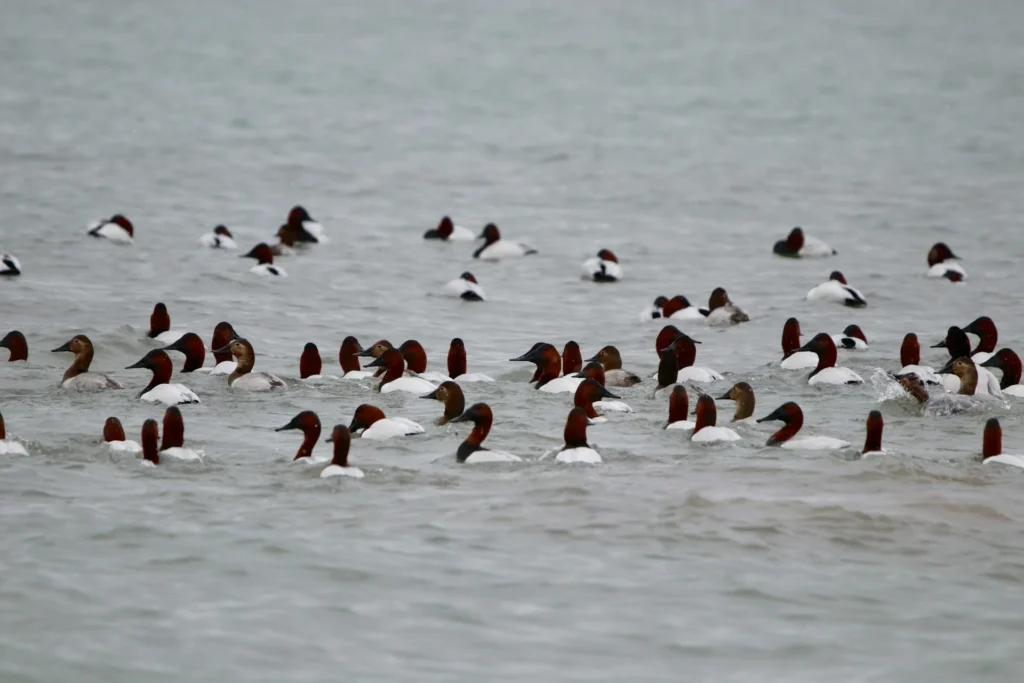
12. Canvasback (Aythya valisineria)

Canvasback

Appearance

The Canvasback is instantly recognizable for its:

  • Sloping red head and long black bill
  • Pale grayish-white body that resembles canvas (hence the name)
  • Black chest and tail feathers

Females are subtler in appearance, with a brownish head and tan body, yet they share the same sleek, wedge-shaped profile.

Habitat and Range in Texas

Canvasbacks are migratory visitors to Texas and are most commonly spotted during fall and winter. Key areas include:

  • Coastal bays and estuaries
  • Inland reservoirs and deep lakes
  • Open wetlands and flooded grain fields

They prefer deeper water bodies compared to dabbling ducks.

Diet

Canvasbacks are specialist divers that forage underwater, primarily feeding on:

  • Aquatic tubers, especially wild celery (Vallisneria)
  • Other submerged plants
  • Occasionally insects, snails, and small fish

Their long, narrow bill is perfectly suited for grasping underwater vegetation.

Behavior

These ducks are strong, fast flyers, known for their powerful, direct wingbeats. Unlike dabblers, Canvasbacks dive completely underwater to feed and often stay submerged for 10–20 seconds at a time.

They are quieter than most ducks, but males sometimes give a low “whoop” sound during courtship.

Breeding (Outside Texas)

Canvasbacks breed in the prairie pothole region of the U.S. and Canada, choosing deep-water wetlands with ample vegetation for nesting. Their nests are often floating platforms anchored to reeds or bulrushes.Conservation Status

Currently listed as Vulnerable, Canvasbacks face threats from:

  • Wetland loss and pollution
  • Degradation of food sources like wild celery

Conservation programs focus on protecting stopover wetlands and breeding habitats along migration corridors.

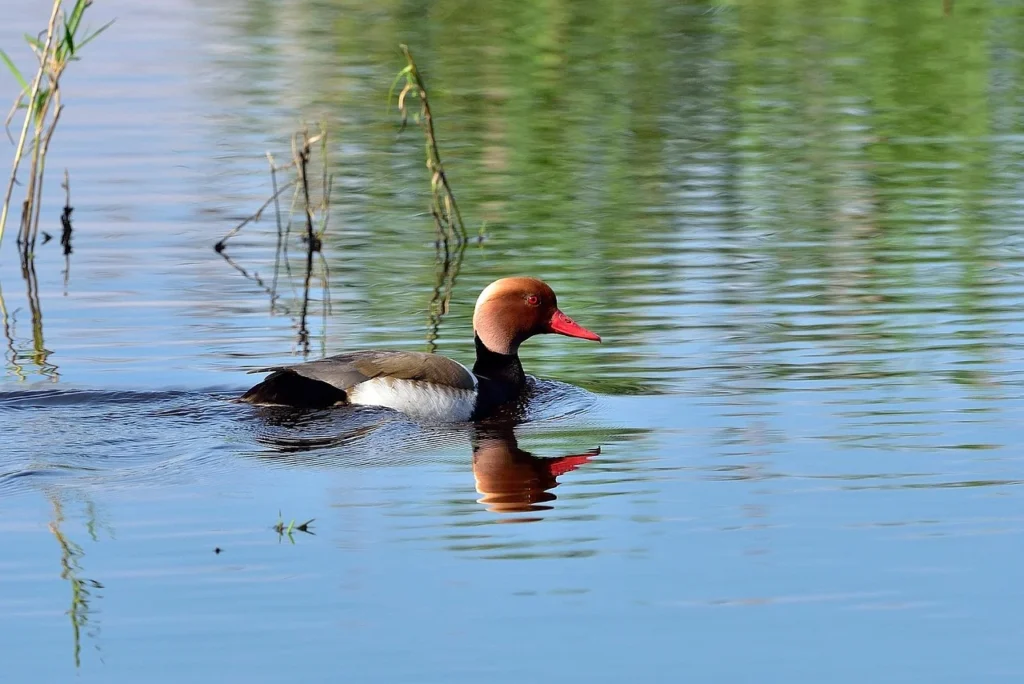
14. Redhead (Aythya americana)

Redhead Duck

Appearance

The Redhead is a medium-sized diving duck known for its striking red head and neck, black breast, and light grey body. Males are unmistakable with their bold coloration, while females are uniformly brown with a paler face and a bluish-gray bill. Their rounded head and sloping forehead help distinguish them from similar diving ducks like Canvasbacks.

Habitat and Range in Texas


Redheads are migratory and commonly winter in Texas, especially along the Gulf Coast. Key habitats include:

  • Coastal bays and estuaries
  • Large inland lakes and reservoirs
  • Shallow freshwater marshes
  • Protected brackish wetlands and lagoons

Texas’s Laguna Madre is a globally important wintering site, often hosting tens of thousands of Redheads at once.

Diet


Redheads dive for food in both fresh and saltwater. Their primary diet includes:

  • Aquatic plants like pondweeds and wild celery
  • Seeds and tubers from submerged vegetation
  • Occasional insects, mollusks, and small crustaceans

They forage by diving or tipping underwater, especially in groups.

Behavior

Redheads are gregarious and social, often forming large flocks outside of the breeding season. They may associate with other diving ducks but generally stick together. Males give a soft “whee-o” whistle, while females produce a series of low quacks.

Breeding (Outside Texas)


They typically breed in the northern Great Plains and Canadian prairies. Nests are built over water among thick emergent vegetation. Females lay 7–10 eggs, and interestingly, Redheads are known for parasitizing the nests of other duck species like Canvasbacks by laying eggs in them.

Fun Fact


Over 80% of the continental Redhead population winters along the Texas Gulf Coast—making the Lone Star State vital for their survival!

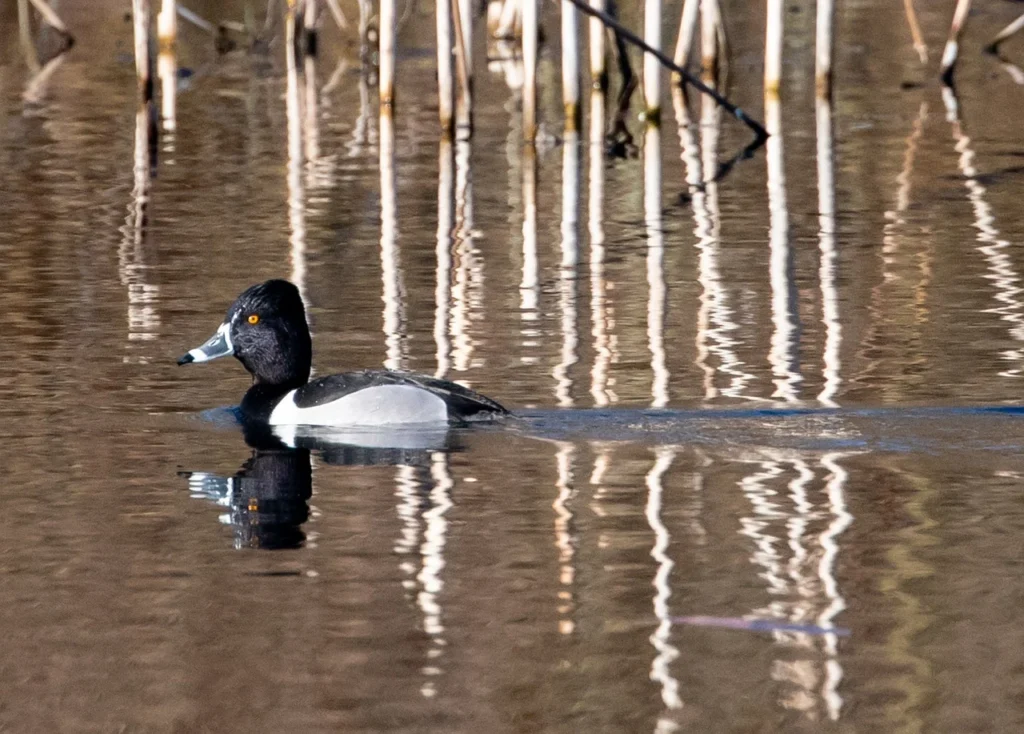
13. Ring-necked Duck (Aythya collaris)

Ring-necked Duck

Appearance


Despite its name, the Ring-necked Duck is more easily identified by its ringed bill than the faint chestnut ring around the neck. Males feature a striking black head, chest, and back, with grey sides and a white ring near the tip of the bill. Females are brown with a pale face and white eye ring, offering excellent camouflage in wetland vegetation.

Habitat and Range in Texas


Ring-necked Ducks are migratory visitors throughout Texas during the fall and winter months. Preferred habitats include:

  • Freshwater lakes and reservoirs
  • Marshes and wooded ponds
  • River oxbows and floodplain wetlands

They are more commonly found in inland wetlands than coastal areas and often in flocks mixed with other diving ducks.

Diet


As a diving duck, the Ring-necked Duck forages underwater for:

  • Submerged aquatic plants like pondweed and wild celery
  • Seeds and tubers from wetland vegetation
  • Aquatic insects, snails, and crustaceans

Their feeding technique includes short, agile dives and upending near aquatic vegetation.

Behavior


These ducks are generally quiet but can become vocal during courtship. Males may give a whining, nasal call, while females produce a harsh grating noise. They are strong fliers, often taking off almost vertically from the water—a distinctive trait among divers.

Breeding (Outside Texas)


They breed mainly in the northern U.S. and southern Canada, favoring forested wetlands. Females nest near water, typically among dense vegetation. Clutches usually consist of 8–10 eggs, and ducklings are highly mobile soon after hatching.

Fun Fact


Despite being named for a neck ring, most birdwatchers identify this species by its bill markings, making it one of the more “misnamed” ducks in North America.

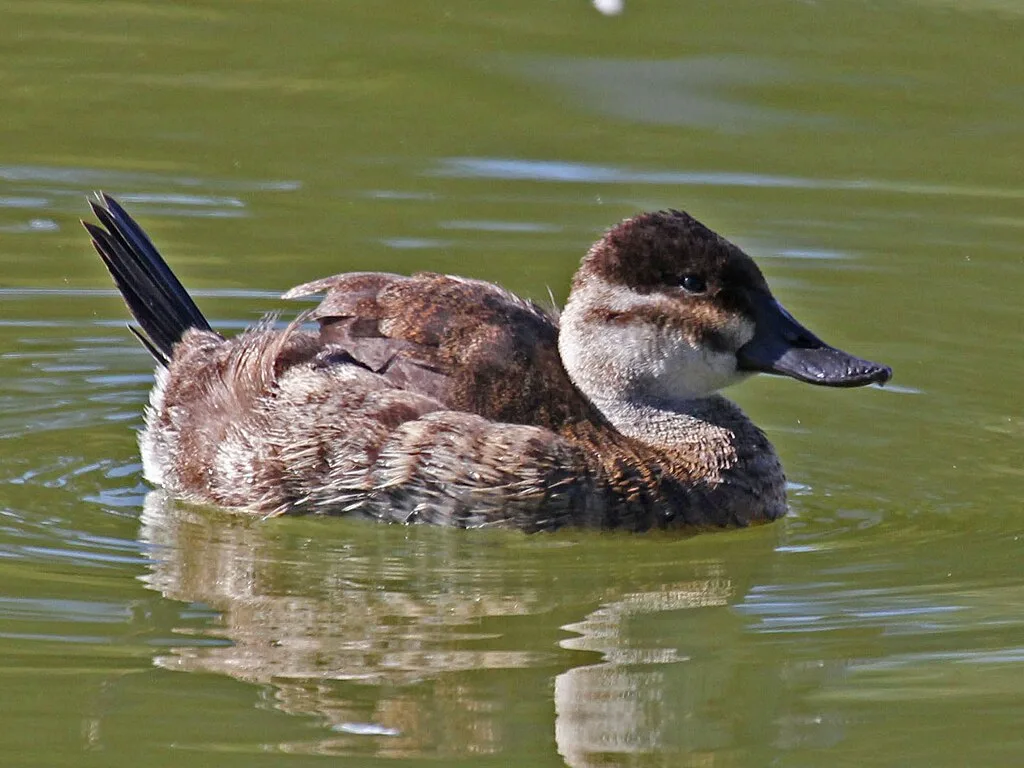
14. Ruddy Duck (Oxyura jamaicensis)

Ruddy Duck
Credit: Wikimedia, DickDaniels

Appearance


The Ruddy Duck is a small, compact diving duck with a long, stiff tail that it often holds upright. Breeding males are unmistakable with a bright sky-blue bill, rich chestnut body, blackish crown, and white cheeks. Females and non-breeding males are duller brownish with a dark line across their pale cheeks, making them more cryptic.

Habitat and Range in Texas


Ruddy Ducks are common winter residents throughout Texas and breed in the Panhandle and western wetlands. You can spot them in:

  • Freshwater ponds and lakes
  • Marshes with dense aquatic vegetation
  • Open reservoirs and coastal lagoons

They prefer shallow waters where they can easily dive for food.

Diet


Ruddy Ducks are diving feeders and forage underwater. Their diet includes:

  • Aquatic insects and larvae
  • Crustaceans
  • Seeds of aquatic plants
  • Small mollusks and zooplankton

They often feed at night or during twilight hours, using their broad bills to strain food from mud.

Behavior


These ducks are strong, agile divers but clumsy on land. They often sink low in the water when alarmed rather than fly away. Males perform elaborate courtship displays involving bubbling, tail shaking, and rapid bill-drumming on their chest.

Breeding (in Texas and beyond)


Ruddy Ducks build floating nests hidden in dense marsh vegetation. The female lays 5–10 eggs and raises the ducklings alone. Chicks are precocial, leaving the nest soon after hatching but staying near the female.

Fun Fact


Ruddy Duck eggs are unusually large relative to the hen’s body size—among the largest in proportion of any duck species!

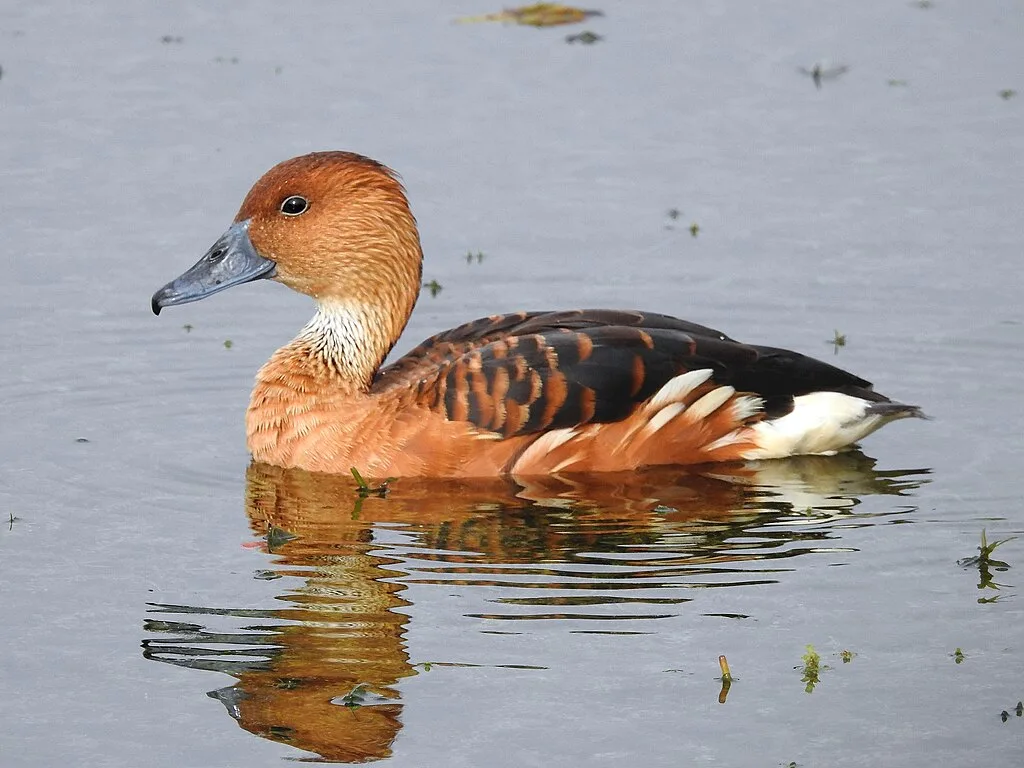
15. Fulvous Whistling-Duck (Dendrocygna bicolor)

Fulvous Whistling-Duck
cc: Wikimedia JeffreyGammon

Appearance


The Fulvous Whistling-Duck is a striking, long-legged waterfowl with a tall neck and upright posture. Its plumage is mostly rich cinnamon or “fulvous” (tawny orange-brown), with a dark back and bold white stripe on each side. It has a bluish-gray bill and legs, and both sexes look alike.

Habitat and Range in Texas


This duck is a common summer breeder in southeastern Texas and along the Gulf Coast. You’ll find it in:

  • Rice fields and flooded agricultural lands
  • Freshwater marshes with dense vegetation
  • Shallow ponds and reservoirs

They are most often seen in pairs or small groups rather than large flocks.

Diet


Fulvous Whistling-Ducks primarily feed at night, dabbling and tipping in shallow water. Their diet includes:

  • Seeds of grasses, sedges, and aquatic plants
  • Rice and other grains from farmlands
  • Occasional aquatic invertebrates and insects

They forage both in water and in adjacent crop fields.

Behavior


These ducks are vocal and known for their loud, clear whistling calls, often heard in flight. They are strong fliers and form tight, synchronized groups. Fulvous Whistling-Ducks may roost in trees or elevated spots near water.

Breeding


In Texas, breeding occurs in late spring and summer. Nests are built on the ground among thick vegetation or on floating mats. The female lays 12–14 eggs, and both parents share incubation duties. Ducklings are active within hours of hatching.

Fun Fact


Unlike most ducks, Fulvous Whistling-Ducks have partially webbed feet and often perch in trees—more like geese than typical dabbling ducks!

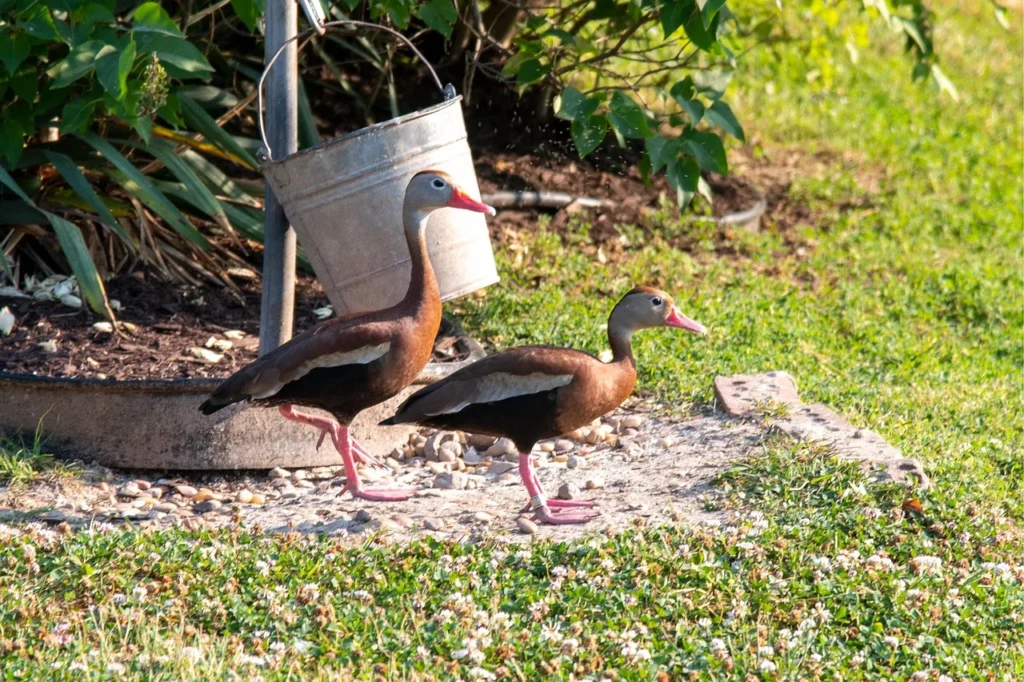
16. Black-bellied Whistling-Duck (Dendrocygna autumnalis)

Black-bellied Whistling-Duck

Appearance


This unique duck stands out with its long legs, upright stance, and vivid colors. Adults have a bright pink bill, a chestnut body, black belly, gray face, and white wing patches visible in flight. Both sexes look similar, and their goose-like shape often causes confusion.

Habitat and Range in Texas


Black-bellied Whistling-Ducks are common year-round residents in southern and eastern Texas. Look for them in:

  • Freshwater ponds and reservoirs
  • Agricultural fields, especially rice fields
  • Wetlands and flooded pastures
  • Urban parks and golf course ponds

They are adaptable and increasingly expanding northward in range.

Diet


These ducks are primarily herbivorous and forage by dabbling or grazing. Their diet includes:

  • Grass seeds and aquatic vegetation
  • Grains like rice, corn, and millet
  • Occasional aquatic insects and snails

They often forage on land in the early morning and late evening.

Behavior


Highly social and vocal, Black-bellied Whistling-Ducks make high-pitched whistling calls. They are often seen perched on fence posts or tree limbs—unusual behavior for ducks. They form loose flocks and are comfortable around human activity.

Breeding


These cavity nesters often use tree holes or nest boxes near water. They breed from spring through summer, and both parents incubate 9–16 eggs. It’s common for multiple females to lay eggs in the same nest—sometimes over 40!

Fun Fact


Unlike most ducks, Black-bellied Whistling-Ducks don’t quack—they whistle! They also sometimes nest in owl boxes and can raise multiple broods each season.

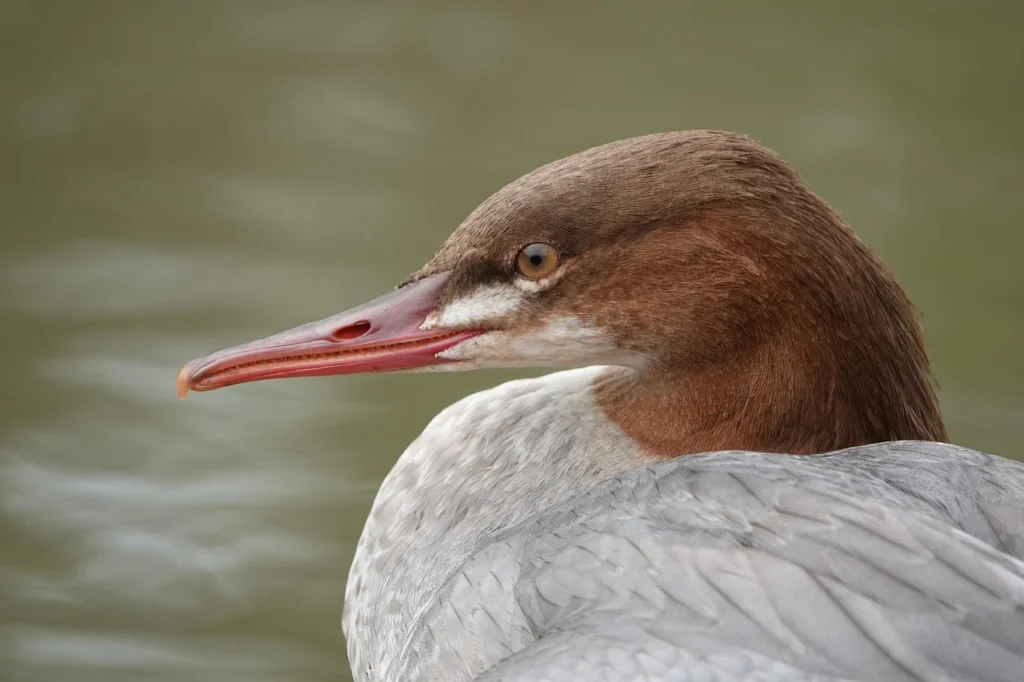
17. Common Merganser (Mergus merganser)

Common Merganser

Appearance


The Common Merganser is a large, sleek duck with a long, slender red bill and a streamlined body. Males in breeding plumage have a dark green head, bright white body, and black back. Females and juveniles are gray-bodied with a rusty-brown head and a short crest at the back.

Habitat and Range in Texas


In Texas, Common Mergansers are rare but regular winter visitors, especially in the Panhandle and northern regions. You may spot them:

  • On large, clear lakes and reservoirs
  • Along slow-moving rivers
  • In deep freshwater habitats with abundant fish

They prefer cold, clean waters and are less common in the southern half of the state.

Diet


Common Mergansers are diving ducks and expert fish hunters. Their serrated bills help grip slippery prey. Their diet includes:

  • Small fish like minnows and perch
  • Aquatic insects and crustaceans
  • Occasionally amphibians and mollusks

They dive underwater and pursue fish with agile swimming.

Behavior


These ducks often form small flocks in winter. They are quiet and graceful, flying with rapid wingbeats. When alarmed, they flush quickly in a low flight over the water. Their dives are smooth and often deep in search of prey.

Breeding (Outside Texas)


They breed in forested areas near northern rivers and lakes. Nests are placed in tree cavities or nest boxes, often far from the water. Females lay 6–17 eggs and raise ducklings solo, leading them to water shortly after hatching.

Fun Fact


Common Mergansers can dive over 30 feet deep to catch fish and are among the few duck species that rely so heavily on live fish as their main food source.

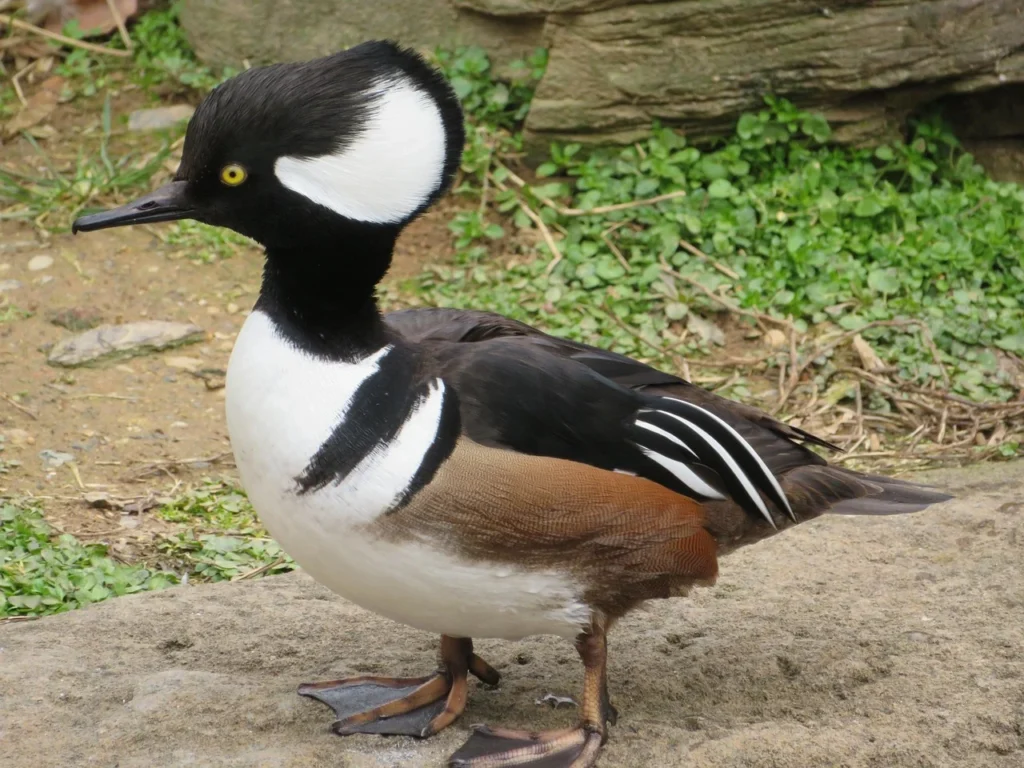
18. Hooded Merganser (Lophodytes cucullatus)

Hooded Merganser

Appearance


The Hooded Merganser is a striking, small diving duck known for its large collapsible crest. Males have a bold black-and-white fan-shaped hood, yellow eyes, a dark back, and chestnut flanks. Females are brown overall with a cinnamon-toned crest and a more slender, dark bill.

Habitat and Range in Texas


In Texas, Hooded Mergansers are uncommon but regular winter visitors, especially from late fall through early spring. They are found in:

  • Shallow wooded wetlands
  • Cypress swamps and river sloughs
  • Small lakes and ponds with overhanging trees

They prefer quiet, shaded water bodies with ample cover.

Diet


Hooded Mergansers are skilled visual hunters that dive to catch aquatic prey. Their diet includes:

  • Small fish and crayfish
  • Aquatic insects and larvae
  • Frogs and other small amphibians

Their eyes adapt quickly to underwater vision, aiding their fishing accuracy.

Behavior


These ducks are fast and agile in water, diving frequently. They are typically solitary or seen in pairs and small groups. Males perform elaborate courtship displays by fanning their crests and shaking their heads.

Breeding (Outside Texas)


They nest in tree cavities near freshwater. Females lay 7–15 eggs in hollow trees or nest boxes. After hatching, ducklings leap from the cavity to the ground and follow the mother to water.

Fun Fact


The Hooded Merganser’s eyes adjust focus underwater like goggles, making it a superb aquatic predator despite its small size.

19. Red-breasted Merganser (Mergus serrator)

Red-breasted Merganser

Appearance


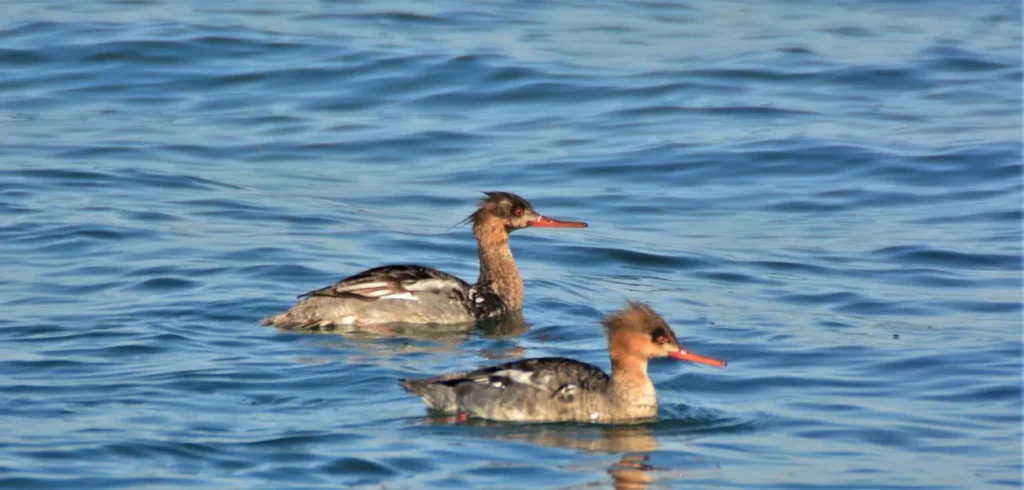
The Red-breasted Merganser is a sleek diving duck with a spiky crest and long, narrow red bill. Males in breeding plumage feature a greenish-black head, rusty breast, white neck collar, and patterned flanks. Females and nonbreeding males are grayish with a brown head and ragged crest, giving them a scruffy appearance.

Habitat and Range in Texas


In Texas, Red-breasted Mergansers are mainly winter visitors and migrants, especially along the Gulf Coast. Look for them in:

  • Coastal bays and estuaries
  • Tidal lagoons and saltwater marshes
  • Large inland lakes and reservoirs

They prefer open water and often form flocks during migration.

Diet


These mergansers are expert fish hunters and feed by diving and chasing prey underwater. Their diet includes:

  • Small fish (main prey)
  • Aquatic crustaceans
  • Amphibians and aquatic insects

They use their serrated bills to grip slippery fish with ease.

Behavior


Red-breasted Mergansers are active swimmers and frequent divers. They are often seen in loose flocks and may feed cooperatively in groups. Their flight is fast and low over the water with rapid wingbeats.

Breeding (Outside Texas)


Breeding takes place in northern boreal forests and tundra near freshwater. Nests are shallow scrapes hidden in vegetation close to water. Females lay 6–12 eggs and raise the ducklings alone.

Fun Fact


Red-breasted Mergansers hold the world speed record for ducks—flapping at over 100 mph during level flight!

20. Common Goldeneye (Bucephala clangula)

Common Goldeneye

Appearance


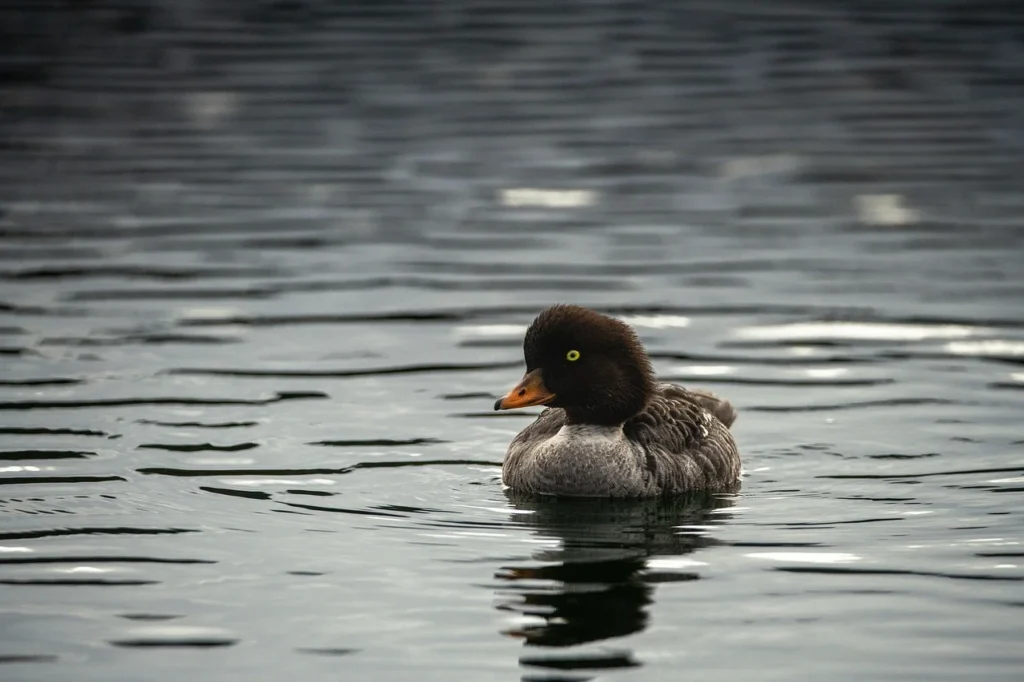
The Common Goldeneye is a medium-sized diving duck with a striking appearance. Males are mostly black and white with a round white spot near the base of the bill and a glossy green-black head. Females have a chocolate-brown head, gray body, and yellow-tipped black bill. Both sexes have bright golden-yellow eyes that give the species its name.

Habitat and Range in Texas


Common Goldeneyes are uncommon but regular winter visitors in Texas. They’re mostly spotted in:

  • Large reservoirs and lakes
  • Slow-moving rivers
  • Coastal bays and estuaries (occasionally)

They prefer clear, open water and tend to stay farther from shore than dabbling ducks.

Diet


These ducks are diving foragers, feeding underwater on a wide variety of prey. Their diet includes:

  • Aquatic insects and larvae
  • Crustaceans
  • Mollusks and small fish
  • Aquatic plants and seeds (occasionally)

They dive with agility and can stay submerged for extended periods.

Behavior


Goldeneyes are active and fast swimmers. They often forage alone or in small flocks. In flight, they produce a distinctive whistling sound with their wings, especially noticeable during takeoff.

Breeding (Outside Texas)


They nest in tree cavities in boreal forests across Canada and the northern U.S. Females may reuse the same nest annually, laying 6–12 eggs. Ducklings leap from the nest within a day of hatching and head straight for water.

Fun Fact
Despite being cavity nesters, Common Goldeneyes often lay their eggs in nests of other goldeneyes—a behavior called brood parasitism.

Duck-Like Species Found in Texas Wetlands

21. American Coot (Fulica americana)

American Coot

Appearance

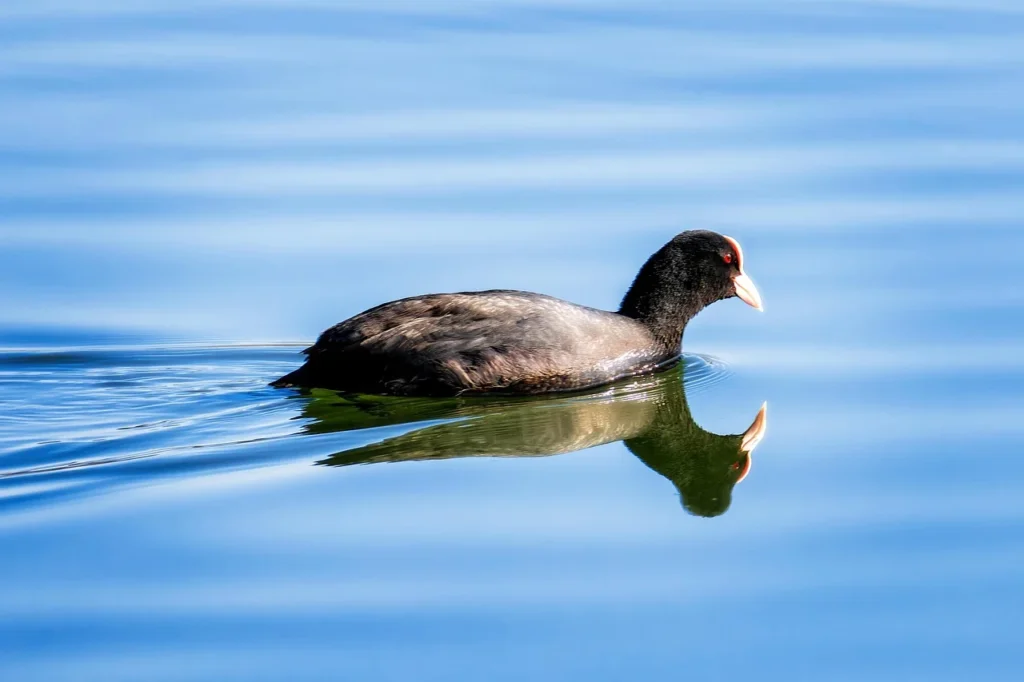
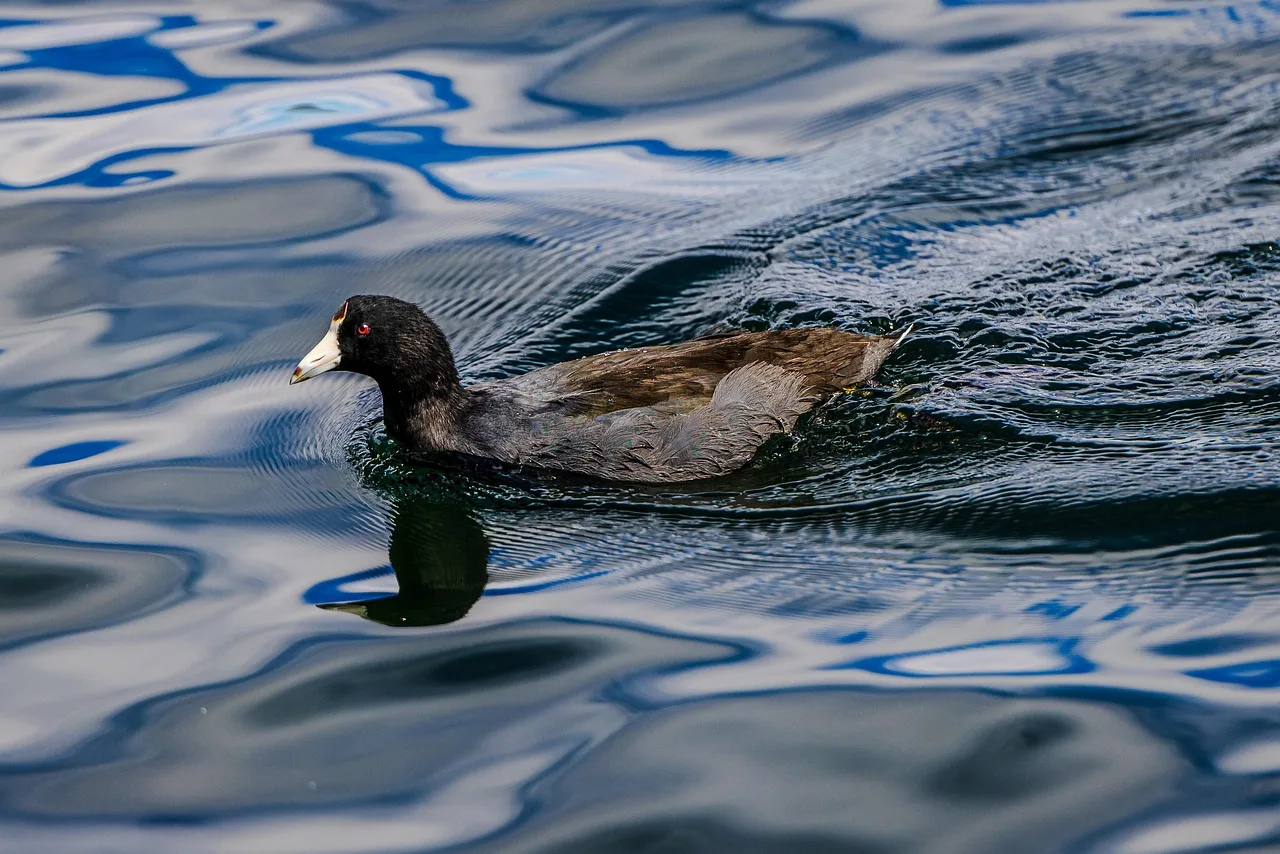
Though often mistaken for a duck, the American Coot is not a true duck. It has:

  • A slate-gray to black body
  • A bright white, chicken-like bill
  • A red eye and a small frontal shield above the beak
  • Greenish-yellow legs with lobed toes instead of webbed feet

This distinct foot structure helps coots walk across muddy marshes and even on floating vegetation.

Habitat and Range in Texas

American Coots are year-round residents across Texas and can be found in:

  • Ponds, lakes, marshes, and reservoirs
  • Urban parks and golf course ponds
  • Both freshwater and brackish environments

They are highly adaptable and often seen mingling with true duck species.

Diet

Coots are omnivores and flexible feeders. Their diet includes:

  • Aquatic plants and algae
  • Grasses and seeds
  • Insects, crustaceans, and small fish

Unlike ducks, they frequently dive or dip their heads underwater while swimming to reach food.

Behavior

Coots are aggressive and territorial, often chasing off intruders with flapping and squawking displays. Despite their round, duck-like shape, their flight is labored and awkward—they often require a long running start across the water.

Their nasal “kuk-kuk” calls are common sounds in Texas wetlands

Nesting

Coots build floating nests anchored to vegetation. The female lays 8–12 eggs, and both parents share incubation and chick-rearing duties.

Fun Fact

Even though they look like ducks, American Coots are actually members of the rail family. Their fossil record in Texas goes back thousands of years, and they’re among the most commonly counted waterbirds during bird surveys.

22. Pied-billed Grebe (Podilymbus podiceps)

Pied-billed Grebe

Appearance

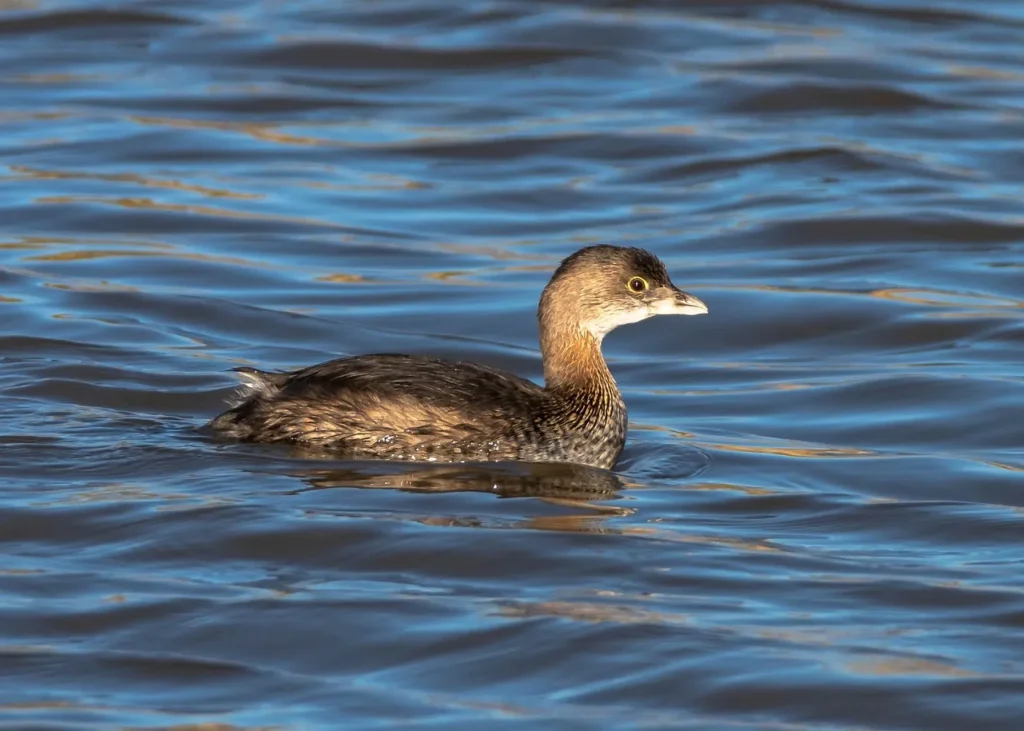
At a glance, the Pied-billed Grebe may seem like a small brown duck, but it’s actually a member of the grebe family. It features:

  • A compact, rounded body
  • A stubby bill that’s pale with a dark vertical stripe (in breeding season)
  • Brownish plumage with a slightly darker crown and back
  • No tail — instead, its rear end looks fluffy or tapered in the water

Unlike ducks, grebes often swim very low in the water, with only their heads and upper backs visible.

Habitat and Range in Texas

Pied-billed Grebes are common year-round across much of Texas and are especially frequent in:

  • Marshes
  • Slow-moving rivers
  • Ponds and lakes with dense shoreline vegetation

They prefer quiet, vegetated detlands, where they can dive and hide easily.

Diet

These birds are excellent divers that feed on:

  • Small fish
  • Aquatic insects and larvae
  • Crustaceans
  • Occasionally amphibians

They often swallow small prey underwater and even consume their own feathers to help digest bones and sharp items safely.

Behavior

Pied-billed Grebes are famously secretive and can sink like a submarine when threatened, vanishing almost instantly below the surface. They rarely fly unless migrating and are often seen alone or in pairs rather than flocks.

Their eerie, whooping call is often heard in spring and early summer.

Nesting

These grebes build floating nests anchored to reeds or cattails. Both male and female help incubate the eggs and care for the striped chicks, which often ride on the parents’ backs shortly after hatching.

Fun Fact

Despite their duck-like appearance, grebes are more closely related to flamingos than ducks. The Pied-billed Grebe is one of the most widespread grebes in North America — and a regular fixture in Texas wetlands.

23. Double-crested Cormorant (Nannopterum auritum)

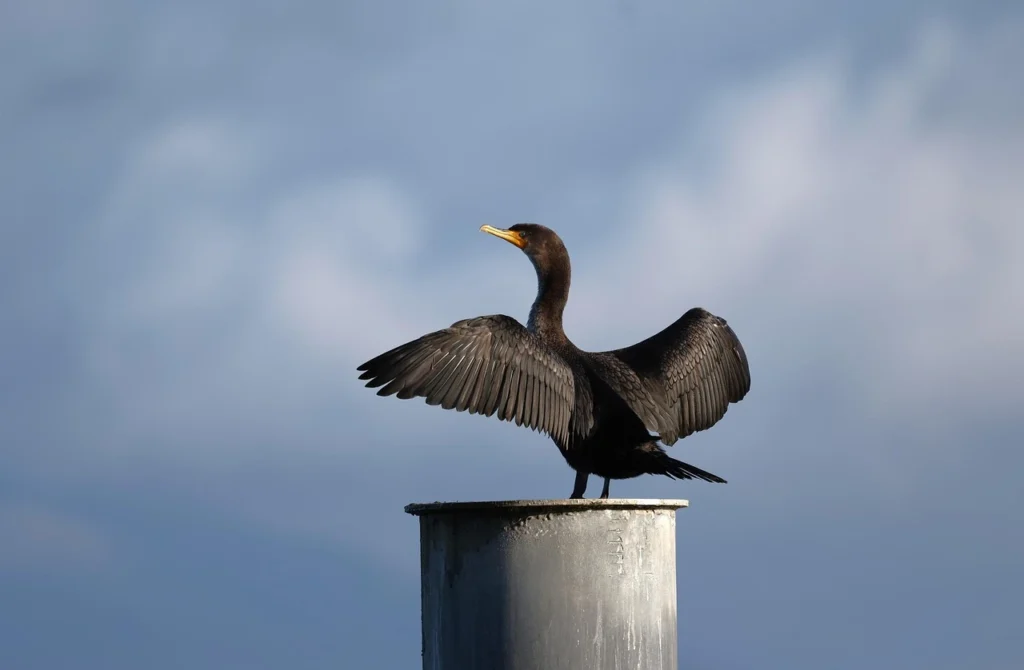
Double-crested Cormorant

Appearance


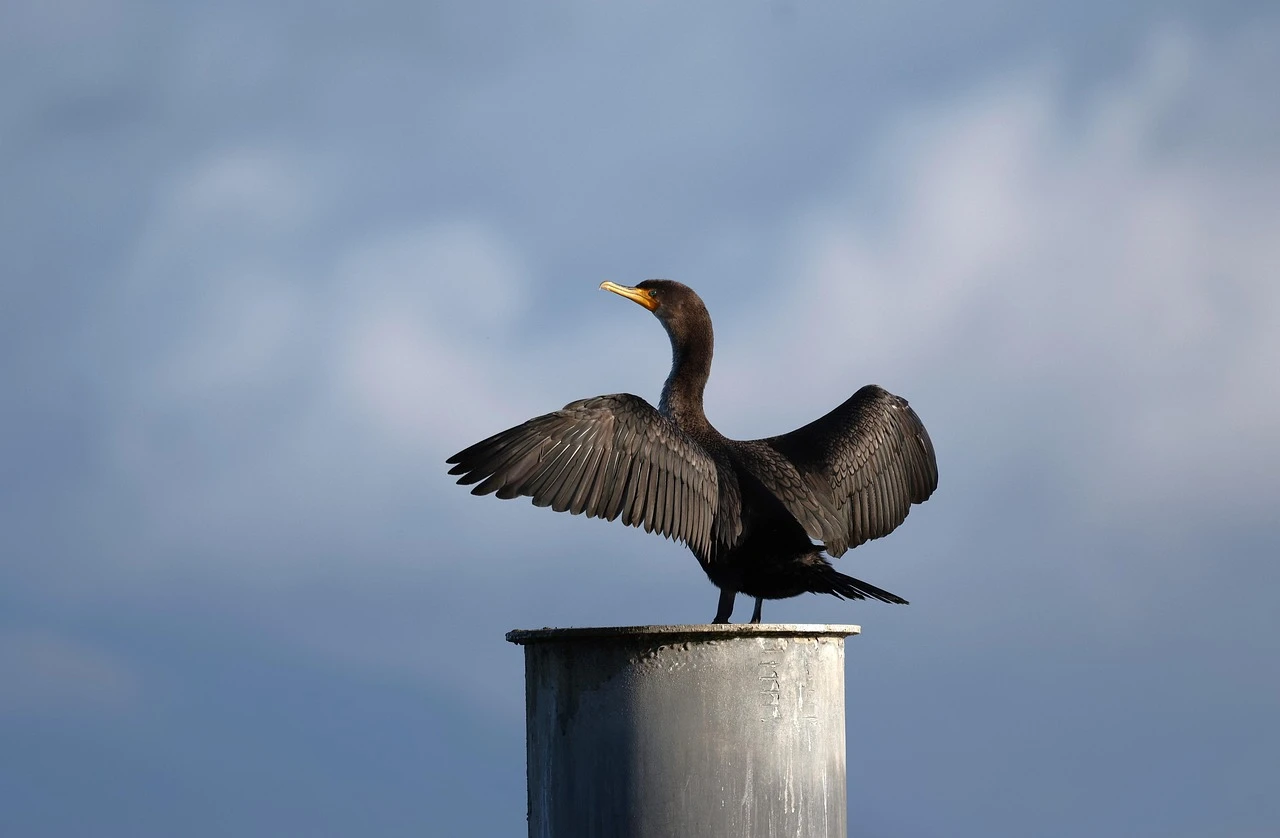
The Double-crested Cormorant is a large, slender, dark waterbird with a long neck and hooked bill. Adults appear blackish overall, often with a slight green or bronze sheen. In breeding season, they develop two tufts of feathers—“double crests”—on either side of the head, though these can be hard to see.

Habitat and Range in Texas


Cormorants are common year-round residents throughout Texas, especially around large bodies of water. Typical habitats include:

  • Freshwater lakes and reservoirs
  • Coastal bays and estuaries
  • Rivers and aquaculture ponds
  • Docks, piers, and large snags for roosting

They’re frequently seen perched with wings outstretched to dry.

Diet


Double-crested Cormorants are voracious fish-eaters and expert divers. Their diet mainly includes:

  • Small to medium-sized fish
  • Crayfish and amphibians (occasionally)
  • Aquatic insects and larvae

They pursue fish underwater using their strong legs and webbed feet.

Behavior


Unlike ducks, cormorants lack waterproofing oils, which is why they must dry their wings after diving. They swim low in the water with only their head and neck showing and often dive completely underwater for extended periods. Their flight is strong and direct, with neck outstretched and wings beating steadily.

Breeding


These birds nest in colonies, often on islands, cliffs, or tall trees. Nests are made of sticks and debris and reused yearly. Females lay 3–4 eggs, and both parents share incubation duties. Chicks are fed regurgitated fish until fledging.

Fun Fact


Because of their efficient fishing skills, cormorants are sometimes seen as a nuisance by fish farmers. Yet they play a vital role in aquatic ecosystems by controlling fish populations and cycling nutrients.

24. Common Gallinule (Gallinula galeata)

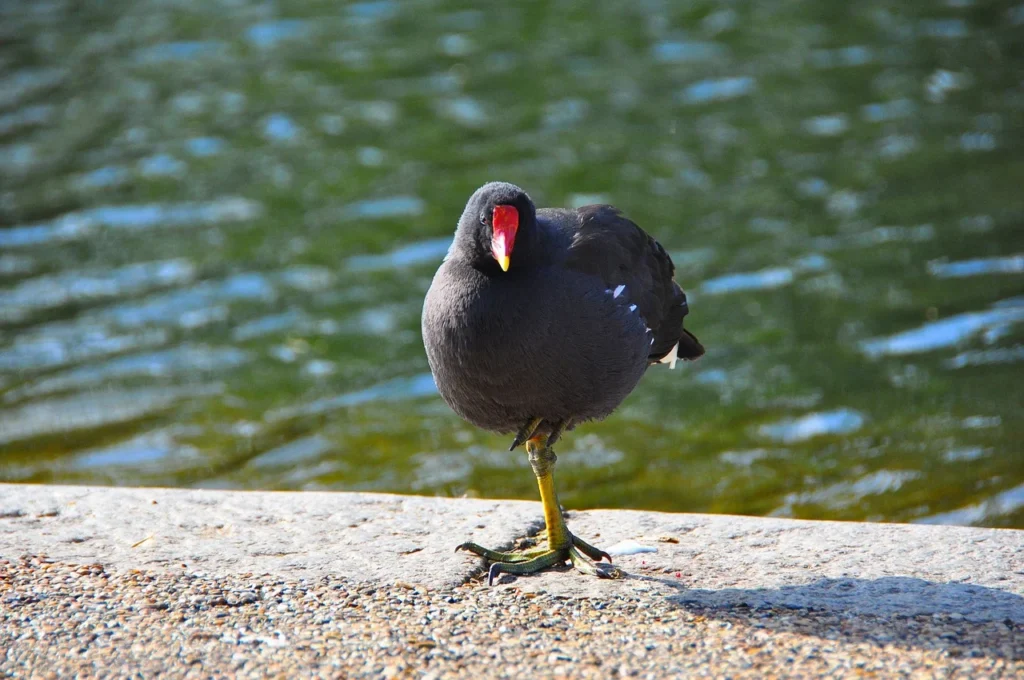
Common Gallinule

Appearance


The Common Gallinule, also known as the Common Moorhen, is a duck-like bird but can be easily distinguished by its bright red forehead shield and yellow-tipped red bill. Adults have a slate-black body, white flank stripes, and long greenish legs with unwebbed toes, ideal for walking on vegetation.

Habitat and Range in Texas


Common Gallinules are widespread year-round in Texas, especially in the warmer eastern and coastal regions. Preferred habitats include:

  • Marshes and wetlands with dense emergent vegetation
  • Edges of ponds, lakes, and bayous
  • Rice paddies and flooded ditches

They prefer shallow waters with floating vegetation for foraging and nesting.

Diet


Gallinules are omnivores, feeding on both plant and animal matter. Their diet includes:

  • Aquatic vegetation and seeds
  • Insects and small snails
  • Worms and crustaceans
  • Algae and even frog eggs

They often pick food from the surface of the water or while wading.

Behavior


Though duck-like in shape, Gallinules swim with a jerky motion and often walk on floating plants. They are territorial during breeding season and may engage in fights. Known for their loud clucking calls, they often vocalize to maintain contact or defend their area.

Breeding


In Texas, breeding typically occurs in spring and summer. Nests are built in thick reeds or cattails, made from dead plant material. Females lay 5–10 eggs, and both parents help with incubation and chick-rearing. Chicks can swim almost immediately after hatching.

Fun Fact


Despite their aquatic lifestyle, Common Gallinules are strong runners and climbers. Their long toes help them navigate lily pads and reeds better than ducks can.

25. Neotropic Cormorant (Nannopterum brasilianum)

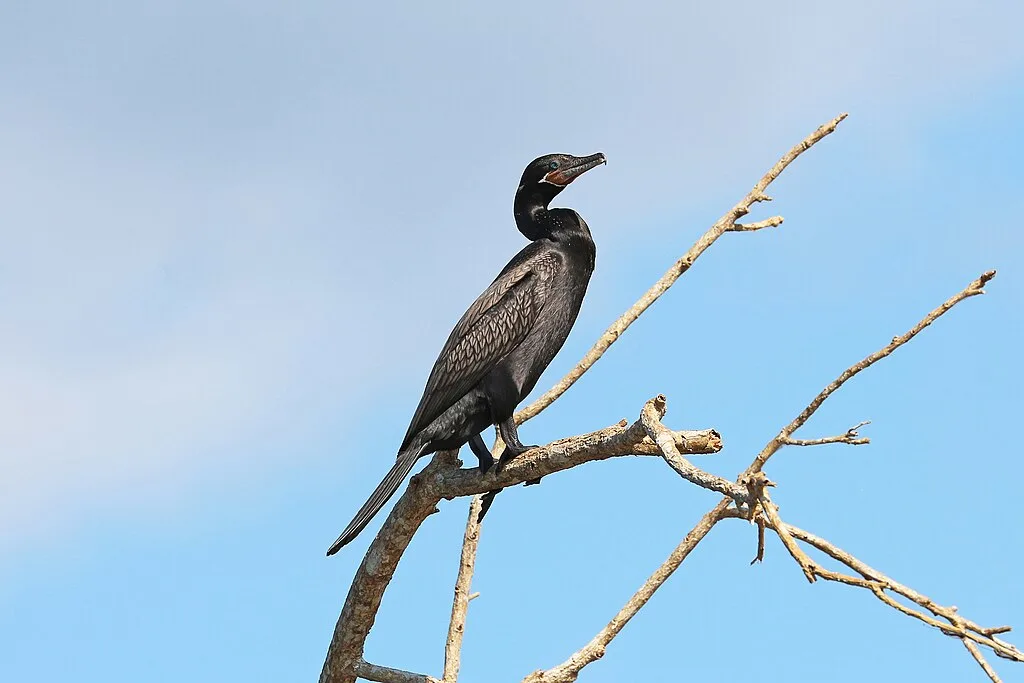
Neotropic Cormorant
credit: Wikimedia, Bernard Gagnon

Appearance


The Neotropic Cormorant is a slender, dark waterbird with a long neck and thin, hooked bill. Adults are mostly black with a greenish sheen and have a faint white line on the face during breeding season. Their tail is relatively long, and they often perch with wings spread wide to dry after diving.

Habitat and Range in Texas


This cormorant species is widespread in Texas and can be found year-round in many regions. They are especially common in:

  • Coastal bays and estuaries
  • Inland lakes and reservoirs
  • Marshes and slow-moving rivers
  • Urban drainage canals and wetlands

They are highly adaptable and often seen perched on utility poles, snags, or docks near water.

Diet


Neotropic Cormorants are skilled underwater hunters. Their diet mainly consists of:

  • Small fish (like sunfish, minnows, or shad)
  • Crustaceans (especially crayfish)
  • Amphibians and aquatic insects (occasionally)

They swallow prey headfirst and may be seen gulping it down at the water’s surface.

Behavior


These birds dive from the surface and pursue prey underwater using powerful kicks from their feet. After feeding, they often stand with wings outstretched to dry, as their feathers are not fully waterproof. Their call is a low, guttural grunt or croak, but they are mostly silent outside nesting areas.

Breeding


Neotropic Cormorants nest in colonies, often alongside herons and egrets. Nests are made of sticks and placed in trees, shrubs, or even on man-made structures near water. Pairs may raise 3–5 young per brood, and both parents help feed the chicks.

Fun Fact


Neotropic Cormorants are one of the only cormorant species that can frequently be seen flying low over highways and dry land—unusual behavior for a waterbird!

Where to Spot Ducks in Texas

With its vast wetlands, reservoirs, and coastal zones, Texas is a duck-watching paradise year-round. Whether you’re in the Panhandle or the Gulf Coast, these are some of the best locations to find both migratory and resident ducks:

1. Aransas National Wildlife Refuge (Gulf Coast)

  • Best for: Wintering waterfowl, including Northern Pintail, Gadwall, Redheads, and American Wigeons.
  • Habitat: Salt marshes, brackish flats, and tidal estuaries.
  • Bonus: Also home to the endangered Whooping Crane.

2. Anahuac National Wildlife Refuge (Southeast Texas)

  • Best for: Dabbling ducks, such as Blue-winged Teal and Mottled Ducks.
  • Features: Coastal prairie and marshes that attract thousands of ducks each migration season.

3. Caddo Lake State Park (East Texas)

  • Best for: Wood Ducks, Hooded Mergansers, and secretive Pied-billed Grebes.
  • Habitat: Cypress swamps and bayous make for magical birding.

4. Muleshoe National Wildlife Refuge (Texas Panhandle)

  • Best for: Diving ducks, including Ruddy Ducks and Ring-necked Ducks.
  • Note: Seasonal playa lakes draw massive waterfowl numbers during migration.

5. Lake Texoma and Lake Buchanan (North & Central Texas)

  • Best for: Canvasbacks, Common Mergansers, and large rafts of mixed duck species.
  • Features: Open water with plenty of aquatic vegetation and protected coves.

6. Urban Water Bodies (Statewide)

  • Cities like Houston, Dallas, Austin, and San Antonio have:
    • Park ponds
    • Golf course lakes
    • Urban wetlands
  • Expect: Mallards, American Coots, and Blue-winged Teals year-round.

FAQ

What is the most common duck in Texas?

The Mallard (Anas platyrhynchos) is one of the most common ducks found throughout Texas. It thrives in both urban and wild wetlands, including ponds, lakes, and marshes. Mallards are easily identified by the male’s glossy green head and the female’s mottled brown plumage. Their adaptability and abundance make them a familiar sight for birdwatchers across the state.

Are there any rare or unusual ducks in Texas?

Yes, Texas occasionally hosts rare duck species such as the Harlequin Duck and the Long-tailed Duck, particularly along the Gulf Coast during migration. These species are not commonly found in the region and are considered exciting sightings for experienced birders. Their appearances are usually seasonal and may vary year to year depending on weather and migration patterns.

Where is the best place to see ducks in Texas?

Some of the best places to see ducks in Texas include Aransas National Wildlife Refuge, Caddo Lake, Anahuac National Wildlife Refuge, and the Texas Coast during winter. Inland lakes like Lake Somerville and Lake Tawakoni are also excellent spots for viewing both migratory and resident ducks.

When is duck migration season in Texas?

Duck migration in Texas typically peaks from October through February. This is when migratory waterfowl travel south along the Central Flyway. Early migrants like Blue-winged Teal arrive in September, while others, such as Northern Pintails and Green-winged Teals, stay through the winter months.

What duck species can be hunted in Texas?

Texas allows regulated duck hunting for several species, including Mallards, Gadwalls, Northern Pintails, Teal, Wigeons, and Shovelers. Hunting seasons and bag limits are set annually by the Texas Parks and Wildlife Department. Always check the latest regulations before heading out.

Conclusion

From the vibrant Green-winged Teal to the majestic Wood Duck and the exotic Muscovy, Texas is a true haven for duck lovers. With over 30 true duck species and several fascinating duck-like birds roaming the state’s lakes, marshes, and coastal wetlands, there’s always something new to discover. Whether you’re birdwatching with binoculars or exploring with a field guide in hand, the Lone Star State offers endless opportunities to experience the beauty and diversity of waterfowl.

Grab your gear, head to your nearest wetland, and keep your eyes open—there’s a good chance your next favorite duck is waiting just beyond the reeds.

15 TYPES OF Black Birds in South Carolina

South Carolina’s rich mix of wetlands, forests, and coastal plains makes it a year-round haven for birdlife, especially striking black-colored birds. Whether you’re spotting a grackle shimmering in the sun or hearing the caw of a crow across a pine woodland, these dark-feathered residents are hard to miss.

This guide explores 15 common black birds in South Carolina, ranging from sleek songbirds to majestic scavengers. While they may share a color palette, each species has its unique behaviour, habitat, and voice. Some are backyard regulars, others prefer secluded marshes or soaring skies—but all have an important role in the state’s vibrant ecosystem.

Whether you’re a backyard birder or a curious traveler, this article will help you identify and appreciate these birds through photos, field marks, and fun facts.

1. Common Grackle (Quiscalus quiscula)

Common Grackle

What Does the Common Grackle Look Like?

The Common Grackle is a medium-sized blackbird with an elongated body, long tail, and piercing yellow eyes. While they appear entirely black from afar, up close, males shimmer with iridescent blues, greens, and purples, especially around the head.

Also read: 14 Shorebirds of Florida and How to Identify Them

Where Can You Find Grackles in South Carolina?

Grackles are widespread across South Carolina all year long. You’ll find them in:

  • Suburban neighborhoods and parks
  • Farm fields and pastures
  • Wetlands, lake edges, and pine woods

They thrive in human-altered environments and often travel in noisy flocks.

Also read: Bird Species That Look Like American Robins

What Do Grackles Eat?

These opportunistic omnivores eat:

  • Beetles, caterpillars, and other insects
  • Corn, rice, and seeds
  • Berries, fruits, and garbage scraps
  • Occasionally, frogs, fish, or baby birds

They often forage in groups, boldly walking across lawns or parking lots.

Behavior and Sounds

Grackles are known for their harsh, metallic calls—often described as creaky or rusty. They’re highly social and sometimes aggressive, especially in groups. Their long tails are often held in a V-shape during flight.

Nesting and Breeding

Grackles build bulky nests in trees, shrubs, or even man-made structures. They lay 3–5 eggs per clutch, and both parents may be involved in raising the young.

Fun Fact

Grackles have been seen dunking hard food (like dog kibble) in water to soften it before eating—an example of their intelligence and adaptability.

2. Red-winged Blackbird (Agelaius phoeniceus)

Red-winged Blackbird

What Does the Red-winged Blackbird Look Like?

Male Red-winged Blackbirds are easy to recognize with their glossy black feathers and vivid red-and-yellow shoulder patches, called epaulets. These bright patches flare during territorial displays. Females look very different—streaky brown, with pale eyebrows, often mistaken for a sparrow.

Where Can You Find Red-winged Blackbirds in South Carolina?

These birds are common year-round in South Carolina, especially near water. You’ll spot them in:

  • Freshwater marshes and ponds
  • Rice fields and drainage ditches
  • Grassy roadsides and wet meadows

They often perch on cattails or reeds, loudly singing to defend their space.

What Do Red-winged Blackbirds Eat?

Red-winged Blackbirds are omnivores. Their diet shifts with the seasons:

  • Spring/Summer: Insects like dragonflies, beetles, and caterpillars
  • Fall/Winter: Seeds from grasses, grains, and weeds
  • Occasionally berries or small snails

They forage in groups and often feed on the ground or low in vegetation.

Behavior and Sounds

These birds are famously loud and territorial. Males sing a distinctive “conk-la-ree!” song to attract mates and warn rivals. During breeding season, they fiercely defend their nests—even diving at humans who get too close.

Nesting and Breeding

Females build cup-shaped nests in thick marsh grasses or shrubs near water. They lay 3–4 eggs, and the male may guard multiple nests in his territory. The young fledge about two weeks after hatching.

Fun Fact

Red-winged Blackbirds are one of the most studied and widespread birds in North America, with males known to defend up to 10 females’ nests at once!

3. European Starling (Sturnus vulgaris)

European Starling

What Does the European Starling Look Like?

European Starlings appear black at first glance but shine with green and purple iridescence in good light. In winter, their plumage is spotted with white, giving them a speckled look. They have short tails, pointed yellow bills (in breeding season), and a chunky body with triangular wings.

Where Can You Find Starlings in South Carolina?

Starlings are non-native but now abundant year-round across South Carolina. They thrive in:

  • Suburban lawns and cityscapes
  • Farms, feedlots, and barns
  • Utility lines and parking lots

They’re especially noticeable in massive winter flocks that murmurate in swirling shapes.

What Do European Starlings Eat?

These birds are omnivorous generalists. Their menu includes:

  • Insects and grubs (especially in spring)
  • Seeds and grains
  • Fruits like mulberries and cherries
  • Scraps from trash bins and urban areas

They often probe the ground with their strong bills to uncover hidden bugs.

Behavior and Sounds

Starlings are social, noisy, and competitive. They make a wide range of sounds, including clicks, whistles, and mimicked calls from other species. In flocks, they’re constantly chattering. They’re also known to aggressively take over nest sites from native birds.

Nesting and Breeding

Starlings nest in cavities—tree holes, vents, and even traffic lights. They line the cavity with grass and feathers. Females lay 4–6 pale blue eggs, and both parents help incubate and raise the young.

Fun Fact

Despite being introduced to the U.S. in the 1890s by Shakespeare fans, starlings are now one of the most numerous birds in North America, with an estimated 200+ million individuals.

4. Rusty Blackbird (Euphagus carolinus)

Rusty Blackbird
Andy Reago & Chrissy McClarren, CC BY 2.0, via Wikimedia Commons

What Does the Rusty Blackbird Look Like?

In winter, Rusty Blackbirds are named for the rust-colored edges on their otherwise black feathers—giving them a “worn bronze” look. Males appear mostly glossy black in breeding season, while females are softer brown with subtle streaks. They have pale yellow eyes and slender bills.

Where Can You Find Rusty Blackbirds in South Carolina?

Rusty Blackbirds are winter migrants in South Carolina. Look for them from late fall through early spring in:

  • Swamps and wooded wetlands
  • Flooded bottomland forests
  • Edges of slow-moving creeks and beaver ponds

They prefer quiet, forested wetlands, making them less visible than other blackbirds.

What Do Rusty Blackbirds Eat?

They forage in wet ground and shallow water, flipping over leaves and debris to find:

  • Aquatic insects and beetles
  • Small fish and amphibians
  • Snails, crustaceans, and plant matter

Their diet is more water-based than most other blackbirds.

Behavior and Sounds

Rusty Blackbirds are quiet and cautious, often foraging alone or in small, loose groups. Their call is a distinctive, creaky “kreee” or “gurgle,” quite unlike the sharp tones of grackles or red-winged blackbirds.

Nesting and Breeding (Outside SC)

Rusty Blackbirds breed in boreal forests far to the north, nesting near standing water in spruce bogs or alder thickets. Their cup-shaped nests are built in shrubs or small trees.

Fun Fact

This species has declined by over 85% in recent decades, making it one of North America’s fastest-declining songbirds. Wetland loss and pollution are suspected causes.

5. Brewer’s Blackbird (Euphagus cyanocephalus)

What Does the Brewer’s Blackbird Look Like?

Brewer’s Blackbirds are sleek and slender. Males are a glossy black with subtle purplish or bluish iridescence—especially on the head. Their eyes are a striking pale yellow. Females, by contrast, are uniformly brownish-gray with dark eyes, lacking the sheen of the males.

Where Can You Find Brewer’s Blackbirds in South Carolina?

This species is considered uncommon and irregular in South Carolina, typically seen during migration or in winter. When present, you may find them:

  • Foraging in open fields or grassy roadsides
  • Loafing near shopping centers and parking lots
  • In mixed flocks with grackles or starlings

They prefer open or semi-open habitats and are often spotted near human activity.

What Do Brewer’s Blackbirds Eat?

Their diet is flexible and seasonal. They forage mostly on the ground for:

  • Insects like grasshoppers, beetles, and ants
  • Seeds and grains from fields or feeders
  • Berries and small fruits in the fall
  • Occasionally crumbs and scraps in urban areas

They often follow tractors or lawnmowers to catch exposed insects.

Behavior and Sounds

Brewer’s Blackbirds are calm and often quiet. Their song is a high-pitched, squeaky series of notes, and their calls include short clicks or harsh “chucks.” Males may display by fluffing feathers and holding their tails up.

Nesting and Breeding (Outside SC)

They breed in western and northern regions, nesting in trees, shrubs, or even on the ground. Nests are built from grasses and mud. Females lay 3–6 eggs, typically pale blue or gray with markings.

Fun Fact

Although less common in the Southeast, Brewer’s Blackbirds are among the few blackbird species that thrive in parking lots and city centers, often strolling right past pedestrians.

6. Boat-tailed Grackle (Quiscalus major)

Boat-tailed Grackle

What Does the Boat-tailed Grackle Look Like?

This large, long-legged blackbird is hard to miss. Males are glossy black with a distinctly long, keel-shaped tail—like a boat’s rudder—often held in a wide V during flight. Females look entirely different: they are smaller and brown with paler underparts and a more modest tail.

Where Can You Find Boat-tailed Grackles in South Carolina?

These grackles are year-round residents along the South Carolina coast. You’ll often spot them in:

  • Salt marshes and tidal flats
  • Docks, harbors, and boardwalks
  • Coastal shopping centers and beach parking lots

They’re common where land meets water, especially around brackish wetlands and urban beach areas.

What Do Boat-tailed Grackles Eat?

They’re omnivorous and opportunistic, known to eat:

  • Crabs, insects, and small fish
  • Frogs, snails, and other marsh critters
  • Seeds, grains, and garbage scraps

They often wade into shallow water to grab food or boldly scavenge around picnic tables.

Behavior and Sounds

Boat-tailed Grackles are extremely vocal. Their calls are loud, bizarre, and varied, ranging from crackling sounds to wheezy whistles. Males are bold and often gather in large, noisy flocks, especially near food sources.

Nesting and Breeding

These birds nest in colonies in reeds or shrubs over water. Females build the nests and care for the young, while males compete for mating rights. Each clutch usually contains 3–5 eggs.

Fun Fact

Boat-tailed Grackles only occur in the coastal Southeast, unlike their inland cousins. Their tail is one of the longest of any North American songbird relative to body size.

7. Brown-headed Cowbird (Molothrus ater)

Brown-headed Cowbird

What Does the Brown-headed Cowbird Look Like?

Males are glossy black with a rich chocolate-brown head that contrasts clearly in good light. Females are plain grayish-brown overall, with subtle streaking and a stout body. Both sexes have thick, conical bills suited for seed eating.

Where Can You Find Cowbirds in South Carolina?

Brown-headed Cowbirds are common across South Carolina in open or semi-open habitats. Look for them:

  • In pastures and farmland
  • Along forest edges and grasslands
  • Around feeders, especially with mixed blackbird flocks

They often follow grazing animals or mowing equipment to catch disturbed insects.

What Do Cowbirds Eat?

Cowbirds forage mostly on the ground for:

  • Grass and weed seeds
  • Beetles, caterpillars, and flies
  • Grain crops and crumbs near human activity

They’re frequent visitors to backyard feeders, particularly for millet and sunflower seeds.

Behavior and Sounds

Males perform a distinctive bowing song display, accompanied by a liquid, gurgling “glug-glug-gleee”. These birds are highly social and often mix with blackbirds, grackles, and starlings.

Nesting and Breeding: Brood Parasites

Brown-headed Cowbirds are infamous for their brood parasitism—they lay eggs in other birds’ nests instead of building their own. Host birds unknowingly raise the cowbird chick, often at the expense of their own young.

Fun Fact

One female cowbird may lay up to 40 eggs in a single breeding season, scattering them across multiple host nests. Despite their shady reputation, this strategy has helped cowbirds thrive in a wide variety of habitats.

8. Common Raven (Corvus corax)

Common Raven

What Does the Common Raven Look Like?

Ravens are massive, all-black birds with a thick, shaggy neck, a heavy bill, and wedge-shaped tail (seen best in flight). Their wings are broad and long, often showing “fingered” wingtips when soaring. Glossy plumage gives off a purplish or bluish sheen in sunlight.

Where Can You Find Ravens in South Carolina?

Common Ravens are rare in South Carolina, mostly confined to the Appalachian foothills and highland forests in the far northwest corner of the state. Look for them:

  • In remote mountain ridges or forested slopes
  • Near rocky outcrops or cliffs
  • Soaring over open clearings or roadways in high-elevation zones

They’re generally absent from the coastal plain and piedmont regions.

What Do Ravens Eat?

These intelligent scavengers have a varied diet, including:

  • Carrion (dead animals)
  • Small mammals, reptiles, and eggs
  • Insects, grains, and berries
  • Human leftovers or garbage in rural areas

They use their strong bills to tear meat or crack open hard food.

Behavior and Sounds

Ravens are highly intelligent and often seen soaring alone or in pairs, performing acrobatic loops or dives. Their deep, resonant “kraaawk” is lower-pitched than a crow’s. They’re capable mimics and can even imitate human voices when captive.

Nesting and Breeding

Ravens nest on cliffs, tall trees, or man-made structures like power towers. They build large stick nests, reused and added to yearly. Pairs are monogamous and stay together year-round. Clutches usually have 3–7 eggs.

Fun Fact

Ravens are among the smartest birds on Earth, known for using tools, solving puzzles, and even playing games in the wild.

9. American Crow (Corvus brachyrhynchos)

American Crow

What Does the American Crow Look Like?

American Crows are medium-to-large all-black birds with a straight bill, fan-shaped tail, and a glossy sheen on their feathers. Unlike ravens, they lack shaggy neck feathers and have a more rounded tail in flight. Their wings are shorter and more paddle-like.

Where Can You Find Crows in South Carolina?

American Crows are common and widespread across all of South Carolina year-round. You’ll find them:

  • In suburban neighborhoods and city parks
  • Around fields, pastures, and woodlots
  • Roosting in large flocks in urban or semi-urban areas

They adapt well to human presence and are often seen foraging on roadsides or lawns.

What Do Crows Eat?

Crows are opportunistic omnivores and eat just about anything:

  • Insects, worms, and small animals
  • Fruits, nuts, seeds, and grains
  • Roadkill, garbage, and bird eggs
  • Pet food left outside or scraps from picnics

They often forage in small groups and may cache food for later use.

Behavior and Sounds

Crows are intelligent and social, often gathering in large flocks outside the breeding season. Their calls are familiar—harsh “caws” and croaks that vary by mood and context. They’re excellent problem-solvers and use teamwork to exploit new food sources.

Nesting and Breeding

Crows build bulky stick nests in tall trees. The female incubates 3–7 pale blue-green eggs while the male brings food. Older siblings sometimes help raise the chicks—a trait rare among songbirds.

Fun Fact

Crows can recognize individual human faces and remember those who pose a threat or offer food—sometimes for years.

10. Great-tailed Grackle (Quiscalus mexicanus)

Great-tailed Grackle

What Does the Great-tailed Grackle Look Like?

The Great-tailed Grackle is a large, lanky blackbird with glossy plumage and a striking long tail that often appears V-shaped in flight. Males are entirely iridescent black with hints of purple and blue. Females are significantly smaller with brownish bodies and darker wings and tails.

Their bright yellow eyes and upright posture make them easy to spot among other blackbirds.

Where Can You Find Great-tailed Grackles in South Carolina?

Though originally native to the western U.S. and Mexico, these grackles have expanded their range and can now be found in urban and suburban areas across South Carolina, especially:

  • Parking lots and fast-food areas
  • City parks and open grassy spaces
  • Wetlands, agricultural fields, and marinas

They thrive around human-modified landscapes and are highly adaptable.

What Do Great-tailed Grackles Eat?

These omnivores will eat nearly anything:

  • Insects, frogs, lizards
  • Grains and seeds
  • French fries, pet food, and trash scraps

They often forage in groups and are not shy about raiding garbage bins or picnic tables.

Behavior and Sounds

Highly social and vocal, Great-tailed Grackles are known for their loud, metallic calls and constant chatter. Males often perch high and call loudly to attract mates or assert territory.

They walk boldly on lawns, flare their tails during displays, and often bathe communally in puddles or fountains.

Nesting and Breeding

Nesting typically occurs in colonies, often in trees or reed beds. Males are polygamous and may mate with multiple females, each building her own bowl-shaped nest of grass and twigs.

Females incubate the eggs alone, raising 3–5 chicks per clutch.

Fun Fact

The Great-tailed Grackle has been called the “clown of the bird world” for its exaggerated postures, noisy calls, and antics around humans.

11 Orchard Oriole (Male – Black Morph) (Icterus spurius)

Orchard Oriole
Dan Pancamo, CC BY-SA 2.0, via Wikimedia Commons

What Does the Orchard Oriole Look Like?

Adult male Orchard Orioles in their breeding plumage are strikingly dark, with a black head, back, and tail, and a rich chestnut-colored chest and belly. They are smaller and slimmer than most orioles, with a slightly curved black bill and long tail.

Females and juveniles, however, are greenish-yellow and lack the dark coloration, making the male one of the few “black bird” entries in this list.

Where Can You Find Orchard Orioles in South Carolina?

These orioles are summer breeders in South Carolina, especially in:

  • Open woodlands with scattered trees
  • Edges of pastures, orchards, and gardens
  • Riparian areas near rivers or lakes

They arrive in late spring and typically migrate south by mid-August.

What Do Orchard Orioles Eat?

Orchard Orioles have a varied diet depending on the season:

  • Insects like beetles, caterpillars, and grasshoppers
  • Spiders and other small invertebrates
  • Berries, nectar, and fruits like mulberries and figs

They are active foragers, hopping among branches or hovering briefly to pluck food.

Behavior and Sounds

These birds are relatively shy and quick-moving, making them harder to spot than their more vibrant oriole cousins. Males sing a warbling, fast-paced song often described as more muted than the Baltimore Oriole.

They’re often solitary or in small family groups.

Nesting and Breeding

Females weave a pendant-style nest that hangs from a tree branch, usually well-hidden. The nest is crafted from plant fibers, grasses, and even horsehair.

They typically lay 3–6 pale blue to whitish eggs, and only the female incubates, though males help defend the territory.

Fun Fact

Despite their name, Orchard Orioles are less likely to nest in actual orchards today and prefer semi-open woodland edges or riverbanks.

12. Turkey Vulture (Cathartes aura)

Turkey Vulture

What Does the Turkey Vulture Look Like?

The Turkey Vulture is a large, dark-bodied scavenger with broad wings, long fingers at the wingtips, and a distinct two-toned wing pattern—dark in front and silvery in the back. Its most recognizable feature is the bald red head, which resembles that of a wild turkey.

Where Can You Find Turkey Vultures in South Carolina?

These vultures are common year-round throughout South Carolina and can be seen:

  • Soaring over highways and open countryside
  • Roosting in tall trees, barns, or abandoned buildings
  • Near landfills, roadkill sites, or forest edges

They are especially active on warm, sunny days when thermals help them glide with minimal effort.

What Do Turkey Vultures Eat?

Turkey Vultures are nature’s clean-up crew, feeding almost exclusively on carrion:

  • Roadkill and dead animals
  • Rotting fish or livestock remains
  • Sometimes scraps at dumps or in rural areas

They locate food using their keen sense of smell, which is rare among birds.

Behavior and Sounds

Turkey Vultures rarely make vocal sounds; they mostly hiss or grunt when threatened. In flight, they tilt side to side with wings held in a shallow V shape (dihedral). They are graceful gliders and can soar for hours without flapping.

Nesting and Breeding

Unlike most birds, Turkey Vultures do not build nests. They lay 1–3 eggs directly on the ground in caves, hollow logs, or abandoned structures. Chicks are fluffy white and cared for by both parents.

Fun Fact

Turkey Vultures can vomit as a defense mechanism, deterring predators with the foul smell and lightening their weight to escape quickly.

13. Black Vulture (Coragyps atratus)

Black Vulture

What Does the Black Vulture Look Like?

The Black Vulture is a stocky, broad-winged scavenger with entirely black plumage and a short, square tail. Its most distinctive feature is the wrinkled gray-black, featherless head and pale whitish “stars” near the wingtips—visible when soaring. Compared to the Turkey Vulture, it has a shorter tail, broader wings, and a more compact appearance.

Where Can You Find Black Vultures in South Carolina?

Black Vultures are common year-round throughout South Carolina. They prefer:

  • Open woodlands and rural farmland
  • Landfills, highways, and urban edges
  • Roosting on utility poles, cell towers, or dead trees

They often roost and soar in groups, frequently seen with Turkey Vultures.

What Do Black Vultures Eat?

Black Vultures are strict scavengers, often relying on sight or following Turkey Vultures to carcasses:

  • Roadkill, dead fish, and livestock remains
  • Occasionally raid unguarded nests for eggs or hatchlings
  • Scavenge trash or food waste in urban areas

Unlike Turkey Vultures, they lack a strong sense of smell, so they depend on visual cues.

Behavior and Sounds

Black Vultures are highly social, roosting and feeding in large groups. In flight, they flap more frequently and glide with flat, straight wings (not a V shape like Turkey Vultures). They are mostly silent, making only hisses and grunts.

They’re more aggressive at carcasses, often driving other scavengers away.

Nesting and Breeding

Black Vultures lay 1–3 eggs directly on the ground in sheltered spots like:

  • Hollow logs
  • Caves or abandoned buildings
  • Dense vegetation or thickets

Both parents take turns incubating and feeding the young by regurgitation. Chicks fledge after about 10 weeks.

Fun Fact

Black Vultures have been observed performing communal parenting, where multiple adults help feed and care for a single brood—an unusual behavior among scavengers.

14. Fish Crow (Corvus ossifragus)

Fish Crow
Rhododendrites, CC BY-SA 4.0, via Wikimedia Commons

What Does the Fish Crow Look Like?

The Fish Crow is nearly identical in appearance to the American Crow, with glossy black feathers, a squared tail, and a slightly smaller, slimmer build. It has a shorter bill and often appears to have a more shaggy throat when calling.

Since visual ID is tricky, the best way to distinguish a Fish Crow is by its nasal, two-note “uh-uh” call, which is noticeably different from the American Crow’s classic “caw.”

Where Can You Find Fish Crows in South Carolina?

Fish Crows are found year-round in coastal and inland waterways throughout South Carolina. Preferred locations include:

  • Salt marshes and estuaries
  • Riverbanks and freshwater lakes
  • Coastal towns and marina areas
  • Parking lots, beaches, and garbage dumps

They are more concentrated near water, especially compared to the widespread American Crow.

What Do Fish Crows Eat?

Fish Crows are omnivorous scavengers, feeding on a wide variety of foods:

  • Dead fish and small aquatic animals
  • Insects, berries, and grains
  • Bird eggs and nestlings
  • Human food waste and roadkill

They are opportunistic and often forage in groups, especially around water sources or picnic areas.

Behavior and Sounds

The voice is the key to identifying Fish Crows. Their call is a short, hoarse “uh-uh” or “awk-awk,” compared to the American Crow’s clear “caw.”

They are highly social, often forming noisy flocks. In flight, they flap in bursts and are agile foragers—sometimes following boats or walking beaches in search of scraps.

Nesting and Breeding

Fish Crows typically nest in tall trees near water, especially pines and hardwoods. The female builds a stick nest high above ground and lays 3–5 eggs.

Both parents share feeding duties, and nestlings fledge in about 4–5 weeks.

Fun Fact

Despite their name, Fish Crows don’t exclusively eat fish—but they were first identified near coastal areas, which led to their misleading name.

15. Double-crested Cormorant (Nannopterum auritum)

Double-crested Cormorant

What Does the Double-crested Cormorant Look Like?

The Double-crested Cormorant is a large, long-bodied waterbird with blackish plumage, an orange-yellow hooked bill, and a long, kinked neck. In breeding season, adults develop wispy white tufts on either side of their heads—hence the name “double-crested.”

In flight, they appear slender with a snakelike neck, and they often fly in V-formations low over the water.

Where Can You Find Cormorants in South Carolina?

Double-crested Cormorants are common year-round along the South Carolina coast and inland during migration or winter. Look for them:

  • Perched on docks, rocks, or snags near water
  • Swimming low in lakes, rivers, and estuaries
  • Nesting in colonies on coastal islands or reservoirs

They often spread their wings to dry after diving—an iconic pose due to their less water-repellent feathers.

What Do Double-crested Cormorants Eat?

These birds are expert fish hunters, diving underwater to catch their prey. Their diet includes:

  • Small fish (main diet)
  • Crustaceans like shrimp or crayfish
  • Occasional amphibians

They dive using their strong webbed feet, swimming with agility beneath the surface.

Behavior and Sounds

Cormorants are generally quiet, except for deep grunts or croaks at nesting sites. They often roost communally and are highly visible when drying wings with outstretched poses.

Their flight is fast and direct, with rapid wingbeats. On the water, they swim low, often with just their head and neck above the surface.

Nesting and Breeding

Double-crested Cormorants nest in colonies, sometimes with other waterbirds. They build platform nests of sticks in trees, on cliffs, or even man-made structures.

They lay 3–4 eggs, and both parents help with incubation and chick-feeding. Nesting sites are often coated in guano from years of reuse.

Fun Fact

The Double-crested Cormorant’s wing-drying behavior is not just for show—it’s necessary because their feathers are less waterproof, which actually helps them dive deeper for fish.

Conclusion

From the glossy sheen of the Common Grackle to the soaring grace of the Turkey Vulture, South Carolina’s black birds offer far more than meets the eye. Their dark plumage hides a world of diversity—each species plays a unique role in local ecosystems, whether it’s cleaning up carrion, pollinating plants, or simply filling the air with birdsong.

These birds adapt to nearly every environment the state offers—from dense swamps and coastal marshes to urban backyards and open farmland. Whether you’re a seasoned birder or a beginner, paying attention to behavior, vocalizations, and habitat can help you tell them apart with ease.

By appreciating these often-overlooked feathered residents, we deepen our connection to the natural world—and help protect the habitats they rely on. So next time a shadow passes overhead or a caw rings out from the trees, look again—you might just spot one of South Carolina’s incredible black birds.

Red Robin vs Cardinal: Key Differences

0

Red Robins and Northern Cardinals are two of the most iconic backyard birds in North America. With their bold colors, beautiful songs, and frequent visits to gardens and feeders, they often capture the attention of bird lovers and casual observers alike. But despite some surface-level similarities, these birds have many differences in size, behavior, and habitat.

In this guide, we’ll compare Red Robins vs Cardinals across all major aspects: appearance, vocalizations, behavior, habitat, diet, and more. Whether you’re trying to identify a visitor at your feeder or simply want to learn more about these songbirds, this side-by-side breakdown will help you tell them apart with ease.

Physical Appearance and Size Comparison

Size and Body Structure

American Robins are slightly larger than cardinals. They have a more elongated body, long legs, and a relatively long tail. Adults typically measure 9 to 11 inches in length, with a wingspan of 12 to 16 inches, and weigh around 2.7 to 3 ounces.

Northern Cardinals, on the other hand, are more compact. They average 8.3 to 9.1 inches long, with a wingspan of 9.8 to 12.2 inches, and weigh only 1.5 to 1.7 ounces. Cardinals often appear more “hunched” when perched, with a thicker bill and a prominent crest on their heads.

Also read: Bird Species That Look Like American Robins

Plumage and Color Patterns

Male Cardinals are bright red all over, with a black mask around the face and a thick red-orange beak. Female Cardinals are a soft tan or brown with red accents on their wings, tail, and crest.

American Robins have a grayish-brown back, vivid orange breast, and black head (more prominent in males). In flight, you may notice a white patch under their tails. Females are duller in tone with a more uniform color contrast.

Also read: 14 Shorebirds of Florida and How to Identify Them

Quick Visual ID Tips

  • Look for a red crest and black face mask? It’s a male cardinal.
  • Spotting an orange breast with gray back and black head? That’s a robin.
  • If the bird looks pale brown with warm red hints and a thick beak, it’s likely a female cardinal.
  • No crest and sleek posture usually point to a robin.

Vocalizations and Birdsong Differences

One of the easiest ways to tell a Red Robin from a Northern Cardinal—especially early in the morning—is by their songs. While both species are known for their musical calls, their styles and purposes are different.

Robin Songs and Calls

Robin sound

Robins produce a series of clear, whistling notes that sound cheerful and flowing. Their call is often described as:
“cheerily, cheer-up, cheer-up, cheerily”

They sing most often at dawn and dusk, especially during breeding season. Robins use their songs for both territory defense and attracting mates, and their vocalisations can last for extended periods.

You might also hear sharp “tut-tut” alarm calls or a soft “whinny” when they’re startled or alerting others of predators.

Cardinal Songs and Sounds

Cardinals have a slower, more deliberate song. Their tunes are often melodic whistles that sound like:
“purdy purdy purdy” or “cheer cheer cheer”

Both males and females sing (which is rare among songbirds), and they’re most vocal in spring and summer. Cardinals use their calls mostly for mate communication and territory protection.

Their call notes include a metallic “chip”, often repeated when near feeders or sensing danger.

How to Tell Them Apart by Sound

  • Robins: Faster-paced, cheerful and fluid series of whistles
  • Cardinals: Slower, more rhythmic, often rising and falling in pitch
  • Robins sing longer, while Cardinals sing shorter, more repetitive songs
  • Alarm calls differ: Robins give high-pitched tutting, Cardinals give sharp chips

Habitat and Geographic Range

While both Red Robins and Northern Cardinals are common across much of the United States, their preferred environments and year-round behaviors differ.

American Robin Habitat

Robins are incredibly versatile and adapt well to a variety of environments. You’ll find them in:

  • Suburban lawns and gardens
  • Parks and schoolyards
  • Golf courses and pastures
  • Woodlands and forest edges
  • Open tundra in the north during migration

Robins are migratory. In northern states, they typically appear in early spring and migrate southward in winter. In southern states like Texas or Florida, you might see them all year long.

They prefer areas with short grass and soft soil, where it’s easier to hunt for worms and insects.

Northern Cardinal Habitat

Cardinals are non-migratory and stay in one area year-round. They thrive in:

  • Shrubby woodlands and forest edges
  • Backyard gardens with thick vegetation
  • Suburban neighborhoods with bird feeders
  • Brushy fields and overgrown hedgerows

Cardinals are shy and prefer dense cover, often staying hidden in foliage. Unlike robins, they are less likely to be seen foraging in open lawns unless food sources are nearby.

Range Map Notes

  • Robins: Found across the entire U.S. and Canada, expanding north in summer and retreating south in winter
  • Cardinals: Found throughout the eastern and southern U.S., particularly abundant in the Southeast and Midwest, slowly expanding northward

Diet and Feeding Habits

While both robins and cardinals are common backyard birds, they have distinct diets and foraging styles that can help you tell them apart.

What Robins Eat

Robins are omnivores, with a diet that changes depending on the season. In spring and summer, they are most often seen hopping across lawns, searching for:

  • Earthworms (a favorite!)
  • Beetles, caterpillars, and other insects
  • Spiders and small snails

In fall and winter, when insects are scarce, robins shift to eating more berries and fruits, including:

  • Juniper berries
  • Crabapples
  • Elderberries
  • Mulberries

They forage mainly on the ground, tugging worms from the soil or grabbing fallen fruit.

What Cardinals Eat

Cardinals are primarily granivores, meaning they eat a lot of seeds. Their strong, cone-shaped bills are perfect for cracking:

  • Sunflower seeds
  • Safflower seeds
  • Millet
  • Cracked corn

They also enjoy:

  • Berries and small fruits
  • Insects (especially during breeding season to feed chicks)

Cardinals are frequent visitors at bird feeders, especially in winter. They prefer platform or tray feeders and often wait patiently nearby before feeding.

Key Feeding Differences

FeatureRobinCardinal
Diet TypeOmnivore (insects + fruit)Granivore (seeds + fruit)
Foraging StyleGround foragerBushes, shrubs, and feeders
Favorite FoodsWorms, berriesSunflower seeds, berries
Visits Feeders?RarelyFrequently

Breeding and Nesting Behaviors

When it comes to courtship, nest-building, and raising young, robins and cardinals have very different approaches. These differences can offer helpful clues when identifying which bird is nesting in your backyard.

Robin Nesting Habits

American Robins are seasonal breeders, usually raising two to three broods per year during spring and summer. Their nesting behavior includes:

  • Nest Construction: Built almost exclusively by the female, using twigs, grass, and mud to form a sturdy, cup-shaped structure.
  • Nest Location: Often found in trees, shrubs, ledges, eaves, lamp posts—even porch lights!
  • Eggs: 3–5 light blue eggs per clutch.
  • Parental Roles: Females incubate the eggs; males help guard the area and feed the young after hatching.

Robins typically raise multiple broods in a single season, sometimes building a new nest for each one.

Cardinal Nesting Habits

Northern Cardinals are known for their monogamous relationships. Pairs often stay together for several seasons or even for life.

  • Nest Construction: The female builds the nest, but the male assists by bringing materials like twigs and leaves.
  • Nest Location: Hidden in dense shrubs or low trees, usually 3 to 10 feet above the ground.
  • Eggs: 2–5 pale eggs with dark speckling.
  • Parental Roles: Both parents feed the chicks. Males are often seen feeding females during incubation—part of their strong pair bonding.

Cardinals are protective of their nesting area and often choose hidden locations to keep predators away.

Social Behavior and Territorial Traits

While both robins and cardinals are commonly seen around humans, their social and territorial behaviors differ quite a bit—especially during the breeding season.

Robin Behavior

Robins are known to be territorial during nesting but become more social during the colder months.

  • Breeding Season: Males aggressively defend nesting territory with sharp, whistling calls and physical displays.
  • Winter Months: Robins gather in large flocks, sometimes numbering in the hundreds, especially when roosting in berry-laden trees.
  • Foraging: They often hop confidently across lawns in search of food, showing little fear of humans.

This shift from territorial to social behavior makes robins quite dynamic throughout the year.

Cardinal Behavior

Cardinals are more solitary by nature and usually stick to pairs or small family groups.

  • Breeding Season: Males are highly territorial, frequently chasing away other cardinals and giving sharp metallic “chip” calls to warn intruders.
  • Year-Round Behavior: Even outside of breeding, cardinals often forage alone or in pairs rather than joining flocks.
  • Shyness: Cardinals are more cautious around people, often staying hidden in foliage and approaching feeders only when they feel secure.

Behavior at a Glance

TraitRobinsCardinals
Territorial?Yes, during breedingYes, especially males year-round
Social BehaviorFlock in winterMostly solitary or in pairs
Interaction with HumansBold, frequent lawn foragersCautious, prefer shrub cover

Flight Style and Movement Patterns

Though both robins and cardinals are strong flyers, they differ noticeably in how they move through the air—and understanding these patterns can help with quick identification.

Robin Flight Characteristics

Robins have a direct and purposeful flight style. When they take off, it often looks like they’re heading somewhere with intent.

  • Flight Pattern: Strong, straight-line flights with steady wingbeats
  • Takeoff Style: Quick and fluid, often from open areas or perches
  • In the Air: Wings twist slightly rather than flapping straight up and down

This efficient flight style is ideal for longer migrations and quick bursts across open spaces.

Cardinal Flight Characteristics

Cardinals have a more fluttery and undulating flight, with noticeable dips and rises. Their movement often appears a bit clumsy but is ideal for navigating thick vegetation.

  • Flight Pattern: Short bursts of rapid wingbeats followed by glides
  • Takeoff Style: Hops and flutters upward from shrubs or low branches
  • In the Air: Often appears erratic, with sharp turns and curves

Their less aerodynamic style reflects their tendency to stay close to the ground and near dense cover.

Flight Comparison Summary

Flight TraitRobinsCardinals
StyleDirect, straight, purposefulFluttery, erratic, with dips and glides
Best SeenIn open areas like lawns or fieldsIn bushy areas, backyard feeders
Takeoff BehaviorConfident launch from ground/perchQuick, upward flutter from low cover

Field Identification and Quick Tips

Spotting a robin or a cardinal in the wild can be exciting, but if you’re unsure which bird you’re looking at, these quick field ID tips can help you confidently tell them apart.

Quick Visual Cues

FeatureAmerican RobinNorthern Cardinal
Overall ColorGrayish-brown back, orange chestMale: Bright red, Female: Tan with red tint
HeadBlack in males, paler in femalesBlack “mask” around the beak (both sexes)
BillYellow and slenderThick, cone-shaped, reddish-orange
TailLong and fan-shapedMedium and rounded
CrestAbsentPointed crest on top of head

Behavior Clues

  • Robin:
    • Bold, hops across open lawns
    • Forms large winter flocks
    • Frequently seen pulling worms from soil
  • Cardinal:
    • Shy, hides in shrubs
    • Forages in pairs or alone
    • Common at feeders, especially in early morning and dusk

Vocalization Tip

If you hear a cheerful, fluid tune with longer phrases, it’s likely a robin.
If the song is whistled, slow, and melodic, that’s a cardinal.

Symbolism and Human Connection

Both the American Robin and the Northern Cardinal hold special places in American culture, folklore, and spirituality. Their appearances are often tied to meaningful moments, especially for those who enjoy backyard birdwatching.

Robin Symbolism

The robin is often seen as a harbinger of spring—its return north is one of the first signs that winter is ending. Because of this, robins are associated with:

  • Renewal and rebirth
  • Hope and optimism
  • The changing of seasons

In spiritual circles, robins are sometimes believed to represent the presence of deceased loved ones, especially when seen in peaceful moments or unusual settings.

Cardinal Symbolism

Cardinals are especially powerful spiritual symbols in many U.S. households. Their bright red color and frequent appearances near homes have made them symbols of:

  • Love and devotion
  • Spiritual visitation (especially of loved ones who’ve passed)
  • Protection and guidance

The popular saying goes:

“When a cardinal appears, a loved one is near.”

Many people believe cardinals deliver comfort during periods of grief or uncertainty, especially when seen after a personal loss.

Conservation Status and Human Impact

While both robins and cardinals are common sights across the U.S., understanding their conservation status helps us appreciate how they interact with our changing environments—and how we can support their populations.

American Robin

American Robin
  • Conservation Status: Least Concern (IUCN)
  • Population Trend: Stable and widespread
  • Threats:
    • Pesticide use (can contaminate their food supply)
    • Habitat loss due to urban development
    • Window collisions during flight

Robins are highly adaptable. They thrive in suburban lawns, parks, and gardens, making them one of the most familiar wild birds in America. Their broad diet and nesting flexibility help them survive in a variety of landscapes.

Northern Cardinal

Northern Cardinal
  • Conservation Status: Least Concern (IUCN)
  • Population Trend: Increasing in parts of the U.S.
  • Threats:
    • Habitat fragmentation
    • Predation of nests (especially by cats or raccoons)
    • Glass collisions

Cardinals benefit from bird feeders and backyard landscaping, which provide food and safe places to nest. As more people add feeders and native plants to their yards, cardinals have extended their range northward over the last few decades.

How You Can Help

  • Plant native shrubs and trees for natural shelter
  • Avoid pesticides and herbicides in gardens
  • Add a bird bath or shallow water source
  • Place window decals to prevent bird strikes
  • Use bird-friendly feeders stocked with seeds like sunflower and safflower

Frequently Asked Questions (FAQs)

Are robins and cardinals related?

No, robins and cardinals are not closely related. The American Robin is a member of the thrush family (Turdidae), while the Northern Cardinal belongs to the cardinal family (Cardinalidae). They may share similar habitats, but they come from different evolutionary branches.

Why do robins and cardinals sound similar?

Their songs can sound similar to untrained ears, especially in early spring. However, robins tend to have cheerier, more continuous songs, while cardinals sing slower, melodic whistles. With a bit of practice, you can learn to tell them apart by tone and rhythm.

Can robins and cardinals nest in the same yard?

Yes! Both birds are common in suburban and rural areas. Robins prefer open spaces and often nest on structures, while cardinals favor dense shrubs and low trees. As long as food and cover are available, it’s not unusual to see both in the same yard.

Do robins and cardinals migrate?

Robins: Partially migratory. Many head south in winter, but some stay in mild climates year-round.
Cardinals: Non-migratory. They remain in their home range all year long, often seen at feeders even in snowy conditions.

Conclusion

Though often confused due to their vibrant plumage and familiar presence, American Robins and Northern Cardinals are remarkably distinct. Robins are larger, migratory, and active foragers often seen on open lawns. Cardinals are smaller, non-migratory, and more likely to stay hidden in shrubs and trees.

From their flight patterns to their nesting habits and even their songs, each bird has unique traits that set it apart. Whether you’re a casual backyard birder or a devoted nature enthusiast, recognising these differences deepens your appreciation for both species.

No matter which bird shows up at your feeder first, both robins and cardinals bring color, music, and wonder to American landscapes year-round.

8 Birds That Look Like Ostriches: Emus, Rheas, and More

When people think of tall, flightless birds, the ostrich often takes centre stage. But across the globe, nature has crafted several other birds that look like Ostriches—some in size, some in shape, and others in behaviour. From the emu’s shaggy feathers to the cassowary’s powerful legs and the rhea’s graceful sprint, these birds share more than just long necks and strong legs. While each species has its own identity, they all highlight a fascinating case of convergent evolution—where different species develop similar traits to survive in similar ways.

Let’s explore some incredible birds that look like ostriches—and discover what makes them both similar and uniquely different.

Quick Comparison Table: Birds That Resemble Ostriches

Bird NameScientific NameRegion FoundSauce OptionsAccompanimentsRefill Policy
EmuDromaius novaehollandiaeAustraliaChoice of 2: Classic Buffalo, Honey BBQ, Sweet Asian Chile, Honey Dijon Mustard, Hot Honey Glaze, NEW Spicy Honey Mustard, Buttermilk Ranch, Bleu CheeseSignature Coleslaw, Endless FriesUnlimited refills after finishing current serving; no sharing; dine-in only
Southern CassowaryCasuarius casuariusNorthern Australia, New Guinea, IndonesiaHoney BBQ, Sweet Asian ChileSignature Coleslaw, Endless FriesUnlimited refills after finishing current serving; no sharing; dine-in only
Greater RheaRhea americanaSouth AmericaCocktail SauceSignature Coleslaw, Endless FriesUnlimited refills after finishing current serving; no sharing; dine-in only
Darwin’s RheaRhea pennataChile, Argentina
Somali OstrichStruthio molybdophanesSomalia, Ethiopia, Kenya
Kori BustardArdeotis koriSub-Saharan Africa
Great BustardOtis tardaEurope, Central Asia
Marabou StorkLeptoptilos crumenifer

Types of Birds That Look Like Ostriches

1. Emu (Dromaius novaehollandiae)

 Emu (Dromaius novaehollandiae)

Appearance and Physical Traits

The emu is the second-largest bird in the world, closely resembling the ostrich in body shape and movement. Standing up to 6.5 feet (2 metres) tall, it has shaggy brown-grey feathers, a long neck, and strong, muscular legs built for speed. Unlike ostriches, emus have three toes instead of two, but both birds share a similar upright stance and flightless nature.

Habitat and Distribution

Native to Australia, emus are found across the mainland in a variety of landscapes including grasslands, woodlands, and arid scrub. Their adaptability allows them to thrive in both semi-arid and coastal regions, avoiding only heavily forested or desert areas.

Diet and Foraging Behaviour

Emus are omnivores, feeding on seeds, fruit, flowers, insects, and even small animals. They also swallow pebbles to help grind food in their gizzard—much like ostriches do.

Behaviour and Survival Skills

These birds are solitary or live in loose flocks, often covering vast distances in search of food and water. Emus can sprint up to 30 mph (50 km/h) and are excellent jumpers. While generally non-aggressive, they can defend themselves with powerful kicks if threatened.

Also read: Bird Species That Look Like American Robins

Breeding and Nesting

During mating season, males take charge—building ground nests and incubating the eggs laid by multiple females. They remain with the eggs for nearly two months without eating much, a behaviour also seen in rheas and ostriches.

Conservation

Emus are widespread and not considered endangered. In some regions, they’re even regarded as agricultural pests due to their tendency to damage crops.

2. Southern Cassowary (Casuarius casuarius)

Southern Cassowary (Casuarius casuarius)

Appearance and Physical Traits

The Southern Cassowary is one of the most visually striking flightless birds in the world. Standing up to 6.6 feet (2 metres) tall and weighing as much as 130 pounds (60 kg), it has a jet-black body, vivid blue and purple skin on its neck and head, and a prominent bony helmet-like casque. Its three-toed feet include a sharp, dagger-like inner claw capable of inflicting serious injuries.

Habitat and Distribution

Cassowaries are native to the tropical rainforests of northern Australia, New Guinea, and Indonesia. They prefer dense, humid forests where they can forage for food beneath thick canopy cover.

Diet and Foraging Behaviour

Primarily frugivorous, cassowaries feed on fallen fruits, but they also consume fungi, insects, and small animals. Their role as key seed dispersers is vital to the health and regeneration of rainforest ecosystems.

Behaviour and Temperament

Cassowaries are solitary and highly territorial, often avoiding human contact. However, when cornered or provoked, they can be aggressive, using their powerful legs and sharp claws for defence. Unlike ostriches, they are excellent swimmers, capable of crossing rivers with ease.

Breeding and Parenting

Like emus, male cassowaries incubate the eggs and rear the chicks alone. They provide protection and guidance for up to nine months, teaching their offspring how to forage and survive in the wild.

Conservation

Cassowaries are listed as vulnerable, primarily due to habitat loss, road fatalities, and occasional hunting. Conservation programs aim to protect rainforest habitats and reduce human-cassowary conflict.

Also read: Birds That Look Like a Peacock

3. Greater Rhea (Rhea americana)

Greater Rhea (Rhea americana)

Appearance and Physical Traits

The Greater Rhea is South America’s largest bird and bears a strong resemblance to the ostrich. It can reach up to 5.6 feet (1.7 metres) in height and weigh around 66 pounds (30 kg). With long legs, a bare neck, and soft grey-brown feathers, the rhea looks like a slightly smaller and fluffier cousin of the ostrich. Unlike ostriches, it has three toes on each foot and lacks tail feathers.

Habitat and Distribution

Greater rheas are found across Argentina, Brazil, Bolivia, Paraguay, and Uruguay, thriving in grasslands, savannas, and open forests. They prefer flat, open terrain that allows them to spot predators from a distance and run to safety.

Diet and Foraging Behaviour

They are omnivores, consuming grasses, fruits, seeds, and a range of small animals such as insects, lizards, and frogs. Like ostriches and emus, rheas swallow small stones to aid digestion.

Behaviour and Social Structure

Rheas are social birds, often living in groups of 10 or more. During the breeding season, males become territorial and fiercely guard their nests. They are fast runners—capable of reaching speeds up to 40 mph (64 km/h).

Breeding and Chick Rearing

Greater rhea males are sole caregivers. A male may collect eggs from up to a dozen females and incubate them all in a single nest, protecting and raising as many as 60 chicks at once.

Conservation

While not endangered, the Greater Rhea faces population declines in some areas due to habitat loss and hunting. Protected areas and breeding programs are helping sustain their numbers.

4. Darwin’s Rhea (Rhea pennata)

Darwin’s Rhea (Rhea pennata) 

Appearance and Physical Traits

Darwin’s Rhea, also known as the lesser rhea, is a smaller relative of the greater rhea, but it still resembles an ostrich in build and behaviour. It stands around 3 feet (1 metre) tall and weighs approximately 33 pounds (15 kg). Its plumage is brownish-grey with white speckles, offering excellent camouflage in the dry grasslands of South America.

Habitat and Distribution

This species is found primarily in Patagonia and the Andean foothills of Chile and Argentina. It inhabits arid shrublands, open steppes, and mountain slopes, adapting well to the cooler, harsher environments of the southern cone.

Diet and Foraging Behaviour

Darwin’s Rhea is herbivorous, feeding on grasses, seeds, leaves, and small shrubs. It also occasionally consumes insects, helping it survive in nutrient-scarce environments. Like other flightless birds, it swallows pebbles to assist with digestion.

Behaviour and Movement

This bird is a swift runner, reaching speeds of up to 37 mph (60 km/h), which is crucial for evading predators. Darwin’s rhea typically forms small groups and uses vigilant behaviour to monitor threats in open terrain.

Breeding and Nesting

Similar to other ratites, males take on the responsibility of incubating eggs from several females. They guard the nest and raise the chicks on their own, often leading large broods across the steppe.

Conservation

Darwin’s Rhea is classified as near threatened, largely due to habitat degradation, hunting, and egg collection. Conservation efforts are active in Chile and Argentina, focusing on habitat restoration and captive breeding.

5. Somali Ostrich (Struthio molybdophanes)

Somali Ostrich (Struthio molybdophanes)

Appearance and Physical Traits

The Somali Ostrich is a close relative of the common ostrich but has some distinguishing features. It sports bluish-grey skin on its neck and thighs, and males have black-and-white plumage, while females are a more subdued greyish-brown. It stands up to 8 feet (2.4 metres) tall and weighs around 290 pounds (130 kg)—making it nearly identical in size to its more widespread cousin.

Habitat and Distribution

This species is native to the Horn of Africa, particularly in Somalia, Ethiopia, and parts of Kenya. It thrives in arid and semi-arid environments, such as dry savannas, shrublands, and desert edges.

Diet and Foraging Behaviour

Like other ostriches, the Somali Ostrich is primarily herbivorous, feeding on grasses, leaves, fruits, and seeds. It is capable of surviving in hot, dry conditions with minimal water, extracting moisture from plants.

Behaviour and Adaptations

Solitary or found in small groups, the Somali Ostrich is a high-speed runner, reaching up to 43 mph (70 km/h). It uses its strong legs not only for running but also for defence, capable of delivering powerful kicks to predators.

Breeding and Nesting

They engage in communal nesting, where multiple females lay eggs in a shared nest. The dominant female and the male take turns incubating the clutch, and chicks hatch after about six weeks.

Conservation

The Somali Ostrich is listed as vulnerable due to poaching, habitat loss, and illegal trade. Conservation efforts are limited but growing, especially in protected reserves and transboundary parks in East Africa.

6. Kori Bustard (Ardeotis kori)

Kori Bustard (Ardeotis kori)

Appearance and Physical Traits

The Kori Bustard is the heaviest flying bird in the world, although it prefers walking to flying. Standing up to 4 feet (1.2 metres) tall and weighing up to 40 pounds (18 kg), it has a stocky build, long neck, and sturdy legs. Its plumage is a mix of grey, brown, and white, providing effective camouflage in dry, open habitats.

Habitat and Distribution

Native to sub-Saharan Africa, the Kori Bustard inhabits savannas, grasslands, and semi-arid plains. It avoids forests and mountainous areas, instead favouring wide-open spaces where it can forage and display.

Diet and Feeding Behaviour

An opportunistic omnivore, the Kori Bustard eats insects, seeds, small mammals, reptiles, and berries. It forages slowly on foot, often seen picking at the ground for prey or edible plants.

Behaviour and Courtship

Though capable of flight, the Kori Bustard only takes to the air when absolutely necessary. Males are known for their dramatic courtship displays, puffing out their necks, fanning their tails, and emitting deep booming calls to attract females.

Breeding and Parenting

Females lay 1–2 eggs in shallow scrapes on the ground and raise the chicks alone. The young are precocial and follow their mother closely until they are old enough to survive independently.

Conservation

The Kori Bustard is classified as near threatened due to hunting, habitat degradation, and collisions with power lines. Conservation efforts are in progress in parts of southern Africa through protected habitats and monitoring programs.

7. Great Bustard (Otis tarda)

Great Bustard (Otis tarda)

Appearance and Physical Traits

The Great Bustard is one of the heaviest flying birds in the world, rivaling the Kori Bustard. Males can reach up to 4 feet (1.2 metres) in height and weigh as much as 40 pounds (18 kg). They have rust-coloured chests, white bellies, and brown, black, and white speckled plumage, giving them a regal, robust appearance. Their thick necks and long legs contribute to their ostrich-like silhouette.

Habitat and Distribution

This species is native to Europe and Central Asia, particularly Spain, Portugal, Hungary, Mongolia, and parts of Russia. It prefers open plains, grasslands, and steppe habitats, where it can spot threats and perform its elaborate displays.

Diet and Feeding Habits

Great Bustards are omnivores, feeding on seeds, berries, grasses, insects, and occasionally small vertebrates like frogs or rodents. Their diet changes seasonally based on availability.

Behaviour and Displays

Known for their spectacular mating displays, male Great Bustards puff up their feathers, fan out their tails, and lower their wings while making low-frequency calls to attract females. Despite their size, they are strong fliers but tend to walk long distances when undisturbed.

Breeding and Nesting

Females lay 1–3 eggs in shallow depressions on the ground and raise the chicks alone. The young are well-camouflaged and learn to forage early on.

Conservation

The Great Bustard is considered vulnerable, with population declines caused by habitat fragmentation, agriculture, and collisions with power lines. Conservation efforts in Europe, especially in Spain and the UK, are helping to stabilise some local populations.

8. Marabou Stork (Leptoptilos crumenifer)

Marabou Stork (Leptoptilos crumenifer)

Appearance and Physical Traits

The Marabou Stork may not be flightless like the ostrich, but its enormous size, bald head, and long legs give it a similar imposing presence. This bird stands up to 5 feet (1.5 metres) tall with a wingspan reaching 11 feet (3.3 metres). Its scrawny, bare head and neck are adapted for scavenging, while its black-and-white plumage and thick bill complete its distinctive look.

Habitat and Distribution

Found across sub-Saharan Africa, the Marabou Stork inhabits wetlands, savannas, garbage dumps, and riverbanks. It prefers areas near water but is highly adaptable to human-altered landscapes.

Diet and Feeding Behaviour

This bird is a scavenger, often feeding on carrion, scraps, and garbage. It also hunts live prey like frogs, fish, insects, and small mammals. Its bald head helps it stay clean while feeding on carcasses, much like vultures.

Behaviour and Adaptability

Though it can fly, the Marabou Stork often walks slowly on land, resembling the gait and upright stance of ostriches. It is usually seen alone or in loose flocks, especially near human settlements where food is plentiful.

Breeding and Nesting

During breeding season, Marabou Storks build large stick nests in trees. They typically lay 2–3 eggs, and both parents share in incubation and feeding duties.

Conservation

The species is not currently endangered, though it faces local threats from habitat pollution and wetland loss. In some urban areas, it is considered a nuisance due to its scavenging habits.

Final Thoughts: More Than Just Ostrich Lookalikes

Birds that resemble ostriches may span different continents and environments, but they all share remarkable traits—long legs, strong running ability, and a preference for life on the ground. From the emu sprinting across Australian plains to the cassowary lurking in tropical rainforests, these species are powerful examples of convergent evolution at work. While not all are true flightless birds, each one brings a unique survival strategy and ecological role.

As we’ve seen, nature doesn’t just stop at ostriches when crafting large, fascinating birds. Whether they’re booming across the savanna or quietly stalking wetlands, these avian giants remind us how richly diverse—and interconnected—the bird world truly is.

Frequently Asked Questions (FAQs)

🔹 What bird is most similar to an ostrich?

The emu is the closest match. It shares size, build, and behaviour, though it has three toes instead of two.

🔹 Are rheas related to ostriches?

Yes. Rheas, ostriches, emus, cassowaries, and kiwis are all part of a group called ratites—large, flightless birds with flat breastbones.

🔹 Can cassowaries be dangerous?

Yes, cassowaries are territorial and powerful, with sharp claws that can injure humans or predators when provoked.

🔹 Do all these birds live in Africa?

No. While ostriches and marabou storks are native to Africa, others come from Australia (emus, cassowaries), South America (rheas), and Europe or Asia (bustards).

🔹 Is the Marabou Stork flightless?

No, it can fly, but its height, walking behaviour, and scavenging style give it a similar look and presence to flightless birds like ostriches.

🔹 Are there any birds like ostriches in the United States?

While the United States doesn’t have native birds exactly like ostriches, rheas and emus are commonly found on farms and ranches across the country. These large, flightless birds are raised for their meat, feathers, and eggs, especially in rural areas of Texas, Florida, and the Midwest.

🔹 Can you see ostrich-like birds in the wild in the USA?

Not naturally in the wild, but ostrich-like birds such as emus and rheas are often kept on private farms and ranches. Some have escaped captivity and formed small, temporary feral populations—particularly in Florida and Texas. You can also see these birds in zoos and wildlife reserves across the U.S.

12 yellow and black birds in California

California offers a remarkable variety of bird species thanks to its rich mix of coastal shorelines, sprawling valleys, deserts, and forests. Among the many avian wonders, birds with bright yellow and black plumage stand out as some of the most stunning and easy to spot. From vibrant songbirds flitting through backyards to elusive woodland species hidden deep in the trees, these colourful birds delight both casual observers and seasoned birdwatchers. This guide explores 12 fascinating yellow and black birds found across California, helping you identify and appreciate these bold and beautiful species on your next outdoor adventure.

Also read: 14 Shorebirds of Florida and How to Identify Them

List of Yellow and black Birds in California

1. Hooded Warbler (Setophaga citrina)

Hooded Warbler (Setophaga citrina)
Ninahale, CC BY-SA 4.0, via Wikimedia Commons

Appearance and Identification

The Hooded Warbler is a small, vibrant songbird known for its striking plumage. Males display bright yellow underparts and face, sharply contrasted by a bold black hood that covers the head, throat, and upper breast. Females and immature birds have similar yellow colouring but lack the full dark hood, instead showing a faint olive-green wash around the head. Both sexes have olive-green backs and distinct white tail spots, which are visible when the bird flutters its tail.

Also read: Bird Species That Look Like American Robins

Habitat and Range

The Hooded Warbler favours dense, shady undergrowth within deciduous forests. Although it breeds primarily in the eastern United States, small numbers occasionally pass through California, particularly along the coastal woodlands and riparian corridors during migration. Sightings in California are considered rare but exciting for birdwatchers.

Diet and Feeding Behaviour

Hooded Warblers primarily feed on insects and spiders. They are agile foragers, gleaning prey from leaves, bark, and twigs or capturing insects in midair. Occasionally, they will supplement their diet with small berries. Their feeding activity is most often observed in dense understory vegetation, where they move quickly and skilfully.

Vocalisations

The male’s song is a bright, melodic series of notes often rendered as “ta-wit ta-wit ta-wit tee-yo.” This clear, whistled tune is repeated frequently during the breeding season to establish territory and attract mates. Their call note is a sharp “chip,” which can be heard even when the bird remains hidden in dense foliage.

Nesting and Breeding

Hooded Warblers are ground to low-shrub nesters. The female builds an open cup-shaped nest, usually in shrubs or low saplings, constructed of dead leaves, grass, and bark strips. Clutches typically consist of 3 to 5 eggs. Incubation lasts about 12 days, and both parents assist in feeding the nestlings. In areas where they breed, their nests are sometimes parasitised by Brown-headed Cowbirds.

Behaviour and Movement Patterns

These warblers are known for their secretive and energetic behaviour. They often flick their tails to expose their white tail spots, possibly as a visual signal to deter predators or communicate with mates. During migration, they travel at night and are solitary, unlike some other warbler species that move in mixed flocks.

Conservation Status

The Hooded Warbler is classified as a species of Least Concern by global conservation assessments. Its population is considered stable overall, but habitat loss due to deforestation and urban development remains a concern in parts of its breeding range. In California, where it appears only as a rare migrant, it holds particular interest for bird enthusiasts but does not have a defined conservation status within the state.

Which green bird in California mimics human speech but is often mistaken for a wild parakeet?

2. Evening Grosbeak (Coccothraustes vespertinus)

Appearance and Identification

The Evening Grosbeak is a large, robust finch with a thick, conical bill perfect for cracking seeds. Males are particularly striking with their bright yellow bodies, bold black wings featuring prominent white patches, and an olive-brown head with a distinctive yellow stripe above the eyes. Females and immature birds are more subdued, with greyish bodies, blackish wings, and white wing patches, but still share the chunky build and large bill of the males.

Habitat and Range

Evening Grosbeaks are typically associated with coniferous and mixed forests across North America. In California, they are primarily found in mountainous regions such as the Sierra Nevada and the Cascade Range, especially during winter irruptions. Their occurrence in the state can be irregular, depending on food availability in their core range to the north.

Diet and Feeding Behaviour

Their diet consists mainly of seeds, buds, and fruits, with a special preference for seeds of maples, pines, and spruces. They also feed on insects and larvae during the breeding season. Evening Grosbeaks are known for their ability to crush hard seeds with ease. They often visit backyard feeders during winter, where they consume sunflower seeds in large quantities.

Vocalisations

The Evening Grosbeak’s call is a sharp, distinctive “cleer” or “chirp,” which carries over long distances. Their song is less musical than that of other finches and consists mainly of short, high-pitched notes. The call is often the first indication of their presence, especially when flocks are moving overhead.

Nesting and Breeding

Evening Grosbeaks nest high in trees, typically in dense coniferous forests. The female builds a loose, shallow cup of twigs, grasses, and mosses. A typical clutch consists of 2 to 5 pale greenish-blue eggs. Both parents contribute to feeding the chicks. Their breeding range is generally north of California, with only occasional breeding records in the state’s higher elevations.

Behaviour and Movement Patterns

These finches are highly nomadic and irruptive, meaning their winter movements are unpredictable and tied to seed abundance. In years of scarce food supply farther north, large flocks may move southward into California in significant numbers. They are generally social birds and can be seen feeding in flocks, especially during the non-breeding season.

Conservation Status

The Evening Grosbeak is currently listed as Least Concern, but its population has experienced notable declines in recent decades, particularly in the eastern parts of its range. Habitat changes and disease may be contributing factors. In California, it remains an occasional winter visitor with no significant conservation concern at the state level but is always a delight for birdwatchers when they appear.

3. Scott’s Oriole (Icterus parisorum)

Scott’s Oriole (Icterus parisorum)
Andy Reago & Chrissy McClarren, CC BY 2.0, via Wikimedia Commons

Appearance and Identification

Scott’s Oriole is a striking medium-sized bird with vivid contrast in its plumage. Adult males have a bright lemon-yellow belly and underparts, sharply set against a glossy black head, back, throat, and wings. Their tail is also mostly black with white outer feathers visible during flight. Females and immature males are duller, with olive-yellow underparts and a greyish-brown back. The long, slender body and slightly curved bill add to their distinctive silhouette.

Habitat and Range

Scott’s Orioles favour arid and semi-arid environments. In California, they are most commonly found in the southeastern desert regions, including the Mojave and Sonoran deserts. They prefer open desert scrub, rocky slopes, and areas with abundant yucca plants, particularly the Joshua tree, which plays a key role in their nesting behaviour.

Diet and Feeding Behaviour

These orioles are omnivorous, feeding on insects, caterpillars, grasshoppers, and beetles, as well as spiders and nectar. They also eat fruit and are known to occasionally visit hummingbird feeders for sugar water. Scott’s Orioles forage both on the ground and among foliage, using their strong bills to pry into flowers and bark crevices.

Vocalisations

The male Scott’s Oriole has a sweet, clear, and melodic song, often heard in the early mornings. The song consists of whistling notes that carry well across the desert landscape. They also emit harsh chatter calls as contact notes or when alarmed.

Nesting and Breeding

Scott’s Orioles build deep, woven, hanging nests suspended from the leaves of yucca plants or tall desert shrubs. The nests are made from grasses, plant fibres, and other fine materials. Females lay 3 to 5 pale bluish or greyish eggs, often marked with brown spots. The female incubates the eggs while the male helps defend the nesting area.

Behaviour and Movement Patterns

Scott’s Orioles are territorial during the breeding season but may roam more widely during other times of the year. They are often seen perched high on yucca stalks or tall desert trees, surveying their surroundings. They may engage in “anting” behaviour, rubbing ants on their feathers to deter parasites.

Conservation Status

Scott’s Oriole is classified as Least Concern, with a stable overall population. However, they depend heavily on healthy desert ecosystems, especially areas with sufficient yucca plants for nesting. Habitat disturbance and loss of native vegetation in some parts of their range could pose localised threats in the future.

4. Yellow-headed Blackbird (Xanthocephalus xanthocephalus)

Appearance and Identification

The Yellow-headed Blackbird is an unmistakable bird with a striking combination of colours. Adult males have a vivid golden-yellow head and chest sharply contrasted by a sleek black body, wings, and tail. They also show distinct white wing patches visible in flight. Females and juveniles are duller, with brownish-black bodies and paler yellowish faces and throats. Their robust size and large, pointed bill make them easily recognisable among other blackbird species.

Habitat and Range

In California, Yellow-headed Blackbirds are primarily found in freshwater wetlands with dense emergent vegetation such as cattails and bulrushes. They breed in marshes throughout the Central Valley, the Great Basin, and other suitable inland wetland habitats. During migration and winter, they may be seen in agricultural fields and open pastures.

Diet and Feeding Behaviour

Yellow-headed Blackbirds feed mainly on insects during the breeding season, including beetles, caterpillars, and grasshoppers. In the non-breeding months, their diet shifts to seeds and grains, often gleaned from harvested agricultural fields. They forage both on the ground and in vegetation and sometimes join large mixed flocks with other blackbird species.

Vocalisations

The male’s song is one of the most unusual and unmistakable sounds of the marsh. It consists of a loud, raspy, and almost mechanical-sounding screech, often likened to a rusty gate hinge. Calls include various harsh notes used for communication and warning.

Nesting and Breeding

Yellow-headed Blackbirds nest in dense colonies, usually over water. The female builds a bulky cup nest of wet plant material attached to sturdy stems of cattails or reeds. Clutches contain 3 to 5 bluish-white eggs. The female handles most of the incubation and chick-rearing duties, while the male defends the territory aggressively from intruders.

Behaviour and Movement Patterns

These blackbirds are highly territorial during the breeding season, with males defending small nesting areas within large colonies. They are migratory in California, with birds arriving at breeding marshes in spring and forming large foraging flocks in fall and winter. Outside the breeding season, they are often seen associating with flocks of Red-winged Blackbirds and other blackbirds.

Conservation Status

The Yellow-headed Blackbird is classified as Least Concern but relies heavily on healthy wetland ecosystems. Loss of marsh habitat through development and water diversion poses potential long-term threats. In California, conservation efforts aimed at protecting and restoring wetlands are critical to ensuring this species continues to thrive.

5. Common Yellowthroat (Geothlypis trichas)

Common Yellowthroat (Geothlypis trichas)

Appearance and Identification

The Common Yellowthroat is a small, secretive warbler with distinctive markings. Adult males feature bright yellow underparts and a bold black facial mask bordered with white or pale grey, giving them a bandit-like appearance. Females and immature birds lack the black mask and are more uniformly olive-brown above with yellowish throats and chests. Both sexes have a compact, rounded body and a short tail that is often flicked while foraging.

Habitat and Range

Common Yellowthroats are widespread and adaptable across North America. In California, they are common residents and migrants throughout the state. They thrive in wetlands, marshes, riparian thickets, and dense vegetation near water. Even in urban areas with sufficient shrubby cover, these warblers find suitable habitat.

Diet and Feeding Behaviour

Insectivorous by nature, Common Yellowthroats feed mainly on small insects and spiders. They hunt by hopping through dense vegetation and gleaning prey from leaves, stems, and branches. Their constant flicking movements and tendency to stay low to the ground make them both elusive and fascinating to watch.

Vocalisations

The male Common Yellowthroat has a distinctive, repetitive song that sounds like “witchety-witchety-witchety.” This musical phrase is often heard from concealed spots within dense foliage. Their call note is a sharp “chip,” used by both sexes to maintain contact or signal alarm.

Nesting and Breeding

Nesting occurs at or near ground level in thick, dense cover. The female constructs a cup-shaped nest of grasses, sedges, and leaves, usually well-hidden among reeds or tall grasses. Clutches typically contain 3 to 5 eggs, and only the female incubates them. After hatching, both parents share in feeding the chicks. Their nests are frequent targets of brood parasitism by Brown-headed Cowbirds.

Behaviour and Movement Patterns

Common Yellowthroats are active and often skulking, rarely venturing far from dense cover. They exhibit short, rapid flights and frequently flick their tails. Migratory in much of North America, California hosts both resident populations and additional birds passing through in spring and fall.

Conservation Status

The Common Yellowthroat is classified as Least Concern and remains widespread and abundant throughout its range. In California, it continues to thrive in wetland habitats. However, ongoing wetland loss and degradation pose a potential threat to local populations, making habitat preservation a critical conservation priority.

6. American Goldfinch (Spinus tristis)

American Goldfinch (Spinus tristis)

Appearance and Identification

The American Goldfinch is a small, slender finch with a short, conical bill and distinctive colouring. Breeding males are bright yellow with a contrasting black cap, black wings with white wing bars, and a black tail. Females and non-breeding males are more subdued, displaying olive-brown upperparts and duller yellow underparts. Both sexes have a distinctive undulating flight pattern, which makes them easy to spot in flight.

Habitat and Range

American Goldfinches are found throughout much of North America and are widespread across California. They prefer open fields, weedy meadows, orchards, roadsides, and backyard gardens with abundant seed sources. They are common in both rural and suburban landscapes and are frequent visitors to bird feeders.

Diet and Feeding Behaviour

The diet of the American Goldfinch is almost entirely vegetarian. They specialise in feeding on seeds from a variety of plants such as thistles, sunflowers, dandelions, and asters. They are agile foragers and will cling to seed heads, hanging upside down to extract seeds. During winter, they may visit feeders for nyjer (thistle) seeds and sunflower seeds.

Vocalisations

The American Goldfinch has a cheerful, musical song composed of a series of warbles and trills. Their flight call is often described as a soft “per-chick-o-ree” or “po-ta-to-chip,” which they utter repeatedly as they undulate through the air.

Nesting and Breeding

Goldfinches are late breeders, often waiting until midsummer when thistle plants are in full bloom. The female builds a tightly woven cup-shaped nest high in shrubs or trees, using plant down, fibres, and spider silk. She lays 4 to 6 pale blue or white eggs and incubates them for about two weeks. Both parents participate in feeding the nestlings.

Behaviour and Movement Patterns

American Goldfinches are highly social outside of the breeding season and often form flocks. They exhibit strong site fidelity to feeding areas and feeders. In California, they are year-round residents in some areas but may shift locally to track seed availability.

Conservation Status

The American Goldfinch is listed as Least Concern, with stable and abundant populations across its range. Their adaptability to human-altered landscapes and willingness to use bird feeders has helped them remain one of California’s most familiar and well-loved backyard birds.

7. Western Meadowlark (Sturnella neglecta)

Western Meadowlark (Sturnella neglecta)

Appearance and Identification

The Western Meadowlark is a medium-sized songbird with a chunky body and short tail. Its most recognisable feature is the brilliant yellow breast and throat, boldly marked with a distinctive black “V” across the chest. The back and wings are streaked in shades of brown, black, and white, providing excellent camouflage in grassland habitats. The bill is long and pointed, well-suited for probing the ground for food.

Habitat and Range

The Western Meadowlark is widely distributed throughout western and central North America and is one of California’s most familiar grassland birds. It inhabits open fields, prairies, pastures, agricultural lands, and roadside grassy areas. It is found year-round in much of California, from the Central Valley to coastal plains and inland valleys.

Diet and Feeding Behaviour

Primarily a ground forager, the Western Meadowlark’s diet includes insects, beetles, grasshoppers, caterpillars, and spiders, which it gleans from the ground and low vegetation. In winter and early spring, it supplements its diet with seeds and grains. Its probing feeding technique and slow, deliberate walking behaviour make it a distinctive sight in open fields.

Vocalisations

The male’s rich, flute-like song is among the most beautiful of any North American bird. Delivered from fence posts, shrubs, or atop tall grasses, the song consists of melodious whistles and gurgling notes that carry over long distances. Calls include a sharp “chuck” used as an alarm.

Nesting and Breeding

Western Meadowlarks nest on the ground, constructing a well-concealed, dome-shaped nest out of grasses and plant stems, often with a side entrance. Nests are carefully hidden in tall grasses to avoid predators. Females lay 3 to 7 eggs and incubate them alone. Both parents feed the young after hatching.

Behaviour and Movement Patterns

These birds are largely solitary during the breeding season but may form loose flocks in winter. They spend most of their time walking or hopping on the ground, using their cryptic plumage to blend into the grasslands. Western Meadowlarks are non-migratory in much of California but may make short seasonal movements in search of food.

Conservation Status

The Western Meadowlark is listed as Least Concern but has experienced population declines in some areas due to habitat loss and agricultural changes. In California, they remain widespread and common, but conservation of grassland ecosystems is vital for their continued stability.

8. Western Tanager (Piranga ludoviciana)

Western Tanager (Piranga ludoviciana)

Appearance and Identification

The Western Tanager is one of the most vividly coloured songbirds of North America. Breeding males are unmistakable, with bright yellow bodies, jet-black wings with white wing bars, and a striking reddish-orange head. Females and non-breeding males are more subdued, featuring olive-yellow bodies and duller wing markings without the vivid red. Both sexes have a stout, pointed bill well-adapted for their diet.

Habitat and Range

Western Tanagers breed in coniferous and mixed woodlands, particularly in montane forests. In California, they are most commonly found during spring and summer in forests of the Sierra Nevada, Cascade Range, and coastal ranges. They prefer open pine and fir forests but will also use mixed deciduous-conifer habitats. During migration, they may visit parks and gardens at lower elevations.

Diet and Feeding Behaviour

Their diet consists of insects, fruits, and berries. Western Tanagers are skilled foragers and often catch insects mid-air or glean them from foliage. They also consume a wide variety of fruits, especially during late summer and migration periods. They are known to visit backyard fruiting shrubs when passing through urban areas.

Vocalisations

The song of the Western Tanager is a series of short, burry phrases somewhat reminiscent of a robin’s song but less musical. They also give a distinctive “pit-er-ick” call note, often heard as they move through the treetops.

Nesting and Breeding

Western Tanagers build their nests high in coniferous trees, typically well-camouflaged among dense foliage. The female constructs a loosely woven cup nest from twigs, grasses, and rootlets. She lays 3 to 5 pale blue or greenish eggs. Only the female incubates the eggs, but both parents participate in feeding the young after hatching.

Behaviour and Movement Patterns

Western Tanagers are generally solitary or found in pairs during the breeding season. They can be difficult to spot, as they tend to forage quietly high in the forest canopy. They are migratory, leaving California in late summer to spend the winter in Mexico and Central America. During migration, they sometimes appear in unexpected locations, including gardens and parks.

Conservation Status

The Western Tanager is classified as Least Concern, with stable populations across much of its range. In California, habitat preservation of montane conifer forests is important for their continued success. They are considered a highlight species for birdwatchers fortunate enough to glimpse their bold colours in the wild.

9. Eastern Meadowlark (Sturnella magna)

Eastern Meadowlark (Sturnella magna)
Mike’s Birds from Riverside, CA, US, CC BY-SA 2.0, via Wikimedia Commons

Appearance and Identification

The Eastern Meadowlark closely resembles its western counterpart but has subtle differences. It sports a bright yellow breast with a sharp black “V” across the chest and streaked brown, black, and white upperparts. Its head features bold facial stripes. Compared to the Western Meadowlark, the Eastern Meadowlark’s plumage tends to be slightly paler, and the black markings are more crisply defined. The bill is long and pointed, perfect for probing in grasses.

Habitat and Range

The Eastern Meadowlark’s core range lies east of the Great Plains, but small populations and rare migrants occasionally appear in southeastern California. It favours open grasslands, hayfields, pastures, and agricultural fields. In California, sightings are mostly restricted to select grassland patches and valley farmlands.

Diet and Feeding Behaviour

Eastern Meadowlarks forage mainly on the ground, eating a wide variety of insects, including beetles, grasshoppers, crickets, and caterpillars. They also consume seeds and grains, especially during winter months. They methodically probe the ground and sift through grasses to locate prey.

Vocalisations

The song of the Eastern Meadowlark is more musical and clear than that of the Western species. It consists of pure, flute-like whistles that descend slightly at the end. The male sings from prominent perches during the breeding season to defend territory and attract mates. Calls include sharp “dzert” or “tslip” notes.

Nesting and Breeding

Nesting occurs on the ground in thick grass or vegetation. The female builds a domed nest with a side entrance, well-camouflaged in tall grasses. Clutches usually contain 3 to 6 white eggs, often speckled with brown. The female incubates the eggs and tends to the young, while the male defends the territory.

Behaviour and Movement Patterns

Eastern Meadowlarks are generally solitary or found in small groups outside of the breeding season. They walk or hop slowly through grasslands while foraging. Unlike the Western Meadowlark, which is common across much of California, the Eastern Meadowlark is considered a rare and local visitor to the state.

Conservation Status

The Eastern Meadowlark is listed as Near Threatened due to substantial population declines across its range, largely driven by habitat loss, agricultural intensification, and pesticide use. In California, it is a rare visitor with no significant breeding population, but conservation of remaining grassland habitat remains important.

10. Townsend’s Warbler (Setophaga townsendi)

Appearance and Identification

The Townsend’s Warbler is a small, striking songbird with a vivid colour pattern. Adult males display a bright yellow face with a bold black cap and cheek patch, contrasted by olive-green upperparts and black streaking on the flanks. Females and immature birds show similar features but with less intense black markings. Both sexes have white wing bars and a slender, sharp bill suited for insect foraging.

Habitat and Range

In California, Townsend’s Warblers are primarily seen as migrants and winter visitors. They breed farther north, mainly in the coniferous forests of the Pacific Northwest and Alaska. During migration and winter, they can be found along California’s coast, in oak woodlands, mixed forests, and occasionally in urban parks and gardens.
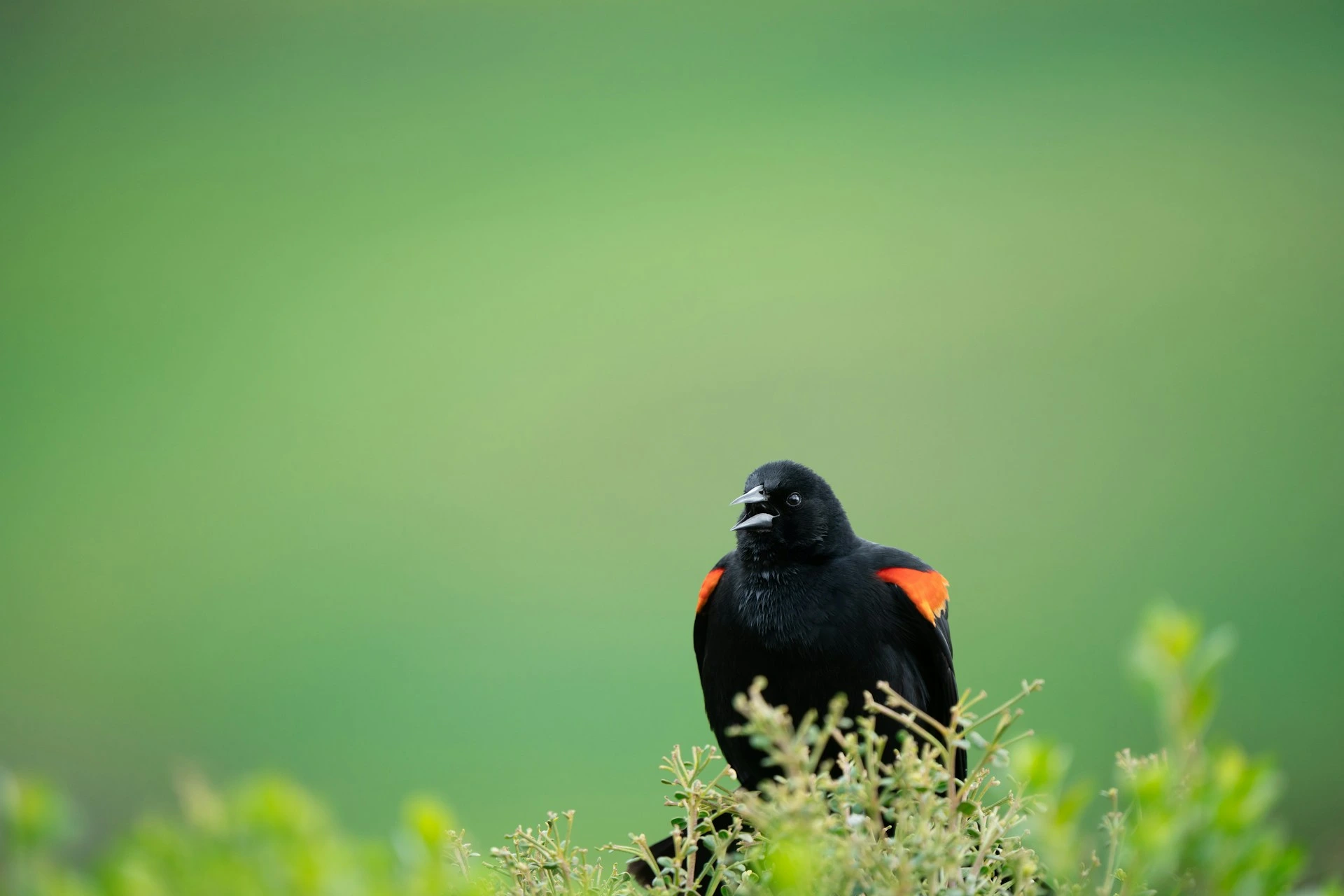
Diet and Feeding Behaviour

Townsend’s Warblers feed almost exclusively on insects and spiders, gleaning them from leaves and branches as they flit through the treetops. They are highly active foragers and are often seen hanging upside down or darting through foliage to capture prey. In winter, they may also supplement their diet with berries and nectar from flowers.

Vocalisations

The male’s song is a rapid series of high-pitched buzzy notes, often delivered from a hidden perch within dense foliage. They also give soft “chip” calls that help maintain contact with mates or signal alarm.

Nesting and Breeding

Although they do not breed in California, in their breeding range they nest high in coniferous trees. The female builds a cup-shaped nest out of moss, grasses, and fine twigs, usually well concealed among dense branches. Clutches typically contain 4 to 5 eggs, with the female handling most of the incubation duties.

Behaviour and Movement Patterns

Townsend’s Warblers are highly energetic and spend much of their time actively searching for food. During migration, they often join mixed-species flocks of warblers, chickadees, and kinglets. They are generally solitary during breeding season but quite social in winter foraging groups.

Conservation Status

The Townsend’s Warbler is classified as Least Concern, with stable populations overall. Habitat conservation in both their breeding and wintering ranges, including California’s coastal forests, is important for maintaining their numbers. Birdwatchers in California particularly cherish their appearances during migration, as they bring a splash of colour to the landscape.

11. Lesser Goldfinch (Spinus psaltria)

Appearance and Identification

The Lesser Goldfinch is a small, lively finch that adds a splash of colour to California’s landscapes. Males have bright yellow underparts and a glossy black cap and back (western populations) or dark greenish-black back (southwestern populations). They show distinct white wing patches and a short, conical bill. Females and immature birds are duller, with olive upperparts and yellowish underparts. Their quick, bouncy flight and frequent visits to feeders make them easily recognisable.

Habitat and Range

The Lesser Goldfinch is widespread throughout California and is one of the most common finches in the state. It inhabits open woodlands, chaparral, parks, gardens, and suburban areas. It favours areas with scattered trees and shrubs and is especially common in foothills and lower mountain slopes. These adaptable birds are permanent residents throughout much of their California range.

Diet and Feeding Behaviour

Primarily seed eaters, Lesser Goldfinches consume a wide variety of seeds from native and introduced plants. They especially favour sunflower seeds, thistle, dandelions, and alder seeds. They are acrobatic feeders, often hanging upside down from seed heads or feeder perches. Occasionally, they supplement their diet with small insects.

Vocalisations

Lesser Goldfinches have a varied and musical song, consisting of rapid, high-pitched warbles and trills. Males often sing from exposed perches. Their call is a sweet, soft “tee-yee” or “chu-wee,” heard frequently as they fly or forage.

Nesting and Breeding

These goldfinches nest in shrubs and small trees. The female builds a compact, cup-shaped nest of plant fibres, grasses, and hair. She lays 3 to 6 pale blue or white eggs and is solely responsible for incubation. Both parents feed the young once hatched. Lesser Goldfinches often raise multiple broods in a season, especially in areas with abundant food.

Behaviour and Movement Patterns

Highly social, Lesser Goldfinches are often seen in small flocks, especially outside of the breeding season. They exhibit energetic, undulating flight and frequently visit bird feeders. Their flocks mix readily with other finches such as American Goldfinches and Pine Siskins.

Conservation Status

The Lesser Goldfinch is listed as Least Concern and remains abundant throughout California. Its ability to thrive in suburban environments and adaptability to human-modified landscapes has helped it remain stable. It is a favourite among backyard birdwatchers for its bold colouring and cheerful presence.

12. Wilson’s Warbler (Cardellina pusilla)

Wilson’s Warbler (Cardellina pusilla)
Rhododendrites, CC BY-SA 4.0, via Wikimedia Commons

Appearance and Identification

The Wilson’s Warbler is a small, slender songbird with a distinctive and easily recognisable appearance. Males are bright yellow underneath with olive-green upperparts and a characteristic small, black cap atop the head. Females and immature birds lack the bold cap, instead showing an olive crown or very faint darkening. Both sexes have a thin, straight bill and rounded wings, giving them a delicate and active look as they flit through vegetation.

Habitat and Range

Wilson’s Warblers breed primarily in dense shrubby habitats across Alaska and Canada, but they migrate widely along the Pacific Flyway. In California, they are regular migrants in spring and fall and are commonly found in riparian woodlands, shrubby edges, thickets, and coastal scrub. They are most frequently encountered in parks, gardens, and along streams during migration.

Diet and Feeding Behaviour

Wilson’s Warblers feed mainly on insects, including beetles, caterpillars, flies, and spiders. They forage energetically, flitting through dense shrubs and low branches, occasionally hovering or catching prey in mid-air. They rarely forage high in the canopy, preferring dense undergrowth where they can remain concealed.

Vocalisations

The male’s song is a rapid series of sharp, chipping notes that accelerate and then taper off at the end. Their call is a sharp, metallic “chip,” which helps birders locate them even when hidden in foliage.

Nesting and Breeding

Wilson’s Warblers do not breed in California, but they breed farther north in moist, shrubby habitats. There, the female builds a small cup-shaped nest near the ground or low in shrubs. Clutches usually consist of 4 to 5 white or cream-coloured eggs with fine speckling. Only the female incubates, and both parents feed the chicks once they hatch.

Behaviour and Movement Patterns

These warblers are highly active and rarely remain still. They flit through dense foliage, often flicking their wings and tail. In California, they are strictly migratory, passing through in large numbers during spring and fall migrations. They sometimes mix with other small migrants such as warblers, kinglets, and chickadees.

Conservation Status

Wilson’s Warbler is listed as Least Concern but has experienced some declines due to habitat loss, particularly in breeding and wintering grounds. In California, their conservation largely depends on the preservation of riparian corridors and shrubby areas used during migration. Despite pressures, they remain a favourite of birdwatchers for their bright colouring and energetic behaviour.

Conclusion

California’s diverse landscapes offer bird enthusiasts incredible opportunities to observe a wide variety of yellow and black birds. From the vibrant American Goldfinch in backyard gardens to the elusive Hooded Warbler passing through during migration, each species brings a unique charm and character to the Golden State’s birdlife. By preserving wetlands, woodlands, and open grasslands, we ensure these beautiful species continue to thrive. Whether you’re an avid birder or a casual observer, spotting these striking birds is always a memorable experience in California’s great outdoors.

10 commonly found small Brown birds in Florida

Florida is a birdwatcher’s paradise, offering everything from majestic egrets to flashy warblers. But tucked away in our shrubs, marshes, and backyards are some of the most charming and underappreciated avian residents—small brown birds. Often dismissed as “just another sparrow,” these subtle species bring personality, song, and ecological importance to the landscapes they inhabit. In this guide, we’ll explore 10 commonly found small brown birds in Florida, focusing on how to identify them, where to find them, and why they matter.

Also read: 14 Shorebirds of Florida and How to Identify Them

1. Carolina Wren (Thryothorus ludovicianus)

Appearance and Identification

The Carolina Wren is a compact, energetic bird with rich, reddish-brown plumage on its back and buff-coloured underparts. One of its most distinctive features is a bold white eyebrow stripe that runs from the beak to the back of the head. It has a long, slightly curved bill and often holds its tail cocked upward. Measuring around 5.5 inches in length, this small bird is commonly mistaken for other wrens but stands out due to its vibrant colour and loud voice.

Habitat and Range in Florida

Found throughout Florida year-round, the Carolina Wren is incredibly adaptable. It thrives in wooded backyards, suburban gardens, forest edges, overgrown lots, and even urban parks. You’ll often spot them hopping among palmetto leaves, vines, or low branches as they search for insects. Their ability to nest close to human homes makes them one of the most commonly seen small brown birds in the state.

Diet and Foraging Behaviour

Carolina Wrens are primarily insectivorous, feeding on beetles, caterpillars, spiders, and other small invertebrates. They forage actively by probing leaf litter, fallen logs, or tree bark, often using their curved bill to dig out hidden prey. In winter or during food shortages, they may also eat seeds, berries, and suet from backyard feeders.

Vocalisations and Song

This tiny bird has a voice that’s far larger than its body. The male Carolina Wren is known for its clear, whistled phrases, often described as “teakettle-teakettle-teakettle.” These repeated calls can be heard year-round and help establish territory. Wrens are also known to mimic the songs of other birds, making them quite the vocal performers in Florida’s morning chorus.

Nesting and Breeding Habits

Carolina Wrens are creative nesters. They build cup-shaped nests in cavities or sheltered spots, including hanging flower pots, mailboxes, garage shelves, and even old boots. The nesting season in Florida typically begins as early as March and may continue through summer, with the potential for multiple broods per year. A typical clutch contains 4 to 6 eggs, which are creamy-white with reddish-brown speckles.

Behaviour and Personality

These wrens are curious, active, and fiercely territorial. They’ll often investigate open sheds, porches, or garages in search of nesting spots. Despite their small size, they boldly defend their territory with loud calls and aggressive posturing toward intruders. Their energetic hopping and tail-flicking make them fun to watch, especially when they dart from shrub to shrub.

Conservation and Interesting Facts

The Carolina Wren population in Florida is stable and widespread. Their adaptability to human environments has helped them thrive even in suburban and urban settings. A few interesting facts: they mate for life, both partners help raise the young, and they often return to the same nesting site each season. If you hear loud singing from a hidden corner of your yard, there’s a good chance it’s this charming little wren announcing its presence.

Also read: Types of Florida Woodpeckers with Pictures

2. House Wren (Troglodytes aedon)

Appearance and Identification

The House Wren is a small, drab bird with a warm brown back, slightly paler underparts, and faint barring on the wings and tail. It has a short, slightly curved bill and a flat head profile. Though it lacks bold markings, its small, rounded body and constantly flicking tail give it an energetic appearance. At around 4.75 inches long, the House Wren is often overlooked due to its plain colouring, but its quick movements and persistent chatter make it noticeable if you pay close attention.

Habitat and Range in Florida

House Wrens are winter residents in Florida, typically arriving in the fall and departing by spring. During this time, they inhabit a wide variety of habitats, including backyards, parks, overgrown fields, and forest edges. They prefer areas with dense underbrush or piles of brush where they can forage and find cover. Although they don’t usually breed in Florida, they may investigate cavities and nest boxes out of curiosity.

Diet and Foraging Behaviour

Insects and spiders make up the bulk of a House Wren’s diet. They actively forage close to the ground, hopping and climbing through vegetation, dead logs, and brush piles. They’re known for their meticulous searching—turning leaves, pecking into crevices, and even exploring small holes and nooks. During colder months, when insect activity slows, they may occasionally consume seeds or small berries, but they primarily rely on protein-rich prey.

Vocalisations and Song

The House Wren’s voice is louder and more complex than one might expect from such a small bird. Its song is a rapid, bubbling series of trills and chatters, often delivered from a low perch or while actively foraging. The male sings frequently, even during winter, to establish territory or communicate with other wrens. Their call is a sharp, dry “churr” or “chek” sound, often given in alarm when disturbed.

Nesting and Breeding Habits

House Wrens are not regular breeders in Florida, as their main breeding range is farther north. However, during migration, they sometimes inspect potential nesting sites like nest boxes or natural cavities. In their breeding range, they are notorious for their competitive nature—females line their nests with soft material, while males may build multiple nests to entice a mate. They may also remove or puncture the eggs of other cavity-nesting birds.

Behaviour and Personality

These tiny wrens are bold, inquisitive, and full of energy. Despite their small size, they often dominate backyard scenes with their vocal presence and persistent movement. They’re fearless explorers, often entering garages, sheds, or patios in search of food or nesting spots. During the winter months, they can be seen solo or loosely associating with other small birds in mixed flocks.

Conservation and Interesting Facts

House Wren populations remain strong, thanks to their adaptability and preference for human-altered landscapes. They readily use birdhouses and tolerate proximity to people. One fascinating trait is their intense nest competition—House Wrens often sabotage the nests of other species to secure prime spots. Though they’re seasonal visitors to Florida, their sprightly nature makes them a welcome wintertime sight.

3. Brown Thrasher (Toxostoma rufum)

Brown Thrasher

Appearance and Identification

The Brown Thrasher is a large, slender songbird with rich, reddish-brown plumage above and boldly streaked white underparts. It features a long, slightly curved bill and an elongated tail that it often flicks or fans. Its bright yellow eyes give it a piercing, alert look, and the wings display two faint white wing bars. Measuring about 11 inches in length, the Brown Thrasher is larger than most backyard birds and is sometimes mistaken for a small hawk or a juvenile thrush at a glance. However, its elongated form, heavy streaking, and deep rufous back are distinguishing features.

Habitat and Range in Florida

In Florida, the Brown Thrasher is a year-round resident, found throughout the state in a variety of semi-open habitats. It favours dense thickets, shrubby hedgerows, woodland edges, and overgrown fields. These birds prefer environments where they can remain partly hidden while foraging or nesting. While they are not often seen in open spaces, you can sometimes spot them darting across trails or perching briefly on low fences before vanishing into underbrush. They are also common in suburban yards with dense shrubbery and fruiting plants.

Diet and Foraging Behaviour

Brown Thrashers have an omnivorous diet, consuming a wide variety of foods including insects, earthworms, snails, fruits, seeds, and occasionally small lizards or frogs. They forage primarily on the ground, using their strong bills to flip leaves, scratch soil, and dig into mulch to uncover hidden prey. Their feeding style is vigorous and deliberate—often tossing aside debris with such force that it draws attention. In fall and winter, berries from native plants like holly, wax myrtle, and beautyberry form a significant part of their diet.

Vocalisations and Song

The Brown Thrasher is one of Florida’s most impressive songsters. Its song is a lengthy, melodious series of phrases, each usually repeated twice before moving on to a new one. It’s known to mimic other birds and even mechanical sounds, much like a mockingbird. Males sing from prominent perches, especially during the spring breeding season. Their calls include a sharp, metallic “chak” or “tchuck,” often heard when the bird is startled or when it feels its nest is threatened.

Nesting and Breeding Habits

Nesting begins early in spring and can extend into late summer. Brown Thrashers build bulky cup-shaped nests made of twigs, vines, and grass, typically placed low in dense shrubs, thorny bushes, or tangled vines. The female lays 3 to 5 bluish-white eggs speckled with brown, which are incubated by both parents for about 12 to 14 days. After hatching, the chicks remain in the nest for about 9 to 13 days before fledging. Both parents are highly protective and may dive at intruders that come too close to the nest.

Behaviour and Personality

Although they are secretive by nature, Brown Thrashers are fiercely territorial and can be quite bold when defending their space. They are usually solitary or found in pairs and spend much of their time hidden in brush. When seen, they move with confidence, walking or hopping rather than flying short distances. Their bright eyes, alert posture, and powerful digging actions give them an air of purpose. They rarely visit feeders, preferring natural food sources, but may be attracted by mealworms or dense shrubbery.

Conservation and Interesting Facts

The Brown Thrasher’s population is generally stable, but local declines have been noted in areas where hedgerows and dense cover have been removed due to suburban development. As the state bird of Georgia, it holds cultural significance in the southeastern U.S. It’s also the only thrasher species that regularly breeds east of the Mississippi River. Its vocal repertoire is thought to include over 1,000 different song phrases—one of the largest among North American songbirds—making it a remarkable subject for birders and naturalists alike.

Appearance and Identification

The Brown Thrasher is Florida’s only regularly occurring thrasher. It’s larger than most wrens and sparrows, but still fits the “small brown bird” category due to its slim build. It has rich rufous upperparts, a long tail, and heavily streaked white underparts.

4. Eastern Phoebe (Sayornis phoebe)

Appearance and Identification

The Eastern Phoebe is a small, slender flycatcher with a plain yet charming appearance. Its upperparts are a soft brownish-gray, while its underparts are off-white to pale yellowish, often with a dusky wash on the chest. It has a short, dark bill and a subtle, rounded head crest that gives it a domed-headed profile. One of the bird’s most notable habits is tail-wagging—it constantly bobs its tail while perched. Measuring around 6.5 inches in length, the Eastern Phoebe lacks strong field marks but can be easily identified by its posture, quiet demeanor, and behaviour.

Habitat and Range in Florida

In Florida, the Eastern Phoebe is primarily a winter resident, although small breeding populations may occur in the Panhandle and North Florida. It inhabits open woodlands, forest edges, pastures, stream banks, and residential areas—often staying near water. This species has adapted well to human presence and is frequently seen perching on fences, low branches, utility lines, and under eaves or porch roofs. During cooler months, they become widespread across the state, often returning to the same wintering site year after year.

Diet and Foraging Behaviour

Eastern Phoebes are insectivorous, relying heavily on flying insects such as flies, wasps, beetles, and dragonflies. They hunt using a “sit-and-wait” technique—perching on a low branch or wire, then darting out quickly to catch prey in mid-air before returning to the same perch. This flycatching behaviour is efficient and energy-conserving. In winter, when insect availability is lower, they diversify their diet with small fruits and berries, including those from poison ivy, sumac, and dogwood plants. They may also occasionally snatch insects from the ground or foliage.

Vocalisations and Song

The Eastern Phoebe’s call is a sharp, quick “chip” or “tsip,” used for alerting others or expressing mild alarm. Its song is a simple, raspy two-syllable “fee-bee,” from which it gets its name. The song is not melodic but is distinctive and often one of the earliest bird songs heard in late winter and early spring. Males sing persistently during the breeding season to attract mates and defend territory. Though quieter in Florida’s winter range, individuals may still call during warm spells or in response to sunlight and warmth.

Nesting and Breeding Habits

In their northern breeding range—and occasionally in North Florida—Eastern Phoebes nest in sheltered, human-made or natural ledges. Typical nest sites include building eaves, barn rafters, under bridges, or rocky outcrops. The female constructs a cup-shaped nest from mud, moss, and grass, usually on a horizontal surface protected from the elements. She lays 3 to 6 white eggs, sometimes with faint speckles. Incubation lasts about 15–16 days, and the young fledge within 16–18 days. Pairs may raise two broods per season, often reusing or refurbishing the same nest site.

Behaviour and Personality

Eastern Phoebes are calm, unaggressive, and solitary in nature. Unlike other flycatchers, they do not join mixed flocks and prefer to forage alone. They’re often unbothered by human activity and can become quite tame around homes and buildings. Their quiet confidence, habit of returning to the same perch, and tail-wagging behaviour make them easy to recognise for attentive birders. While not flashy, their reliability and soft personality have made them favourites among naturalists and homeowners alike.

Conservation and Interesting Facts

Eastern Phoebes have adapted remarkably well to human-altered landscapes and are not currently of conservation concern. Their population is stable and widespread. They were the first North American bird species to be banded by John James Audubon in the early 1800s, marking a milestone in ornithology. Their readiness to nest near buildings makes them one of the most accessible and observable flycatchers for beginning birders and families interested in wildlife.

5. Song Sparrow (Melospiza melodia)

Song Sparrow

Appearance and Identification

The Song Sparrow is a medium-sized sparrow with a rounded head, streaked brown and gray upperparts, and heavily streaked underparts that often form a central dark spot on the breast. Its face features a greyish cheek patch, bordered by a warm brown stripe through the eye and a lighter eyebrow. The long, rounded tail is frequently flicked and fanned. At approximately 6 inches long, the Song Sparrow is slightly chunkier than other common sparrows, with a sturdy build and robust bill. Its pattern can vary regionally, but in Florida, wintering birds usually exhibit rich brown streaks and bold facial markings.

Habitat and Range in Florida

In Florida, the Song Sparrow is a winter visitor, arriving from northern breeding grounds in late fall and remaining through early spring. During this period, they occupy brushy fields, wet meadows, marsh edges, hedgerows, and shrubby roadsides. They are frequently found in semi-open habitats that offer dense low cover for foraging and protection. Song Sparrows are quite adaptable and may also be seen in gardens, overgrown lots, and park margins, especially near water sources.

Diet and Foraging Behaviour

Song Sparrows are ground foragers, feeding on a mix of seeds and insects. In Florida’s winter landscape, they primarily eat the seeds of grasses, weeds, and herbaceous plants. When insects are available, particularly during warmer periods, they’ll catch beetles, caterpillars, ants, and spiders. They forage by hopping and scratching at the leaf litter or probing along the base of vegetation, typically staying low and moving in short bursts. While they seldom visit feeders, they may occasionally eat millet or cracked corn scattered on the ground.

Vocalisations and Song

The Song Sparrow’s name is well-earned—its song is one of the most beautiful and recognisable among sparrows. It typically starts with two or three clear, whistled notes followed by a cheerful mix of trills, buzzes, and warbles. Males sing to attract mates and mark territory, and though less frequent in winter, singing can still be heard on sunny days in Florida. Their call note is a sharp “chimp” or “tchlep,” often used for communication or a mild alarm. Each male has a unique song pattern, adding variety to their habitats’ soundscape.

Nesting and Breeding Habits

Song Sparrows do not breed in most parts of Florida, but in their breeding range, females build cup-shaped nests made from grasses, bark strips, and rootlets. Nests are typically placed low in shrubs, dense vegetation, or even on the ground, hidden from predators. The female lays 3 to 5 eggs, which she incubates for 12–14 days. Both parents help feed the young, which fledge about 10–12 days after hatching. Song Sparrows often raise two to three broods in a single season in northern habitats.
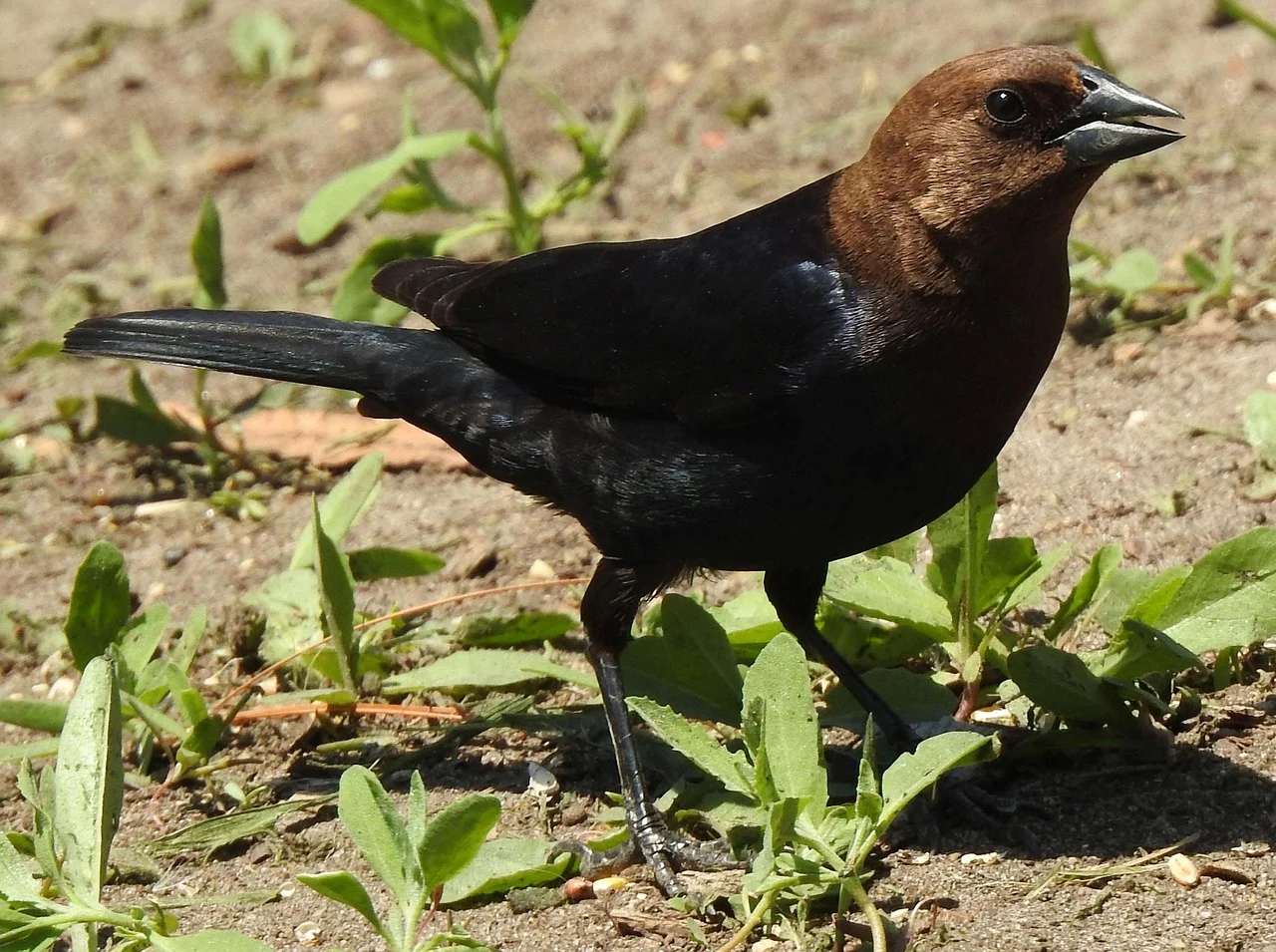
Behaviour and Personality

These sparrows are alert and active, often flicking their tails and hopping through brushy cover with energy. Although cautious, they are not overly shy and may feed in view if approached slowly. In winter, they can be seen singly or in small flocks and may join mixed-species groups. Their behavior is observant and responsive—they often respond quickly to new noises or movement in their vicinity. With patience, birders can enjoy extended views of their foraging and even vocal interactions.

Conservation and Interesting Facts

The Song Sparrow is one of the most widespread and regionally variable sparrows in North America, with over 20 recognised subspecies. Their adaptability to different environments, from coastal marshes to high mountain meadows, contributes to their stable population status. Interestingly, Song Sparrows adjust the complexity of their songs depending on population density—more complex in competitive areas. Their beautiful and individualised songs make them a delight for birders and an ideal species for studying bird communication.

6. Swamp Sparrow (Melospiza georgiana)

Appearance and Identification

The Swamp Sparrow is a compact, subtly attractive sparrow with a warm rufous crown, gray face, and dark streaked back. Its wings often show chestnut tones, and the underparts are a smooth, buffy gray without the bold streaking seen in the Song Sparrow. The throat and chest are clear, and the flanks may show faint washes of color. This species also has a relatively long, rounded tail and a stout bill, sometimes appearing slightly yellowish at the base. At around 5.5 inches long, the Swamp Sparrow blends in beautifully with its wetland surroundings, making it a bit tricky to spot despite its frequent presence.

Habitat and Range in Florida

In Florida, the Swamp Sparrow is primarily a winter visitor, arriving in late autumn and departing by early spring. It thrives in freshwater and brackish marshes, wet prairies, grassy ditches, and low-lying fields with standing water and dense vegetation. These birds prefer habitats with tall grasses, sedges, or reeds, where they can forage while remaining well-concealed. Birders can find them in wildlife refuges, coastal wetlands, and wet agricultural margins, particularly early in the morning when the birds are most active.

Diet and Foraging Behaviour

Swamp Sparrows feed on a mix of seeds and invertebrates. During the winter months in Florida, their diet leans heavily toward grass seeds and aquatic plant matter, though they still consume spiders, beetles, and other small insects when available. Their foraging style is cautious and deliberate—hopping or walking among wet grasses and shallow water, often just out of sight. They use their short bills to pick food from stems or sift through the muddy ground near the water’s edge. Unlike some sparrows, they rarely visit feeders.

Vocalisations and Song

The male Swamp Sparrow’s song is a sweet, slow trill—less varied than the Song Sparrow’s but still pleasant. It’s often described as a long, buzzy note that fades slightly at the end. Although vocal activity is reduced during winter, Swamp Sparrows may give brief bursts of song during mild weather. Their call is a high, sharp “tchip” or “tsip,” typically heard when the bird is flushed or alarmed. Their subtle voice is often the key to detecting their presence in thick vegetation.

Nesting and Breeding Habits

Swamp Sparrows do not nest in Florida, but in their northern breeding range, they construct well-concealed nests built low among marsh vegetation or sometimes on the ground. The female weaves a cup using grasses, moss, and cattail leaves, placing it in a clump of grass, reed, or shrub just above water. She lays 3 to 5 eggs and performs most of the incubation duties. Both parents feed the young after hatching, and pairs may raise one or two broods per season.

Behaviour and Personality

Swamp Sparrows are shy and secretive by nature, preferring to stay hidden in dense wetland cover. When disturbed, they tend to skulk away through vegetation or take short, low flights into deeper grass rather than fleeing in the open. Their movements are slow and deliberate, and they tend to avoid confrontation. Despite this reserved behaviour, they are highly territorial on breeding grounds. In winter, they may associate loosely with other sparrow species but remain relatively solitary compared to flocking sparrows like Chipping or Savannah.

Conservation and Interesting Facts

Swamp Sparrow populations are generally stable, but their dependence on wetland habitats makes them vulnerable to habitat degradation and water pollution. Drainage of marshes and the encroachment of development into wetlands can negatively impact their numbers. Interestingly, Swamp Sparrows have been used in scientific studies on song evolution, as males show regional dialects and subtle differences in trill speed and pitch. Their preference for dense vegetation makes them a rewarding find for patient birdwatchers willing to scan the edges of Florida’s wetlands.

7. Chipping Sparrow (Spizella passerina)

Appearance and Identification

The Chipping Sparrow is a slim, petite bird with clean lines and a refined look. In breeding plumage, adults display a bright chestnut crown, crisp black eye-line, and pale gray face and underparts, giving them a sharp, elegant appearance. Their wings are brown with subtle streaks, and their long, notched tail adds to their slim silhouette. In winter, their colours soften—the crown turns brownish, and the face becomes more subdued, but the overall structure remains recognisable. Measuring around 5 to 5.5 inches long, this sparrow’s sleek form and characteristic posture make it easy to identify with a bit of practice.

Habitat and Range in Florida

In Florida, Chipping Sparrows are common winter residents, seen across the state from October through April. They inhabit open woodlands, suburban lawns, weedy fields, and the edges of pine forests. These birds are especially fond of areas with scattered trees and short ground cover, including residential yards with bird feeders. Although they breed in the northern U.S. and Canada, a few may nest in the Panhandle and North Florida, where open conifer habitats are available.

Diet and Foraging Behaviour

Chipping Sparrows forage mostly on the ground, searching for seeds, insects, and small berries. In Florida’s winter season, they feed heavily on grass seeds and occasionally visit feeders for millet or cracked corn. During the breeding season in their northern range, they consume more insects, including caterpillars, beetles, and grasshoppers, to nourish their young. These sparrows often forage in flocks, moving across lawns and open fields with light, skipping steps, pecking rapidly as they go.

Vocalisations and Song

Their song is a simple, evenly spaced trill, often compared to the sound of a sewing machine. It lacks musical variation but is distinctive for its dry, buzzy tone and steady rhythm. The call note is a sharp “chip,” which is how the bird earned its name. Although less vocal in Florida’s winter months, Chipping Sparrows still use contact calls while foraging in groups, and on warm days, a few may offer short practice trills.

Nesting and Breeding Habits

Chipping Sparrows do not typically nest in peninsular Florida, though breeding occurs in the northernmost parts of the state. In nesting areas, they build small, neat cup-shaped nests in low shrubs, conifers, or deciduous trees, often close to human dwellings. The nest is woven from grasses and rootlets and frequently lined with animal hair. Females lay 3 to 5 pale blue eggs and incubate them for about 11 to 14 days. Both parents feed the nestlings, and they may raise two broods per season.

Behaviour and Personality

These sparrows are social, energetic, and generally tolerant of humans. In winter, they gather in small to medium-sized flocks, sometimes mixing with other sparrow species like Field or White-throated Sparrows. Chipping Sparrows often return to the same wintering grounds year after year and quickly memorise the locations of feeders. Their boldness, especially near homes and parks, makes them a familiar and charming presence during the Florida winter months.

Conservation and Interesting Facts

Chipping Sparrows are widespread and among the most abundant sparrows in North America. Their population remains stable, and they have benefited from open, human-altered landscapes. However, nest predation and parasitism by Brown-headed Cowbirds are ongoing threats during breeding. Interestingly, young Chipping Sparrows learn their songs by listening to neighbouring males—song patterns can vary slightly between local populations. Their neat appearance and sociable nature make them one of the most accessible sparrows for beginner birdwatchers.

8. Marsh Wren (Cistothorus palustris)

Marsh Wren
cc: https://www.flickr.com/photos/slobirdr/53440259129/in/photostream/

Appearance and Identification

The Marsh Wren is a small, lively bird with a compact, rounded body and a short, slightly curved bill. It has warm brown upperparts, a pale buff underside, and a striking white eyebrow stripe that contrasts with its dark cap. The back is heavily streaked with black and white, giving it a textured appearance. Its short tail is often held cocked upright, adding to its energetic look. At only about 5 inches in length, the Marsh Wren is easy to overlook—unless it’s singing—but its quick movements and perky posture help birders spot it among the reeds.

Habitat and Range in Florida

In Florida, the Marsh Wren is primarily a winter resident, although a small number may breed in the far north of the state. It favours dense wetland habitats, especially freshwater and brackish marshes filled with cattails, bulrushes, and sedges. These wrens are especially common in coastal estuaries and inland marshes with standing water and tall vegetation. Birders can often find them darting through reed beds or clinging sideways to stems just above the waterline. Patience is key—they are often more easily heard than seen.

Diet and Foraging Behaviour

Marsh Wrens feed almost exclusively on insects and other invertebrates, including beetles, spiders, ants, and fly larvae. They forage by climbing and hopping through vertical stems, probing leaf bases, and pecking around mud or shallow water. Their agility in dense vegetation is impressive, allowing them to reach crevices and spots that other birds avoid. Foraging usually occurs low to the water, and they may also hunt along floating mats of vegetation. Unlike many songbirds, Marsh Wrens rarely, if ever, visit feeders.

Vocalisations and Song

The Marsh Wren has a distinct, mechanical-sounding song—a rapid, chattering series of buzzy notes that resemble the rhythmic whirring of a sewing machine. Males are highly vocal, often singing from exposed perches during dawn and dusk. They also emit sharp “check” or “chuck” calls to express alarm or stake territory. Each male has a large song repertoire, and singing is a critical part of both courtship and territorial defence. Even in winter, they may occasionally burst into song on warm, sunny days.

Nesting and Breeding Habits

Although an uncommon breed in Florida, Marsh Wrens are known for their elaborate nesting behaviour in their core range. Males construct multiple “dummy” nests—oval-shaped structures made from reeds and grasses, often suspended in cattails or sedges above water. Only one nest is used for raising young; the rest may serve to attract a mate or deter predators. Females lay 4 to 6 eggs, incubating them for about two weeks. Both parents feed the chicks, which fledge in about 12–16 days after hatching.
Behaviour and Personality

These wrens are feisty and territorial, often aggressively defending their space from other wrens and marsh birds. They exhibit secretive behaviour, frequently staying out of view and weaving quickly through dense stems. Marsh Wrens are also known to destroy the eggs or nests of nearby birds, including their own species—a rare but well-documented behaviour in highly competitive marsh environments. Despite their small size, they’re full of personality and can be quite vocal and bold within their territory.

Conservation and Interesting Facts

Marsh Wrens are fairly common and widely distributed, but their dependence on healthy wetland ecosystems makes them vulnerable to habitat destruction, water pollution, and climate-related impacts. Restoration of wetlands and preservation of marsh buffers are critical to their continued success. Interestingly, they are among the few songbirds that build multiple nests in a season and possess one of the largest song repertoires relative to their size—some males sing more than 100 different variations. Their behaviour, song, and nesting habits make them a fascinating subject for both casual observers and ornithologists.

9. Field Sparrow (Spizella pusilla)

Field Sparrow male

Appearance and Identification

The Field Sparrow is a small, gentle-looking bird with soft, earthy tones. It features a plain, grayish face, a subtle rusty crown, and a distinctive pink bill that sets it apart from other sparrows. Its upperparts are warm brown with fine streaks, while the underparts are clean and unmarked, fading to a light buff on the sides. Its tail is long and narrow, often slightly notched at the tip. At about 5 inches long, this sparrow’s delicate features and lack of bold markings give it an understated but graceful appearance. It has a quiet charm that makes it a favourite among birdwatchers.
Habitat and Range in Florida

In Florida, the Field Sparrow is a scarce winter resident, most commonly found in the northern and central parts of the state. It favours open country with scattered shrubs, such as old fields, overgrown pastures, pine flatwoods, and grassy clearings with brushy edges. They are less likely to be found in urban areas but may visit semi-rural properties with sufficient natural cover. Birders searching for Field Sparrows in Florida should look closely in areas with dry, open ground and clumps of low vegetation, especially in the morning when foraging is most active.
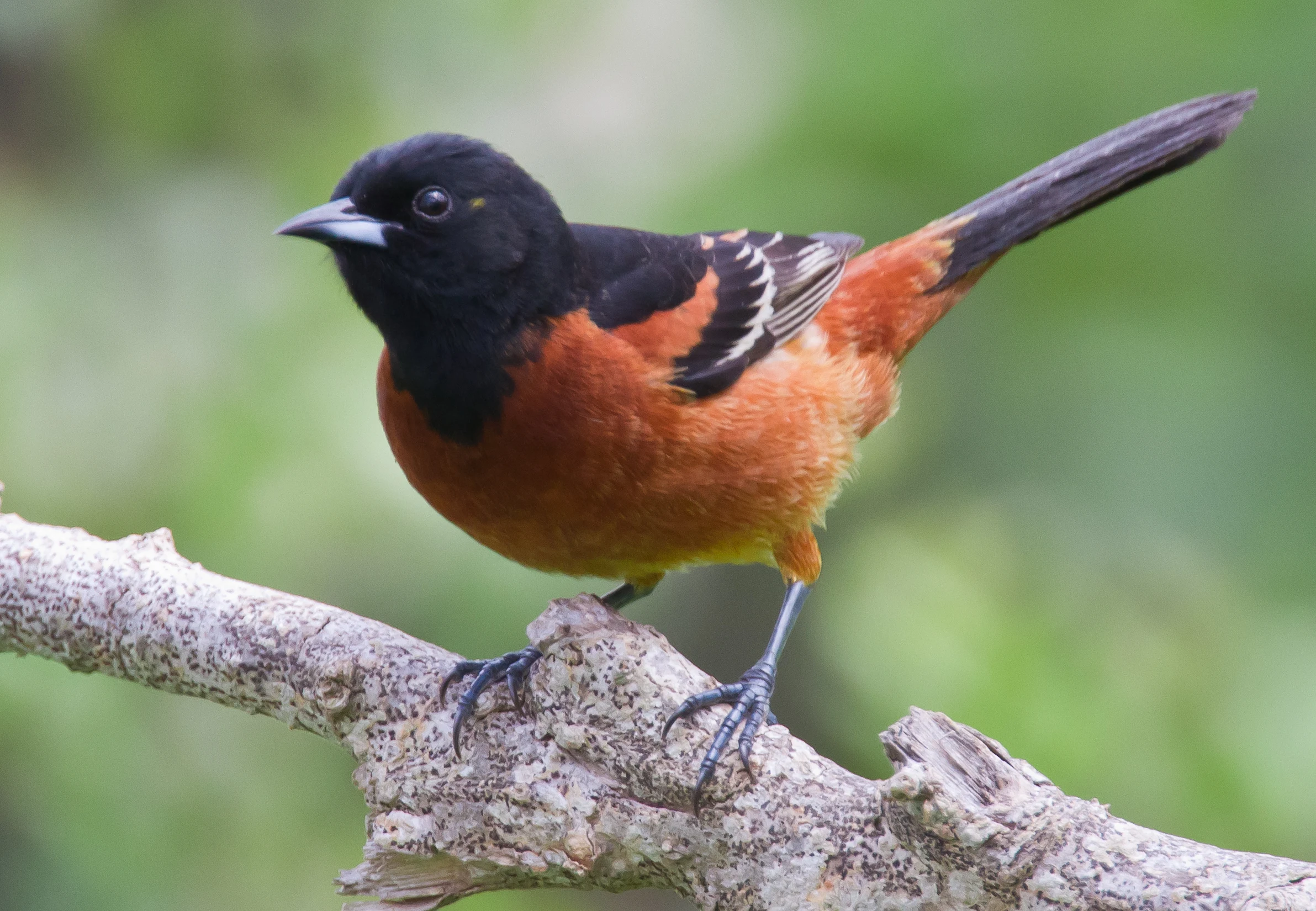
Diet and Foraging Behaviour

Field Sparrows feed mostly on grass seeds during the winter months. They forage quietly on the ground, often hopping slowly through grassy areas and picking seeds from the soil surface or low vegetation. Insects, including caterpillars and small beetles, make up a larger portion of their diet during the breeding season, though they’re less important in Florida’s mild winters. This species is generally shy and unobtrusive while feeding and rarely ventures into open areas unless cover is nearby.

Vocalisations and Song

The Field Sparrow’s song is a series of sweet, clear whistles that accelerate in tempo, often compared to the sound of a bouncing ball that speeds up before stopping. It’s a lovely and recognisable melody, heard most often on breeding grounds. Their call note is a thin, high “seep” or “tsee,” used frequently for communication between mates or among nearby individuals. While they don’t sing as much in winter, these soft call notes can still help birders locate them in Florida’s brushy fields.

Nesting and Breeding Habits

Field Sparrows do not typically breed in Florida, although they nest widely across the central and eastern U.S. In breeding habitats, they place their nests low to the ground, usually in clumps of grass, blackberry brambles, or small shrubs. The female constructs the nest and lays 3 to 5 speckled eggs. Incubation lasts around 10 to 12 days, and the chicks fledge in another 8 to 10 days. Pairs often raise two or even three broods during a single season in their breeding range.

Behaviour and Personality

Field Sparrows are calm and unobtrusive. They prefer solitude or the company of a mate rather than joining large winter flocks. Their movements are measured and careful, often staying low and moving through brushy cover rather than flying high or far. They are non-aggressive and tend to vanish quietly if disturbed. For patient birders, their subtle behaviour and delicate movements provide a rewarding viewing experience, especially when spotted among dry grasslands or overgrown clearings.

Conservation and Interesting Facts

Though still relatively common, Field Sparrow populations have declined in recent decades due to the loss of fallow fields and early-successional habitats caused by urbanisation and intensive agriculture. Conservation of old-field ecosystems and rotational land management are important to their survival. One unique trait is their tendency to sing throughout the day during the breeding season—even in the midday heat when most songbirds are silent. Their sweet, bouncing song and soft colours make them a quiet jewel of North America’s grassland bird community.

10. Sedge Wren (Cistothorus stellaris)

Appearance and Identification

The Sedge Wren is a tiny, cryptic bird with finely streaked brown upperparts, pale underparts, and a faint pale eyebrow stripe. Its short tail is often held upright, and its bill is short and slightly curved. Unlike the bolder Carolina Wren, the Sedge Wren has a softer, more subdued appearance, which blends perfectly into grassy marshes. It measures around 4.5 inches in length and can be challenging to spot due to its excellent camouflage.

Habitat and Range in Florida

This species is primarily a winter resident in Florida, favouring wet meadows, prairie marshes, and grassy wetlands. It prefers drier areas of marshes compared to the Marsh Wren and is often found in stands of sedge, rushes, or tall grasses. During the colder months, they become temporary residents across much of Florida’s wetland preserves and wildlife refuges.

Diet and Foraging Behaviour

Sedge Wrens feed on small insects and spiders, foraging low in dense vegetation. They move methodically through grass clumps, gleaning prey from stems and the ground. They are rarely seen in open view, often vanishing into thick cover at the slightest disturbance. Their feeding style is quiet and patient, often going unnoticed by casual observers.

Vocalisations and Song

The male’s song is a dry, mechanical chatter followed by short trills, unlike the melodic calls of many other wrens. These songs are used for territory defence and attracting mates. Though not as loud or varied as a Carolina Wren’s song, the Sedge Wren’s voice is distinctive and helpful for identification in dense habitat.

Nesting and Breeding Habits

Sedge Wrens do not typically breed in Florida. In their northern breeding range, males construct multiple dome-shaped nests using grasses and sedges, often suspended in vegetation. Only one of these structures is used for actual nesting. Females lay 5–8 eggs and handle most of the incubation and chick-rearing responsibilities.

Behaviour and Personality

Shy and elusive, Sedge Wrens are among the most difficult small birds to observe in Florida. They prefer solitude and blend seamlessly with their surroundings. When startled, they may freeze or drop silently into the grass rather than fly. Their behaviour is cautious and secretive, making patience essential for any birder hoping to observe one.

Conservation and Interesting Facts

Sedge Wren populations are stable but can be vulnerable to habitat loss and changes in wetland management. Their nomadic and unpredictable breeding habits make population monitoring difficult. They are one of the few North American songbirds to construct several dummy nests—a unique behaviour that continues to puzzle ornithologists.

Conclusion

While they may not dazzle with neon colours, Florida’s small brown birds are full of character, complexity, and ecological value. From the chatty Carolina Wren to the elusive Marsh Wren and the melodious Brown Thrasher, each species brings its own rhythm to the state’s natural soundtrack. Whether you’re exploring a coastal marsh, tending your garden, or walking through a pine flatwood, keep your ears and eyes open—because chances are, a small brown bird is watching you too.

By learning to identify and appreciate these understated beauties, you’ll gain a deeper connection with Florida’s wild spaces and the often-overlooked wonders fluttering right in your backyard.

12 Types of Hawks in Michigan with identification

Michigan’s diverse habitats, ranging from dense forests to open grasslands, provide a sanctuary for a wide variety of hawks. These birds of prey play a vital role in maintaining ecological balance, captivating birdwatchers and nature enthusiasts alike. From the agile Sharp-shinned Hawk to the rare Ferruginous Hawk, Michigan offers unique opportunities to observe these raptors in action. Whether soaring in migration or nesting in the state’s rich landscapes, each hawk species brings its own beauty and ecological importance, making Michigan a prime location for studying and admiring these incredible birds.

Types of Hawks in Michigan

1. Sharp-shinned Hawk (Accipiter striatus)

Sharp-shinned Hawk

The Sharp-shinned Hawk is one of Michigan’s smallest hawks, known for its agile flight and swift hunting skills.

This raptor primarily preys on small birds, making it a common sight near bird feeders. It has a distinct appearance with a bluish-gray back, reddish-orange barred chest, and long tail with squared-off edges.

Sharp-shinned Hawks prefer dense forests but are also spotted in suburban areas during migration. These hawks are masters of ambush hunting, relying on speed and surprise to capture their prey. While they’re more visible during their migration in spring and fall, some stay year-round in Michigan’s forests, adapting well to the state’s varied climates.

Also Read : Hawks in Florida: Habitats, Diet, and Appearance of Majestic Raptors

2. Golden Eagle

Golden Eagle

Though rare in Michigan, the Golden Eagle is a majestic sight, especially during migration seasons. Known for its striking golden-brown plumage and enormous wingspan, this eagle exudes power and grace.

Golden Eagles typically inhabit open terrains, such as grasslands and mountainous areas, but they are spotted in Michigan’s skies during their migration to southern territories.

Their diet mainly consists of small to medium mammals, including rabbits and squirrels. These raptors are exceptional hunters, capable of soaring for hours while scanning for prey.

Conservation efforts have helped stabilize their population, making them an occasional, awe-inspiring visitor to the state’s wild landscapes.

Which green bird in California mimics human speech but is often mistaken for a wild parakeet?

3. Short-tailed Hawk

Short-tailed Hawk

The Short-tailed Hawk is a rare visitor to Michigan, mainly sighted during migration. This medium-sized raptor is distinguished by its contrasting plumage—dark brown above and white below.

It’s a highly adaptable species, often found in both forested and open areas. Known for its soaring abilities, the Short-tailed Hawk hunts by gliding high above and swooping down on unsuspecting prey.

Their diet consists of small birds, reptiles, and insects. While they are more common in Florida and Central America, occasional sightings in Michigan’s southern regions add excitement for birdwatchers seeking diversity in raptor species.

Also Read : Discover 10 Types of Hawks in Illinois

4. Zone-tailed Hawk

Zone-tailed Hawk

The Zone-tailed Hawk, often mistaken for a Turkey Vulture due to its similar appearance, is an uncommon sight in Michigan. Its dark plumage and distinctive white bands on the tail set it apart.

This raptor mimics vultures’ flight patterns to sneak up on prey, a unique hunting strategy among hawks. Zone-tailed Hawks are primarily found in the southwestern U.S., but rare wanderers have been reported in Michigan. They feed on small mammals, birds, and reptiles.

Their occasional presence in Michigan adds to the state’s impressive list of hawk species, making them a sought-after species for avid birdwatchers.

5. Harris’s Hawk

Harris’s Hawk

Harris’s Hawk is a strikingly social bird, often hunting in groups, a behavior rare among raptors.

With its dark brown plumage, chestnut-colored shoulders, and white-tipped tail, it’s easily recognizable. While native to the southwestern U.S. and Central America, Harris’s Hawks are rare visitors to Michigan. They thrive in open desert-like habitats but adapt well to various environments.

Their cooperative hunting style allows them to tackle larger prey, including jackrabbits and other mammals. Though uncommon in Michigan, occasional sightings inspire bird enthusiasts to keep an eye out for these unique hawks.

6. Northern Harrier (Circus hudsonius)

Northern Harrier

The Northern Harrier is a graceful hawk often seen gliding low over Michigan’s marshes and grasslands. Recognized by its owl-like facial disk and long wings, this raptor relies on keen hearing and vision to locate prey.

The males display gray plumage with white undersides, while females are larger and sport brown tones. Northern Harriers feed on small mammals, birds, and reptiles, adapting their diet based on availability.

These hawks are year-round residents in Michigan, though their numbers peak during migration seasons. Their distinctive hunting style and elegant flight make them a favorite among birdwatchers and wildlife enthusiasts.

Also read: Commonly Found Small Brown Birds in Florida

7. Broad-winged Hawk (Buteo platypterus)

Broad-winged Hawk

Broad-winged Hawks are small, stocky raptors best known for their spectacular migratory behavior. Every fall, thousands of these hawks form kettles, soaring together in swirling groups during their journey south.

In Michigan, they are summer residents, nesting in dense forests. Their plumage is brown above and white with horizontal barring below, providing excellent camouflage.

Broad-winged Hawks primarily hunt small mammals, amphibians, and insects, often swooping down from a perch. They are vocal during the breeding season, emitting high-pitched whistles to communicate. Observing their migration is a highlight for birders, as these hawks represent one of nature’s incredible spectacles.

8. Red-shouldered Hawk (Buteo lineatus)

Red-shouldered Hawk

The Red-shouldered Hawk is a medium-sized raptor often found in Michigan’s wooded wetlands. It’s named for the reddish-brown patch on its shoulders, complemented by a checkered pattern on its wings and a banded tail.

These hawks are vocal, with a distinctive kee-aah call that echoes through the forests. Their diet includes small mammals, amphibians, and reptiles, with occasional forays into aquatic prey.

Red-shouldered Hawks are year-round residents in southern Michigan, but their numbers increase during migration. Their preference for mature forests and swamps makes them an important indicator of the health of these ecosystems.

9. Rough-legged Hawk (Buteo lagopus)

Rough-legged Hawk

Rough-legged Hawks are winter visitors to Michigan, migrating from their Arctic breeding grounds.

They are easily identifiable by their feathered legs, a unique adaptation to cold climates. These hawks have variable plumage, typically featuring a dark belly band and light underparts.

Open fields and grasslands are their preferred habitats, where they hover in search of small mammals, especially voles. Their hovering hunting style and ability to adapt to harsh winter conditions make them a fascinating species to observe.

Birdwatchers often spot them perched on utility poles or fence posts during Michigan’s colder months.

10. Swainson’s Hawk (Buteo swainsoni)

 Swainson’s Hawk (

Swainson’s Hawk is a long-distance migrant occasionally seen in Michigan during its migration.

This slender raptor has a striking appearance with brown upperparts and a contrasting white throat and chest. They are highly sociable, often forming large flocks during migration.

Their diet shifts seasonally, feeding on insects like grasshoppers during summer and small mammals in other seasons. Swainson’s Hawks prefer open areas like prairies and fields, but sightings in Michigan add excitement for birders.

Their incredible migration to South America highlights their adaptability and resilience, making them one of the most remarkable hawks to observe.

11. Ferruginous Hawk (Buteo regalis)

Ferruginous Hawk

The Ferruginous Hawk, the largest of the Buteo species, is a rare visitor to Michigan. It’s named for its rusty-colored plumage and has strikingly large wings.
Native to the open plains of the western U.S., this hawk occasionally ventures eastward, offering rare sightings in Michigan. Its diet primarily consists of small mammals, including prairie dogs and ground squirrels.

Ferruginous Hawks are known for their powerful build and majestic flight. Though rare, their presence in Michigan’s open areas captivates birdwatchers. Conservation efforts focus on protecting their habitats to ensure these impressive raptors continue to thrive.

12. Northern Goshawk

Northern Goshawk

The Northern Goshawk is a formidable predator and one of Michigan’s most elusive hawks. This large raptor has slate-gray plumage, a white eyebrow stripe, and piercing red eyes.

Known for their fierce hunting style, Northern Goshawks primarily prey on birds and mammals, including squirrels and rabbits. They inhabit dense forests, making them challenging to spot.

These hawks are year-round residents in Michigan but are more active during the breeding season. Their aggressive territorial behavior and swift flight make them a symbol of wilderness and power. Bird enthusiasts treasure glimpses of these secretive raptors in Michigan’s woodlands.

Conclusion

Michigan’s hawks, with their remarkable hunting skills and diverse adaptations, enrich the state’s wildlife tapestry. From common year-round residents like the Red-shouldered Hawk to rare visitors like the Zone-tailed Hawk, each species highlights the beauty and complexity of the natural world.

Observing these raptors not only fosters appreciation for Michigan’s biodiversity but also emphasizes the importance of conservation efforts. Whether you’re an avid birdwatcher or a casual nature lover, encountering hawks in Michigan’s skies is a thrilling reminder of the wonders of the wild.

13 Types Of Woodpeckers Found In Tennessee With Pictures

Tennessee’s rich and varied landscapes, from dense forests to open woodlands and suburban areas, provide a welcoming haven for numerous woodpecker species. These fascinating birds captivate birdwatchers and nature enthusiasts with their vibrant plumage, unique behaviors, and rhythmic drumming. From the tiny Downy Woodpecker to the impressive Pileated Woodpecker, each species plays an essential role in maintaining the health of the ecosystems they inhabit. Woodpeckers found in Tennessee contribute to pest control, seed dispersal, and forest regeneration. Exploring Tennessee’s woodlands offers an exciting opportunity to witness these avian marvels up close.

1. Downy Woodpecker

Downy Woodpecker

The Downy Woodpecker is the smallest woodpecker species in North America, making it a charming addition to Tennessee’s bird population. Its black-and-white plumage, along with a small red patch on the male’s head, makes it easy to identify. 

This adaptable bird is a frequent visitor to backyard feeders, often delighting birdwatchers with its lively activity.

Preferring deciduous forests, parks, and gardens, the Downy Woodpecker plays an important ecological role by feeding on insects that could harm trees. Its diet also includes seeds and suet, ensuring its presence throughout the year. 

With its diminutive size and vibrant demeanor, the Downy Woodpecker is a beloved resident of Tennessee’s natural and suburban landscapes.

Also Read : Discover 10 Types of Hawks in Illinois

2. Hairy Woodpecker

Hairy Woodpecker

The Hairy Woodpecker is a slightly larger cousin of the Downy Woodpecker, sharing similar black-and-white patterns and a red patch on the males.

Known for its strong beak, this species is often heard before it is seen, with its distinctive drumming resonating through Tennessee’s forests. 

The Hairy Woodpecker’s diet consists mainly of insects, particularly wood-boring beetles, which makes it an essential ally in maintaining forest health. It also consumes nuts and berries, adding variety to its diet. 

Often spotted in mature forests and wooded residential areas, the Hairy Woodpecker’s presence indicates a thriving ecosystem. Its striking appearance and beneficial habits make it a favorite among bird enthusiasts.

Which green bird in California mimics human speech but is often mistaken for a wild parakeet?

3. Red-bellied Woodpecker

Red-bellied Woodpecker

The Red-bellied Woodpecker is a striking and vocal bird commonly found in Tennessee’s woodlands and suburban areas.

Despite its name, the red patch on its belly is subtle, while its vivid red cap and nape are far more prominent.

This medium-sized woodpecker is known for its loud calls and acrobatic foraging behaviors as it searches for insects, fruits, and seeds.

Its adaptability allows it to thrive in various habitats, from dense forests to backyard feeders. By storing food in tree crevices, the Red-bellied Woodpecker contributes to the dispersal of seeds, aiding plant regeneration. Its vibrant colors and dynamic behaviors make it a delightful sight for birdwatchers.

Also Read : All About Pileated Woodpecker: The Forest’s Master Drummer

4. Northern Flicker

Northern Flicker

The Northern Flicker stands out among woodpeckers for its unique habits and appearance.Often seen foraging on the ground, this bird’s preference for ants and beetles sets it apart from its arboreal relatives.

Its brownish body, accented with black spots and a bright yellow or red flash in its wings, adds to its distinct charm.Found in open woodlands, fields, and suburban areas, the Northern Flicker is a frequent visitor to Tennessee.

It is also known for its loud, ringing calls that echo through its habitat.With its distinctive coloring and behaviors, the Northern Flicker offers a refreshing change from the typical woodpecker profile, making it a favorite for observation.

5. Pileated Woodpecker

 Pileated Woodpecker

The Pileated Woodpecker is a true giant among its peers, captivating birdwatchers with its size and striking features.With its black body, bold white stripes, and an iconic red crest, this species is often likened to a prehistoric bird.

Found in mature forests across Tennessee, the Pileated Woodpecker is a skilled carpenter, chiseling large rectangular holes in trees to access carpenter ants and beetles.

These cavities often become nesting sites for other species, showcasing its ecological importance.Despite its preference for secluded habitats, its loud drumming and calls make it easy to locate.This impressive woodpecker symbolizes the grandeur of Tennessee’s forest ecosystems.

6. Red-headed Woodpecker

Red-headed Woodpecker

The Red-headed Woodpecker is a vivid and dynamic bird, easily recognized by its completely red head and contrasting black-and-white body.This medium-sized woodpecker is not just visually stunning but also remarkably versatile.

It is known for its aerial acrobatics, catching insects mid-flight, and for its unique habit of storing food for later consumption.Found in open woodlands, orchards, and parks, the Red-headed Woodpecker plays a crucial role in seed dispersal and insect control.

Its striking appearance and engaging behaviors make it a standout species in Tennessee’s avian community, providing both ecological benefits and aesthetic pleasure to those lucky enough to observe it.

7. Yellow-bellied Sapsucker

Yellow-bellied Sapsucker

The Yellow-bellied Sapsucker is a fascinating species known for its methodical feeding habits.This medium-sized woodpecker drills orderly rows of holes in trees to extract sap, which forms the majority of its diet along with small insects.

With its black-and-white plumage and distinctive red cap, the Yellow-bellied Sapsucker is a striking sight in Tennessee’s deciduous forests and orchards.Its sap wells not only nourish the bird itself but also provide sustenance for other species, highlighting its ecological significance.

Despite its relatively quiet demeanor, the Yellow-bellied Sapsucker’s unique habits and bold markings make it an intriguing addition to Tennessee’s woodpecker family.

8. Ivory-billed Woodpecker

 Ivory-billed Woodpecker

The Ivory-billed Woodpecker holds an almost mythical status among bird enthusiasts, often referred to as the “Lord God Bird” for its striking appearance and elusive nature.

Once inhabiting Tennessee’s swampy forests, this large woodpecker is considered critically endangered or possibly extinct.Its black-and-white plumage, accentuated by a prominent white stripe on its wings and a crest (red in males), made it a spectacular sight.

Feeding primarily on beetle larvae found in deadwood, the Ivory-billed Woodpecker played a vital role in forest ecosystems.Although unconfirmed sightings continue to fuel hope for its survival, the Ivory-billed Woodpecker remains a symbol of conservation efforts and a reminder of nature’s fragility.

9. Red-cockaded Woodpecker

The Red-cockaded Woodpecker is a small yet significant species, recognized for its intricate nesting habits.Preferring mature pine forests, it creates nesting cavities in living pine trees, a rare behavior among woodpeckers.

Its name comes from the subtle red streak or “cockade” found on males, which is often difficult to spot.This bird’s reliance on specific habitats has made it a focus of conservation efforts in Tennessee and beyond.

Feeding on insects and tree sap, the Red-cockaded Woodpecker contributes to the health of its forest home.Its role as an ecosystem engineer and its striking appearance make it a species of both ecological and aesthetic value.

10. Yellow-shafted Northern Flicker

Yellow-shafted Northern Flicker

The Yellow-shafted Northern Flicker is a dazzling subspecies of the Northern Flicker, distinguished by the bright yellow undersides of its wings and tail feathers.

Found across Tennessee’s open woodlands and urban areas, this bird is known for its ground-foraging habits, primarily feeding on ants and beetles.Its loud, repetitive calls and rhythmic drumming make it easy to detect.

The Yellow-shafted Northern Flicker is also a strong flier, with its golden plumage flashing brilliantly in flight.Its combination of vibrant coloring, unique feeding habits, and adaptability to different habitats makes it a favorite among birdwatchers, adding a splash of color to Tennessee’s avian diversity.

11. Lewis’s Woodpecker

 Lewis’s Woodpecker

Lewis’s Woodpecker is an extraordinary species with its dark green and pinkish plumage, setting it apart from typical woodpeckers.Named after explorer Meriwether Lewis, this bird is a rare visitor to Tennessee, usually spotted during migration.Unlike most woodpeckers, Lewis’s Woodpecker prefers catching insects mid-air rather than drilling into trees.

It thrives in open woodlands and areas affected by forest fires, where its diet includes flying insects, berries, and nuts.Its graceful flight and striking colors make it a sought-after sight for birdwatchers.

Though not a regular resident, Lewis’s Woodpecker’s occasional presence adds a touch of rarity to Tennessee’s birding scene.

12. Three-toed Woodpecker

 Three-toed Woodpecker

The Three-toed Woodpecker is a unique species, aptly named for its unusual foot structure with only three toes.

Although rare in Tennessee, this woodpecker prefers boreal and coniferous forests, where it feeds on bark beetles and larvae.Its black-and-white plumage, accented with a yellow crown in males, helps it blend into its forested surroundings.

The Three-toed Woodpecker’s presence is often an indicator of healthy forest ecosystems, as it specializes in controlling pest populations.

While sightings in Tennessee are infrequent, its distinct features and ecological importance make it a fascinating subject for bird enthusiasts who venture into its preferred habitats.

13. Ladder-backed Woodpecker

Ladder-backed Woodpecker

The Ladder-backed Woodpecker is a small yet striking species, named for the ladder-like black-and-white stripes adorning its back.

While it is more commonly found in the southwestern United States, this woodpecker occasionally ventures into Tennessee, particularly during unusual migratory patterns.Its compact size and bold markings make it a delightful find for birdwatchers.

Feeding on insects, fruits, and seeds, the Ladder-backed Woodpecker adapts to various habitats, including scrublands and desert edges.Its occasional appearances in Tennessee provide an exciting opportunity for birders to observe a species that brings a touch of the arid Southwest to the southeastern landscapes.

Final Thoughts

Tennessee is a birdwatcher’s paradise, teeming with woodpeckers that bring color, sound, and ecological benefits to its natural habitats. Grab your binoculars and immerse yourself in the joy of observing these remarkable birds. Whether you’re spotting the rare Lewis’s Woodpecker or enjoying the vibrant Red-bellied Woodpecker, every encounter adds a touch of wonder to your outdoor adventures. Explore Tennessee’s forests and woodlands, and let the diverse world of woodpeckers inspire your connection to nature.

8 Bird Species That Look Like American Robins

0

The American Robin is one of the most familiar and beloved birds in North America. With its warm orange breast, cheerful song, and early-spring appearances, it’s often the first bird that sparks someone’s interest in birdwatching. But did you know many other birds share similar features—like size, shape, or colour—and are frequently mistaken for robins?

In this guide, we’ll explore birds that look like robins at first glance. Some share that classic reddish-orange belly, while others imitate their behaviour or silhouette. Whether you’re a beginner birder or a seasoned observer, spotting these look-alikes can be a fun and rewarding challenge. Let’s take a closer look at these robin doppelgängers.

1. Eastern Towhee

Eastern Towhee

The Eastern Towhee (Pipilo erythrophthalmus) is a bold and beautiful bird of the eastern woodlands. Its rufous sides and white belly can easily trick birders into thinking they’ve spotted a robin, especially when it hops around on the forest floor.

Eastern Towhees are stocky sparrows with long tails and round bodies. Males boast jet-black upperparts, vibrant rust-coloured flanks, and crisp white bellies. Females are similarly patterned but in warm chocolatey browns. Their red eyes add to their dramatic look. While similar in size to robins, their colouring is more contrasting and their tails are longer and more expressive.

These birds prefer dense thickets, shrubby fields, and forest edges—anywhere with good ground cover. You’ll find them throughout the eastern and southeastern U.S., particularly in overgrown clearings and brushy woodlands.

Eastern Towhees forage on the ground like their western cousins, using a distinctive double-scratch to uncover food. Their diet consists of insects, spiders, seeds, and fruits such as blackberries and sumac. They’re opportunistic and may also feed on small snails or even grains near feeders.

Towhees are shy and tend to remain hidden in the underbrush. During breeding season, males perch higher to sing a buzzy “drink-your-tea!” song. Their sharp chewink call often gives them away before you see them.

Nests are built low to the ground or directly on it, hidden in dense vegetation. Females do the building and incubating of 2–6 eggs. Chicks fledge within 10–12 days and are fed by both parents. In warmer areas, they may raise two broods.

Eastern Towhees are fairly common but have experienced population declines due to habitat loss and fire suppression, which reduces the brushy undergrowth they need. Encouraging native shrubs and thickets helps provide suitable habitat.

Quick ID Tips

  • Size: Similar to a robin, but chunkier with a more rounded tail.
  • Colour: Bold rufous sides, white belly, black (or brown) back, red eyes.
  • Sound: “Drink-your-tea!” trill and sharp chewink! call.
  • Behaviour: Ground-scratcher often hiding in low brush.

Difference between Eastern Towhee and American Robin

At first glance, their rust-coloured flanks and white belly mimic an American Robin’s underparts. But Eastern Towhees are more strikingly contrasted, with deeper blacks or browns and sharper markings. Their habit of staying low in thick vegetation sets them apart from the lawn-foraging robin.

Which green bird in California mimics human speech but is often mistaken for a wild parakeet?

2. American Redstart

American Redstart

The American Redstart (Setophaga ruticilla) is a flashy little warbler that often gets confused for a robin in a hurry—thanks to its fluttery movement and fiery orange patches on the sides.

Male American Redstarts are black with bright orange patches on their sides, wings, and tail, with a white belly. Females and immature males have grey heads, olive backs, and soft yellow patches instead of orange. They’re smaller than robins but the striking colour contrast and quick movements can fool a first glance.

Redstarts prefer deciduous forests, woodland edges, and shrubby areas near water. They’re widespread across eastern and central North America during the breeding season and migrate to the Caribbean, Central America, and northern South America for winter.

Insectivorous by nature, Redstarts glean insects from leaves and catch flying bugs mid-air. They often flash their tails to startle prey, making them fun to watch. Their diet also includes spiders and small berries, especially in autumn.

Active and acrobatic, Redstarts dart through foliage, constantly flicking their tails and wings. Males sing a series of high, thin notes that rise and fall quickly. Unlike robins, they rarely feed on the ground.

They nest in the fork of a tree or shrub, usually fairly low. Females build the nest and incubate 3–5 eggs. Chicks fledge about 9 days after hatching. Males may sing and defend multiple territories.

While still common, some populations are declining due to habitat loss in both breeding and wintering grounds. Forest conservation and the protection of migratory corridors are key to their future.

Quick ID Tips

  • Size: Smaller than a robin, about the size of a sparrow.
  • Colour: Males are black with bright orange patches; females are grey and yellow.
  • Sound: Thin, high-pitched song with variable phrases.
  • Behaviour: Very active, tail-flashing insect hunter.

Difference between American Redstart and American Robin

The orange on a male Redstart’s sides and tail can briefly mimic a robin’s red breast in flight. However, Redstarts are much smaller, quicker, and more erratic in their movements. Unlike robins, which hop along the ground, Redstarts flit among branches and foliage, rarely sitting still.

Also Read : Discover Blue Birds in Pennsylvania: Where and How to Spot Them

3. Varied Thrush

Varied Thrush

The Varied Thrush (Ixoreus naevius) is like the American Robin’s mysterious cousin from the Pacific Northwest. With a similar shape and stance but wrapped in darker, more dramatic colours, it’s one of the most striking robin look-alikes.

Varied Thrushes have a bold design—slate-grey or black upperparts with a burnt-orange breast and bold black breastband. Their wing bars are orange, and their belly is usually a lighter orange or white. Females are paler with a faded band. Their size and silhouette are nearly identical to the American Robin, which makes them easily mistaken at a glance.

These thrushes dwell in mature coniferous forests along the Pacific Coast and into the mountains of the northwest. In winter, they descend to lower elevations, sometimes visiting parks and backyards, especially during snowy years.

Their diet includes insects, spiders, earthworms, berries, acorns, and seeds. Like robins, they forage on the ground but also pick berries from shrubs and trees.

Varied Thrushes are shy and deliberate. They often stand motionless for long periods, giving them a statuesque quality. Their haunting, buzzy single-note song sounds like a flute played in the distance—eerily beautiful in a misty forest.

They nest low in conifers, crafting a cup-shaped nest of twigs and moss. Females lay 3–5 eggs and do most of the incubating. Chicks fledge in about two weeks. Breeding season is short, with only one brood per year.

Varied Thrush populations are stable but threatened locally by logging and habitat fragmentation. Their dependence on mature forests makes them sensitive to environmental change.

Quick ID Tips

  • Size: Nearly identical to a robin.
  • Colour: Orange breast with black band, dark blue-grey or black upperparts.
  • Sound: Long, eerie, flute-like single notes.
  • Behaviour: Often still and silent in dark forests.

Difference between Varied Thrush and American Robin

At a glance, they’re a dead ringer for a robin in darker lighting. But the breastband and deeper slate tones set them apart. Robins are more vocal and outgoing, while Varied Thrushes are secretive and quiet.

4. Black-headed Grosbeak

Black-headed Grosbeak

The Black-headed Grosbeak (Pheucticus melanocephalus) is another frequent robin double-take, especially in the western U.S. With its warm, orange underparts and dark head, it can look very robin-esque—until it opens its massive beak.

Males have a black head, orange-cinnamon chest, and white belly, with black-and-white wing markings. Females are streaky with orange tinges. They’re similar in size to robins but have a stouter body and a much thicker, conical bill—perfect for cracking seeds.

They prefer mixed forests, streamside woodlands, and suburban parks. You’ll find them throughout the West during breeding season, and they migrate to Mexico and Central America in winter.

Grosbeaks are omnivores. They eat insects, snails, fruits, and seeds. Their powerful bill allows them to eat things robins can’t, including hard seeds and husked fruits. They’ll also visit feeders for sunflower seeds.

More arboreal than robins, Grosbeaks often sing from treetops and forage among branches. Their song is rich and fluid, like a robin’s but sweeter and more musical. Males are often seen singing with visible enthusiasm.

They nest in trees or shrubs, often near water. The female builds the nest and incubates 2–5 eggs. Both parents feed the chicks, and they may raise two broods per season in favourable climates.

Populations are stable and widespread. However, threats include window strikes, habitat loss, and pesticide use. Creating bird-friendly gardens helps support them during migration and breeding.

Quick ID Tips

  • Size: Slightly chunkier than a robin.
  • Colour: Black head, orange chest, white belly, thick bill.
  • Sound: Rich, warbling song—like a robin but sweeter.
  • Behaviour: Tree-dweller, often singing from canopy.

Difference between Black-headed Grosbeak and American Robin

The colour palette of the male Black-headed Grosbeak is remarkably robin-like. However, its thick bill, bolder wing pattern, and tree-loving habits reveal its true identity. Robins are sleeker, more ground-focused, and slightly more uniform in plumage.

5. Baltimore Oriole

Baltimore Oriole

With its flame-orange body and black head, the Baltimore Oriole (Icterus galbula) is one of the most vibrant songbirds in North America—and at a glance, easily mistaken for a robin in flight.

Males are stunning: bright orange below with a jet-black head and back, and bold white wing bars. Females are more yellow-orange with greyish backs and wings. They’re smaller and more slender than robins, but the fiery colour can cause a quick misidentification.

Baltimore Orioles prefer open woodlands, river edges, and urban parks with tall deciduous trees. They’re common in the eastern U.S. and migrate to Central America in winter.

They feed on insects, caterpillars, spiders, fruits, and nectar. Orioles are well known for their love of oranges and grape jelly, often visiting backyard feeders in spring and summer.

Baltimore Orioles are active and vocal. Males sing a flute-like, whistling song from treetops, and both sexes weave elaborate hanging nests from plant fibres. They’re more aerial than robins, flitting through the canopy with a flash of orange.

Females weave a beautiful pouch-like nest suspended from the tip of a branch. She lays 3–7 eggs and does most of the incubation. Both parents help feed the chicks, which fledge after about two weeks.

Baltimore Orioles are common and loved, but their numbers are affected by habitat loss and pesticide use. Native trees and insect-friendly gardens support healthy populations.

Quick ID Tips

  • Size: Smaller and slimmer than a robin.
  • Colour: Brilliant orange and black with white wing bars.
  • Sound: Clear, whistled song; chatter calls.
  • Behaviour: Forages high in trees, loves fruit and jelly.

Difference between Baltimore Oriole and American Robin

Their orange bellies and dark heads easily mimic a robin from below. But orioles are smaller, flashier, and more acrobatic. Robins are more grounded, both literally and in their colour tone, while orioles dazzle from the trees.

6. European Robin

European Robin

Though native to Europe, the European Robin (Erithacus rubecula) has earned an honourable mention for being the bird that gave the American Robin its name. It’s occasionally seen in North America as a rare vagrant and is instantly recognisable thanks to its round shape and iconic red breast.

The European Robin is much smaller than the American Robin, with a round body, large black eyes, and a distinctive red-orange face and breast. Its back and wings are olive-brown, and it lacks the long tail and sleek shape of its American namesake.

In its native range, it prefers gardens, hedgerows, woodlands, and parks—much like the American Robin does here. In North America, it’s rarely seen, usually only during rare transatlantic vagrancy events.

European Robins feed on insects, worms, fruit, and seeds. They often forage on the ground, flicking through leaves and moss like a thrush.

These birds are famously tame in Europe, often following gardeners in hopes of a freshly turned worm. They are solitary and territorial, especially in winter. Their song is sweet, warbling, and melancholic.

They nest in cavities, dense shrubs, or even household items like flowerpots. The female lays 4–6 eggs and may have multiple broods in a season.

European Robins are abundant and much loved across their range. They’re well adapted to urban environments and are often celebrated in British and European culture.

Quick ID Tips

  • Size: Much smaller and rounder than the American Robin.
  • Colour: Orange face and breast, brown back.
  • Sound: Delicate, tinkling song.
  • Behaviour: Ground forager, often curious around humans.

Difference between European Robins and American Robin

Despite the name, European Robins are not true thrushes like the American Robin. But their orange breast and approachable nature inspired early European settlers to give our robin its name. They’re more delicate in every way but carry the same friendly spirit.

7. Scarlet Tanager

Scarlet Tanager

The Scarlet Tanager (Piranga olivacea) is a breathtakingly red songbird whose fiery colour can cause a double-take, especially in shaded forests where a glimpse of red might make you think “robin!”

Males in breeding plumage are brilliant scarlet with jet-black wings and tails—impossible to miss. Females and non-breeding males are olive-yellow with darker wings. They’re similar in size to robins but more compact and vibrant.

Scarlet Tanagers prefer mature deciduous forests, especially oak woodlands, during the breeding season. They’re found throughout the eastern U.S. and migrate to South America for winter.

They eat insects, beetles, ants, wasps, and caterpillars, often foraging high in the canopy. In late summer, they also feed on berries and fruit.

Tanagers are reclusive and favour the treetops. Males sing a raspy, robin-like song described as “a robin with a sore throat.” They often go unseen despite their bright colour.

Females build nests high in trees and lay 3–5 eggs. Only the female incubates, but both parents feed the young. Breeding usually results in one brood per year.

Populations are generally stable but are sensitive to forest fragmentation. They’re also vulnerable to window collisions and migratory hazards.

Quick ID Tips

  • Size: About the same as a robin, but stockier.
  • Colour: Males are red with black wings; females are yellow-green.
  • Sound: Hoarse, robin-like song.
  • Behaviour: Secretive, treetop dweller.

Difference between Scarlet Tanager and American Robin

The male’s red body can resemble a robin’s chest from a distance, but the wings and behaviour are a giveaway. Tanagers prefer the treetops and are less likely to be seen hopping across your lawn.

8. Rufous-backed Robin

Rufous-backed Robin

A true cousin to the American Robin, the Rufous-backed Robin (Turdus rufopalliatus) is a Mexican thrush that occasionally strays into the southern U.S., particularly Arizona and Texas.

This bird is almost a dead ringer for the American Robin. It has a grey head, rufous back and breast, and white belly. Its body shape, posture, and even facial markings are incredibly similar—making it hard to tell apart unless you look closely at the back and wings.

It lives in tropical and subtropical woodlands, gardens, and coffee plantations in Mexico. In the U.S., it’s a rare vagrant and highly sought after by birders in border states.

Like the American Robin, it eats insects, berries, and fruits. It often forages on the ground and in low shrubs.

Rufous-backed Robins behave almost identically to American Robins—perching upright, foraging on lawns, and flicking their tails while moving.

Little is known about their breeding in the U.S., but in their native range, they build nests in trees and raise multiple broods. Their nesting habits are thought to be very similar to the American Robin.

They’re widespread and secure in Mexico, but their presence in the U.S. is always exciting for birders. Habitat preservation in both regions is key for long-term survival.

Quick ID Tips

  • Size: Nearly identical to an American Robin.
  • Colour: Rufous back and breast, white belly.
  • Sound: Similar to American Robin but less studied.
  • Behaviour: Forages on the ground, upright posture.

Difference between Rufous-Backed Robins and American Robin

If you’re in southern Arizona and see a “weird-looking” robin, it might just be a Rufous-backed Robin. They’re closely related and share many traits—but the rufous back is the key field mark.

Final Thoughts

The American Robin is such a familiar sight across North America that many birdwatchers use it as a visual and behavioural reference. But nature has a funny way of repeating a good idea. Across forests, thickets, and treetops, many birds echo the robin’s size, colours, and posture. Some are close relatives, like the Rufous-backed Robin; others are colourful warblers, tanagers, or orioles that only look the part.

Learning to distinguish these robin look-alikes sharpens your birding skills and deepens your appreciation for the diversity in your backyard or on the trail. So next time you see that flash of orange, take a second look—you might just discover something new.