
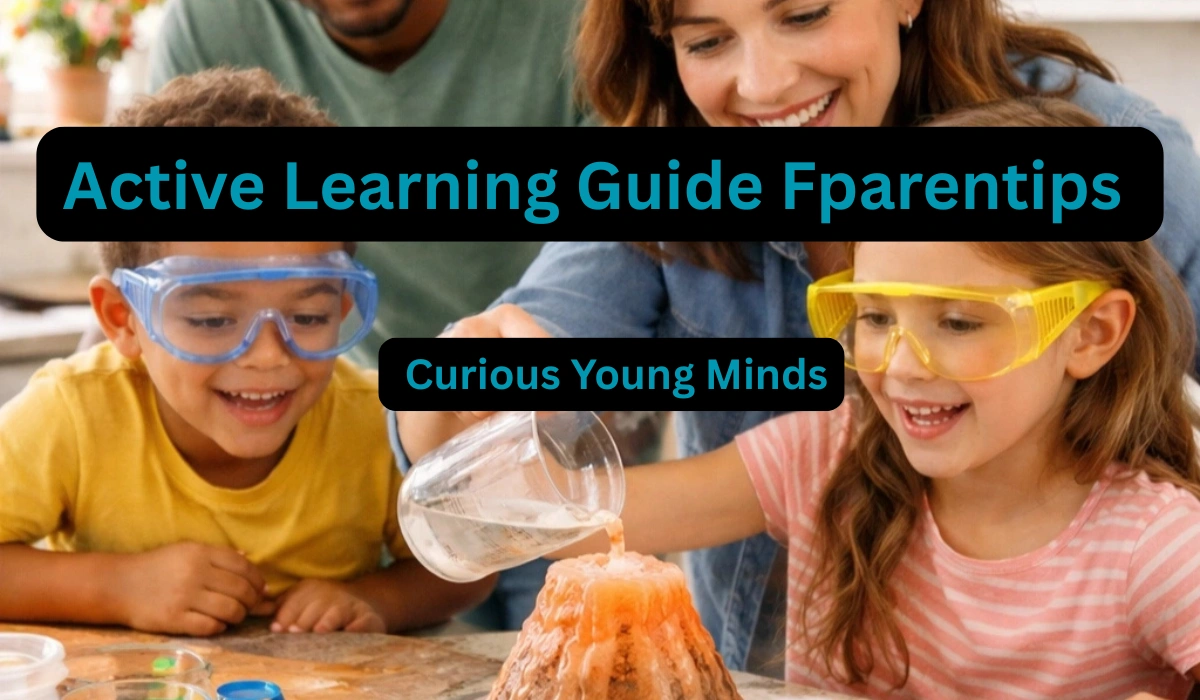

In 2026, active learning has become more than just a buzzword—it’s a parenting approach that empowers children to think critically, ask questions, and explore the world around them. That’s where the active learning guide fparentips comes in. Designed for today’s fast-paced family life, this guide helps parents incorporate simple, effective learning methods into everyday routines—without added stress.
Whether your child is stacking blocks, asking “why?” for the tenth time, or building paper rockets in the living room, every moment is an opportunity to nurture curiosity. With this guide, you’ll discover hands-on activities, screen-time tips, and real-world strategies to help your child learn by doing—right from the heart of your home.
Ready to turn everyday chaos into learning gold? Let’s dive in.
Table of Contents
What Is Active Learning and Why It Matters for Kids
Active learning is more than just keeping children busy—it’s about engaging their senses, curiosity, and problem-solving skills in ways that help them retain knowledge and build confidence. Instead of passively receiving information, kids involved in active learning are hands-on: they ask questions, make observations, experiment, and reflect.
In 2026, education experts continue to emphasize that early exposure to active learning can improve focus, emotional development, and even long-term academic performance. It’s not just for the classroom—active learning can thrive in your kitchen, backyard, or during car rides. When parents step into the role of co-explorer, children gain a richer, more meaningful learning experience that goes beyond memorization.
Whether it’s storytelling with puppets or building towers with cereal boxes, these moments help shape lifelong learners.
Also Read : 7 Large Black Birds in Arizona
How Parents Can Use Active Learning Every Day
You don’t need a degree in education—or even extra hours in your day—to weave active learning into daily life. In fact, the best learning happens when kids feel like they’re just having fun. Parents play a powerful role by turning everyday moments into mini learning adventures.
Start by asking open-ended questions during mealtimes: “Why do you think spaghetti gets soft in water?” or “What shape is your toast?” Let your child help sort laundry by color or count apples into a bag at the grocery store. These simple actions build math, reasoning, and observation skills effortlessly.
In 2026, many parents are blending low-tech activities with occasional educational apps to strike a healthy balance. Even five minutes of focused engagement—like storytelling, scavenger hunts, or building something with recycled materials—can spark a child’s imagination and deepen learning.
The key is consistency, not perfection. Think less “lesson plan” and more “learning in the moment.”
Also Read : Birds That Look Like Penguins: 7 Fascinating Lookalikes of the Sea
Top 10 Active Learning Activities for Home
Active learning doesn’t have to mean expensive toys or complicated prep. Here are 10 parent-approved, 2026-friendly activities that turn ordinary moments into engaging learning opportunities:
- Story Basket Adventures
Fill a basket with random household items. Let your child create a story using those objects. Great for imagination and language skills. - Build a Fort and Map It
After building a blanket fort, draw a simple map of the “fort city.” Adds spatial reasoning and basic geography. - Sink or Float Challenge
Use a bowl of water and test different items. Ask predictions before dropping each one in. Teaches science and hypothesis testing. - Backyard Bug Hunt
Give your child a magnifying glass and a notepad. Explore nature and record discoveries like a mini biologist. - Cooking Together
Let kids measure, mix, and taste-test while preparing a meal. Cooking teaches math, sequencing, and sensory awareness. - Recycled Art Lab
Collect boxes, bottle caps, and tubes. Encourage creative inventions using glue and imagination. - Flashlight Shadow Stories
At night, turn off the lights and use a flashlight to make shadow shapes on the wall. Build narratives around them. - Number Walk
Go on a walk and count things: red cars, birds, mailboxes. It’s math and observation rolled into one. - Emotion Mirror Game
Stand face-to-face and copy each other’s facial expressions. Builds emotional intelligence and empathy. - DIY Obstacle Course
Create a mini indoor or backyard obstacle course with simple challenges. Combines physical movement with problem-solving.
Each of these ideas supports key developmental skills—without screens, pressure, or mess.
Also Read : 13 Birds That Look Like Cardinals
Balancing Screen Time with Hands-On Engagement
In 2026, digital devices are deeply woven into family life—but that doesn’t mean screens have to replace meaningful interaction. The goal isn’t eliminating screen time altogether, but creating a balance where technology supports, not supplants, active learning.
Start by setting clear boundaries: designate “tech-free zones” like the dinner table or bedtime routines. Replace idle scrolling with interactive options like educational apps that encourage creativity, storytelling, or problem-solving. For every 30 minutes of screen time, offer an unplugged activity—like a nature walk or a building challenge using blocks or recyclables.
Many parents are now embracing the “1:2 rule”: one part screen-based learning, two parts real-world exploration. For example, if your child watches a show about animals, follow it up with a trip to the park to spot birds or bugs.
Remember, the most impactful learning still comes from face-to-face conversation, physical play, and hands-on discovery—not just what’s on the screen.
Also Read : Damlpips Explained: Meaning, Use Cases, and 2026 Relevance
Encouraging Curiosity Without Pressure
Curiosity is the heart of active learning—but pressuring kids to “learn” can have the opposite effect. In 2026, parenting experts stress the importance of nurturing, not forcing, a love of discovery. Children learn best when they feel safe to explore, fail, and ask questions without judgment.
Instead of correcting every mistake, try responding with “That’s an interesting idea—let’s test it!” This builds confidence and keeps learning joyful. Give children choices—like picking between building blocks or drawing a comic strip—to foster independence and engagement.
Celebrate effort, not just outcomes. If your child builds a wobbly tower or paints a messy picture, focus on the process: “You worked so hard stacking those blocks!” or “I love how you used bold colors.”
Active learning thrives in an environment where curiosity is rewarded and failure is seen as part of the journey—not a setback. Your encouragement is the spark that keeps their wonder alive.
Also Read : Constraint on Bavayllo and How to Overcome Platform Limits
Troubleshooting Common Challenges in Active Learning
Even the most well-intentioned parents face bumps on the road to active learning. Some days, your child may seem disinterested. Other times, you might feel too stretched to come up with engaging ideas. Don’t worry—this is normal.
Challenge 1: “My child loses interest quickly.”
Solution: Keep activities short and varied. Instead of a 30-minute lesson, try three 10-minute bursts with different formats—movement, drawing, or storytelling.
Challenge 2: “I don’t have time for elaborate setups.”
Solution: Use what you have. Paper towel tubes, kitchen utensils, or cardboard boxes can become tools for learning and creativity. It’s about engagement, not perfection.
Challenge 3: “My child resists new activities.”
Solution: Let them lead. Ask what they’d like to explore, or offer a couple of options. Giving choice encourages participation and reduces pushback.
Challenge 4: “I’m not sure I’m doing it right.”
Solution: There’s no single “right” way. If your child is asking questions, experimenting, or having fun, learning is happening.
Remember, every family has its own rhythm. The goal is progress, not perfection.
Also Read : Pewcetowiec: The Digital Rebel Preserving Poland’s 8-Bit Soul
Active Learning Checklist for Busy Parents
No time? No problem. This quick checklist helps you bring active learning into your home—even on the busiest days. Keep it handy on the fridge or phone for daily inspiration.
Ask at least one open-ended question today
“What do you think will happen if we…?”
Include your child in a daily task
Let them measure ingredients, sort socks, or help water plants.
Do one hands-on activity (10 minutes max)
Build, draw, mix, count—whatever sparks curiosity.
Celebrate effort, not perfection
Focus on trying, discovering, and having fun together.
Balance screen time with real-world interaction
Pair digital moments with offline experiences.
Let your child choose one activity
Fosters independence and keeps them engaged.
Be okay with messes
Learning is often loud, messy, and full of surprises—that’s the magic of it!
Even small moments can have big learning payoffs. With this checklist, you’re turning everyday life into a classroom filled with wonder.
Conclusion: Turning Moments into Meaningful Learning
Active learning doesn’t require fancy tools, a classroom, or extra hours in the day. It thrives in real-life moments—when your child is asking why the sky is blue or figuring out how to stack blocks without them falling. With the help of this active learning guide fparentips, you now have the practical tools to support your child’s growth in ways that feel natural, not forced.
In 2026, the smartest learning isn’t always the most structured—it’s the kind that sparks joy, curiosity, and connection between parent and child. So take a deep breath, follow your child’s lead, and remember: the best lessons often begin with a simple question and a little time spent together.

Welcome to World Birds Life, where the wonder of birds takes center stage. My name is Lexi, and I’m passionate about helping you discover the beauty and joy that birds bring into our lives.