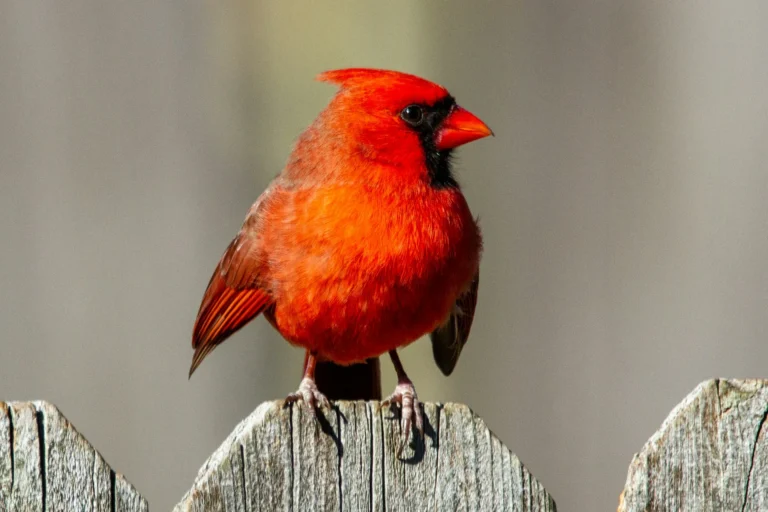
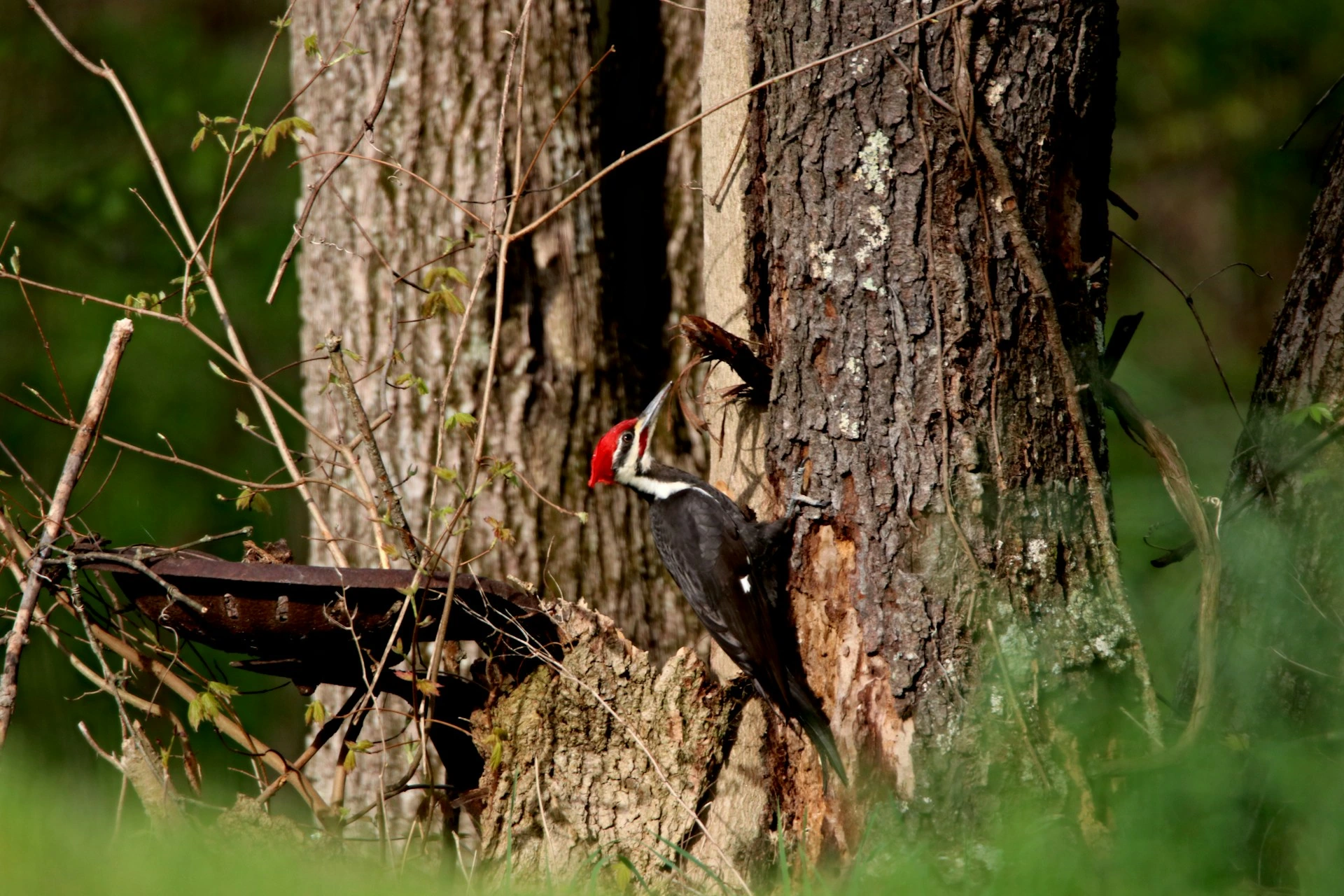
Florida Woodpeckers: Regular Species, Winter Visitors and Identification
Florida status note: This guide focuses on woodpeckers that regularly occur in Florida. Red-headed, Red-bellied, Downy, Hairy, Red-cockaded, Northern Flicker, and Pileated Woodpeckers breed in the state, while Yellow-bellied Sapsuckers are regular winter visitors. Ivory-billed Woodpecker is historical and generally treated as presumed extinct; Acorn, Golden-fronted, and Gila Woodpeckers are not regular Florida species and have been removed from the list.
Florida’s vibrant ecosystems, ranging from pine forests to wetlands, provide a perfect habitat for a variety of Florida Woodpeckers. Known for their rhythmic drumming and unique adaptations, these fascinating birds play crucial roles in maintaining healthy ecosystems. Whether it’s the Pileated Woodpecker, a striking giant carving through tree bark, or the tiny Downy Woodpecker flitting between branches, each species brings its own charm and ecological importance. With a mix of resident and migratory woodpeckers, Florida Woodpeckers offer birdwatchers and nature enthusiasts plenty of opportunities to observe these avian wonders in their natural habitats.
Types of Florida Woodpeckers
1. Pileated Woodpecker
Scientific name: Dryocopus pileatus
Life span: Up to 12 years
Size: 16-19 inches
Weight: 8-12 ounces
Wingspan: 26-30 inches
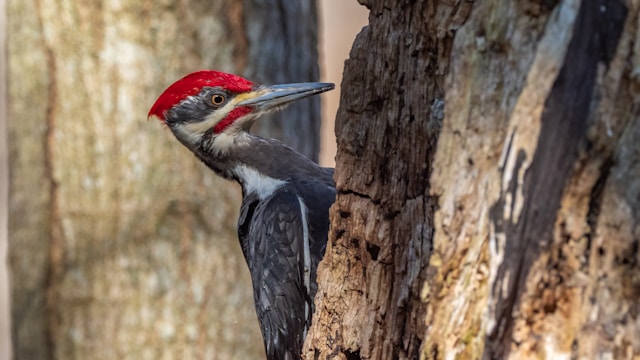
The Pileated Woodpecker is the largest woodpecker in Florida, making it an iconic sight in the state’s forests.
Its bold black plumage, accented by white stripes on its face and a vivid red crest, make it unmistakable.
Preferring mature forests, these birds use their strong bills to carve large, rectangular holes in trees while searching for ants and beetle larvae.
Their loud, resonant calls often echo through wooded areas, signaling their presence.
Observing their industrious foraging and striking appearance makes them a favorite among birdwatchers and nature enthusiasts alike.
2. Red-bellied Woodpecker
Scientific name: Melanerpes carolinus
Life span: 10-12 years
Size: 9-10.5 inches
Weight: 2-3 ounces
Wingspan: 13-16 inches
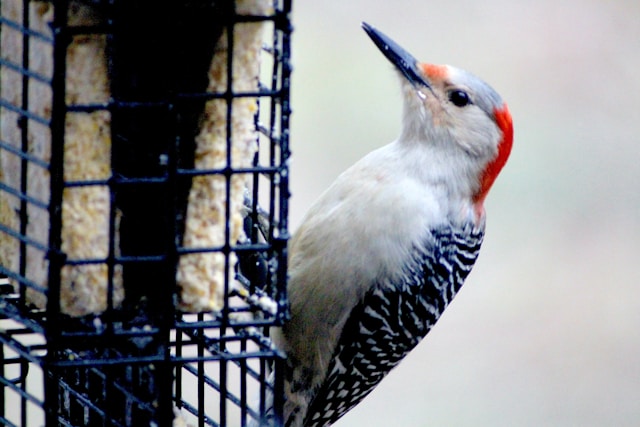
The Red-bellied Woodpecker is a common sight in Florida’s woodlands and suburban backyards.
Despite its name, the reddish hue on its belly is faint and often hard to notice. More prominent are its red cap and nape, which contrast with its black-and-white striped back.
This versatile woodpecker thrives on a varied diet, including insects, fruits, nuts, and seeds.
Its distinctive, rolling calls and adaptability to human-altered environments make it a frequent visitor to feeders, providing ample opportunities for close observation.
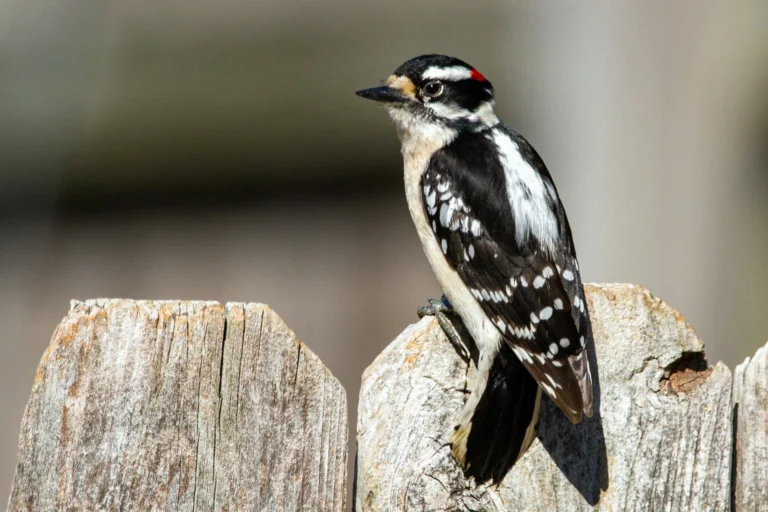
3. Downy Woodpecker
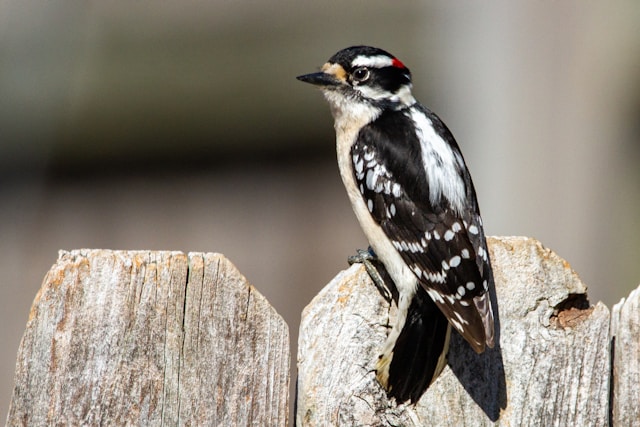
Scientific name: Dryobates pubescens
Life span: 4-5 years
Size: 5.5-7 inches
Weight: 0.7-1 ounce
Wingspan: 9-11 inches
As Florida’s smallest woodpecker, the Downy Woodpecker charms bird enthusiasts with its diminutive size and spotted black-and-white plumage.
These birds are highly active, often seen flitting between trees and visiting backyard feeders.
Their diet primarily consists of insects, supplemented by seeds and berries.
Known for their whinnying call and gentle tapping on tree bark, Downy Woodpeckers are approachable and easy to spot, making them a favorite among novice birdwatchers.
4. Hairy Woodpecker
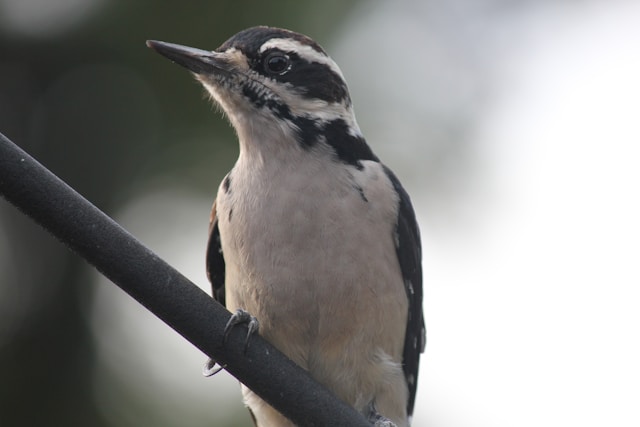
Scientific name: Dryobates villosus
Life span: 5-6 years
Size: 7-10 inches
Weight: 1.5-3.4 ounces
Wingspan: 13-16 inches
Slightly larger than the Downy Woodpecker, the Hairy Woodpecker shares similar black-and-white markings but has a noticeably longer bill.
These birds prefer mature forests and wooded areas, where they forage for insects beneath tree bark.
Occasionally, they consume sap and fruit as well. The Hairy Woodpecker’s sharp, piercing call and vigorous drumming make it a key indicator of a healthy forest ecosystem. Observing this species provides insight into the dynamic role woodpeckers play in their habitats.
5. Red-headed Woodpecker
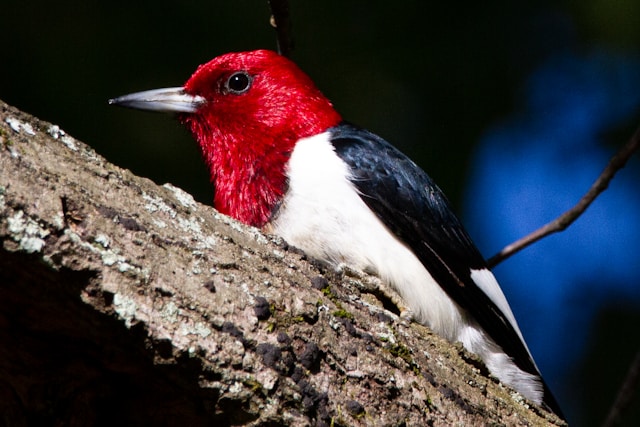
Scientific name: Melanerpes erythrocephalus
Life span: 9-12 years
Size: 7.5-9 inches
Weight: 2-3.2 ounces
Wingspan: 14-17 inches
The Red-headed Woodpecker is a striking bird, known for its completely red head, bright white body, and black wings with white patches.
This species exhibits remarkable behavior, such as catching insects in mid-air and storing food in tree crevices for later consumption.
Found in open woodlands and savannas, these woodpeckers are highly territorial and vocal.
Their bold coloration and fascinating habits make them a highlight for birdwatchers exploring Florida’s natural areas.
6. Northern Flicker
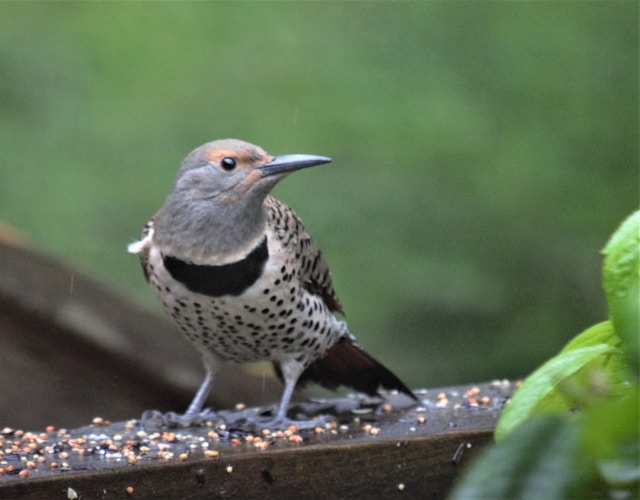
Scientific name: Colaptes auratus
Life span: 6-9 years
Size: 11-12 inches
Weight: 3-5 ounces
Wingspan: 16-20 inches
The Northern Flicker stands out among woodpeckers with its brownish plumage, black spots, and red nape.
Unlike most woodpeckers, flickers often forage on the ground, feeding primarily on ants and other insects. Their loud, clear calls and unique ground-feeding behavior distinguish them from other species.
Found in open woodlands, fields, and suburban areas, the Northern Flicker’s adaptability makes it a versatile and fascinating member of Florida’s avian community.
7. Yellow-bellied Sapsucker
Scientific name: Sphyrapicus varius
Life span: 6-7 years
Size: 7-8.5 inches
Weight: 1.5-2 ounces
Wingspan: 13-16 inches
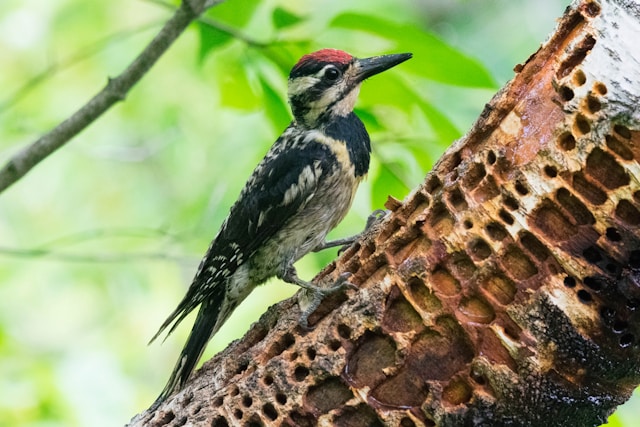
The Yellow-bellied Sapsucker migrates to Florida during winter, bringing its unique sap-feeding behavior to the state.
This medium-sized woodpecker drills neat rows of holes in tree bark to extract sap and catch insects attracted to the sap.
Its pale yellow belly and black-and-white striped face help identify it.
Observing the intricate rows of sap wells left behind provides a glimpse into the resourcefulness and adaptability of this migratory bird.
8. Red-cockaded Woodpecker
Scientific name: Dryobates borealis
Life span: Up to 15 years
Size: 8-9 inches
Weight: 1.5-2 ounces
Wingspan: 14-15 inches
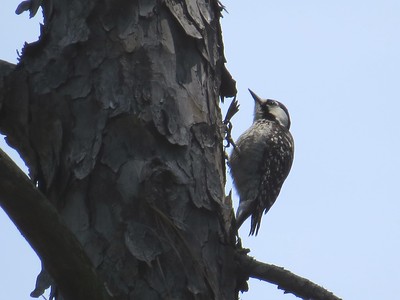
The Red-cockaded Woodpecker is an endangered species, relying heavily on mature pine forests for survival.
It is characterized by its black-and-white barred back and small red streaks on its head, known as cockades.
This species nests in live pine trees, a behavior unique among woodpeckers.
Conservation efforts in Florida focus on preserving and restoring suitable habitats to protect this rare and ecologically significant bird.
Ivory-billed Woodpecker — Historical / Presumed Extinct
Scientific name: Campephilus principalis
Life span: Unknown
Size: 18-20 inches
Weight: 16-20 ounces
Wingspan: 30-31 inches
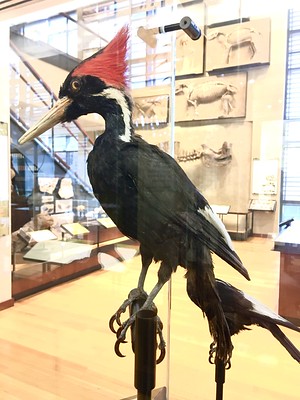
The Ivory-billed Woodpecker is a historical Florida species that the U.S. Fish and Wildlife Service currently treats as presumed extinct after extensive searches failed to produce conclusive evidence that it persists in its historic range.
This large woodpecker, with its striking black-and-white plumage and ivory-colored bill, is occasionally reported in remote areas of Florida.
Unverified reports do not establish a current Florida population. For identification today, birders should treat this species as historical and compare large black-and-white woodpeckers carefully with the much more common Pileated Woodpecker.
Authoritative References
- Cornell Lab — Pileated Woodpecker identification
- Cornell Lab — Red-cockaded Woodpecker identification
- U.S. Fish and Wildlife Service — Ivory-billed Woodpecker five-year review
For a deeper species profile, see our Pileated Woodpecker guide.
Conclusion
Florida’s regular woodpeckers range from the small Downy Woodpecker to the crow-sized Pileated Woodpecker. For present-day identification, focus on confirmed resident and seasonal species; the Ivory-billed Woodpecker belongs in historical context rather than a current Florida checklist.

Lexi edits World Birds Life bird-identification and location guides using authoritative references such as the Cornell Lab of Ornithology, eBird, the U.S. Fish and Wildlife Service, and state wildlife agencies. Updated guides check species status, range, habitat, and look-alike differences where relevant.