Birds That Look Like Blue Jays: 9 North American Look-Alikes
Quick answer: The birds most likely to be mistaken for a Blue Jay in North America are Steller’s Jay, California Scrub-Jay, Florida Scrub-Jay, Woodhouse’s Scrub-Jay, Mexican Jay, Pinyon Jay, Green Jay, Eastern Bluebird, and Indigo Bunting. The fastest clues are crest, size, black necklace, wing pattern, and location. A true Blue Jay is a large crested bird with blue upperparts, white underparts, black barring, white wing and tail patches, and a bold black necklace.
| Bird | Crest? | Key difference from Blue Jay | Main North American range |
|---|---|---|---|
| Steller’s Jay | Yes | Dark head and chest; no white underparts | Western mountains and Pacific forests |
| California Scrub-Jay | No | Blue-and-gray, crestless, no black necklace | Pacific Coast |
| Florida Scrub-Jay | No | Paler blue-gray, crestless; restricted to Florida scrub | Florida only |
| Woodhouse’s Scrub-Jay | No | Dusty blue-gray, thin partial necklace | Interior West |
| Mexican Jay | No | Plain blue-gray head and back, unbarred wings | Southwestern U.S. and Mexico |
| Pinyon Jay | No | Nearly uniform dusty blue with long pointed bill | Interior western U.S. |
| Green Jay | No | Green back, blue head, black face | South Texas and southward |
| Eastern Bluebird | No | Much smaller with rusty-orange breast | Eastern and central North America |
| Indigo Bunting | No | Much smaller, deep blue, conical seed-eating bill | Eastern and central North America in breeding season |
First, Know the Real Blue Jay
The Blue Jay (Cyanocitta cristata) is a large, crested songbird found mainly in eastern and central North America. Cornell describes it as blue above and white to light gray below, with black-and-white patterning on the wings and tail and a conspicuous black necklace across the throat.
When you are trying to identify a Blue Jay look-alike, check these five things first:
- Crest: Blue Jays have a prominent blue crest.
- Black necklace: the dark collar across the throat is a strong field mark.
- White wing and tail patches: these show clearly when the bird moves or flies.
- Size: a Blue Jay is much larger than a bluebird or bunting.
- Range: geography quickly eliminates many western and regional look-alikes.
1. Steller’s Jay

Why it looks similar: Steller’s Jay is the closest crested North American look-alike. It is a large jay with a strong crest and deep blue wings, body, and tail.
How to tell it apart: The head, throat, and upper chest are dark charcoal to black instead of white and blue. It lacks the Blue Jay’s bold white underparts and black necklace. Steller’s Jays are western birds, especially associated with coniferous and mountain forests.
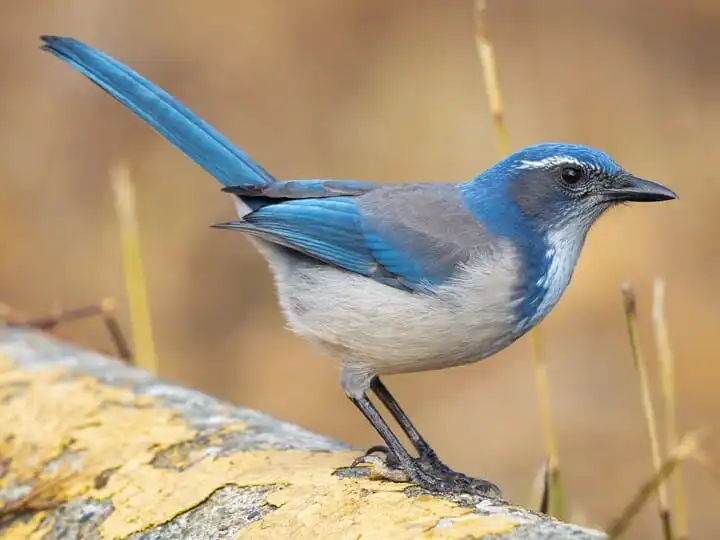
2. California Scrub-Jay

Why it looks similar: This jay is about the right size and has bright blue on the head, wings, and tail.
How to tell it apart: California Scrub-Jays have a smooth, crestless head. Their upperparts combine azure blue with gray-brown, and the underparts are pale. They occur along the Pacific Coast in oak woodland, chaparral, parks, and backyards.
3. Florida Scrub-Jay

Why it looks similar: Florida Scrub-Jays are robin-sized corvids with blue heads, wings, and tails and pale underparts.
How to tell it apart: They have no crest and no Blue Jay-style black necklace. The strongest clue is location: this species occurs only in Florida and is tied to low, sandy oak-scrub habitat. Florida Scrub-Jay is federally listed as Threatened.
4. Woodhouse’s Scrub-Jay
Why it looks similar: Woodhouse’s Scrub-Jay is a large blue-and-gray jay with a long tail, so it can easily be called a “blue jay” by observers in the interior West.
How to tell it apart: It has no crest. Adults are light blue and gray above with a whitish throat and gray belly, separated by only a thin, incomplete blue breast band. Cornell notes that it is typical of open country and pinyon-juniper woodland in the interior West.
5. Mexican Jay

Why it looks similar: Mexican Jays are similar in overall size to Blue Jays and show extensive blue on the head, back, wings, and tail.
How to tell it apart: The plumage is smoother and less patterned, the head is crestless, and the wings and tail lack the Blue Jay’s strong black barring and white spots. In the U.S., look for them mainly in mountain woodlands of Arizona, New Mexico, and west Texas.
6. Pinyon Jay

Why it looks similar: Pinyon Jays are blue, social, noisy corvids, so a distant flock can suggest Blue Jays.
How to tell it apart: They are almost uniformly dusty blue, without a crest, black necklace, or bold white wing pattern. The bill is long and pointed. They are strongly associated with pinyon-juniper country in the western United States and often move in conspicuous flocks.
7. Green Jay

Why it looks similar: The blue crown and cheeks, black facial pattern, jay shape, and bold behavior can remind observers of a Blue Jay.
How to tell it apart: A Green Jay is far more colorful: the back is green, the head contains rich blue, and the face and throat have strong black markings. In the United States it is mainly a South Texas specialty, so range is an immediate clue.
8. Eastern Bluebird
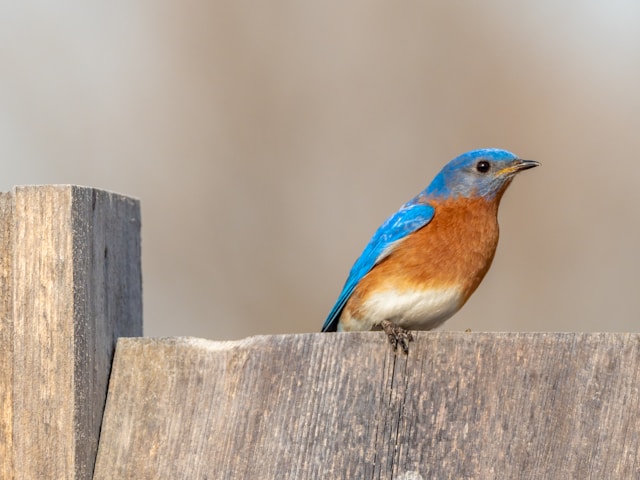
Why it looks similar: A flash of bright blue on the back and wings can lead a beginner to think “Blue Jay,” especially when the bird is seen briefly.
How to tell it apart: Eastern Bluebirds are much smaller, have no crest, and adult males show a rusty-orange breast. They often perch in open country, orchards, fields, and suburban edges rather than behaving like a large forest-edge jay.
9. Indigo Bunting
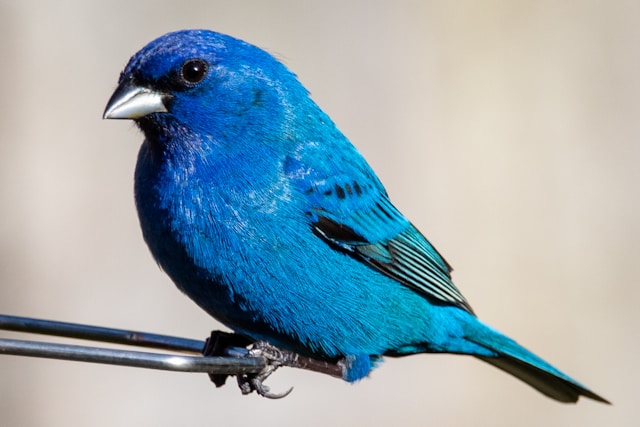
Why it looks similar: Breeding males can appear intensely blue, and the color alone is enough to cause confusion at a distance.
How to tell it apart: Indigo Buntings are tiny compared with Blue Jays, lack a crest and necklace, and have a short conical bill. They are common summer birds in brushy edges and open woodland across much of eastern and central North America.
Which Bird Looks Most Like a Blue Jay?
Steller’s Jay is the best match if you are focusing on overall shape because it is another large crested jay. California, Florida, and Woodhouse’s Scrub-Jays are close in size and family relationship but are crestless. Smaller birds such as Eastern Bluebirds and Indigo Buntings resemble a Blue Jay mainly because of color, not body shape.
Fast Blue Jay Identification by Region
- Eastern and central U.S.: a large crested blue, white, and black jay is usually a true Blue Jay.
- Pacific and mountain West: a crested dark-and-blue jay is usually Steller’s Jay.
- California coast and oak country: a crestless bright-blue jay is likely California Scrub-Jay.
- Interior West: crestless blue-gray jays may be Woodhouse’s Scrub-Jays, Mexican Jays, or Pinyon Jays depending on habitat and location.
- Florida scrub: a crestless blue-gray jay may be the endemic Florida Scrub-Jay.
- South Texas: a green-backed jay with a blue head is a Green Jay.
Related Blue-Bird Guides
If the bird you saw was much smaller than a jay, compare it with our regional blue-bird guides, including blue birds in California and blue birds in Florida.
Authoritative References
- Cornell Lab — Blue Jay identification
- Cornell Lab — Steller’s Jay identification
- Cornell Lab — California Scrub-Jay identification
- Cornell Lab — Florida Scrub-Jay identification
- Cornell Lab — Woodhouse’s Scrub-Jay identification
- Cornell Lab — Eastern Bluebird identification
- Cornell Lab — Indigo Bunting identification

Lexi edits World Birds Life bird-identification and location guides using authoritative references such as the Cornell Lab of Ornithology, eBird, the U.S. Fish and Wildlife Service, and state wildlife agencies. Updated guides check species status, range, habitat, and look-alike differences where relevant.